China evacuates over 1 million people as Typhoon Dolphin hits east coast
While winds have subsided, a transition to extreme rainfall has triggered red alerts and mass relocations across Zhejiang and Fujian to prevent landslides.
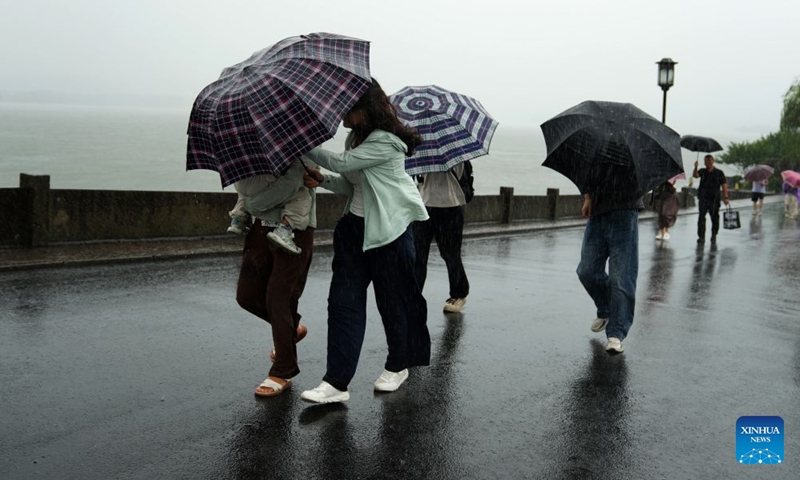
A 42-year-old tourist from Guangdong, stranded in Shanghai after his family's Sunday flight was cancelled, described Typhoon Dolphin as ordinary
, comparing the storm to having a meal and feeling the wind
by the standards of China's southern coast. Yet, while the storm's winds may have felt routine to some, a weather station in central Shanghai recorded its highest 24-hour rainfall in more than 150 years.
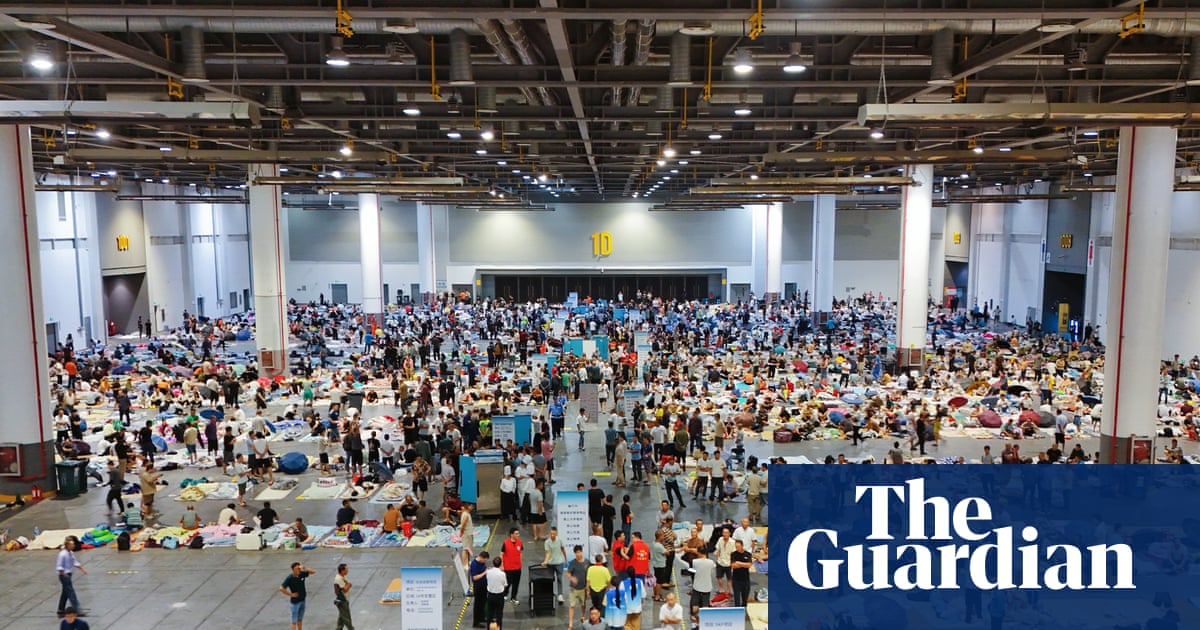
While Typhoon Dolphin weakened rapidly to a tropical storm by 5 a.m. On Monday, its transition from a wind-driven event to a rainfall-driven one triggered a massive state response. More than 1 million people were moved to safety across eastern China by Sunday evening to avoid predicted widespread flooding and landslides.
Related YouTube video
The scale of the relocation was concentrated in three primary zones. According to The Guardian, Wenzhou in Zhejiang province relocated more than 900,000 residents, opening more than 1,500 emergency shelters. In Shanghai, authorities moved 215,600 people from at-risk areas — a sharp increase from an earlier estimate of 30,300 — while 98,900 people were evacuated from high-risk zones in Fujian province.
The storm made landfall near Yuhuan in eastern Zhejiang province at approximately 5:30 p.m. On Sunday, with maximum sustained winds of 42 metres per second (151 kmph). This intensity was equivalent to a Category 1 hurricane on the Saffir-Simpson scale, according to Yahoo News NZ.
The logistical shutdown of the region's infrastructure was near-total. In Shanghai, the two main passenger airports cancelled between 1,300 and 1,500 flights, while Hangzhou's airport saw 270 cancellations, as reported by Abc News. Maritime operations were similarly frozen:
- Yangshan Port: Cleared all berths and moved over 500 small and medium vessels to shelter.
- Fujian Coast: Suspended 55 coastal passenger ferry routes and halted all 115 offshore construction projects.
- Regional Impact: More than 200 ferry routes were suspended across Zhejiang and Fujian.
The primary threat has now shifted from the coastline to the interior. Wang Haiping, chief forecaster at the National Meteorological Centre, told CCTV that the storm is forecast to track westward and slow over central and southwestern China. This deceleration is expected to prolong heavy rain, particularly in mountainous areas and along smaller rivers. The water resources ministry identified the Qiantang, Yong, Jiao, and Shuiyang rivers as being at risk for major flooding.
Forecasters predict some regions will receive between 200mm and 500mm of rain. This extreme precipitation has already triggered a "red" typhoon alert, the highest level in China's warning system, forecasting extraordinary torrential rain
in central and eastern Zhejiang, according to Global Times.
The regional devastation preceded the Chinese landfall. In Japan's Okinawa prefecture, the storm injured six or seven people, including a man over 100 who was blown over, and cut power to more than 50,000 buildings, according to regional utility Okinawa Electric Power. In the Philippines, where the storm intensified monsoon rains without making direct landfall, a landslide in the northern mountain resort city of Baguio destroyed three houses; seven people remain missing and five were rescued, ABC News reported.
This event follows a pattern of escalating volatility. Typhoon Dolphin is the 13th typhoon of the year and arrives only two weeks after Typhoon Noul, which authorities described as the strongest storm to hit China this year. Scientists cited by multiple outlets state that global warming is making such extreme weather and more powerful typhoons more likely.
Beyond the rain, the storm created strange atmospheric anomalies. The Hong Kong Observatory noted a record high temperature of 36.9 Celsius in Hong Kong, caused by warm air pushed over the city by the typhoon's outer subsiding air.
While the winds have subsided, the danger remains inland. Authorities have warned that intense rain could trigger landslides and flooding through Wednesday,
Emergency Response and Infrastructure Strains
The mobilization to counter Typhoon Dolphin involved a tiered administrative strategy. According to Xinhua
, Fujian province raised its typhoon emergency response to Level III, a status mirrored by Shanghai, Jiangsu, and Zhejiang. In Zhejiang, the city of Taizhou specifically relocated 390,000 people on Saturday evening, preceding the broader evacuation of Wenzhou. To secure the coastline, Fujian maritime authorities ordered 290 construction vessels into sheltered waters, while a total of 474 construction vessels across the region were called to port by Friday morning, according to ABC News.
These preventative measures extended to the air and sea, where the logistical ripple effect reached beyond the mainland. In Taiwan, the storm prompted the cancellation of more than 180 flights and the suspension of dozens of ferry services on Sunday. In Okinawa, the utility provider Okinawa Electric Power reported that 5,290 households lost electricity by Sunday afternoon.
The immediate focus now rests on the risk of geological disasters. Authorities in Zhejiang have issued warnings regarding a high risk of such events, specifically instructing residents under a red mountain-torrent warning to follow local evacuation orders. As the storm continues to move north and inland, affecting Henan, Hubei, Anhui, Jiangsu, Zhejiang, and Shanghai, the next step for residents in these regions is to remain indoors during the heavy downpours expected through Wednesday.
How significant is this development?
Contribute your assessment to the aggregated reader intelligence ledger.
Archypedia is dedicated to independent, evidence-backed reporting. This briefing was synthesized from primary source reporting, corroborated across independent newsrooms, and verified against our Editorial Standards.
Transparency record
Evidence behind this report
This report synthesizes 4 distinct sources. Open the source ledger below to compare the underlying coverage.
Prepared under the Archypedia Editorial Policy by the Samir Haddad editorial desk profile. AI-assisted tools may support drafting and verification; public accountability remains with Archypedia. Report an error.