China Jiangxi mudslide leaves one dead and eleven missing after typhoon rains
Specialist teams are utilizing slope radar and drones in Suichuan County to locate missing residents after a landslide destroyed 12 houses in Gaoping Town.
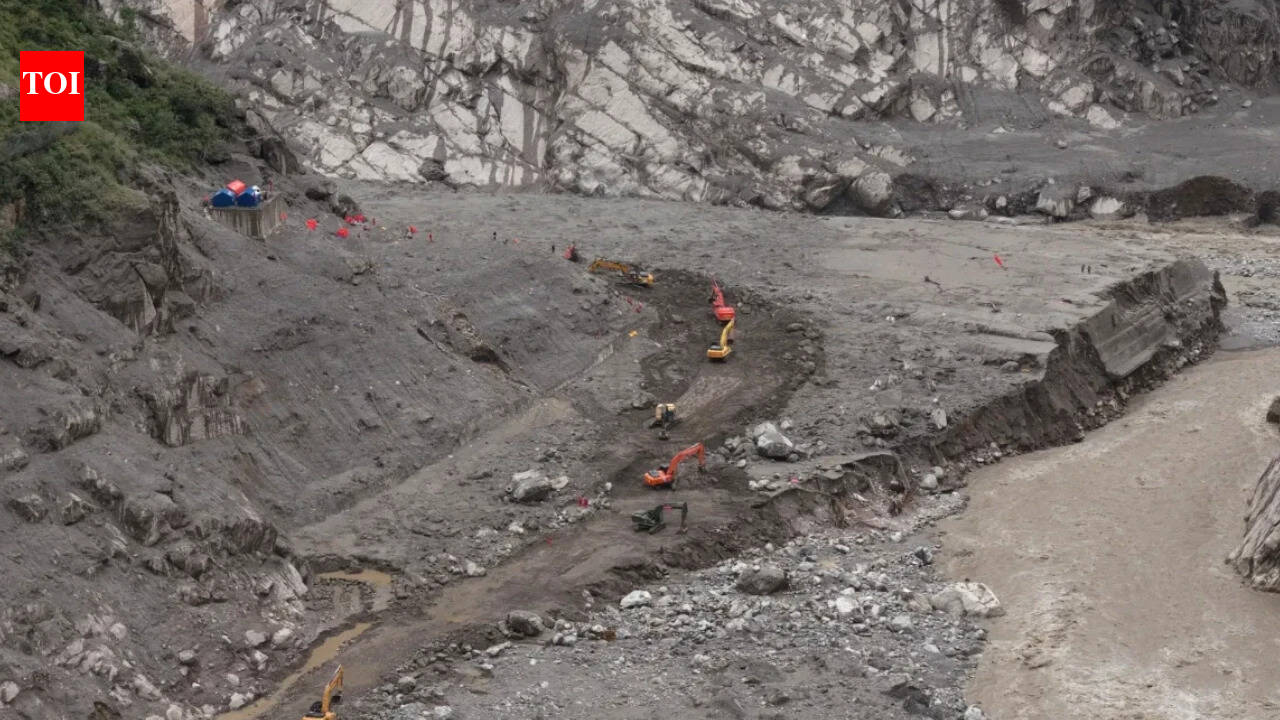
The silence of 4 a.m. In Gaoping Town was broken on Saturday, September 5, 2026, when a mudslide triggered by Typhoon Saudel tore through a village in Suichuan County. The slide destroyed 12 houses and buried residents under debris, leaving one person confirmed dead and 11 others missing, according to county authorities and Yahoo News.
While searchers work to locate the missing in Jiangxi, the broader region is grappling with a storm that has already caused dike breaches and widespread residential collapses in neighboring provinces.
Related YouTube video



Military-Grade Surveillance in Suichuan County
Rescue operations in the affected village of Ji’an City have transitioned from manual digging to high-tech reconnaissance. According to Qazinform, the China National Commission for Disaster Reduction and the Ministry of Emergency Management have deployed specialist teams equipped with slope radar to monitor the terrain for further movement.
Local fire and rescue services have mobilized 41 vehicles and 224 personnel. Drones are currently used for search operations, reconnaissance, and maintaining communications within the disaster zone.
The human toll currently stands as follows:
| Status | Count | Details |
|---|---|---|
| Confirmed Dead | 1 | Pulled from debris |
| Missing | 11 | Trapped in mudslide zone |
| Rescued | 2 | Reported in stable condition |
State broadcaster CCTV reported that more than 10 people were trapped when the landslide hit the town, a figure that aligns with the combined count of the dead, missing, and rescued.
The Tiered Emergency Framework
The Chinese state has activated a multi-layered response system to manage the aftermath of Typhoon Saudel. At the provincial level, authorities in Jiangxi activated a Level III emergency response for disaster relief at noon on Saturday, September 5. This followed a similar upgrade by the Ministry of Natural Resources, which shifted the geological disaster emergency response for the province from Level IV to Level III.
At the national level, the response remains at Level IV.
This tiered structure allows the province to concentrate resources on the 161,500 people affected by the weather across Jiangxi while maintaining a baseline of national oversight. According to The Star, the primary focus of current relocation efforts is to prevent secondary disasters
—additional landslides or floods that often occur after an initial slope failure.
Regional Path of Typhoon Saudel
The mudslide in Jiangxi is one consequence of a storm that has battered the eastern coast with multiple landfalls. Xinhua reports that Typhoon Saudel made two landfalls in Zhejiang Province on August 28 and a third as a tropical storm in Fujian Province on Thursday, September 4.
The impact in Fujian has been more widespread than the concentrated tragedy in Gaoping Town. In Putian city's Huating Town, more than 100 houses collapsed. On Thursday afternoon, a dike overtopped and breached, trapping residents and flooding entire villages. To mitigate these risks, officials evacuated 599,300 residents from high-risk onshore and offshore areas in Fujian by Friday night, as reported by Qazinform.
The volatility of the region's weather is further highlighted by recent disasters elsewhere in Asia. On August 26, flash floods and mudslides struck Tibet and Nepal. In Nepal, the Nepal Police reported on Saturday that the death toll had risen to 1,344. On the Tibet side of the border crossing, Xinhua reported that 31 people died and 531 remain missing.
Infrastructure Collapse and Civilian Impact
The devastation in Gaoping Town is part of a wider pattern of infrastructure failure. According to Times of India, rains triggered by Typhoon Saudel inundated homes and swept through tea-growing communities in Guangdong and Fujian on Friday. In Jinxi village, the flooding was severe enough to bring down a three-storey house.
To protect the public, authorities shut tourist attractions, closed schools, and suspended 24 ferry routes to mitigate the risk of flash floods and landslides.
In Fuding, firefighters waded through waist-deep waters to rescue elderly residents. CCTV footage showed streets transformed into rivers, necessitating the use of inflatable boats for rescue efforts.
While no health crises have been reported in Suichuan County, officials in Nepal are currently dealing with threats of communicable diseases and contaminated drinking water following the August 26 disasters.
The immediate priority in Suichuan County remains the recovery of the 11 missing residents. Authorities continue to relocate villagers from high-risk zones while monitoring saturated slopes to determine if further slides are imminent.
Archypedia is dedicated to independent, evidence-backed reporting. This briefing was synthesized from primary source reporting, corroborated across independent newsrooms, and verified against our Editorial Standards.
Transparency record
Evidence behind this report
This report synthesizes 7 distinct sources. Open the source ledger below to compare the underlying coverage.
- timesofindia.indiatimes.com
- yahoo.com
- asiaone.com
- qazinform.com
- von.gov.ng
- thestar.com.my
- republicworld.com
Prepared under the Archypedia Editorial Policy by the Samir Haddad editorial desk profile. AI-assisted tools may support drafting and verification; public accountability remains with Archypedia. Report an error.