Japan executes man convicted of 2009 Osaka pachinko arson that killed five
Sunao Takami was executed at the Osaka Detention House for a 2009 pachinko parlor arson attack that killed five people.

Japan executed 58-year-old Sunao Takami at the Osaka Detention House on Friday, August 21, 2026, marking the nation's first capital punishment under the administration of Prime Minister Sanae Takaichi and the first hanging in 14 months. Takami was put to death for a devastating arson attack carried out in July 2009, when he poured gasoline onto the floor of a pachinko parlor near his home in Osaka's Konohana Ward and ignited it. The blaze claimed the lives of five people — four customers and one employee — and injured 10 others. Takami turned himself in to authorities the following day.
The execution brings a definitive end to a 17-year legal process defined by disputes over criminal responsibility. During his trial, Takami's defense team argued that he suffered from a mental disorder and operated under a state of diminished capacity, contending his responsibility should be limited. Prosecutors nevertheless pressed for the death penalty, a demand upheld by the Osaka District Court in October 2011. Following the dismissal of his appeal by the Osaka High Court in July 2013, the Supreme Court rejected his final challenge, finalizing his death sentence in February 2016.
Related YouTube video
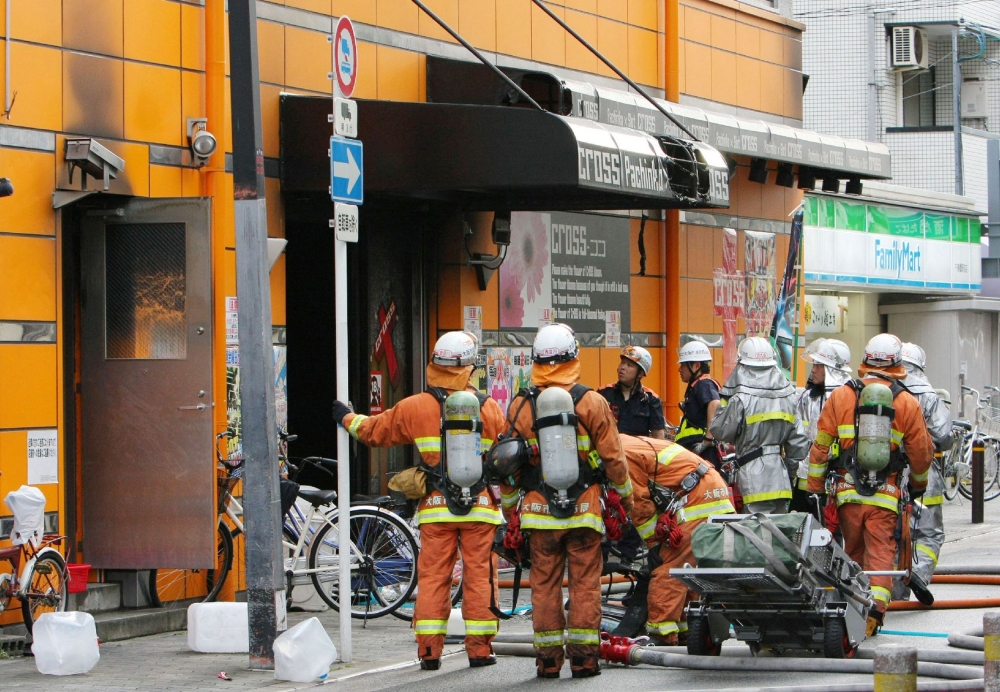
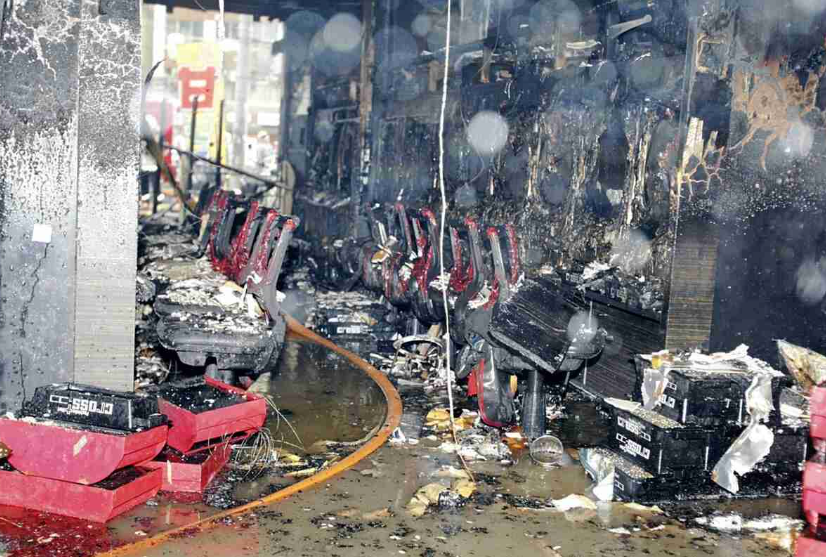

Justice Minister Hiroshi Hiraguchi signed Takami's execution order on Tuesday, August 18, 2026, according to Jiji Press.
Hiraguchi added that he ordered the execution after very careful consideration. This enforcement breaks a quiet administrative stretch that began after the June 2025 hanging of Takahiro Shiraishi, the notorious "Twitter killer" who murdered and dismembered nine people."The crime was extremely serious and brought enormous shock and terror to society,"
Hiroshi Hiraguchi, Justice Minister, via Jiji Press
While the administrative mechanisms moved forward quietly on Friday, the execution underscores deep divisions surrounding Japan's penal practices. Japan and the United States remain the only two G7 nations that continue to enforce capital punishment. Domestic and international critics routinely target the systemic opacity of the Japanese penal system, pointing out that death row inmates are typically informed of their fate only on the morning of their execution. Furthermore, Japanese law stipulates that executions must be carried out within six months of a final verdict once appeals are exhausted, yet inmates routinely spend years or decades isolated on death row before any action is taken.
Campaigners also highlight the shadow of wrongful convictions in a judicial system where detainees face prolonged interrogations. The most prominent correction of such errors involved Iwao Hakamada, an ex-boxer who spent decades on death row for a 1966 quadruple murder before his release in 2014 and formal exoneration at age 88. A court ruled that investigators had tampered with evidence and subjected him to inhumane interrogations to force a confession, making Hakamada only the fifth death row inmate granted a post-war retrial in Japan, all of which have ended in exonerations. Critics similarly decry "hostage justice" practices, where suspects are held in extended pre-trial detention to extract confessions.
Despite these criticisms and a slight rise in abolitionist sentiment, public backing for capital punishment remains overwhelmingly robust. A government survey in 2024 revealed that 83 percent of the Japanese public viewed the death penalty as "unavoidable," while those in favor of abolition rose to 17 percent from nine percent five years prior, as reported by Malay Mail and The Star, drawing from AFP reporting.
Takami's execution leaves precisely 100 inmates remaining on Japan's death row, awaiting their own indefinite futures behind bars.
Historical Execution Patterns and Judicial Precedents
According to data provided to AFP by the Justice Ministry and cited by Malay Mail and The Star, the frequency of capital punishment in Japan has fluctuated significantly over recent years, with 15 executions carried out in the year 2018, three in 2019, three in 2021, and one in 2022. The 2018 enforcement notably included Shoko Asahara and 12 former members of the Aum Shinrikyo doomsday cult, who orchestrated the 1995 Tokyo subway sarin gas attacks that claimed 14 lives. the Ministry of Justice only began making the names of executed inmates public in 2007, a shift that built upon decades of policy characterized by limited official disclosure regarding penal administration.
With the carrying out of Sunao Takami's sentence at the Osaka Detention House, the remaining inmate population on death row stands at 100 individuals according to Jiji Press.
How significant is this development?
Contribute your assessment to the aggregated reader intelligence ledger.
Archypedia is dedicated to independent, evidence-backed reporting. This briefing was synthesized from primary source reporting, corroborated across independent newsrooms, and verified against our Editorial Standards.
Transparency record
Evidence behind this report
This report synthesizes 5 distinct sources. Open the source ledger below to compare the underlying coverage.
Prepared under the Archypedia Editorial Policy by the Samir Haddad editorial desk profile. AI-assisted tools may support drafting and verification; public accountability remains with Archypedia. Report an error.