Iran claims missile attacks on US aircraft carrier and destroyer
Iran claims missile attacks on US aircraft carrier and destroyer
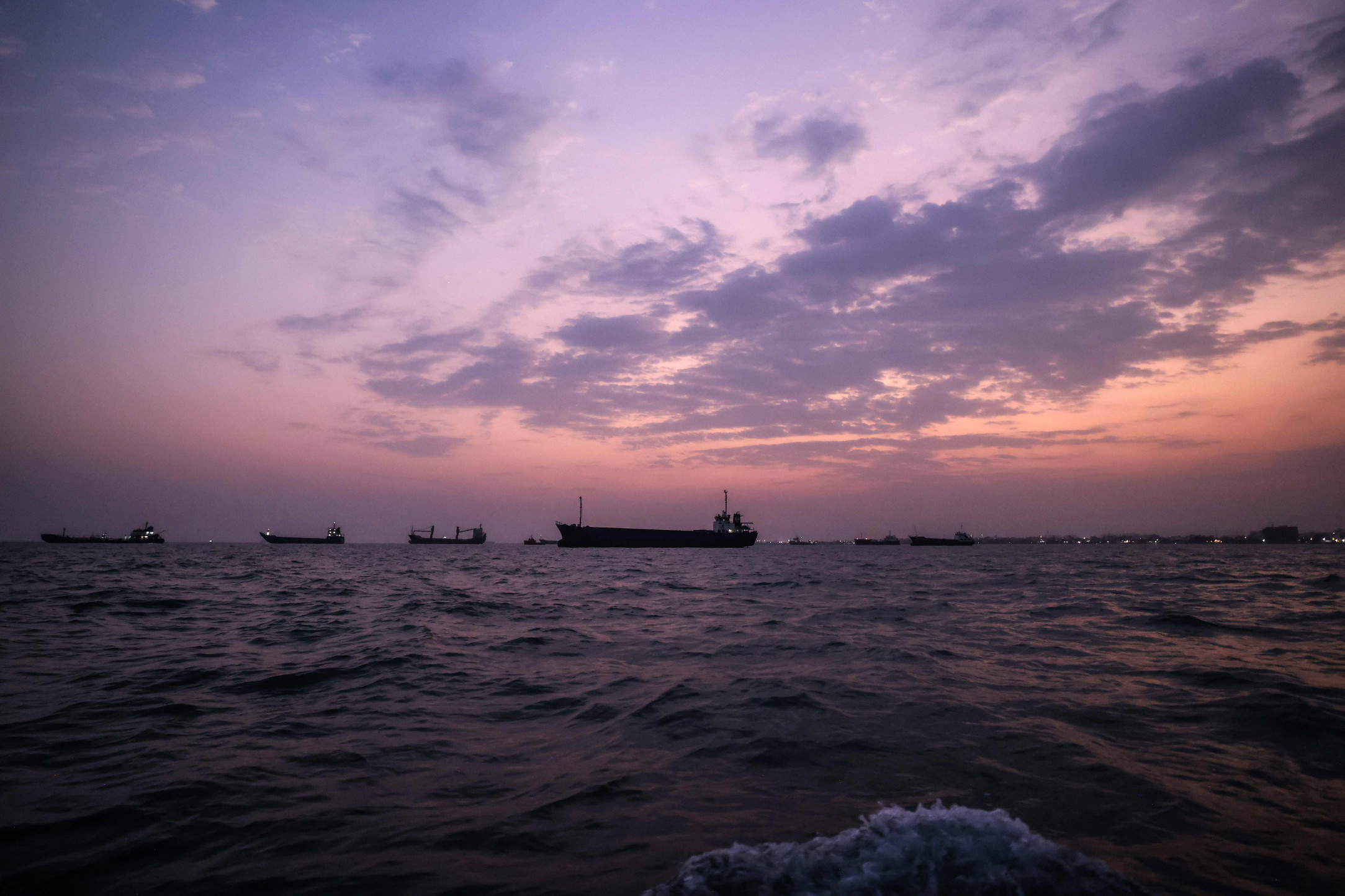
A United States military aircraft crew issued a series of warnings over an emergency channel to the crew of the M/T Stark 1 before the tanker was struck and permanently disabled near Jask. In one exchange, an American-accented voice told the crew, I am preparing to fire at your stern. You have 10 minutes to clear the crew from the stern of your ship
. A subsequent final warning commanded the crew to get into your lifeboats and abandon the ship immediately
, according to audio confirmed by CNN.
The strike was part of a coordinated operation on September 5, 2026, in which U.S. Forces disabled two Iranian tankers and completely destroyed a third. This action followed ballistic missile attacks launched by Iran's Islamic Revolutionary Guard Corps (IRGC) Aerospace Force against a U.S. Aircraft carrier and a guided-missile destroyer.
Related YouTube video


The Saturday Exchange: Missiles and Tankers
The flare-up began when the IRGC Aerospace Force fired several ballistic missiles at a U.S. Aircraft carrier and a destroyer. According to the Deccan Chronicle, the IRGC alleged these warships were participating in a naval blockade and harassing Iranian shipping. Tehran further claimed that both U.S. Vessels were forced to flee the conflict zone after sustaining damage and fearing another attack.
U.S. Central Command (CENTCOM) provided a different account, stating that the warships successfully evaded multiple unprovoked Iranian attacks
and that no American personnel were harmed. In response, U.S. Forces targeted three crude oil carriers. The M/T Downy, located off the coast of Kharg Island, and the M/T Stark 1, near Jask, were permanently disabled. A third vessel, the unladen M/T Kylo (also known as the Noxen), was completely destroyed in the Gulf of Oman.
The human cost of the strikes varied by location. While Iranian state media reported no casualties near Kharg Island, crews in the Gulf of Oman were forced into lifeboats to reach the shore, as reported by the BBC.
| Vessel Name | Location | Outcome | U.S. Classification |
|---|---|---|---|
| M/T Downy | Off Kharg Island | Permanently Disabled | Shadow Network / IRGC funded |
| M/T Stark 1 | Near Jask | Permanently Disabled | Shadow Network / IRGC funded |
| M/T Kylo (Noxen) | Gulf of Oman | Completely Destroyed | Shadow Network / IRGC funded |
The 'Three-for-Two' Economic Logic
CENTCOM Commander Adm. Brad Cooper has explicitly framed these strikes as an economic weapon. He stated that if the IRGC shoots at two U.S. Ships, the U.S. Will impose an even higher economic cost — taking out three of yours
, according to CNN.
This strategy targets Iran's "shadow networks"—vessels operating outside official shipping systems to bypass international sanctions. According to Kuow, these fleets are essential for funding the IRGC and its regional proxies.
Defense Secretary Pete Hegseth expanded this threat on social media, asserting that the U.S. Would destroy (and sink)
Iranian tankers regardless of where they operated, including the Indo-Pacific. Hegseth argued that the fleet is defenceless
because Iran lacks a functional navy or air force to protect its commercial assets.
The Battle for the Strait of Hormuz
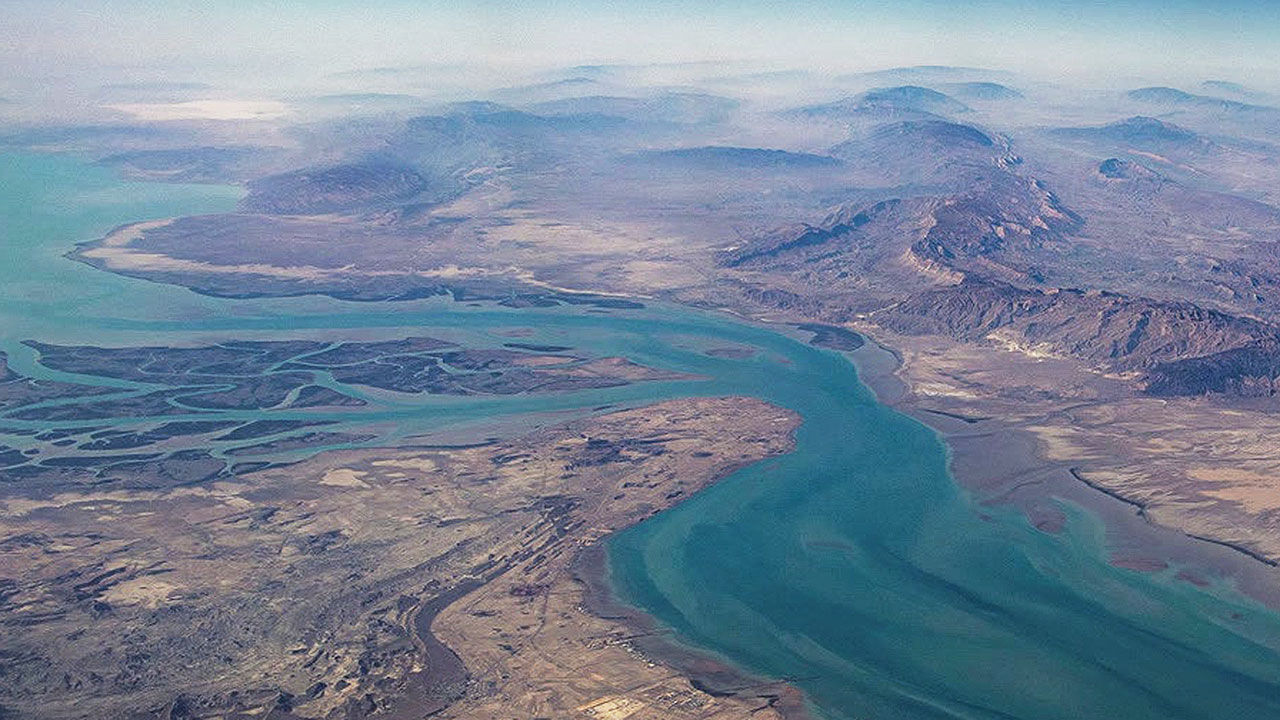
The violence is rooted in a struggle for control over the Strait of Hormuz, a waterway that previously carried about 20% of global oil and LNG supplies. The IRGC Navy claims it retaliated for the U.S. Strikes by targeting six vessels: three U.S.-affiliated ships and three oil tankers traveling through routes Tehran calls unauthorised
in the Strait, as reported by Gulf News.
Tehran views the Strait as a primary source of leverage and insists that vessels must obtain its consent to transit. Conversely, the U.S. Has been escorting commercial ships through a southern route in Omani waters to bypass Iranian control. President Donald Trump has declared that the strait is open
, according to the BBC.
The strike on the M/T Downy is particularly significant due to its proximity to Kharg Island. As a coral outcrop handling roughly 90% of Iran's crude exports, the island is the heart of the nation's oil economy. While previous U.S. Strikes in March hit military targets on the island while sparing oil infrastructure, this latest attack brought military action closer to the terminal.
Chronology of the Six-Month Conflict
The broader confrontation began on February 28, 2026, with joint U.S.-Israeli airstrikes on Iran. The conflict has evolved through several phases:
- February – August: Initial airstrikes followed by Iranian attacks on U.S. Bases in the Gulf and the effective closing of the Strait of Hormuz.
- June: An interim agreement briefly eased fighting but failed to resolve disputes over shipping access.
- August 30: The U.S. Struck Iranian rocket launchers on Larak Island to prevent the deployment of sea mines in the Strait.
- September 1–5: Reciprocal strikes involving U.S. Targets in Jordan, Bahrain, and Iraq, leading to the Saturday naval exchange.
Despite the intensity of these exchanges, U.S. Vice President JD Vance recently denied that the situation should be described as a "war," though he acknowledged the recent flare-up. Similarly, President Donald Trump has dismissed the conflict as small potatoes
, referring to the attacks as intermittent
.
Economic pressure has mounted as U.S. Diesel prices rose to an average of $5.85 per gallon, compared to $3.71 a year prior, according to the BBC.
The military command of the Islamic Republic has warned that if the U.S. Continues its naval blockade and the harassment of Iranian shipping, the response will be more powerful than before
. This includes the potential for an expanded scope of attacks
against U.S. Warships.
Whether Tehran will escalate attacks on U.S. Naval escorts remains the central uncertainty. Such a move would risk triggering a larger response against Iran's remaining military and oil assets, including the nearly 20 tankers currently anchored near Kharg Island that are unable to exit the Gulf due to U.S. Pressure.
Archypedia is dedicated to independent, evidence-backed reporting. This briefing was synthesized from primary source reporting, corroborated across independent newsrooms, and verified against our Editorial Standards.
Transparency record
Evidence behind this report
This report synthesizes 10 distinct sources. Open the source ledger below to compare the underlying coverage.
- bbc.com
- deccanchronicle.com
- indianexpress.com
- cnn.com
- kuow.org
- eastleighvoice.co.ke
- news.sbs.co.kr
- cryptobriefing.com
- nypost.com
- gulfnews.com
Prepared under the Archypedia Editorial Policy by the Samir Haddad editorial desk profile. AI-assisted tools may support drafting and verification; public accountability remains with Archypedia. Report an error.