BRICS leaders meet in India as wars and US tensions test the bloc
Leaders from the expanded 11-member bloc have gathered in New Delhi for high-stakes talks overshadowed by active military conflicts in Ukraine and the Middle East.
NEW DELHI — Indian Prime Minister Narendra Modi welcomed world leaders to New Delhi on Saturday, September 12, 2026, for the 18th BRICS Summit, opening a high-stakes diplomatic gathering shadowed by active military conflicts and intense friction over Western financial hegemony, according to reporting by Ksmu and npr.org. Thousands of police and paramilitary personnel were deployed around the summit venue and other parts of New Delhi, with traffic restrictions and diversions in place.
The two-day summit, running on Saturday, September 12, and Sunday, September 13, 2026, marks a crucial stress test for the newly expanded bloc. Founded in 2006 by Brazil, Russia, India, and China, with South Africa joining in 2010, the grouping has grown into an 11-member coalition that represents approximately half of the world's population and a substantial share of global economic output, according to ksmu.org and npr.org. Yet this enlargement — which brought in Egypt, Ethiopia, Iran, the United Arab Emirates, and Saudi Arabia in 2024, followed by Indonesia in 2025, has imported acute geopolitical rivalries that threaten to paralyze the bloc's decision-making apparatus.
Related YouTube video

Security Clampdown and High-Level Arrivals
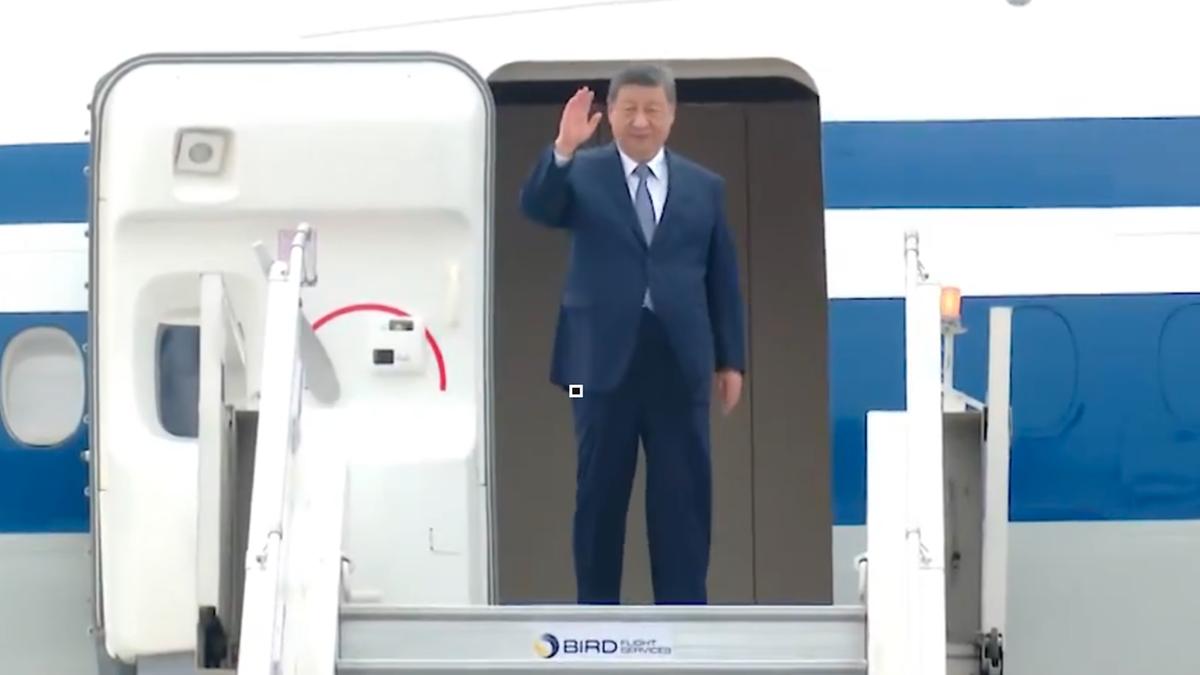
The physical security footprint across New Delhi reflected the volatile international landscape. Chinese President Xi Jinping arrived in the capital on Saturday for his first visit to India since 2019, leading a delegation that includes senior Communist Party official Cai Qi and Foreign Minister Wang Yi, as reported by english.mathrubhumi.com. Russian President Vladimir Putin arrived on Friday, alongside Iranian President Masoud Pezeshkian, whose presence brings the acute realities of Middle Eastern warfare directly into the summit halls.
| Expansion Milestone | Year Added | Key Strategic Implication |
|---|---|---|
| Founding Core (Brazil, Russia, India, China) | 2006 | Established emerging-market counterweight to Western-dominated institutions. |
| South Africa | 2010 | Expanded African representation within the core dialogue. |
| Egypt, Ethiopia, Iran, UAE, Saudi Arabia | 2024 | Brought major energy producers and Middle Eastern rivals into the bloc. |
| Indonesia | 2025 | Added Southeast Asia's largest economy to the emerging framework. |
According to Minutemirror, Putin's arrival carried immense importance for New Delhi as energy markets reel from disruptions tied to the Strait of Hormuz. The ongoing Middle East conflict, triggered by U.S.-Israeli strikes on February 28, 2026, has severely impacted regional stability and exposed sharp fractures among BRICS members, particularly between Iran and the United Arab Emirates.
Competing Visions: De-Dollarization Versus Western Pressure
Beneath the diplomatic pageantry, member states arrived with divergent strategic imperatives. Beijing and Moscow view the grouping primarily as a vehicle to erode U.S. Financial dominance and counter Western influence. Speaking at the BRICS Business Forum in New Delhi on Friday, September 11, 2026, Putin insisted that the bloc was not directed against any single nation and that Moscow remained open to global cooperation, while simultaneously taking aim at the Group of Seven by noting that BRICS economies produce over 40 percent of global GDP, as noted by english.mathrubhumi.com.
For Tehran, the summit serves as an urgent platform to seek economic shielding. Facing sweeping international sanctions and a U.S. Blockade, Iranian President Masoud Pezeshkian told reporters on Friday, September 11, 2026, that pressure on his country had reached a critical stage following military aggression by the U.S. And Israel. Pezeshkian pressed member states to accelerate financial decoupling from the West, according to reporting by ksmu.org and Npr.
"One of the most important steps is to expand the use of national currencies in trade among the members,"
Masoud Pezeshkian, Iranian President, via ksmu.org and npr.org
Beyond currency mechanisms, leaders are scheduled to tackle food security, supply chain resilience, energy cooperation, and reforms to global financial governance, aiming to construct alternatives to institutions long dominated by Washington and European capitals, as outlined by ksmu.org and npr.org.
India's Diplomatic Tightrope and the Beijing Bilateral
For host nation India, the summit represents a masterclass in multi-alignment. New Delhi continues to rely on Russian energy supplies and maintain historic ties with Tehran, even as it expands defense, economic, and technological cooperation with the United States and Europe. Modi held separate bilateral meetings with Putin and Pezeshkian on Friday, September 11, 2026.
Concurrently, India is utilizing the summit to solidify a fragile diplomatic thaw with China. Modi and Xi are scheduled to hold face-to-face talks to build upon recent boundary discussions. National Security Advisor Ajit Doval and Chinese Foreign Minister Wang Yi met in Beijing on August 25, 2026, for the 25th round of Special Representatives' talks, reaching an eight-point consensus to manage border tensions along the roughly 3,500-kilometer Line of Actual Control following the 2020 military clashes, according to english.mathrubhumi.com.
Frequently Asked Questions
Why is the 2026 BRICS Summit considered a major test of bloc unity?
The expanded 11-member bloc includes countries with deeply conflicting geopolitical alignments, notably the ongoing U.S.-backed war involving Iran and internal Middle Eastern frictions between nations like Iran and the United Arab Emirates.
What precedent showed deep divisions among BRICS members before the New Delhi summit?
In May 2026, BRICS foreign ministers failed to reach a consensus on a joint statement regarding the Iran war during a meeting in New Delhi, compelling India to issue a chair's summary instead.
Whether India can successfully forge a unified consensus in New Delhi remains the central question of the weekend. The structural fragility of the expanded alliance was laid bare in May 2026, when foreign ministers failed to issue a joint statement over the Iran war, leaving host officials to navigate sharp member divisions on Middle Eastern conflicts and relations with Washington, as detailed by minutemirror.com.pk and ksmu.org. As leaders debate global security and financial architecture over the remainder of the weekend, the outcome will determine if the enlarged bloc can project collective authority or default once more to a divided chair's summary, with China poised to assume the group's rotating chairmanship following the conclusion of the New Delhi meetings.
Archypedia is dedicated to independent, evidence-backed reporting. This briefing was synthesized from primary source reporting, corroborated across independent newsrooms, and verified against our Editorial Standards.
Transparency record
Evidence behind this report
This report synthesizes 4 distinct sources. Open the source ledger below to compare the underlying coverage.
Prepared under the Archypedia Editorial Policy by the Samir Haddad editorial desk profile. AI-assisted tools may support drafting and verification; public accountability remains with Archypedia. Report an error.