BRICS leaders adopt New Delhi Declaration backing UN reform and Gaza ceasefire
At the 18th summit hosted by Prime Minister Narendra Modi, BRICS members unanimously adopted a 140-point declaration addressing global governance and trade.
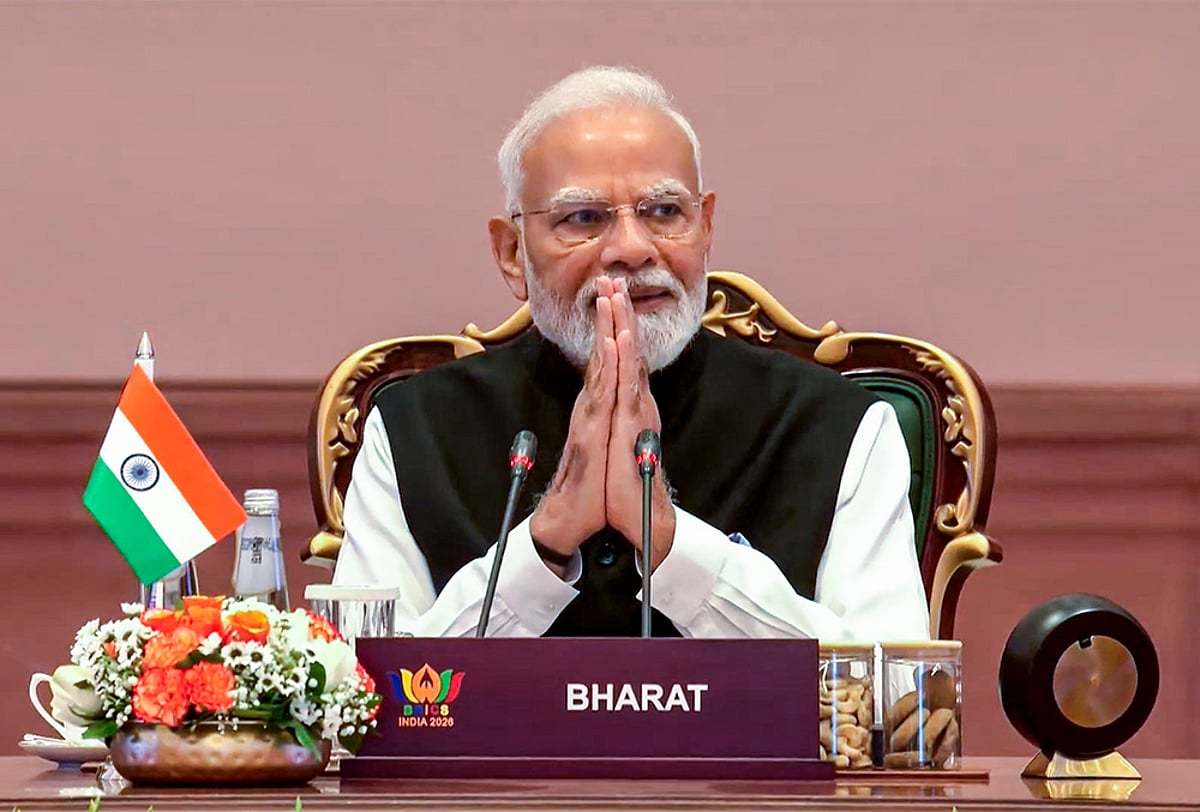
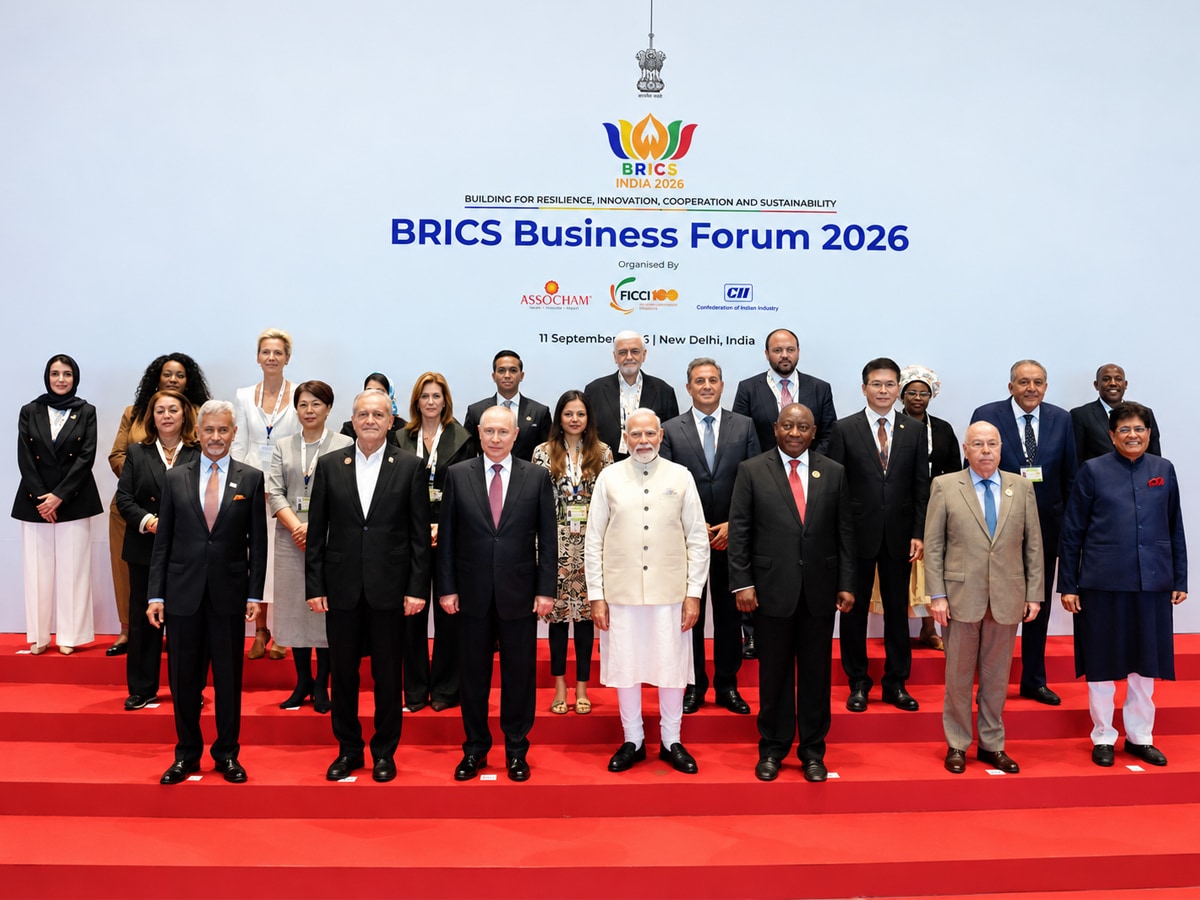
Just months after a foreign ministers' gathering collapsed in New Delhi without producing a joint statement due to deep splits over the war in West Asia, host Prime Minister Narendra Modi engineered a sharp reversal. BRICS leaders unanimously adopted a 140-point New Delhi Declaration on 12 September 2026 at the close of the 18th summit, bridging active regional hostilities and competing geopolitical aims to project a unified voice for the Global South.
The sudden, hard-won unanimity papered over profound structural divisions within the 11-member bloc, whose constituents collectively account for roughly half of the world's population, 40 percent of global GDP, and 26 percent of global trade, according to Forbes India. While nations such as India and Brazil have consistently framed the grouping as a pragmatic economic platform focused on reforming Western-led financial architectures, Russia and China view it as an explicit geopolitical counterweight to the West.
Related YouTube video
.jpg)
Institutional Architecture and Global South Representation
A central pillar of the New Delhi Declaration is its direct challenge to post-World War II global governance structures. According to Dainik Jagran MPCG, the text calls for comprehensive reform of the United Nations, explicitly backing Brazil and India for expanded, permanent roles within the UN Security Council, recalling earlier Beijing and Johannesburg declarations. Furthermore, the declaration highlights geographic imbalances and the historic absence of a female leader at the helm of the UN, carrying particular resonance as the selection process for a successor to outgoing Secretary-General António Guterres unfolds.
The bloc trained its sights on international financial institutions, reiterating demands for the immediate entry into force of the 16th General Review of Quotas at the International Monetary Fund without further delay. Forbes India noted that the declaration pushes for a subsequent 17th review to shift voting power toward emerging market and developing economies while protecting the quota shares of the poorest members. These demands run parallel to a strong push for WTO overhauls, with leaders advocating for the immediate restoration of a fully functioning, two-tier binding dispute settlement mechanism and the appointment of new Appellate Body members to address years of paralysis in global trade appeals.
| Governance Domain | Key BRICS Demand / Policy Position |
|---|---|
| United Nations | Explicit backing for India and Brazil for permanent Security Council expansion; calls for geographical and gender diversity in selecting the next UN Secretary-General. |
| International Monetary Fund | Immediate implementation of the 16th General Review of Quotas and initiation of a 17th review to increase developing-nation voting power. |
| International Trade | Opposition to unilateral tariffs, secondary economic sanctions, and non-compliant carbon border adjustment mechanisms; demand for restoring WTO dispute settlement. |
| Payment Architecture | Rejection of a single shared currency in favor of local-currency trade settlements and enhanced cross-border payment interoperability. |
Financial Pragmatism and the De-Dollarization Compromise
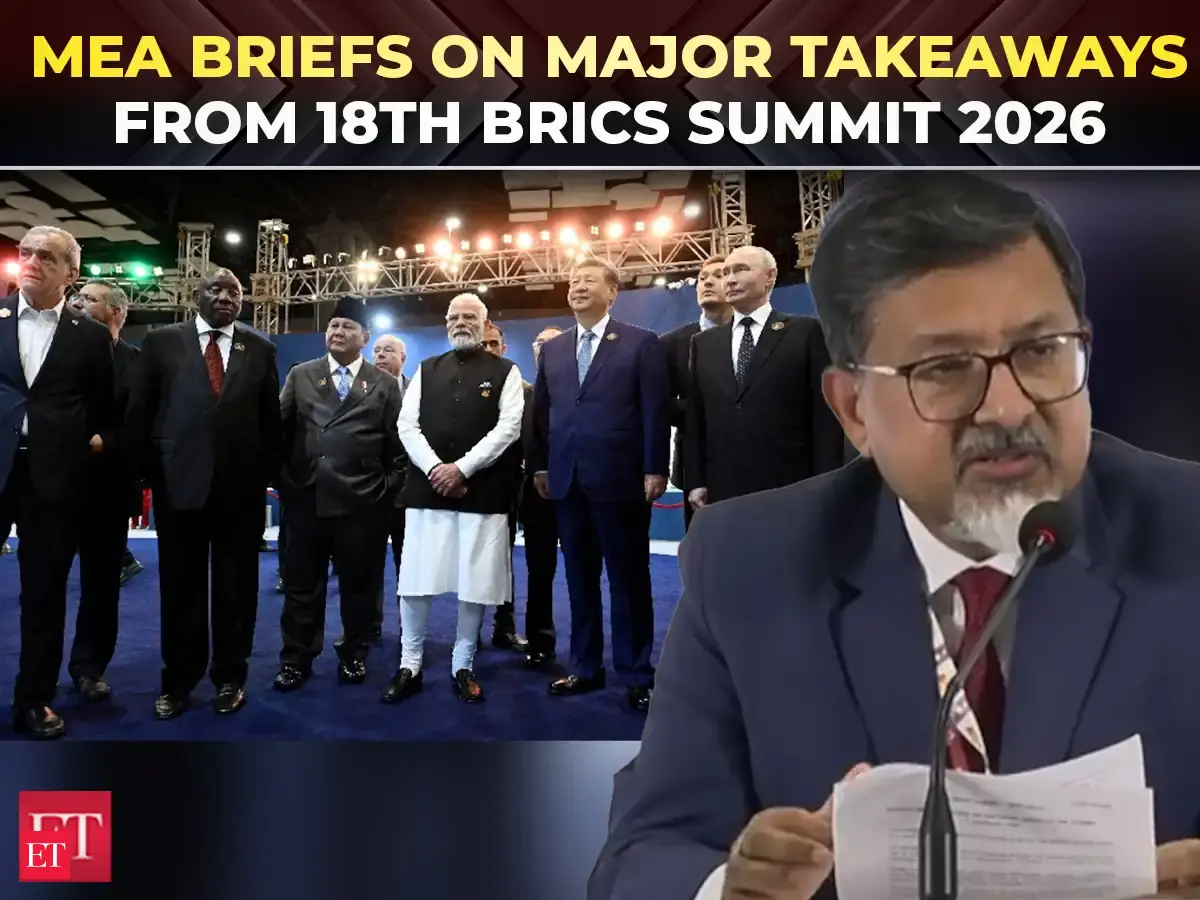
Despite persistent speculation over the creation of a rival monetary unit, the summit yielded a measured compromise on currency policy. MEA Economic Relations Secretary Sudhakar Dalela clarified after the sessions that no proposal for a BRICS currency is currently active, according to Dainik Jagran MPCG. Instead, the declaration acknowledges that there is "no one-size-fits-all approach," directing the BRICS Payment Task Force to advance cross-border payment interoperability and trade settlements denominated in local currencies.
This financial pragmatism extends to defensive trade postures. Outlook India reported that the bloc strongly opposed unilateral economic sanctions, secondary sanctions unauthorized by the UN Security Council, and protectionist carbon border adjustment mechanisms that clash with international trade rules. For host India, the summit also delivered tangible institutional wins, including member interest in establishing a BRICS Risk Lab at GIFT City’s International Financial Services Centre in Gujarat under a voluntary BRICS Insurance Resilience Centre, alongside endorsements for big-cat conservation through the International Big Cats Alliance and frameworks for artificial intelligence governance.
Managing Active Conflicts and Diplomatic Omissions
The summit's most delicate test involved navigating active geopolitical flashpoints among members with competing allegiances. Abc News noted that the expanded bloc, which now includes Iran, the United Arab Emirates, Saudi Arabia, Egypt, Ethiopia, and Indonesia, harbors intense regional rivalries, citing recent hostilities where Iran has attacked the UAE and Saudi Arabia has been targeted by Iran-backed forces, including the Houthis.
Yet the final text struck targeted balances. For India, the declaration delivered a strong diplomatic victory by condemning in the strongest terms the April 22, 2025 terrorist attack in Jammu and Kashmir that killed 26 people, while calling for zero tolerance toward cross-border terrorism and terror financing, as highlighted by Forbes India. Simultaneously, the declaration expressed deep concern over ongoing violence in Gaza despite the ceasefire agreement of October 2025, demanded an immediate Israeli ceasefire and unhindered humanitarian aid, rejected the forced relocation of Palestinians, referenced South Africa’s case against Israel at the International Court of Justice, and reaffirmed support for Palestinian UN membership and a two-state solution based on 1967 boundaries with East Jerusalem as its capital. The bloc also renewed its longstanding call to end the US economic blockade of Cuba.
Concurrently, the diplomatic compromises required notable omissions. The Russia-Ukraine war was completely absent from the text by name, referred to only generically as conflicts in various parts of the world alongside rising global military spending, an omission Forbes India attributed to the strict consensus requirements of the grouping. Meanwhile, sideline optics underscored the bloc's unique convening power: Iranian President Masoud Pezeshkian held a face-to-face meeting with Abu Dhabi Crown Prince Sheikh Khaled bin Mohamed bin Zayed, marking their highest-level engagement since the onset of the Middle East conflict.
Frequently Asked Questions
Did BRICS agree to create a common currency to replace the US dollar?
No. According to Indian Ministry of External Affairs officials cited in summit reports, there was no proposal for a shared BRICS currency. The New Delhi Declaration explicitly notes there is no one-size-fits-all approach, opting instead to advance bilateral trade settlements using local currencies and improve cross-border payment interoperability.
How did the declaration address the war in Ukraine?
The Russia-Ukraine war was entirely omitted by name from the 140-point New Delhi Declaration. Consensus-based drafting rules among members with divergent positions on the conflict resulted in the text referring only broadly to global conflicts and rising military expenditures.
As the summit drew to a close, Prime Minister Narendra Modi extended his best wishes to Chinese President Xi Jinping as China prepares to host BRICS in 2027, as reported by The Economic Times.
Archypedia is dedicated to independent, evidence-backed reporting. This briefing was synthesized from primary source reporting, corroborated across independent newsrooms, and verified against our Editorial Standards.
Transparency record
Evidence behind this report
This report synthesizes 5 distinct sources. Open the source ledger below to compare the underlying coverage.
- forbesindia.com
- outlookindia.com
- economictimes.indiatimes.com
- english.dainikjagranmpcg.com
- abc.net.au
Prepared under the Archypedia Editorial Policy by the Samir Haddad editorial desk profile. AI-assisted tools may support drafting and verification; public accountability remains with Archypedia. Report an error.