
Complainant B on Stand for Second Day in Donaldson Trial – RTE.ie: Testimony, Trauma, and the Legal Battle
The legal proceedings surrounding former Democratic Unionist Party (DUP) leader Jeffrey Donaldson have entered a critical phase as Complainant B returned to the witness stand for a second consecutive day. In a courtroom atmosphere charged with tension, the testimony has shifted toward the complex psychological aftermath of alleged abuse and the harrowing reasons why victims of historical sexual violence often remain silent for decades. The trial, which has captivated the public in Northern Ireland and beyond, centers on grave allegations of rape and sexual assault, positioning a former political powerhouse against a witness detailing a life altered by trauma.
At the heart of the current testimony is the concept of “delayed disclosure.” As Complainant B provides her account of events that allegedly occurred while she was a schoolgirl, the defense has focused heavily on the timeline of reports. However, the witness’s testimony has provided a raw look at the internal struggle of a survivor, including the misplaced sense of guilt and the systemic barriers that prevent victims from approaching the police immediately after an assault.
The Core Allegations: Testimony of Complainant B
During her second day on the stand, Complainant B detailed the nature of the abuse she claims to have suffered at the hands of Jeffrey Donaldson. The allegations are severe, involving rape and repeated sexual abuse during her time as a student. The testimony is not merely a recount of events but a window into the power dynamics at play during the period the abuse is alleged to have occurred.
A significant portion of the cross-examination has centered on the witness’s emotional state and her recollections. The court has heard how the abuse occurred within a context where the defendant held a position of authority and influence. This power imbalance is a recurring theme in the prosecution’s narrative, suggesting that the victim was groomed or intimidated into silence.
“The psychological weight of such allegations often manifests as self-blame, a common trait among survivors of historical abuse who were targeted during their formative years.”
One of the most poignant moments of the second day of testimony involved Complainant B addressing her own perceived failures. She told the court that she blamed herself for not reporting the crimes to the police sooner. This admission highlights a critical aspect of sexual assault cases: the tendency for victims to internalize the shame of the perpetrator, leading to a cycle of silence that can last for a lifetime.
Key Points of the Testimony
- Nature of the Abuse: Allegations of rape and sexual assault occurring while the complainant was still in school.
- Power Dynamics: The influence Jeffrey Donaldson wielded as a public figure and the impact this had on the victim’s ability to seek help.
- Internalized Guilt: The witness’s explicit statement that she felt responsible for the delay in reporting the abuse.
- Memory and Trauma: The challenges of recalling specific details from decades past while under the pressure of a high-profile trial.
Understanding the “Delay in Reporting” Narrative
In many historical abuse trials, the defense often employs a strategy that questions the credibility of a witness based on the time elapsed between the alleged crime and the official report. In the case of Complainant B on stand for second day in Donaldson trial – RTE.ie, this has become a central pillar of the legal argument.
However, forensic psychologists and legal experts argue that “delayed reporting” is not an indicator of falsehood, but rather a symptom of trauma. There are several reasons why a victim might wait years, or even decades, to come forward:
Psychological Barriers
Victims often experience tonic immobility or dissociation during and after an assault. In the years following, the brain may suppress the trauma as a survival mechanism. The “shame” associated with sexual violence—often exacerbated by societal stigmas—can make the prospect of reporting feel more damaging than the silence itself.
The Role of Power and Status
When the accused is a figure of significant social or political standing, such as a leader of a major political party, the barrier to reporting is exponentially higher. Victims may fear that they will not be believed, or that the perpetrator’s influence will protect them from legal consequences. In Northern Ireland’s specific political climate, the weight of institutional loyalty can further stifle reports of misconduct.
Fear of Retaliation
Especially in cases involving school-aged victims, the fear of retaliation against the family or the fear of being ostracized by their community plays a massive role. The witness’s testimony regarding her self-blame is a textbook example of how the perpetrator’s power is maintained long after the physical abuse has ended.
Who is Jeffrey Donaldson and Why This Case Matters
To understand the gravity of this trial, one must understand the stature of the defendant. Jeffrey Donaldson was a titan of Northern Irish politics, serving as the leader of the Democratic Unionist Party (DUP) and a key architect of the peace process and political stability in the region. His fall from grace, triggered by these allegations, represents one of the most significant political scandals in the history of the province.
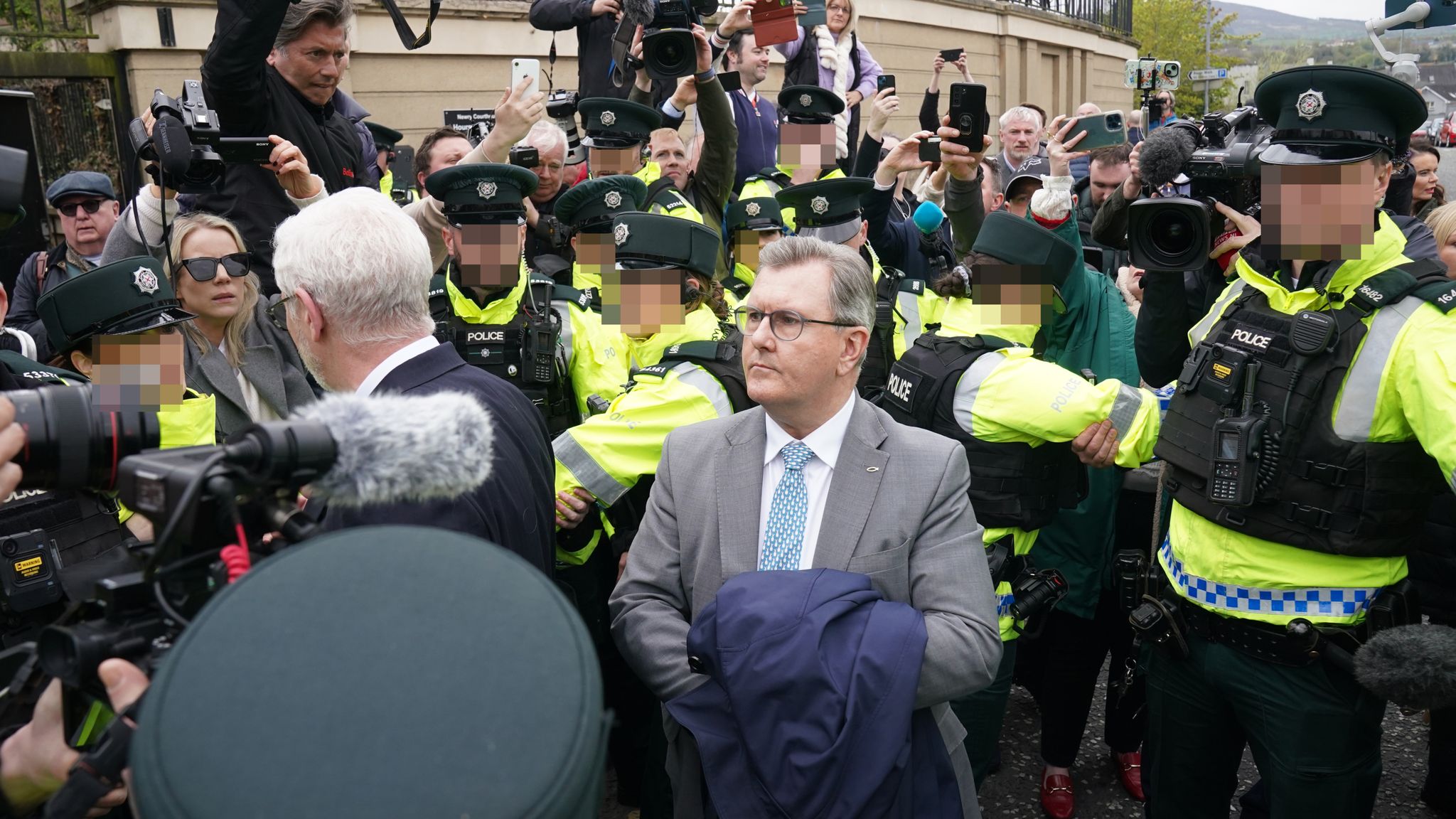
The case transcends a simple criminal trial; it is a litmus test for the justice system’s ability to hold powerful men accountable. For decades, the political landscape of Northern Ireland was dominated by strong-man figures and rigid party hierarchies. The emergence of Complainant B’s allegations suggests a potential pattern of behavior that may have been shielded by the defendant’s political utility.
| Aspect | Context/Impact |
|---|---|
| Political Status | Former DUP leader; influential in the Good Friday Agreement era. |
| Legal Charges | Multiple counts of sexual offenses, including rape. |
| Social Impact | Encouraged other potential victims of powerful figures to come forward. |
| Legal Precedent | Tests the application of “delayed disclosure” in historical abuse cases. |
The Legal Framework: Proving Historical Abuse
Proving crimes that occurred decades ago presents unique challenges for the prosecution. Without forensic evidence (such as DNA), the case relies heavily on testimonial evidence. This makes the credibility of the witness paramount.
The defense typically attempts to find inconsistencies in the witness’s story to suggest that the account is fabricated or misremembered. However, the law recognizes that trauma affects memory. “Fragmented memory” is a recognized psychological phenomenon where a victim remembers the most traumatic parts of an event vividly but may struggle with peripheral details like dates or specific clothing.
The prosecution’s goal is to establish a “consistent core” of truth. If the essential elements of the abuse remain constant across different statements, the court may find the testimony credible despite minor inconsistencies in the timeline. The courage of Complainant B to stand for a second day and face rigorous questioning is a pivotal part of establishing this consistency.
For those interested in the broader legal context, a related explainer on historical abuse legislation may provide further insight into how statutes of limitations and evidentiary rules have evolved to protect survivors.
Broader Implications for Northern Irish Society
The Donaldson trial is occurring against a backdrop of a society still healing from decades of sectarian conflict. The “culture of silence” that permeated Northern Ireland during the Troubles—where people were encouraged not to talk to the police or “inform”—may have inadvertently created an environment where sexual abuse could be hidden more easily.
By bringing these allegations into the public eye, the trial is forcing a conversation about the intersection of political power and personal violation. It challenges the notion that a person’s contribution to the “greater good” (such as political peace-making) can outweigh or excuse private acts of brutality.
The Impact on Future Victims
The visibility of this trial serves as both a warning and an encouragement. It warns that no amount of political power provides permanent immunity. Conversely, it encourages other survivors of historical abuse to realize that their delay in reporting does not invalidate their experience or their right to justice.
Common Misconceptions About Historical Abuse Trials
Public discourse around cases like this often falls into several traps. It is important to clarify these misconceptions to understand the trial’s actual dynamics:
- Misconception: “If it happened, they would have reported it immediately.”
Reality: As seen in Complainant B’s testimony, shame, fear, and psychological trauma often make immediate reporting impossible. - Misconception: “Lack of physical evidence means the event didn’t happen.”
Reality: In historical cases, physical evidence is almost always gone. The legal system relies on the reliability of the testimony and circumstantial corroboration. - Misconception: “The witness is seeking fame or financial gain.”
Reality: The immense psychological toll of testifying in a high-profile trial, as evidenced by Complainant B’s distress on the stand, often outweighs any perceived benefit.
Navigating the Path Toward a Verdict
As the trial progresses, the focus will likely shift from the initial testimony of the complainants to the defense’s attempt to provide an alternative narrative or to cast doubt on the prosecution’s witnesses. The jury will be tasked with weighing the emotional and factual weight of Complainant B’s testimony against the defendant’s denials.
The outcome of this case will likely have reverberations far beyond the courtroom. A conviction would mark a landmark moment in the accountability of political leaders in Northern Ireland. An acquittal would likely spark a wider debate about the difficulties of prosecuting historical sex crimes and the support systems available for survivors.
Observers should watch for the introduction of any corroborating evidence—such as diaries, letters, or testimony from people the complainant may have confided in at the time—which could strengthen the case beyond the word of the witness alone.
Frequently Asked Questions
Who is Complainant B in the Jeffrey Donaldson trial?
Complainant B is a woman who has alleged that she was raped and sexually abused by Jeffrey Donaldson while she was a schoolgirl. Her identity is protected by the court to ensure her privacy and safety during the proceedings.
Why did Complainant B wait so long to report the abuse?
During her testimony, Complainant B expressed that she blamed herself for the delay. Experts suggest that factors such as the defendant’s power, the victim’s age at the time, and the psychological impact of trauma often lead to delayed reporting.
What is the significance of Jeffrey Donaldson’s political career in this case?
As a former leader of the DUP, Donaldson held immense power. The prosecution argues that this power imbalance made it harder for the victim to report the abuse and may have contributed to the survivor’s silence.
How does the court handle a lack of forensic evidence in historical cases?
The court relies on “testimonial evidence.” If a witness’s account is found to be consistent, credible, and plausible, it can be sufficient for a conviction even in the absence of physical evidence from decades ago.
What happens next in the trial?
Following the testimony of the complainants, the trial will move through further witness examinations and the defense’s case before the jury reaches a verdict based on the evidence presented.
The resilience shown by survivors in the public eye, particularly during the grueling process of cross-examination, underscores the systemic challenges facing victims of sexual violence. As the legal process unfolds, the focus remains on whether the justice system can provide a fair resolution that acknowledges both the rights of the accused and the trauma of the accuser.
