
Victorian Council Rejects Calls to Install CCTV at Crime ‘Hotspots’
A Victorian council has declined requests to install additional CCTV cameras in areas identified as crime hotspots, citing a lack of evidence that surveillance alone reduces criminal activity. The decision follows community pressure to increase security in high-risk areas, according to reporting by the Australian Broadcasting Corporation.
Why the Council Denied CCTV Requests in High-Crime Areas
Local government officials have rejected proposals to expand the surveillance network in specific “hotspots,” arguing that the installation of cameras does not necessarily prevent crime from occurring. According to the Australian Broadcasting Corporation, the council’s decision rests on the premise that CCTV is more effective as a tool for forensic investigation after a crime has been committed than as a proactive deterrent to stop the crime from happening in the first place.
Council representatives indicated that the financial cost of installing and maintaining a high-density camera network is significant. These costs include not only the hardware and installation but also the ongoing operational expenses of monitoring footage and managing data storage. Officials stated that these funds could be more effectively allocated toward other community safety initiatives that address the root causes of instability in those neighborhoods.
The rejection comes amid rising concerns from local residents and business owners who claim that certain areas have become magnets for opportunistic crime. These stakeholders argue that the visible presence of cameras would discourage offenders and provide a sense of security to those utilizing public spaces. However, the council maintains that the “displacement effect”—where crime simply moves a few blocks away from a monitored area—negates the overall benefit to the municipality.
The core of the dispute lies in the definition of “safety.” For residents, safety is often perceived through the lens of visible security measures. For the council, safety is measured by crime statistics and the efficient use of public funds.
The Community Argument for Increased Surveillance
Residents in the affected hotspots report a decline in perceived safety, citing a rise in opportunistic thefts, vandalism, and anti-social behavior. According to community advocates, the lack of surveillance makes these areas “easy targets” for offenders who know they can operate without being captured on film. The push for CCTV is not merely about catching criminals but about creating a psychological deterrent.
Local business owners have expressed particular frustration, noting that while private security cameras exist, they often have limited fields of view. A coordinated, council-led CCTV network would provide comprehensive coverage of public thoroughfares, which business owners argue would assist the Victoria Police in identifying suspects more quickly. They contend that the “forensic tool” argument used by the council is insufficient if the cameras are not positioned to capture high-quality, usable evidence of fleeing suspects.
Key demands from the community include:
- Installation of high-definition cameras at known entry and exit points of crime hotspots.
- Real-time monitoring capabilities to allow for faster police response.
- Better integration between council-owned cameras and police databases.
- Increased lighting in tandem with surveillance to improve image quality and deter nighttime crime.
The Council’s Evidence-Based Approach to Crime Prevention
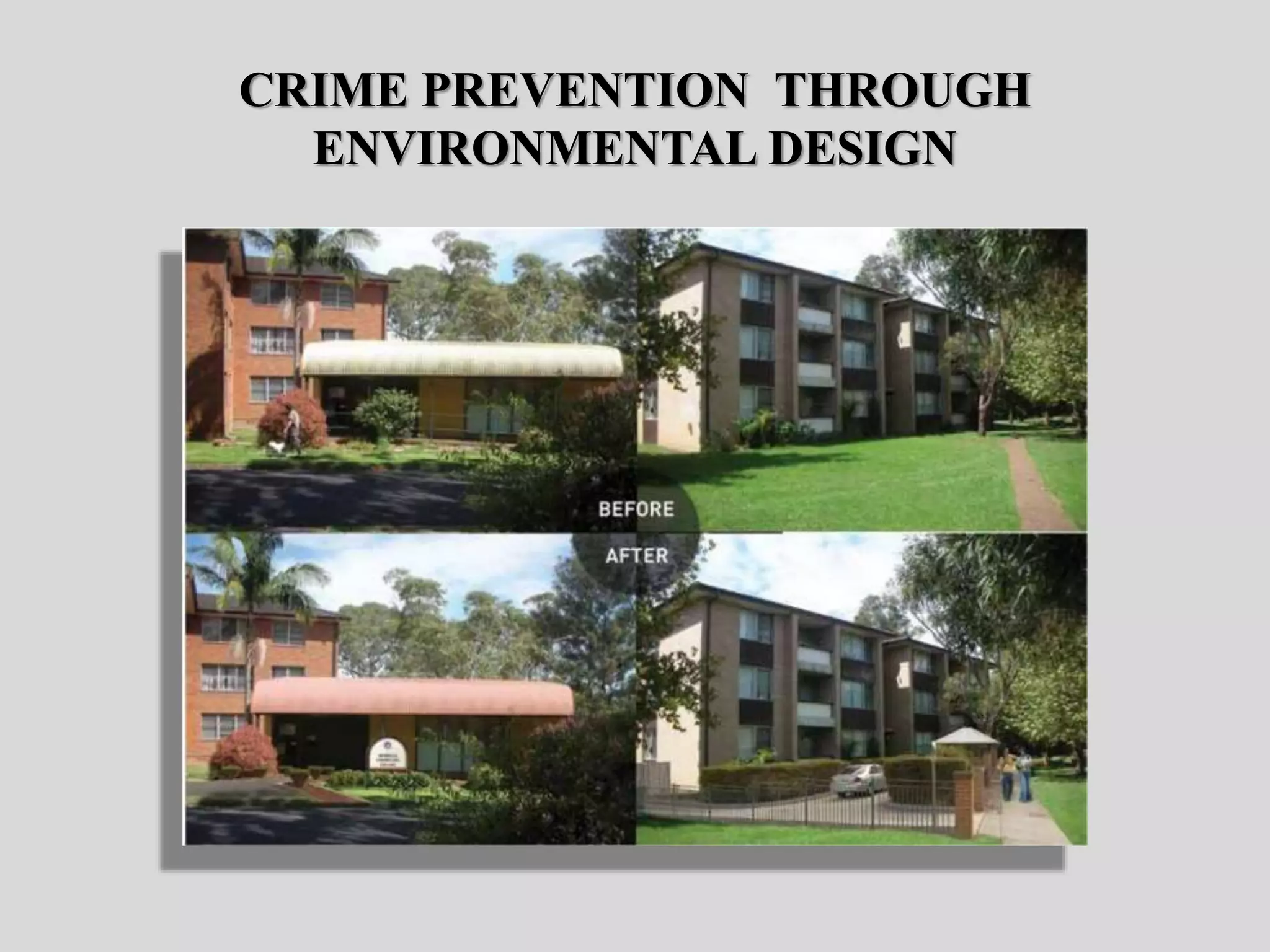
The council’s refusal to install more CCTV is rooted in a strategy known as Crime Prevention Through Environmental Design (CPTED). This approach suggests that the physical environment can be altered to reduce the opportunity for crime without relying solely on surveillance. Rather than adding cameras, the council has suggested focusing on “natural surveillance,” which involves designing spaces so that they are naturally overlooked by people.
According to council planning documents, the focus is shifting toward the following alternatives:
- Improved Street Lighting: Increasing the brightness and quality of lighting to eliminate dark corners where criminals can hide.
- Urban Renewal: Removing overgrown vegetation and derelict structures that provide cover for illegal activity.
- Increased Foot Traffic: Encouraging more commercial and social activity in hotspots to ensure there are always “eyes on the street.”
- Social Programming: Investing in youth engagement and mental health services to address the drivers of anti-social behavior.
The council argues that these measures provide a more sustainable long-term solution than CCTV. By changing the environment, they aim to make the area fundamentally less attractive to criminals, rather than simply monitoring the crime as it happens.
| Strategy | Primary Goal | Pros | Cons |
|---|---|---|---|
| CCTV Surveillance | Detection & Evidence | High forensic value; perceived security. | High cost; displacement of crime; privacy concerns. |
| CPTED (Environmental Design) | Deterrence & Prevention | Addresses root causes; improves urban aesthetics. | Slower implementation; requires structural changes. |
| Increased Policing | Active Intervention | Immediate deterrent; high visibility. | Extremely expensive; resource-intensive. |
The Debate Over CCTV Effectiveness as a Deterrent
The tension between the council and the community mirrors a global debate among criminologists regarding the efficacy of surveillance. Many experts argue that CCTV is highly effective at preventing specific types of crime, such as parking lot thefts or ATM fraud, but far less effective at stopping violent crimes or impulsive anti-social behavior.
According to various crime prevention studies, cameras often result in “crime displacement.” This occurs when criminals move their activities to an adjacent street or a nearby suburb that lacks surveillance. In such cases, the total amount of crime in the region remains the same, but the location shifts. The Victorian council has cited this phenomenon as a primary reason for avoiding a “patchwork” approach to CCTV installation, which might simply push crime into residential side streets.
Furthermore, there is the issue of “false security.” Some analysts argue that relying on cameras can lead to a decrease in active community vigilance. When people believe that “the cameras are watching,” they may be less likely to report suspicious behavior or look out for their neighbors, ironically reducing the “natural surveillance” the council hopes to promote.
However, proponents of CCTV argue that the forensic value cannot be overlooked. Even if a camera does not stop a crime, the ability to provide high-resolution footage to the Victoria Police significantly increases the clearance rate for offenses. For victims of crime, the knowledge that a perpetrator has been identified and apprehended provides a form of justice that environmental design cannot offer.
Privacy Concerns and Legal Frameworks in Victoria
Beyond the debate over effectiveness, the council must operate within the strict legal frameworks of the Privacy and Data Protection Act 2014 (Victoria). The installation of public surveillance cameras requires a rigorous privacy impact assessment to ensure that the collection of data is proportional to the objective being achieved.
Privacy advocates argue that the proliferation of CCTV leads to “function creep,” where cameras installed for crime prevention are later used for other purposes, such as monitoring legal protests or tracking the movements of specific individuals. The council has noted that expanding the camera network increases the risk of data breaches and the potential for misuse of surveillance footage.
To comply with Victorian law, any new CCTV installation would require:
- Clear signage notifying the public of surveillance.
- Strict protocols on who can access the footage and for how long it is stored.
- A demonstrated necessity that the cameras are the “least intrusive” means of achieving the safety goal.
The council’s decision to reject the calls for more cameras may, in part, be a strategic move to avoid the legal and administrative burden of managing a larger, more intrusive surveillance state. The cost of ensuring total compliance with privacy laws adds another layer of expense to the project.
Impact on Local Business and Economic Stability
The rejection of CCTV calls has sparked a debate about the economic health of the identified hotspots. Local business owners argue that the perception of crime is just as damaging as crime itself. If potential customers believe an area is unsafe, they will avoid it, leading to a decline in foot traffic and revenue.
From this perspective, CCTV is not just a security tool but an economic investment. The visible presence of cameras signals to the public that the area is managed and monitored, which can encourage investment and consumer confidence. Business associations have suggested that the council could enter into public-private partnerships to fund the cameras, reducing the burden on the municipal budget.
The council, however, maintains that economic revitalization is better achieved through urban beautification and the attraction of new businesses. They argue that a street filled with cameras can feel “institutional” or “oppressive,” which may actually deter the very foot traffic they wish to attract. The goal is to create a vibrant, welcoming environment rather than a monitored zone.
For more on how urban planning affects safety, see a related explainer on CPTED principles.
Comparing Local Government Responses to Crime Hotspots
The approach taken by this Victorian council is not universal across the state. Other municipalities have taken the opposite route, investing heavily in “Smart City” technology that includes integrated CCTV, acoustic sensors for detecting gunfire or glass breaking, and automated license plate recognition (ALPR).

In some regions, the integration of AI-driven analytics allows cameras to alert authorities to “unusual behavior” in real-time. While these systems are praised by some for their efficiency, they are heavily criticized by civil liberties groups. The Victorian council in this instance has opted for a more conservative, traditional approach to public safety, prioritizing human-centric design over technological surveillance.
This contrast highlights a growing divide in local governance: the “Tech-First” approach versus the “Environment-First” approach. The Tech-First model views crime as a data problem to be solved with monitoring and rapid response. The Environment-First model views crime as a social and spatial problem to be solved by improving the quality of life and the physical layout of the community.
Future Outlook for Community Safety in Victoria
As the council moves forward with its rejection of expanded CCTV, the focus will shift toward the implementation of environmental changes. The success of this strategy will be measured by whether crime rates in the hotspots actually drop or if the “displacement effect” occurs as the council predicts.
Community groups are likely to continue lobbying for surveillance, especially if high-profile incidents occur in these areas. The tension between the desire for immediate, visible security and the council’s preference for long-term, systemic change is expected to remain a central theme in local political discourse.
Furthermore, the role of the Victoria Police will be critical. While the council manages the infrastructure, the police manage the enforcement. If the police report a lack of evidence due to missing footage, the pressure on the council to reconsider its stance on CCTV will intensify. Conversely, if improved lighting and urban design lead to a measurable decrease in crime, the council’s evidence-based approach will be vindicated.
Observers should watch for upcoming budget allocations to see if the council follows through on its promises to fund street lighting and urban renewal projects. The transition from a surveillance-based request to an environment-based solution requires significant capital and political will.
Frequently Asked Questions
Why did the Victorian council reject the request for more CCTV?
The council stated that there is insufficient evidence that CCTV effectively deters crime before it happens. They argued that cameras are better for investigating crimes after the fact and that the high costs of installation and maintenance would be better spent on environmental improvements and social programs.
What is the “displacement effect” mentioned by the council?
The displacement effect is a criminological theory suggesting that increasing security (like CCTV) in one specific area does not eliminate crime but simply pushes it to a nearby location that is not monitored.
What is CPTED and how does it prevent crime?
CPTED stands for Crime Prevention Through Environmental Design. It is a strategy that reduces crime by altering the physical environment—such as improving street lighting, removing blind spots, and increasing natural surveillance—to make it harder for criminals to operate unnoticed.
Are there privacy laws that limit the use of CCTV in Victoria?
Yes. The Privacy and Data Protection Act 2014 (Victoria) governs how local governments collect and store data. Any new surveillance must be proportional to the risk and include clear public notification and strict data management protocols.
Do business owners support the council’s decision?
Generally, no. Many local business owners argue that CCTV provides a necessary psychological deterrent and provides critical evidence that helps police catch offenders, which in turn protects their livelihoods and encourages customers to visit the area.
For further information on local government policies, you may find a related explainer on Victorian local government funding useful.
