
Oil Prices Drop as US-Iran Talks Suggest Easing Tensions—But Market Watchers Warn of Uncertainty
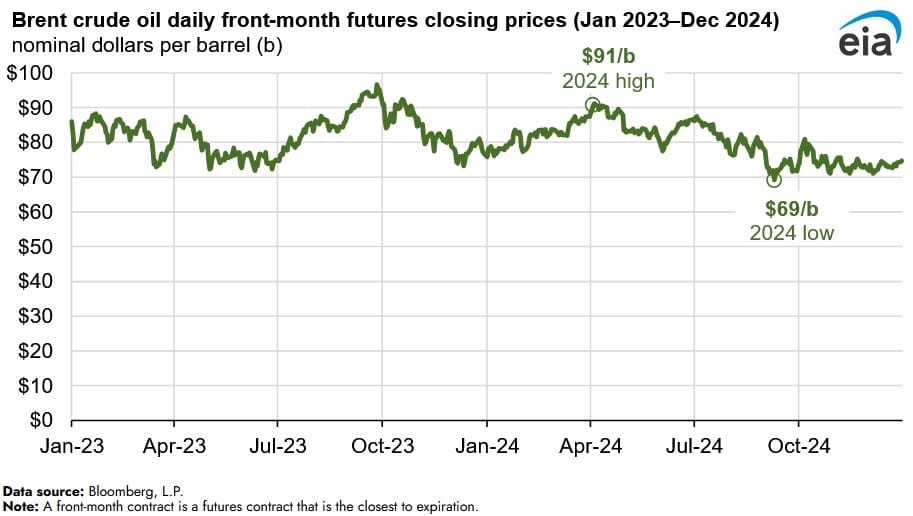
Brent crude futures fell below $85 a barrel on Monday as signs of progress in U.S.-Iran negotiations sparked hopes of reduced oil supply disruptions, though traders cautioned that any long-term easing of tensions remains fragile. The decline came as indirect talks between Washington and Tehran—facilitated by Oman—showed early signs of de-escalation, raising expectations that Iranian crude exports could stabilize after months of volatility.
Analysts at Rystad Energy noted that the price drop reflected a “short-term relief rally,” with futures contracts for June delivery down 1.8% at $84.75 per barrel by midday trading. Meanwhile, West Texas Intermediate (WTI) crude, the U.S. benchmark, dipped 1.5% to $80.90, mirroring broader market caution.
The shift underscores how closely oil markets now track geopolitical developments in the Middle East, where disruptions—whether from attacks on shipping lanes or sanctions enforcement—have repeatedly sent prices swinging. With global demand still recovering from pandemic-era lows, even minor changes in supply dynamics can trigger sharp reactions.
What Happened: The Talks That Triggered the Market Shift
Diplomatic sources in Oman, where the talks have been held, confirmed that U.S. and Iranian representatives met for the first time in nearly two years, focusing on easing sanctions in exchange for guarantees on Iranian nuclear activity. While no formal agreement was announced, participants described the atmosphere as “constructive,” with both sides agreeing to extend discussions into next week.
Key details emerging from the talks include:
- Sanctions relief: The U.S. has reportedly signaled willingness to lift some secondary sanctions on Iranian oil exports, provided Tehran commits to verifiable reductions in uranium enrichment. This would allow limited sales to countries like China and India, which have historically been major buyers despite U.S. restrictions.
- Shipping assurances: Iran has reportedly offered to provide advance notice of vessel movements in the Strait of Hormuz, a move aimed at reducing tensions with U.S. allies in the region. The U.S. Navy has intercepted multiple Iranian-backed shipments in recent months, citing violations of maritime security protocols.
- No immediate crude release: Despite the talks, Iran has not indicated plans to release additional crude from its strategic reserves, which have been a key tool in managing supply shocks. Industry sources suggest Tehran is holding back to test U.S. seriousness about long-term concessions.
Market reactions were immediate but cautious. “The drop in prices is a classic ‘hope premium’—investors are pricing in the possibility of less disruption, but the actual impact won’t be clear until we see concrete actions,” said a trader at Vitol, one of the world’s largest oil trading firms.
Who’s Involved—and What Do They Stand to Gain?
The negotiations involve a complex web of stakeholders, each with distinct interests:
| Stakeholder | Key Interest | Potential Impact of Talks |
|---|---|---|
| United States | Stabilize oil prices, prevent Iranian nuclear advancement, maintain Gulf security | Possible sanctions relief could lower prices but risks being seen as a concession to Iran’s regional influence. |
| Iran | Restore pre-sanctions oil revenues, ease pressure on rial, reduce military tensions | Limited sanctions relief may boost exports but falls short of full economic normalization. |
| OPEC+ | Balance market stability with Iranian supply dynamics | May adjust production quotas if Iranian exports rise, potentially pressuring Saudi Arabia to cut output further. |
| China & India | Secure discounted Iranian crude amid global supply tightness | Could increase imports if sanctions ease, but face U.S. pressure to reduce reliance on Iranian oil. |
| Oil traders & refiners | Access to Iranian heavy crude at competitive prices | Profit margins could improve if supply stabilizes, but risks remain from geopolitical volatility. |
One wild card remains: the role of Israel. Jerusalem has repeatedly warned against any U.S. concessions to Tehran, arguing that past agreements—such as the 2015 nuclear deal—only emboldened Iranian proxies in the region. A leaked Israeli intelligence assessment, obtained by Al-Monitor, suggested that Iran’s recent reduction in uranium enrichment was more about domestic political pressure than genuine compliance with potential U.S. demands.
Why This Matters: The Geopolitical Tightrope Oil Markets Are Walking
The current price drop is less about immediate supply changes and more about shifting expectations. Since the U.S. withdrawal from the 2015 Iran nuclear deal in 2018, Tehran has gradually reduced oil exports from 2.5 million barrels per day to around 1 million currently, according to data from the International Energy Agency (IEA). That loss has been a key factor propping up prices, especially as OPEC+ has struggled to fully offset disruptions from Russia’s invasion of Ukraine.

Yet the market’s reaction highlights a critical paradox: while lower prices benefit consumers, they also signal reduced risk premiums—meaning traders are betting that supply disruptions will ease. That assumption carries risks.
Key risks ahead:
- No deal, no relief: If talks stall, Iran could ramp up attacks on tankers in the Strait of Hormuz, as it did in 2019, sending prices soaring again.
- OPEC+ divisions: Saudi Arabia and Russia may resist any Iranian supply increase, fearing it undermines their own output cuts aimed at supporting prices.
- U.S. political hurdles: Any sanctions relief would require approval from Congress, where hardline factions remain skeptical of engaging with Iran.
Historically, oil markets have overreacted to geopolitical rumors—only to correct sharply when expectations aren’t met. In 2020, for instance, prices spiked 20% in a single day after reports of a Saudi-Russia deal to cut output, before stabilizing as details emerged. A similar pattern could play out here.
How Markets Are Reacting—and What Traders Are Watching
While futures prices dipped on Monday, the underlying market sentiment remains divided:
- Short-term traders are betting on further declines if talks lead to tangible sanctions relief. “The market is pricing in a 5–10% drop in Iranian exports over the next three months,” said a broker at Trafigura, adding that any increase in supply would likely be gradual.
- Hedgers and refiners are holding off, waiting for confirmation that Iran will actually increase shipments. “We’ve seen this movie before—promises turn into delays,” noted a source at Shell’s trading arm.
- Geopolitical risk models are showing mixed signals. The J.P. Morgan GSCI Commodities Index suggests that while oil volatility has eased slightly, the Strait of Hormuz remains a flashpoint. “The real test will be whether Iran follows through on shipping assurances—or if this is just another diplomatic stalling tactic,” said a risk analyst at Goldman Sachs.
One data point stands out: the premium on Iranian crude has narrowed. Heavy sour grades like Iran’s Foroozan crude—once trading at a $3–$5 discount to Dubai/Oman benchmarks due to sanctions—are now only $1–$2 cheaper, according to S&P Global Platts. This suggests buyers are growing more confident in securing supplies, even if legally gray.
Yet the market’s caution is palpable. “The biggest question isn’t whether prices will fall further, but whether they’ll rebound just as quickly if talks collapse,” said a veteran trader at Glencore. “History shows that geopolitical risks in the Gulf don’t stay resolved—they just go dormant.”
What Comes Next: Three Scenarios for Oil Prices
Analysts are tracking three potential outcomes over the next 30 days, each with distinct implications for prices:
| Scenario | Probability (Per Analysts) | Price Impact | Key Triggers |
|---|---|---|---|
| Talks succeed in limited sanctions relief | 40% | Brent dips to $80–$82; WTI to $76–$78 | Iran resumes 500,000–700,000 bpd exports; no major attacks on shipping. |
| Talks stall or collapse | 35% | Brent spikes to $90–$95; WTI to $85–$90 | Iran escalates tensions (e.g., attacks on Gulf tankers); U.S. tightens sanctions. |
| No deal, but tensions ease | 25% | Brent stabilizes at $85–$88; WTI at $81–$84 | Diplomatic engagement continues; no major supply disruptions. |
Industry observers note that even in the best-case scenario, prices are unlikely to drop sharply. “The market has already priced in a lot of the upside from Iran talks,” said a strategist at Citigroup. “The real drivers now are OPEC+ production cuts and demand growth in Asia, not just Iranian supply.”
China’s economic recovery and India’s robust fuel demand are keeping Asian refiners hungry for crude, while OPEC+’s latest meeting in June may introduce further output adjustments. “We’re in a Goldilocks zone—prices aren’t high enough to trigger demand destruction, but not low enough to encourage more supply,” added the Citigroup analyst.
Common Questions About the US-Iran Talks and Oil Markets
Will Iranian oil exports actually increase if sanctions ease?
Not immediately. Iran’s oil infrastructure—pipelines, terminals, and tankers—has deteriorated under sanctions, and it would take months to restore full export capacity. Even with sanctions relief, Iran’s exports would likely rise gradually, capping any near-term price impact.
Could the U.S. reimpose sanctions if talks fail?
Yes. The U.S. has used “snapback” sanctions in the past, such as when it reimposed penalties on Venezuela after a failed dialogue with Maduro. If Iran violates any agreements, Washington could quickly reinstate restrictions, sending prices volatile again.
How do these talks compare to the 2015 nuclear deal?
The current discussions are far narrower in scope. The 2015 deal included comprehensive nuclear inspections, sanctions relief across multiple sectors, and a UN Security Council resolution. This time, the focus is solely on oil and nuclear enrichment—no broader diplomatic normalization is on the table.
What role does Russia’s war in Ukraine play in this?
Indirect but significant. Western sanctions on Russian oil have forced buyers like India and China to seek alternatives, including Iranian crude. If U.S.-Iran talks lead to stable Iranian exports, it could reduce pressure on Russia to cut output further, potentially stabilizing prices at higher levels.
Are there other risks to oil prices besides Iran?
Absolutely. Key risks include:
- OPEC+ compliance: Saudi Arabia has already cut production beyond its quota, but if demand weakens, members may resist further cuts.
- U.S. shale production: Higher prices could spur more drilling in the Permian Basin, adding supply within months.
- Global recession fears: If China’s economy slows further, demand could drop faster than expected.
What should investors do?
Experts advise caution. “Don’t chase the dip based on these talks alone,” said a portfolio manager at BlackRock. “Diversify across crude grades, regions, and hedging strategies. The biggest risk isn’t a price spike—it’s a sudden reversal if geopolitical tensions flare again.”
For now, the market’s focus remains on Oman. If the next round of talks produces a concrete framework, prices may drop further. But if diplomacy stalls, the Strait of Hormuz—and oil prices—could once again become the world’s most volatile flashpoint.
