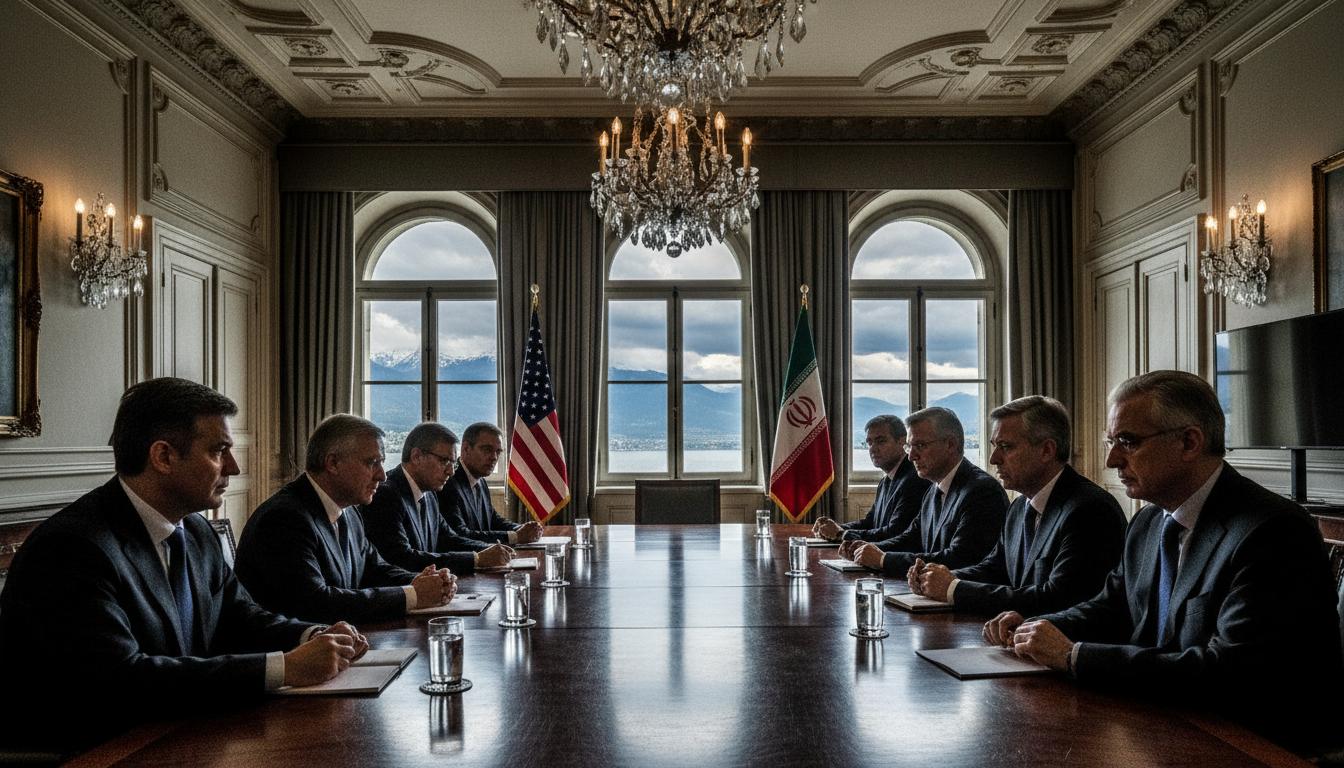
U.S. and Iranian officials have begun negotiations in Switzerland to address regional instability and the conflict in Lebanon, according to reports from NOS and NRC. While JD Vance stated the U.S. is prepared to fundamentally change
its relationship with Iran, the talks are complicated by simultaneous threats of new military attacks from Donald Trump.
- Diplomatic Shift: JD Vance indicated a willingness to reset U.S.-Iran relations during the Swiss meetings.
- Military Tension: Donald Trump has issued threats of new attacks, creating a contradiction in U.S. messaging.
- Negotiation Status: Reports from NU indicate uncertainty over whether Iran has withdrawn from the talks following Trump’s rhetoric.
- Primary Focus: The situation in Lebanon remains a high priority on the diplomatic agenda.
Why the U.S.-Iran talks in Switzerland are unstable
The diplomatic effort in Switzerland is currently defined by a clash between negotiation and aggression. According to NRC, JD Vance has expressed that the United States is open to a fundamental shift in how it engages with Iran. This suggests a potential opening for a new diplomatic framework or the easing of certain pressures.

However, this opening is countered by the rhetoric of Donald Trump. As reported by De Telegraaf and NRC, Trump continues to threaten Iran with new attacks. This duality in U.S. communication has led to reports from NU that it remains unclear if Iranian representatives have walked away from the negotiating table in response to those threats.
How the Lebanon crisis drives the agenda
Regional security, specifically the volatility in Lebanon, is a primary driver for these meetings. According to NOS, Lebanon is high on the agenda
as officials attempt to manage the broader conflict in the Middle East. The goal of these discussions is to prevent further escalation in a region where Iranian influence and U.S. strategic interests frequently collide.
Vance says in Switzerland that US are prepared to ‘fundamentally change’ relations with Iran, Trump threatens new attacks.
NRC
Economic implications of contradictory U.S. signals
For global markets, the contradiction between Vance’s diplomatic openness and Trump’s military threats creates a volatile environment. In business terms, this uncertainty typically manifests in energy markets. Because Iran’s stability and its relationship with the U.S. directly affect oil production and the security of the Strait of Hormuz, conflicting signals from Washington can lead to price swings in crude oil.
Investors generally prefer clear policy trajectories. The current lack of a unified U.S. stance—oscillating between a fundamental change
in relations and the threat of new strikes—increases the risk premium for companies operating in the Middle East and those dependent on stable energy imports.
