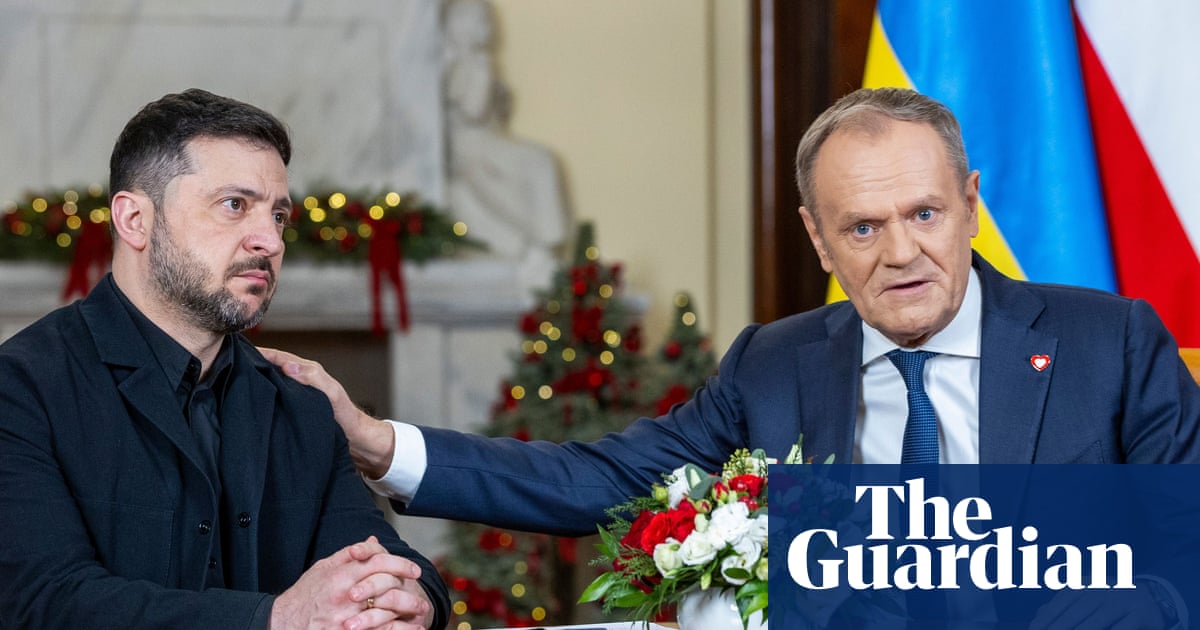
Ukraine War Briefing: Dispute Over Second World War Army Unit Threatens to Divide Poland and Ukraine
A diplomatic crisis has emerged between Poland and Ukraine after the Polish president stripped President Volodymyr Zelenskyy of a top state honor following a dispute over the renaming of a special forces unit. In response, Zelenskyy returned the award, while Polish Prime Minister Donald Tusk warned that the escalation represents a “strategic mistake” for both nations, according to reports from Bloomberg and the BBC.
The rift centers on the legacy of a Second World War-era army unit, an issue that has long simmered between the two neighbors but now threatens to disrupt critical security cooperation during Russia’s ongoing invasion of Ukraine. The escalation follows a decision by Ukrainian authorities to rename a special forces unit, an action that the Polish presidency viewed as an affront to Polish national memory and the victims of wartime massacres.
Why did the Polish president strip Volodymyr Zelenskyy of his honor?
The Polish president revoked one of the country’s highest honors from Volodymyr Zelenskyy after Ukraine renamed a special forces unit, according to The Washington Post. The renaming is linked to the legacy of the Ukrainian Insurgent Army (UPA), a group that fought for Ukrainian independence during World War II but is remembered in Poland for committing mass killings of ethnic Poles in the Volhynia and Eastern Galicia regions.
For the Polish presidency, the decision to honor or associate military units with figures from the UPA is seen as a validation of war crimes. The move to strip the honor was a direct response to what Warsaw characterized as a failure to acknowledge the historical suffering of Poles at the hands of Ukrainian nationalists. This action marks a significant departure from the close personal and political rapport that had previously defined the relationship between President Andrzej Duda and President Zelenskyy.
Following the revocation of the award, Zelenskyy returned the honor to Poland, according to the BBC. This exchange of symbolic gestures signals a breakdown in high-level diplomatic communication and reflects a deeper struggle over how to balance current security needs with historical grievances.
What is the significance of the WWII army unit dispute?
The dispute focuses on the Ukrainian Insurgent Army (UPA), which operated during the 1940s. While many in Ukraine view the UPA as freedom fighters who resisted both Nazi Germany and the Soviet Union, Poland views the organization through the lens of the Volhynia massacres. During these events, UPA forces targeted Polish civilians in an effort to “cleanse” the territory for a future Ukrainian state.
This historical divide is not merely academic; it is a potent political tool. In Poland, the memory of these massacres is central to national identity and is often leveraged by conservative political factions. In Ukraine, the glorification of WWII-era nationalists has been part of a broader effort to distance the national identity from the Soviet era and build a narrative of resistance against foreign occupation.
The current crisis suggests that the “strategic silence” previously maintained by both governments—where historical disputes were sidelined to prioritize the fight against Russia—is no longer sustainable. The renaming of the special forces unit acted as a catalyst, bringing these long-standing tensions back to the forefront of bilateral relations.
| Perspective | View of WWII Army Unit (UPA) | Primary Concern |
|---|---|---|
| Ukrainian Nationalist View | Freedom fighters resisting Nazi and Soviet occupation. | National sovereignty and independence. |
| Polish National View | Perpetrators of ethnic cleansing and massacres in Volhynia. | Justice for victims and historical truth. |
| Pragmatic Diplomatic View | A sensitive legacy that should not impede current security. | Maintaining the anti-Russian coalition. |
How is the Polish government reacting to the diplomatic rift?
The reaction within Poland is sharply divided between the presidency and the prime minister’s office. Prime Minister Donald Tusk has expressed concern over the escalation, warning that the spat is a “strategic mistake,” according to Bloomberg. Tusk, who leads a more centrist government, views the public degradation of relations with Kyiv as a risk to Poland’s regional security and its role as Ukraine’s primary logistics hub.
Tusk’s warning underscores a tension within the Polish state: the clash between the presidency’s focus on nationalistic historical memory and the government’s focus on geopolitical pragmatism. While the president’s office prioritizes the moral imperative of acknowledging wartime crimes, the prime minister’s office prioritizes the stability of the alliance against the Kremlin.
The rift is further complicated by the role of Karol Nawrocki, a figure associated with the Polish Institute of National Remembrance. According to reports from Ukrainska Pravda, President Zelenskyy has been highly critical of Nawrocki’s approach, stating that Nawrocki is “doing what Orbán did,” referring to Hungarian Prime Minister Viktor Orbán’s tendency to obstruct EU and NATO consensus for nationalist goals. Zelenskyy warned that this approach “will end badly,” suggesting that the weaponization of history could be exploited by Russia to divide the two allies.
What are the potential consequences for the Ukraine-Poland alliance?
The immediate consequence is a chilling of diplomatic relations at the highest levels. The return of state honors is a rare and severe diplomatic signal. However, the broader impact on military and logistical support remains uncertain. Poland continues to be the primary gateway for Western weapons and aid entering Ukraine, and neither side has indicated a desire to halt these essential flows.

Nevertheless, the dispute creates several strategic vulnerabilities:
- Russian Propaganda: The Kremlin frequently attempts to drive a wedge between Poland and Ukraine by amplifying historical grievances. A public divide over the UPA provides Moscow with a narrative that the alliance is fragile and built on unstable ground.
- EU Integration: Poland has historically been a strong supporter of Ukraine’s path toward European Union membership. However, nationalist elements within Poland may use these historical disputes to justify delaying or complicating Ukraine’s accession process.
- Internal Political Pressure: In both Warsaw and Kyiv, leaders face pressure from nationalist wings of their respective populations. President Zelenskyy must maintain national morale and identity, while the Polish presidency must answer to a constituency that views the Volhynia massacres as an unhealed wound.
“The danger lies in allowing historical disputes to dictate current security policy. When the rhetoric shifts from cooperation to the stripping of honors, it signals a move from strategic partnership to emotional confrontation.”
How does this compare to other diplomatic disputes in the region?
The current spat mirrors the pattern of “memory wars” seen elsewhere in Eastern Europe, particularly the tensions between Hungary and its neighbors. By comparing Nawrocki’s actions to those of Viktor Orbán, Zelenskyy is highlighting a trend where nationalist historians and politicians use the past to create friction within Western alliances. Orbán has frequently used historical grievances to justify his divergent stances on the EU and the war in Ukraine.
Unlike the Hungarian case, however, Poland and Ukraine are bound by an existential threat. While Hungary can afford to be a “spoiler” due to its specific veto powers and smaller strategic role in the direct fight, Poland is Ukraine’s most vital neighbor. The contrast in framing is evident: while the Polish presidency frames this as a matter of honor and truth, Prime Minister Tusk frames it as a matter of strategic survival.
Historically, Poland and Ukraine have navigated these waters before. Following the 2014 Maidan Revolution, there were similar tensions regarding the glorification of nationalists. In those instances, the disputes were managed through quiet diplomacy and joint commissions of historians. The current public nature of the honor-stripping suggests that the traditional mechanisms for resolving these conflicts are currently failing.
Common misconceptions about the Poland-Ukraine historical dispute
A frequent oversimplification is that this is a simple disagreement over a few names on a building or a unit’s title. In reality, the dispute is about the legitimacy of the state narratives of both countries. For Ukraine, the UPA represents the struggle for a state that was denied for decades by the Soviet Union. For Poland, the UPA represents a betrayal and a campaign of terror against civilians who had lived in those lands for generations.
Another misconception is that this dispute will lead to a total collapse of military aid. Given the shared threat of Russian aggression, it is unlikely that Poland would stop acting as a transit hub. However, the quality of the cooperation—the level of intelligence sharing, the speed of coordination, and the political will to push for Ukrainian EU membership—could be significantly degraded.
Finally, some observers suggest that this is merely a “domestic play” for voters in Poland. While the timing often coincides with political cycles, the depth of the emotional response in both countries indicates that these are genuine national traumas, not just calculated political maneuvers.
Timeline of the Escalation
| Event | Action/Outcome | Source of Tension |
|---|---|---|
| Unit Renaming | Ukraine renames a special forces unit associated with WWII-era legacy. | Perceived glorification of the UPA. |
| Honor Revocation | Polish President strips Zelenskyy of a high state honor. | Reaction to the renaming of the military unit. |
| The Return | President Zelenskyy returns the honor to Poland. | Diplomatic response to the revocation. |
| Tusk’s Warning | PM Donald Tusk calls the spat a “strategic mistake.” | Fear of undermining security alliance. |
| The Orbán Comparison | Zelenskyy compares Polish nationalist rhetoric to Viktor Orbán. | Warning against the weaponization of history. |
Frequently Asked Questions
What was the Ukrainian Insurgent Army (UPA)?
The UPA was a nationalist paramilitary organization that fought for an independent Ukrainian state during World War II. While they fought against both the Nazis and the Soviets, they are primarily remembered in Poland for the mass killing of Polish civilians in Volhynia and Eastern Galicia.
Why is the “strategic mistake” mentioned by Donald Tusk important?
Prime Minister Tusk believes that public diplomatic fights over history weaken the united front against Russia. Because Poland is the primary logistical hub for Ukraine’s defense, any instability in their relationship could be exploited by the Kremlin to hinder the flow of aid or divide NATO allies.

Does this mean Poland will stop supporting Ukraine in the war?
There is currently no evidence that military or humanitarian aid will stop. The dispute is primarily diplomatic and symbolic, involving state honors and historical narratives, rather than a breakdown of the military-industrial cooperation necessary for Ukraine’s defense.
Who is Karol Nawrocki and why is he mentioned?
Karol Nawrocki is a prominent figure in Poland’s historical memory institutions. President Zelenskyy cited him as an example of someone using nationalist history to create division, comparing his approach to the disruptive political style of Hungary’s Viktor Orbán.
How did President Zelenskyy respond to the stripping of his honor?
Zelenskyy responded by returning the honor to Poland. He also publicly criticized the nationalist approach to history, suggesting that such disputes are counterproductive and potentially dangerous for the stability of the region.
As both nations continue to navigate the pressures of a high-intensity war, the ability to separate historical grievances from current strategic imperatives will likely determine the longevity of their alliance. The current crisis serves as a reminder that while security interests can align two nations, unresolved history remains a potent fault line that can be triggered by a single symbolic act.
