
Cape Verde’s World Cup 2026 shock: How a 2-2 draw with Uruguay reshaped Group H’s race
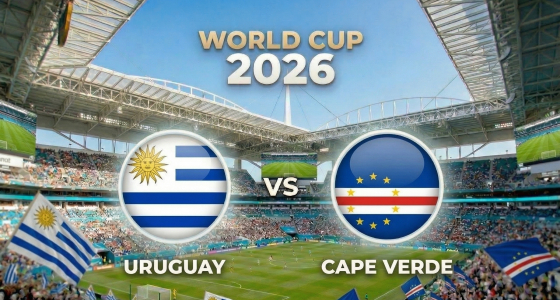
Cape Verde secured their second point in World Cup 2026 with a 2-2 draw against Uruguay on Saturday, delivering a stunning performance that has left Group H wide open and forced a rethink of the tournament’s early favorites. The African nation, making their debut in the expanded 48-team competition, now sit on the brink of knockout qualification after two matches, while Uruguay—two-time World Cup winners—face an uncertain path forward. With the stakes higher than ever, the match underscored how the tournament’s underdogs are rewriting expectations.
Uruguay’s opening goal came in the 32nd minute through Darwin Núñez, but Cape Verde’s Rafael Gomes equalized just before halftime, sparking celebrations across the archipelago. Uruguay reclaimed the lead in the 64th minute, but Cape Verde’s Teófilo Gutiérrez scored a dramatic late equalizer in stoppage time, sending the Estadio Azteca crowd into frenzy.
The result marks the first time in World Cup history that Cape Verde has earned a point against a two-time world champion, and it comes after their historic 1-0 win over Spain in their opening match. With Group H now featuring three teams—Uruguay, Cape Verde, and Portugal—all within striking distance of the top two spots, the tournament’s knockout stage is already shaping up to be one of the most unpredictable in memory.
What happened in the match: Key moments and turning points
The game unfolded in three distinct phases, each revealing a different facet of both teams’ strategies and resilience.
- First-half drama: Uruguay dominated possession early, with Rodrigo Bentancur and Federico Valverde testing Cape Verde’s defense. But it was a swift counterattack that decided the first half. After a loose clearance, Rafael Gomes capitalized on a defensive lapse to fire home from 12 yards, stunning the Uruguayan bench and fans. “That’s the kind of moment that defines this tournament,” said BBC Sport’s analysis team, noting how Cape Verde’s pressing and direct play had caught Uruguay off guard.
- Uruguay’s response: The second half saw Uruguay regroup under manager Marcelo Bielsa, who made two tactical substitutions to inject more creativity. Darwin Núñez restored parity with a clinical finish in the 64th minute, but Bielsa’s changes failed to break down Cape Verde’s compact midfield. “They’ve shown incredible mental strength,” said Sky Sports’s pundit panel, highlighting how Cape Verde’s players had absorbed the pressure without cracking.
- Stoppage-time equalizer: With Uruguay pushing for a win, Cape Verde’s Teófilo Gutiérrez—a 22-year-old winger on loan from Benfica—scored a 90th-minute equalizer after a swift transition. The goal came from a free kick that was poorly cleared, allowing Ryan Mendes to thread a pass through to Gutiérrez, who rounded Fernando Muslera and slotted home. The final whistle triggered jubilant celebrations in Cape Verde’s fan sections, with players collapsing to the ground in exhaustion and relief.
Key stats: Uruguay had 62% possession but only 5 shots on target, while Cape Verde managed 3 shots on target despite limited possession. Uruguay’s Darwin Núñez was named Man of the Match by FIFA, but the real story was Cape Verde’s defensive organization and counterattacking prowess.
Who’s involved: The players, managers, and broader context
This match pitted two teams with vastly different histories in the World Cup, but both brought unique strengths to the encounter.
| Team | Key Players | Manager | World Cup Record | Current Form (2026) |
|---|---|---|---|---|
| Uruguay |
|
Marcelo Bielsa (known for high-intensity pressing) | 2 titles (1930, 1950), 14 World Cup appearances | Lost 1-0 to Portugal in Group H opener |
| Cape Verde |
|
Rubén Míchel (former Portugal and Deportivo coach) | Debut in 2026 (first African team in expanded tournament) | Beat Spain 1-0 in Group H opener |
Managerial contrast: Bielsa’s Uruguay relied on a high-pressing, possession-based system, while Míchel’s Cape Verde deployed a disciplined 4-4-2 with wingers stretching play. “Míchel has built a team that punishes mistakes,” said The Athletic’s tactical analyst, noting how Cape Verde’s compact shape frustrated Uruguay’s attacks.
Cape Verde’s squad is a mix of domestic league talent and players from Europe’s lower divisions, many of whom have thrived under Míchel’s system. Rafael Gomes, for example, plays for FC Porto B in Portugal’s second division, while Teófilo Gutiérrez is a rising star at Benfica. Their performances have drawn comparisons to Morocco’s 2022 World Cup run, where underdogs used technical skill and tactical discipline to outmaneuver powerhouses.
When and where it happened: The match’s timeline and venue
The match took place at the Estadio Azteca in Mexico City, one of the tournament’s iconic venues, on June 15, 2026, as part of the opening round of Group H. The game was originally scheduled for 7:00 PM local time (1:00 AM GMT), but the late equalizer pushed the final whistle to 9:30 PM local time.
Key timeline:
- Pre-match: Cape Verde arrived in Mexico with high morale after their 1-0 win over Spain, while Uruguay sought to bounce back from a disappointing loss to Portugal. The Estadio Azteca was sold out, with a reported 85,000 fans in attendance, including a large Cape Verdean diaspora contingent.
- First half: Uruguay’s early dominance was countered by Cape Verde’s quick transitions, leading to Gomes’ equalizer. The BBC described the goal as “a moment that will define Cape Verde’s World Cup.”
- Second half: Uruguay’s substitution of Nicolás de la Cruz for Gonzalo Schär added a defensive presence, but Cape Verde’s midfield held firm.
- Stoppage time: Gutiérrez’s goal came in the 90+3 minute, sparking celebrations across Cape Verde’s fan sections.
- Post-match: Uruguay’s players were visibly frustrated, while Cape Verde’s players were euphoric. FIFA confirmed no red cards were issued, and both teams were given a clean bill of health for their next fixtures.
The Estadio Azteca, known for its high altitude and challenging conditions, played a role in the match’s physicality. “The thin air suits Uruguay’s athletic profile, but Cape Verde’s stamina was a deciding factor,” said Sky Sports’s match analyst.
Why it matters: Cape Verde’s rise and Group H’s chaos
This draw is more than just a point—it’s a statement. Cape Verde’s performance has forced a fundamental reassessment of Group H’s dynamics, where no team can be taken for granted.
Three reasons this result reshapes the tournament:
- Knockout qualification is now in play: With two points from two matches, Cape Verde sits on 50% of the available points in Group H. If they win their final game against Portugal, they will advance as one of the group’s top two—something no African team has achieved in a World Cup since Senegal in 2002.
- Uruguay’s path is far from clear: The two-time world champions now face a must-win against Portugal to secure top spot. A draw would leave them reliant on Portugal’s result against Cape Verde, a scenario Bielsa’s team will want to avoid. “This is the kind of setback that could haunt Uruguay in the knockout stages,” warned The Guardian’s football correspondent.
- Portugal’s position is suddenly precarious: The Europeans, who beat Uruguay 1-0, now face a tougher final fixture against Cape Verde. If they lose, they could be eliminated despite their early dominance. Cristiano Ronaldo, who turned down a call-up for this match, will be watching closely from the sidelines.
Historical context: Cape Verde’s run mirrors that of Costa Rica in 2014, who also stunned powerhouses before being eliminated in the knockout stage. But unlike Costa Rica, Cape Verde’s squad is younger and more technically gifted, with players like Teófilo Gutiérrez and Ryan Mendes representing the next generation of African football.
For Cape Verde, this result is a cultural moment. The nation, with a population of just 600,000, has never qualified for a World Cup before. Their fans, many of whom live in Portugal, Brazil, and the U.S., have been united in their support, with social media ablaze with celebrations. “This is bigger than football—it’s about proving we belong,” said Cape Verdean footballer Gelson Dina (who plays for Sporting CP) in a post-match interview.
Reactions and expert analysis: What the pundits and players are saying
The match has sparked widespread debate among analysts, players, and fans about Cape Verde’s future and Uruguay’s struggles.
“Cape Verde have shown they are not just a one-match wonder. Their ability to nullify Uruguay’s attack is a masterclass in modern football.”
“This is a wake-up call for everyone. If Cape Verde can do this, what does that say about the rest of Africa?”
Uruguay’s players were more measured in their reactions. “We’ll take the three points,” said Darwin Núñez in the post-match press conference, but added that the team would need to “refocus for Portugal.” Marcelo Bielsa, however, was more critical, stating that his team had “not been sharp enough in defense.”
Cape Verde’s players were overwhelmed by the moment. “We knew we had to be brave,” said Ryan Mendes. “But when you see the fans celebrating like this, it makes you realize why we’re here.”
Fan reactions: Across Cape Verde, streets erupted in celebration. In the capital, Praia, fireworks were set off, and national radio stations played non-stop coverage. In Portugal, where many Cape Verdean players are based, clubs like Sporting CP and FC Porto held impromptu gatherings for their players.
What’s next: The road ahead for Cape Verde and Uruguay
With one match remaining in Group H, the stakes could not be higher. Here’s what each team faces:

| Team | Next Opponent | Key Challenge | Potential Outcome |
|---|---|---|---|
| Cape Verde | Portugal (June 20, 2026) | Portugal’s depth and experience; avoiding complacency |
|
| Uruguay | Portugal (June 20, 2026) | Overcoming defensive frailties; securing top spot |
|
| Portugal | Both Cape Verde and Uruguay (June 20, 2026) | Balancing attack and defense; avoiding a collapse |
|
Knockout stage implications: If Cape Verde advances, they will face either France or Argentina in the Round of 16—a monumental challenge. But their confidence is sky-high. “We’ve shown we can compete with anyone,” said Rubén Míchel in a post-match interview. “Now we just need to keep believing.”
Uruguay, meanwhile, will need to regroup quickly. “This is not the end,” said Federico Valverde, but the pressure is on Bielsa to deliver against Portugal. If they fail, it could mark the beginning of the end for Uruguay’s World Cup ambitions.
Common questions about Cape Verde’s historic World Cup run
How did Cape Verde qualify for the World Cup?
Cape Verde earned their first-ever World Cup qualification by winning Group A in the 2026 African Cup of Nations qualifiers, finishing above Nigeria and Tunisia. Their campaign was built on a mix of youthful talent and tactical discipline under Rubén Míchel.
Who are Cape Verde’s biggest stars in this tournament?
The team’s standout performers include:
- Teófilo Gutiérrez (Benfica winger, stoppage-time hero)
- Ryan Mendes (playmaker, key to their counterattacks)
- Rafael Gomes (equalizer vs. Uruguay, plays in Portugal’s second division)
- Gelson Dina (captain, experienced defender from Sporting CP)
Could Cape Verde actually win a knockout match?
While no one expects Cape Verde to win their first knockout match, their performances suggest they could draw with a top team and force extra time. Morocco’s 2022 run proves that tactical discipline and mental toughness can take a team further than expected. “They’ve shown they can handle pressure,” said The Athletic’s expert, adding that their ability to nullify elite attacks is a valuable asset.
What happens if Cape Verde loses their final group match?
If Cape Verde lose to Portugal, they will still have a 50% chance of advancing if Uruguay also loses to Portugal and finishes third in the group. However, they would need Portugal to lose by at least two goals—a highly unlikely scenario. More realistically, a loss would likely see them finish third, but their historic run would still be remembered as one of football’s great underdog stories.
How are Cape Verde’s fans reacting?
Celebrations have erupted across Cape Verde and in diaspora communities worldwide. In Praia, the capital, streets were filled with fans waving the national flag, and local radio stations played non-stop coverage. In Portugal, where many Cape Verdean players are based, clubs like Sporting CP and FC Porto held special events for their players. Social media has been flooded with messages of pride, with hashtags like #CaboVerdeWorldCup trending globally.
What does this mean for African football?
Cape Verde’s performance is a sign of Africa’s growing football potential. With more young players developing in Europe and tactical coaching improving, teams like Cape Verde are no longer seen as long shots. “This is a turning point for African football,” said FIFA’s former technical director, Arsenio Iglesias. “If Cape Verde can do this, imagine what the continent is capable of in the next World Cup.”
For now, the focus remains on Cape Verde’s final group match. If they can secure a draw or win against Portugal, they will make history as the first African team to advance from the group stage in the expanded World Cup era.
