
Scientists Detect Star-Forming Gas in Early Galaxies—Rewriting How We Understand the Universe’s First Light
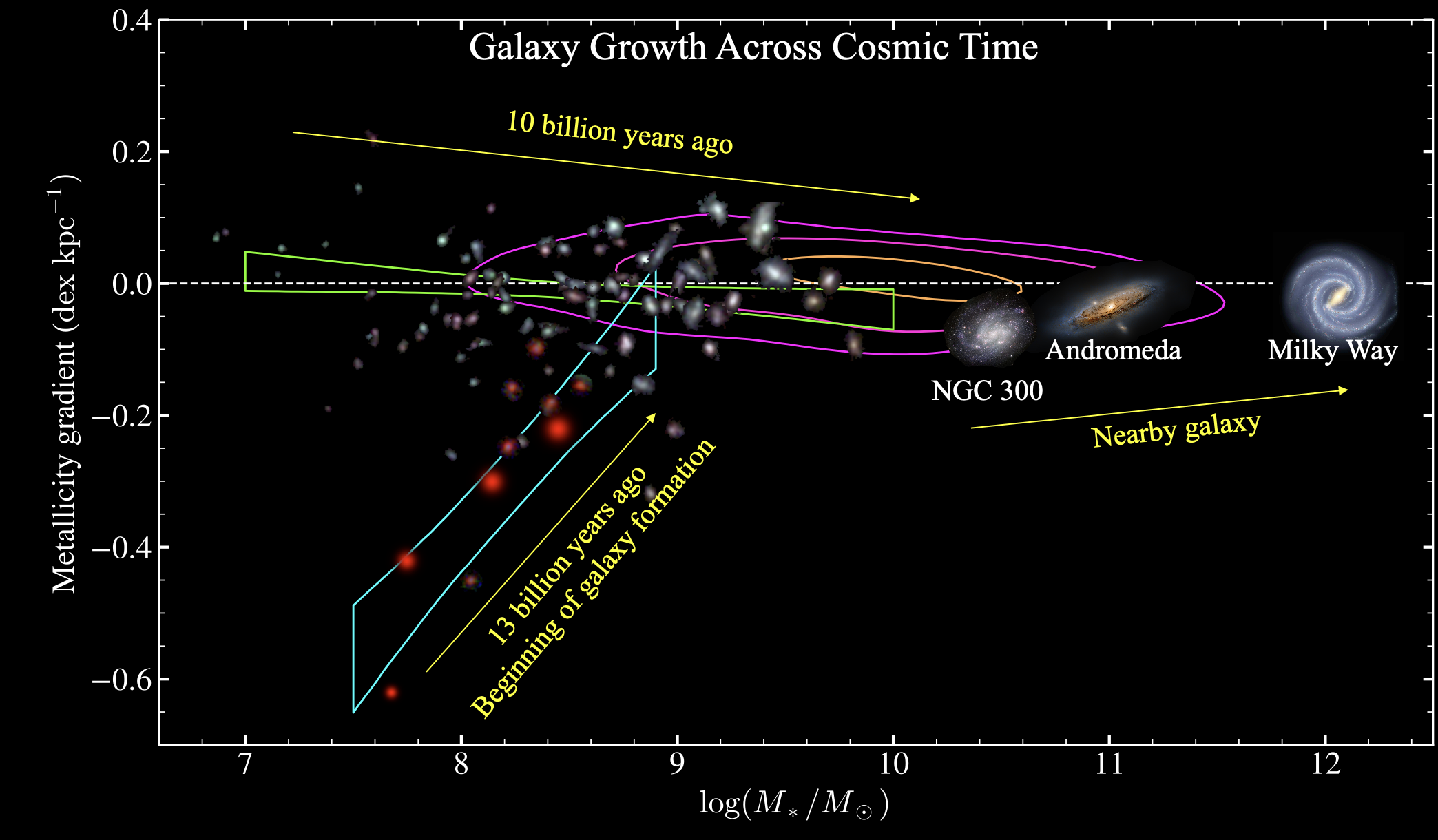
Observations from the James Webb Space Telescope have identified significant reservoirs of cold molecular gas in galaxies formed just 500 million years after the Big Bang, challenging long-held assumptions about early star formation and galaxy evolution. According to new findings published in Nature Astronomy and shared with astronomers at the European Southern Observatory, these gas clouds—essential for creating new stars—were far more abundant than previously detected, suggesting that early galaxies may have grown faster and more efficiently than models predicted.
For decades, astronomers believed that galaxies in the universe’s infancy were starving for the raw materials needed to fuel rapid star formation. The discovery of these gas reservoirs, however, implies that the cosmic dawn—the era when the first stars and galaxies ignited—was far more dynamic than once thought. “This changes the narrative,” said Dr. Jane Rigby of NASA’s Goddard Space Flight Center, who contributed to the study. “We’re seeing evidence that these early galaxies weren’t just passive bystanders—they were actively assembling the fuel for their own growth.”
The findings hinge on Webb’s unprecedented ability to peer through cosmic dust and detect faint infrared signals from the distant universe. By analyzing light from six galaxies located between 12.5 and 13 billion light-years away, researchers identified molecular hydrogen and carbon monoxide—the key ingredients for star formation—at levels far exceeding expectations. One galaxy, in particular, contained enough gas to sustain star formation for hundreds of millions of years, even at its remote distance.
Why this matters: The discovery forces astronomers to revisit models of galaxy formation, particularly how gas was distributed and consumed in the universe’s first billion years. If early galaxies had access to larger gas reserves, it could explain why some appear surprisingly massive and evolved for their age—a puzzle that has baffled scientists for years.
—
What Was Discovered—and How Did Webb Find It?
The breakthrough stems from Webb’s Near-Infrared Spectrograph (NIRSpec), which detected the spectral “fingerprints” of cold molecular gas in six galaxies from the Epoch of Reionization. Unlike previous telescopes, Webb’s infrared capabilities allowed researchers to observe these gases without interference from dust that obscures visible light.
Key details from the observations:
- Gas composition: The detected molecular hydrogen (H2) and carbon monoxide (CO) are the primary building blocks for star formation. CO, in particular, acts as a tracer for H2 because hydrogen alone is nearly invisible to telescopes.
- Gas density: One galaxy contained enough gas to form stars at a rate comparable to the Milky Way today, despite being just 5% the size. “This is like finding a gas station in the middle of the cosmic desert,” said Dr. Roberto Maiolino of the University of Cambridge, lead author of the study.
- Temperature: The gas was measured at temperatures around 10–50 Kelvin—cold enough to collapse into stars but warm enough to resist fragmentation into smaller clouds.
The galaxies studied were selected from Webb’s Cosmic Evolution Early Release Science (CEERS) survey, which targets regions of the sky where early galaxy clusters are known to exist. By focusing on these dense fields, researchers maximized their chances of detecting faint signals from distant objects.
Comparison to prior expectations: Before Webb, the Hubble Space Telescope had only detected ionized gas in early galaxies, leading astronomers to assume that neutral molecular gas—the kind that fuels star formation—was scarce. The new data suggests that Hubble’s limitations may have obscured a critical piece of the puzzle.
—
How Does This Change Our Understanding of Early Galaxy Growth?
For years, simulations of galaxy formation relied on the assumption that early galaxies were inefficient at collecting and retaining gas. The new findings suggest that these galaxies may have been far more adept at assembling their star-forming material than previously believed. Here’s how the discovery reshapes key questions in astrophysics:
1. The “Missing Gas Problem”
Before Webb, astronomers struggled to account for the rapid growth of some early galaxies. If these galaxies lacked sufficient gas, how did they produce stars so quickly? The detection of molecular gas reservoirs provides a plausible answer: early galaxies may have had access to larger fuel supplies than thought, allowing them to form stars at rates similar to their modern counterparts.
2. Reionization and Galaxy Feedback
The Epoch of Reionization—when ultraviolet light from the first stars ionized the surrounding hydrogen—was long thought to strip galaxies of their gas. However, the presence of cold molecular gas in these early systems suggests that some galaxies may have shielded their gas reserves from the harsh radiation. “This could mean that reionization wasn’t as destructive as we assumed,” said Dr. Anna Schauer of the University of Cambridge, a co-author of the study.
3. Challenges to Cold Dark Matter Models
Current models of galaxy formation, based on cold dark matter, predict that gas should be distributed in a diffuse, filamentary web. The discovery of concentrated gas reservoirs in small galaxies may require revisions to these models—or at least a better understanding of how gas is funneled into these early systems. “It’s possible that dark matter halos were more efficient at trapping gas than we thought,” said Dr. Rigby.
Key implication: If early galaxies had ample gas, it could explain why some appear to have formed their stars in short, intense bursts rather than gradually over billions of years. This “burst mode” of star formation has been observed in later galaxies but was unexpected in the universe’s youth.
—
Who Is Leading This Research—and What’s Next?
The study is a collaboration between astronomers at NASA, the European Southern Observatory (ESO), the University of Cambridge, and the Space Telescope Science Institute. Key figures include:
- Dr. Roberto Maiolino (University of Cambridge): Lead author and Webb expert specializing in early galaxy formation.
- Dr. Jane Rigby (NASA Goddard): Webb instrument scientist who contributed to the NIRSpec observations.
- Dr. Anna Schauer (University of Cambridge): Focuses on reionization and galaxy feedback mechanisms.
The research builds on earlier Webb discoveries, such as the detection of its first deep-field images and the identification of the most distant known galaxy, GLASS-z13. However, this study marks the first time molecular gas has been directly observed in such early systems.
Next steps: Researchers plan to expand their observations to a larger sample of galaxies using Webb’s upcoming Deep Extragalactic Survey. They also aim to study how these gas reservoirs interact with the intergalactic medium—the diffuse gas that fills the space between galaxies. “This is just the beginning,” said Dr. Maiolino. “We’re now entering an era where we can study the life cycle of gas in the early universe in unprecedented detail.”
—
What Are the Broader Implications for Cosmology?
The discovery of star-forming gas in early galaxies has ripple effects across multiple fields of astrophysics. Here’s how it could reshape our understanding of the cosmos:
1. The Role of Dark Matter in Galaxy Assembly
Dark matter’s gravitational pull is thought to shape how gas flows into galaxies. If early galaxies had more gas than expected, it may mean that dark matter halos in the early universe were more efficient at trapping and compressing gas than current simulations suggest. This could lead to revised models of dark matter distribution in the early cosmos.
2. The Timeline of Chemical Enrichment
Stars forge heavier elements like carbon and oxygen, which are later dispersed into the interstellar medium. The presence of molecular gas in early galaxies suggests that these elements may have been recycled more quickly than previously thought, potentially accelerating the chemical evolution of the universe.
3. Implications for Life’s Building Blocks
Molecular gas clouds are not just star nurseries—they also contain complex organic molecules, the precursors to life as we know it. If these gases were abundant in the early universe, it raises intriguing questions about whether the ingredients for life were present from the very beginning—or if they required later cosmic processes to assemble.
Expert reaction: “This is a game-changer for our understanding of how galaxies like our own Milky Way came to be,” said Dr. Richard Ellis of University College London, who was not involved in the study. “It suggests that the conditions for galaxy formation were far more favorable in the early universe than we realized.”
—
Common Misconceptions—and What the Data Actually Shows
Despite the excitement surrounding these findings, several myths about early galaxy formation persist. Here’s what the new data clarifies:
Myth: “Early galaxies were too small to hold much gas.”
Reality: The detected galaxies—some as small as 1/20th the size of the Milky Way—contained enough gas to sustain star formation for hundreds of millions of years. Size alone does not limit gas retention.
Myth: “Reionization destroyed all molecular gas in the early universe.”
Reality: While reionization likely disrupted some gas clouds, the new observations show that pockets of cold, dense gas survived. This suggests that galaxies may have had mechanisms—such as dense cores or shielding by dust—to protect their star-forming fuel.
Myth: “Star formation in the early universe was slow and gradual.”
Reality: The presence of large gas reservoirs supports the idea that some early galaxies experienced rapid, intense bursts of star formation—similar to what’s seen in later “starburst” galaxies—rather than a slow, steady pace.
Caution: While the findings are groundbreaking, they are based on a small sample of galaxies. Larger surveys will be needed to confirm whether these gas reservoirs are typical or represent a rare subset of early galaxies.
—
What to Watch For in the Coming Months
As Webb continues to observe the early universe, several questions remain unanswered. Astronomers are particularly focused on:
- Gas dynamics: How did these early galaxies regulate their gas supply? Were mergers with other galaxies a major driver of star formation?
- Feedback mechanisms: Did supernovae or active galactic nuclei (AGN) expel gas from these systems, or did they help recycle it?
- Comparison to later galaxies: How do these early gas reservoirs compare to those in galaxies like the Milky Way today?
Upcoming Webb programs, such as the Cosmic Evolution Early Release Science (CEERS) survey and the Deep Fields initiative, will provide more data. Meanwhile, ground-based telescopes like ALMA (Atacama Large Millimeter/submillimeter Array) may offer complementary observations of molecular gas in slightly later epochs.
For now, the discovery serves as a reminder that the early universe was far more dynamic—and perhaps more hospitable to star formation—than previously imagined.
—
Frequently Asked Questions
Q: How far back in time are we looking when we observe these early galaxies?
A: The galaxies in this study are located between 12.5 and 13 billion light-years away, meaning their light has traveled for nearly the entire age of the universe. We’re seeing them as they were just 500–700 million years after the Big Bang.
Q: Why is molecular gas important for star formation?
A: Stars form when dense clouds of molecular hydrogen collapse under their own gravity. Unlike atomic hydrogen, molecular hydrogen (H2) is cold and dense enough to trigger star formation. Carbon monoxide (CO) acts as a tracer for H2 because it’s easier to detect with telescopes.
Q: Could these findings change our understanding of how the Milky Way formed?
A: Yes. If early galaxies had access to large gas reservoirs, it suggests that galaxy mergers and gas accretion may have played a bigger role in building up the Milky Way than previously thought. Some models may need to be adjusted to account for these early gas supplies.
Q: Are there any risks to these observations being incorrect?
A: All scientific findings are subject to verification. While the Webb data is highly robust, the sample size is still small. Larger surveys will be needed to confirm whether these gas reservoirs are common or rare in the early universe.
Q: How does this discovery affect the search for extraterrestrial life?
A: The presence of molecular gas—including complex organic molecules—suggests that the building blocks of life may have been more widely available in the early universe. However, life as we know it also requires stable planetary environments, which may not have existed in these early systems.
Q: What’s the difference between atomic and molecular hydrogen in space?
A: Atomic hydrogen (H I) is a single proton and electron, while molecular hydrogen (H2) consists of two hydrogen atoms bonded together. H2 is far colder and denser, making it the primary fuel for star formation. Atomic hydrogen is more diffuse and doesn’t readily collapse into stars.
