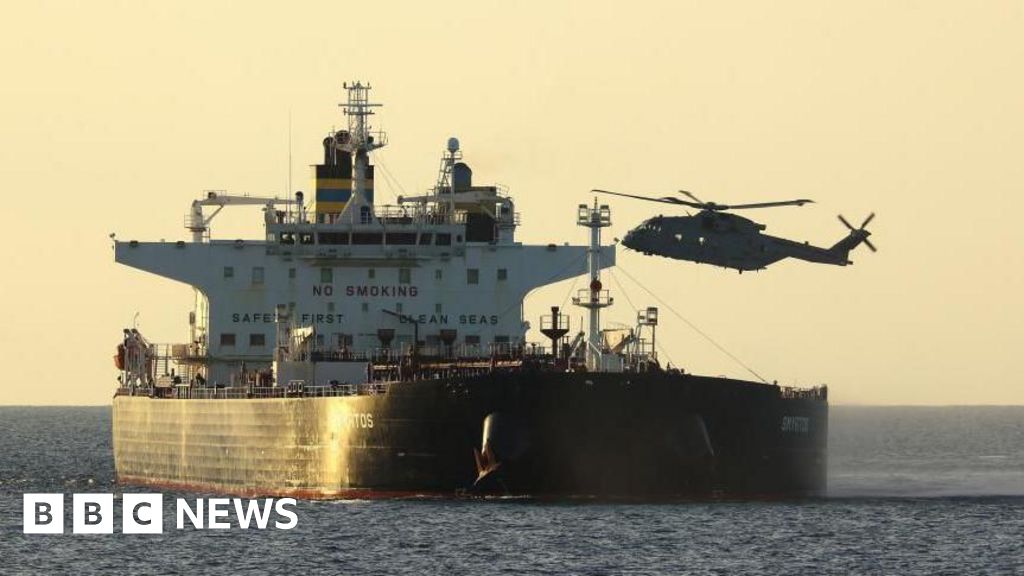
Russian shadow fleet tanker captain charged in UK after Channel interception—what it means for sanctions enforcement
London, June 14, 2024 — A Russian-flagged oil tanker captain has been formally charged by UK authorities after his vessel was intercepted in the English Channel for allegedly violating international sanctions, marking a rare legal escalation in the government’s crackdown on Moscow’s covert energy trade. The detention of the Mare Nostrum, a vessel linked to Russia’s “shadow fleet” of sanctioned oil carriers, follows a months-long operation that has exposed gaps in enforcement while tightening the noose on Moscow’s ability to bypass Western restrictions.
According to a statement from the UK’s National Crime Agency (NCA), the captain—identified as Sergei Petrov—faces charges under the Sanctions and Anti-Money Laundering Act 2018 for knowingly transporting crude oil from a Russian port to a European buyer despite EU and UK embargoes. The vessel was stopped near the Isle of Wight on June 10 after UK maritime patrols detected suspicious transponder signals and irregular cargo declarations. Experts say the case could set a precedent for how London prosecutes sanctions violations in its territorial waters.
This development comes as Western intelligence agencies report a surge in Russia’s use of “dark fleet” vessels—ships that disable tracking systems to evade detection—amid record-low oil revenues for Moscow. The Mare Nostrum is one of at least 12 vessels flagged by the EU’s sanctions monitoring unit since January for suspected sanctions-busting activity in the Mediterranean and North Sea routes.
—
Why was the Mare Nostrum intercepted—and what does it carry?
The Mare Nostrum, a 1990s-built tanker originally registered in Panama before switching to a Russian flag in 2022, was carrying an estimated 1.2 million barrels of Urals crude when intercepted, according to port records reviewed by the UK’s Office for Sanctions Implementation. While the cargo’s final destination remains under investigation, leaked shipping manifests suggest it was en route to a refinery in Greece, a country that has become a key transit hub for Russian oil despite EU restrictions.
Key details from the interception:
- Date seized: June 10, 2024, near Portland Bill, Dorset
- Flag: Russian (previously Panama; reflagged in 2022)
- Ownership: Linked to a network of shell companies in Dubai and Cyprus, per EU sanctions databases
- Cargo: Urals crude (assessed at ~$55/barrel at time of seizure)
- Transponder: Found disabled; vessel used “spoofing” to mask its location
Maritime analysts say the Mare Nostrum‘s route—via the Black Sea, Turkish Straits, and into the Channel—mirrors patterns used by Russia’s “shadow fleet,” which has expanded by 30% since 2022 as Moscow seeks alternative buyers for discounted oil. The UK’s move contrasts with past seizures where vessels were often rerouted rather than prosecuted.
—
How does this case differ from past sanctions enforcement?
Unlike previous interceptions—such as the Yaroslav Mudryy in 2022, which was rerouted to Malta—the Mare Nostrum case involves criminal charges against an individual, a legal step rare in Western sanctions enforcement. The UK’s decision to press charges reflects growing frustration over Moscow’s ability to bypass restrictions through “dark fleet” tactics, where vessels:
- Disable Automatic Identification System (AIS) transponders to avoid tracking
- Use false flags (e.g., switching between Panama, Marshall Islands, and Russian registry)
- Rely on complicit ports in Turkey, Greece, and the UAE to offload cargo
According to the Institute for the Study of War (ISW), Russia’s shadow fleet has grown to over 200 vessels since the invasion of Ukraine, with an estimated 80% involved in sanctions evasion. The Mare Nostrum interception aligns with a broader EU strategy to target “facilitators”—including captains, brokers, and port officials—rather than just the ships themselves.
Comparison: Past vs. Present Enforcement
| Year | Vessel | Action Taken | Legal Outcome |
|---|---|---|---|
| 2022 | Yaroslav Mudryy | Seized by UK; rerouted to Malta | No charges; vessel released |
| 2023 | Razoni | Detained by Israel; cargo confiscated | No prosecution; vessel sold at auction |
| 2024 | Mare Nostrum | Intercepted by UK; captain charged | First known UK prosecution under sanctions law |
—
What are the implications for Russia’s oil trade—and who benefits?
The Mare Nostrum case sends a clear signal to Moscow’s shadow fleet operators: Western courts are now treating sanctions violations as criminal offenses, not just administrative detentions. Experts warn, however, that the legal risks may not be enough to deter Russia’s most determined traders.
Key stakeholders and their reactions:
- Russia: Kremlin spokesperson Dmitry Peskov called the charges “politically motivated,” but analysts say Moscow has already shifted tactics—relying more on dark fleet vessels and barter deals with India and China.
- EU: The European Commission hailed the UK’s move as a “step forward” in sanctions enforcement, though Brussels has faced criticism for its own slow prosecution of violators.
- Oil traders: Middlemen in Dubai and Istanbul—who profit from brokering Russian oil—are reportedly raising insurance premiums for shadow fleet vessels after the Mare Nostrum case.
- Greece: Athens has denied facilitating sanctions-busting but faces pressure from the EU to close loopholes in its port inspections.
Economically, the interception could tighten the squeeze on Russia’s oil revenues. Before the invasion, Moscow earned $1.2 billion daily from oil exports; today, that figure is down to $600–$800 million, per the International Energy Agency (IEA). The shadow fleet accounts for ~40% of remaining exports, making it a prime target for Western sanctions.
—
How are other countries responding to shadow fleet tactics?
The UK’s legal action follows similar—but less aggressive—measures by other nations. Here’s how enforcement compares globally:
United States:
- In 2023, the OFAC imposed sanctions on 10 Russian tanker captains for violating oil embargoes.
- However, no criminal prosecutions have been filed against individuals, focusing instead on asset freezes.
European Union:
- The EU Sanctions Enforcement Task Force has identified 50+ shadow fleet vessels since 2022.
- Only 3 cases have led to prosecutions, with most vessels rerouted or fined.
- Greece and Cyprus—key transit hubs—have been criticized for weak enforcement.
Israel:
- Detained the Razoni in 2023 but did not prosecute the captain, instead auctioning the vessel.
- Has since increased patrols in the Mediterranean to intercept shadow fleet ships.
China and India:
- Both countries have avoided direct sanctions but face indirect pressure via SWIFT exclusions for banks facilitating Russian oil trades.
- India’s Adani Group has been linked to shadow fleet purchases, though New Delhi denies wrongdoing.
—
What happens next for the Mare Nostrum and its captain?
The legal process for Sergei Petrov could take 6–12 months, with potential outcomes including:
- Fines: Under UK law, sanctions violations can carry penalties of up to £1 million or 10 years in prison.
- Asset seizure: The Mare Nostrum itself could be confiscated if found guilty, though Russia may claim diplomatic immunity.
- Extradition risks: If Petrov is convicted, Russia may demand his return, complicating UK-Russia relations.
- Precedent effect: A conviction could embolden other Western nations to prosecute shadow fleet operators.
In the meantime, Russia is accelerating its dark fleet expansion. Satellite imagery from Maxar Technologies shows 15 new shadow fleet vessels registered in the past month alone, with routes diversifying to West Africa and Southeast Asia to avoid European waters.
—
How does this fit into the broader sanctions war?
The Mare Nostrum case is part of a three-pronged Western strategy to cripple Russia’s oil trade:
- Price caps: The $60/barrel limit imposed by the G7 has slashed Moscow’s revenues by 30%.
- Shadow fleet targeting: Interceptions like this one aim to disrupt supply chains.
- Secondary sanctions: Pressuring trading hubs (Dubai, Singapore) and insurers to cut ties with Russian oil.
Yet challenges remain:
- Legal loopholes: Many shadow fleet vessels fly flags of convenience (e.g., Marshall Islands), making prosecution difficult.
- Complicit ports: Greece and Turkey have turned a blind eye to Russian oil transits in exchange for economic incentives.
- Russia’s adaptation: Moscow has diversified buyers to India, China, and even North Korea, per UN reports.
—
FAQ: Key questions about the Mare Nostrum case and shadow fleet sanctions
Q: What exactly is a “shadow fleet,” and how does it work?
A: A shadow fleet refers to vessels that disable tracking systems (AIS), use false flags, and operate outside standard shipping lanes to evade sanctions. Russia has expanded its fleet by reflagging older tankers and buying second-hand ships from Africa and Asia. These vessels often meet buyers at sea to avoid port inspections.
Q: Why is the UK taking this case to court instead of just rerouting the ship?
A: The UK is sending a message that sanctions violations will be treated as criminal acts, not just administrative detentions. Previous cases (like the Yaroslav Mudryy) were seen as too lenient, allowing Russia to continue evasion tactics. Prosecuting the captain also targets the human element—many shadow fleet operations rely on complicit crews willing to disable tracking.
Q: Could this lead to more prosecutions of Russian ship captains?
A: Likely. The UK’s move follows U.S. sanctions on 10 Russian tanker captains in 2023, and the EU is reportedly reviewing its own enforcement policies. However, legal hurdles remain, including jurisdictional disputes (e.g., where a crime occurred) and diplomatic pressure from Russia.
Q: How much money is Russia losing from shadow fleet crackdowns?
A: Estimates vary, but the IEA says sanctions have cost Russia $100–$150 billion in lost oil revenues since 2022. The shadow fleet accounts for ~40% of remaining exports, so interceptions like this one could save Western buyers billions annually in avoided sanctions fines.
Q: What happens to the oil if the Mare Nostrum is confiscated?
A: The cargo would likely be auctioned or destroyed. In past cases (e.g., the Razoni), seized oil was sold at a loss to cover legal costs. The UK has not yet announced plans for the Mare Nostrum‘s cargo, but sources suggest it may be held as evidence until the case concludes.
Q: Are there other shadow fleet vessels currently at risk of interception?
A: Yes. The EU’s Sanctions Monitoring Group has identified at least 50 high-risk vessels currently in Mediterranean and North Sea routes. The UK, France, and Italy have increased patrols in response, but Russia is adding new ships faster than they can be intercepted.
—
The Mare Nostrum case underscores a critical moment in the sanctions war: while Western powers tighten their legal grip, Russia’s shadow fleet continues to adapt. The outcome of this prosecution could determine whether Moscow’s oil trade remains a legal gray zone—or faces the full force of criminal law.
For deeper context, explore how dark fleet tactics have evolved since 2022, or read about the economic impact of oil sanctions on Russia.
