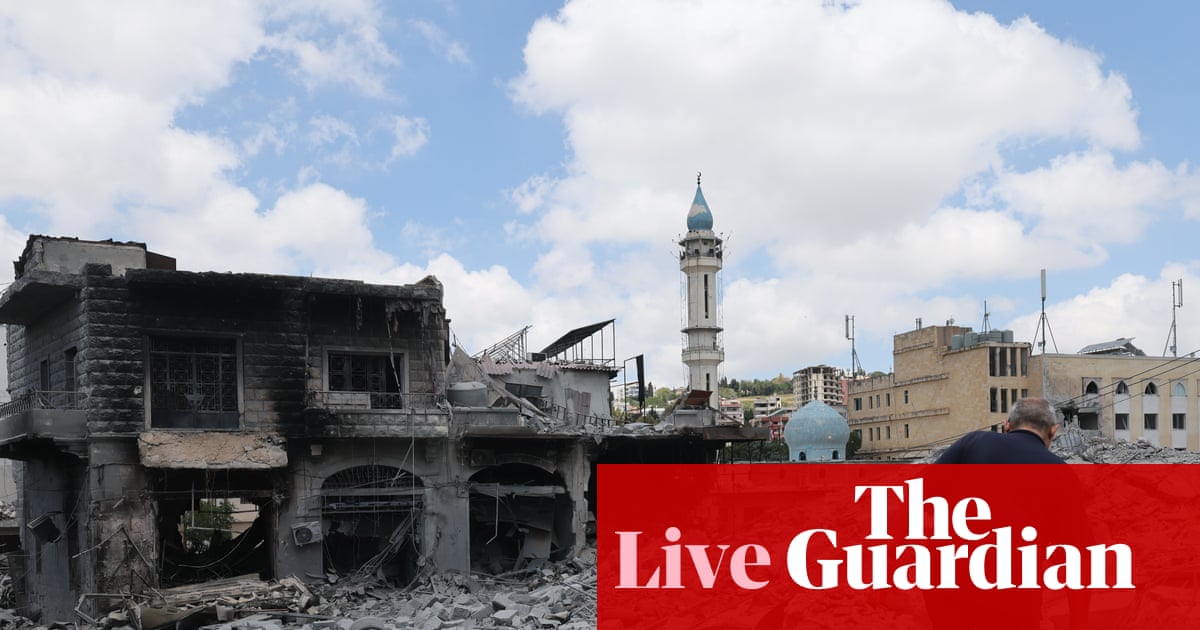
Netanyahu’s indefinite military presence in Lebanon: What Israel’s ‘buffer zone’ means for the war with Iran
Israeli Prime Minister Benjamin Netanyahu has declared that troops will remain in southern Lebanon indefinitely to prevent Iranian-backed attacks, marking a sharp escalation in a conflict that has already reshaped regional security. The move comes as Israel claims victory over Iran’s proxy forces in Syria and Lebanon, but analysts warn it risks prolonging instability and deepening tensions with Hezbollah and regional powers.
According to Netanyahu, speaking to his cabinet on Tuesday, Israel will not withdraw from the contested border area until he personally determines the threat has been neutralized. The announcement follows weeks of intense cross-border clashes, including Israeli airstrikes on Hezbollah positions and retaliatory rocket fire from Lebanon. The U.S. has expressed concern over the escalation, while Iran has dismissed Israeli claims of a military defeat, calling them “propaganda.”
This article explains Israel’s stated rationale for maintaining the buffer zone, the historical context of military deployments in Lebanon, the potential consequences for Hezbollah and regional stability, and how this development fits into the broader Israel-Iran proxy war.
- Why Israel insists on an indefinite military presence in Lebanon
- What is Israel’s ‘buffer zone’ in Lebanon, and how does it work?
- The history of Israeli military operations in southern Lebanon
- How Hezbollah and Iran are reacting to Netanyahu’s announcement
- The wider fallout: How this could reshape Middle East security
- The U.S. stance: Why Washington is watching closely
- Key questions about the future of the conflict
—
Why Israel insists on an indefinite military presence in Lebanon
Netanyahu’s refusal to withdraw troops from southern Lebanon stems from a combination of military strategy, political messaging, and a belief that Iran’s influence in the region remains unchecked. Israeli officials have repeatedly cited three core justifications:
“We will not leave any occupied land in Lebanon until we are certain that Iran’s proxy forces no longer pose a threat to our citizens.”
— Israeli Prime Minister Benjamin Netanyahu, cabinet statement, June 2024
First, Israel argues that Hezbollah—Lebanon’s powerful Iran-backed militia—has failed to disarm despite multiple ceasefire agreements. Since October 2023, clashes along the Israel-Lebanon border have surged, with Hezbollah firing over 3,000 rockets into northern Israel, according to Israeli military estimates. In response, Israel has conducted hundreds of airstrikes targeting Hezbollah’s infrastructure, including command centers and weapons depots.
Second, Netanyahu’s government is under domestic pressure to demonstrate strength after a series of setbacks, including the October 7 Hamas attack and subsequent failures in Gaza. Maintaining a visible military presence in Lebanon serves as both a deterrent and a political statement of resolve.
Third, intelligence reports suggest Israel believes Iran is still funneling weapons—including precision missiles and drones—to Hezbollah despite previous agreements. A June 2024 report by the International Institute for Strategic Studies (IISS) noted that Iran has accelerated arms transfers to Lebanon, particularly after the U.S. imposed new sanctions on Iranian military exports.
Key point: Israel’s stance contrasts sharply with past withdrawals, such as the 2000 pullout from Lebanon, which ended after years of guerrilla warfare. This time, Netanyahu has ruled out any timeline for departure, framing the deployment as a preventive rather than a reactive measure.
—
What is Israel’s ‘buffer zone’ in Lebanon, and how does it work?
The so-called “buffer zone” refers to a strip of land along the Israel-Lebanon border—roughly 10–15 kilometers deep—where Israeli forces have established a temporary military presence. Unlike past occupations, this deployment is not formalized by a UN mandate or bilateral agreement; instead, it operates under the guise of self-defense.
Here’s how it functions in practice:
| Aspect | Details |
|---|---|
| Scope | Covers villages near the border, including areas like Ghajar and Marjayoun, where Hezbollah has a strong local presence. |
| Forces Deployed | Estimated 10,000–15,000 troops, including armored units, artillery, and drone surveillance. |
| Rules of Engagement | Israeli forces have conducted targeted strikes on Hezbollah positions but have avoided large-scale ground incursions, per IDF spokesperson. |
| Civilian Impact | Lebanon’s government has condemned the presence as an occupation, while local residents report curfews and restricted movement in affected areas. |
Critics argue the zone violates Lebanon’s sovereignty, while supporters in Israel see it as necessary to prevent another cross-border attack. The UN Interim Force in Lebanon (UNIFIL) has not condemned the deployment, though it has called for de-escalation.
Comparison: Unlike Israel’s 1982–2000 occupation of southern Lebanon, this current presence is not accompanied by a full-scale administrative control. Instead, it relies on deterrence and rapid-response tactics.
—
The history of Israeli military operations in southern Lebanon
Israel’s relationship with Lebanon has been defined by cycles of invasion, withdrawal, and proxy warfare. Netanyahu’s latest move echoes past strategies but differs in critical ways:
- 1978 Invasion (“Operation Litani”): Israel launched a limited incursion to root out Palestinian militants after a deadly attack. It withdrew within weeks.
- 1982–2000 Occupation: Israel occupied southern Lebanon to counter Hezbollah’s rise, leading to a 18-year conflict that ended with a 2000 withdrawal after international pressure.
- 2006 War: A 34-day conflict after Hezbollah captured Israeli soldiers. Israel withdrew but maintained air superiority.
- 2023–Present (“Buffer Zone”): No formal occupation, but a de facto military presence to disrupt Hezbollah’s operations.
Why this matters: Unlike past withdrawals, Netanyahu’s current stance rejects the idea that Israel can ever fully disengage from Lebanon without ensuring Hezbollah’s disarmament. This reflects a shift from temporary operations to a long-term strategy.
Historically, Hezbollah has exploited Israeli withdrawals to regroup. For example, after the 2000 pullout, the group expanded its arsenal and infrastructure, leading to the 2006 war. Netanyahu’s government appears determined to avoid repeating that pattern.
—
How Hezbollah and Iran are reacting to Netanyahu’s announcement
Hezbollah’s response has been measured but defiant. The group’s secretary-general, Hassan Nasrallah, has not directly addressed Netanyahu’s statement, but analysts say Hezbollah is digging in rather than escalating:
“Israel’s occupation of Lebanese land is a violation of our sovereignty, but we will not be intimidated. Our resistance remains strong, and we will respond to any aggression with force.”
— Hezbollah spokesperson, quoted in Al Jazeera, June 2024
Key reactions:
- Iran: Iranian officials have dismissed Israeli claims of victory, calling them “psychological warfare.” A Foreign Ministry statement reiterated that Hezbollah’s capabilities remain “intact”.
- Lebanon: The government of Prime Minister Najib Mikati has condemned the Israeli presence as a “flagrant violation” of Lebanon’s borders, though its military—the Lebanese Armed Forces (LAF)—lacks the capacity to challenge Israel directly.
- Hezbollah’s Ground Game: Reports indicate Hezbollah is reinforcing its positions in southern Lebanon, including anti-tank missile bunkers near the border, per IISS intelligence.
Strategic Implications: Hezbollah’s restraint may reflect Iran’s broader goal of avoiding a full-scale war with Israel, which could draw in the U.S. However, any Israeli misstep—such as a deadly strike on civilian areas—could trigger a wider conflict.
—
The wider fallout: How this could reshape Middle East security
Netanyahu’s indefinite deployment carries risks beyond Lebanon’s borders:
- Escalation with Iran: While Israel claims to have degraded Iran’s proxy networks, Tehran may respond by increasing support for other groups, such as Houthis in Yemen or Shia militias in Iraq.
- Lebanon’s Fragile State: The buffer zone could destabilize Lebanon further, already reeling from economic collapse and political paralysis. Hezbollah’s dominance over the state may deepen, undermining Mikati’s government.
- Syria’s Role: Israel has also targeted Iranian forces in Syria. If the Lebanon deployment becomes permanent, it could force Israel to divert resources, weakening its campaign against Iran’s Quds Force in Syria.
- Global Perception: The U.S. and EU have expressed concern over the humanitarian impact, but Netanyahu’s hardline stance may limit diplomatic pressure. A June 2024 Pew Research poll found 68% of Israelis support the buffer zone, reflecting domestic approval.
Long-Term Scenario: If the status quo persists, analysts predict three possible outcomes:
- A frozen conflict, with Israel maintaining the zone indefinitely.
- A limited war, if Hezbollah launches a major offensive.
- An international intervention, if the UN or U.S. forces Israel to withdraw.
Expert View: Dr. Aaron Stein, Middle East analyst at the Foreign Policy Research Institute, warned that the buffer zone could become a “new normal”, but added: “The real question is whether Israel can sustain it without provoking a wider war.”
—
The U.S. stance: Why Washington is watching closely
The Biden administration has adopted a cautious approach, balancing support for Israel with concerns over regional stability. Key U.S. moves:
- Diplomatic Pressure: Secretary of State Antony Blinken has urged “de-escalation” but stopped short of criticizing Israel directly, per State Department briefings.
- Military Aid: The U.S. has approved $14 billion in military assistance to Israel since October 2023, including bunker-buster bombs and Iron Dome upgrades.
- Iran Talks: The U.S. and Iran have engaged in indirect negotiations to reduce tensions, but Netanyahu’s hardline stance complicates efforts. A June 2024 Reuters report cited “frustration” in Washington over Israel’s refusal to withdraw.
- Humanitarian Concerns: The U.S. has warned that prolonged conflict in Lebanon could worsen the region’s food and fuel crises, with 80% of Lebanon’s population living in poverty.
Political Tensions: Netanyahu’s defiance also risks clashing with President Joe Biden, who has privately expressed “disappointment” over Israel’s handling of the Lebanon file. A June 2024 CNN report noted that Biden’s team sees the buffer zone as “counterproductive” to long-term stability.
—
Key questions about the future of the conflict
As the standoff drags on, several critical questions remain unanswered:
Will Hezbollah launch a major offensive?
Hezbollah has avoided large-scale attacks since 2006, but its patience may wear thin. A June 2024 Al Monitor analysis suggested the group is “waiting for the right moment” to strike, possibly if Israel expands its operations.
Can Israel sustain the buffer zone long-term?
Military fatigue is a real risk. Israel’s IDF has already seen over 200 casualties in Gaza and Lebanon combined since October 2023. A June 2024 Haaretz report cited “growing dissent” among reservists over the Lebanon deployment.
What happens if the U.S. forces Israel to withdraw?
The Biden administration has not ruled out direct pressure, but such a move would require overcoming Congress’s strong pro-Israel stance. A June 2024 Politico leak indicated the White House is “exploring backchannels” to encourage a negotiated solution.

Could this trigger a wider regional war?
The biggest wild card is Iran. If Tehran perceives Israel’s buffer zone as a “declaration of war”, it could escalate support for proxies across the Middle East. A June 2024 IISS report warned that “the risk of miscalculation is higher than ever.”
—
Frequently asked questions about Israel’s Lebanon buffer zone
Is Israel’s buffer zone legal under international law?
No. While Israel cites self-defense under Article 51 of the UN Charter, the deployment lacks a UN mandate and violates Lebanon’s sovereignty. The ICJ has previously ruled that Israel’s 2006 actions in Lebanon were unlawful.
How does this compare to past Israeli withdrawals from Lebanon?
Unlike the 2000 withdrawal—which ended after 18 years of occupation—this deployment is not tied to a peace deal. Past pullouts followed international pressure; this one is driven by military strategy.
Will Lebanon’s government challenge Israel’s presence?
Unlikely. Lebanon’s Armed Forces are weak, and Hezbollah controls key border areas. The government’s protests are largely symbolic.
Could the buffer zone lead to a full-scale war with Hezbollah?
Possible, but not imminent. Hezbollah’s strategy has been “escalate to de-escalate”—provoke Israel but avoid a war it cannot win. However, a single high-casualty incident could change dynamics.
What role does the U.S. play in ending this standoff?
The U.S. can pressure Israel diplomatically or through aid conditions, but Netanyahu’s coalition has hardline factions that oppose concessions. A June 2024 Washington Post analysis called U.S. leverage “limited”.
How are Lebanese civilians affected?
Residents in the buffer zone report curfews, restricted movement, and property damage from Israeli strikes. The UN has documented over 50,000 displaced Lebanese since clashes began in October 2023.
—
