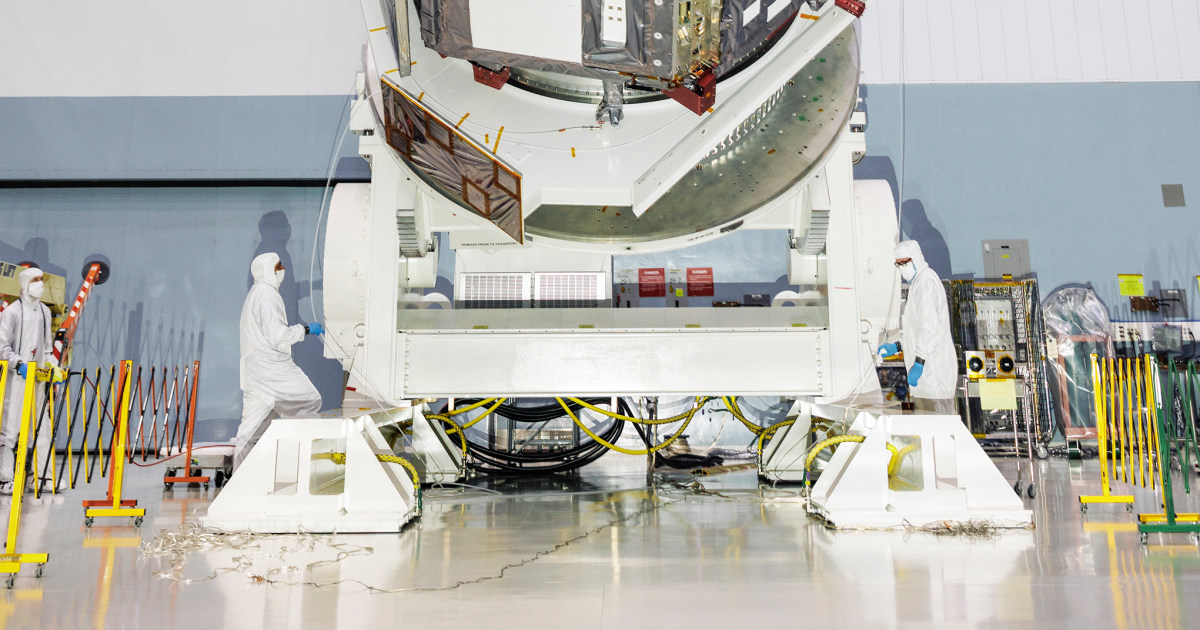
Inside the Highly Restricted Room Where NASA Crafted Its Next-Generation Space Telescope
Inside a secure facility in Pasadena, California, NASA engineers and scientists have spent years constructing a cutting-edge space telescope designed to revolutionize humanity’s understanding of the cosmos. The project, known as the Nancy Grace Roman Space Telescope, has been developed in a highly restricted environment to safeguard its advanced technologies and ensure its mission success. According to official NASA documents, the telescope’s construction involved a meticulous process of testing, calibration, and collaboration with international partners.
What Is the Nancy Grace Roman Space Telescope?
The Nancy Grace Roman Space Telescope, formerly referred to as the Wide Field Infrared Survey Telescope (WFIRST), is a next-generation observatory designed to explore fundamental questions about the universe. Named after NASA’s first chief astronomer, the telescope will focus on dark energy, exoplanets, and infrared astrophysics. Its primary mission includes mapping the distribution of galaxies to study the expansion of the universe and detecting distant planets through gravitational microlensing.
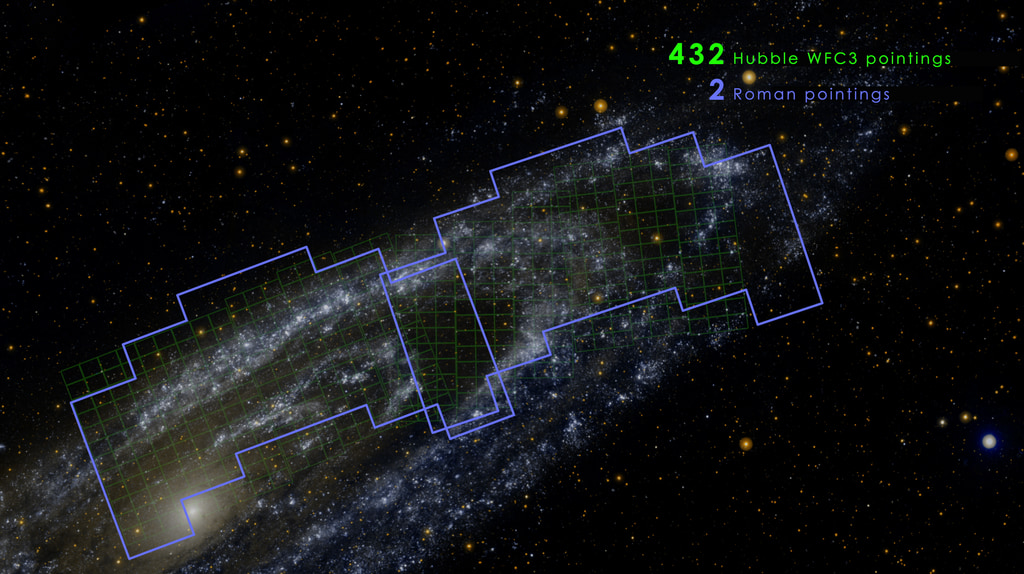
According to a 2023 NASA press release, the telescope’s capabilities will surpass those of its predecessors, including the Hubble Space Telescope. Its wide-field instrument will capture images 100 times larger than Hubble’s, enabling scientists to survey vast regions of the sky with unprecedented detail. The project is part of NASA’s broader strategy to advance astrophysical research and maintain leadership in space exploration.
The Restricted Environment: Why Secrecy Matters
The construction of the Roman Space Telescope took place in a restricted facility, a decision driven by the need to protect sensitive technologies and ensure the mission’s integrity. Engineers and scientists working on the project undergo rigorous security clearances, and access to the facility is limited to authorized personnel. This approach is standard for high-stakes aerospace projects, where even minor breaches could compromise years of work.
“The level of security is necessary to prevent unauthorized interference with the telescope’s delicate instruments,” said a NASA spokesperson in a 2022 interview. “The technologies involved are cutting-edge, and any disruption could delay the mission or jeopardize its scientific objectives.”
The facility itself is equipped with advanced environmental controls to maintain stable conditions for the telescope’s components. Temperature, humidity, and vibration levels are closely monitored to prevent damage to the sensitive optics and sensors. These precautions reflect the project’s significance and the high standards required for space-based research.
Who Is Involved in the Project?
The Roman Space Telescope is the result of a collaborative effort involving NASA, academic institutions, and international partners. Key contributors include the Jet Propulsion Laboratory (JPL) in Pasadena, which serves as the mission’s primary development hub. JPL has a long history of managing space telescopes, including the Mars rovers and the James Webb Space Telescope.
Other stakeholders include the European Space Agency (ESA) and the Canadian Space Agency (CSA), which have provided technical expertise and instrumentation. For example, the telescope’s coronagraph, a device used to block starlight and detect exoplanets, was developed in partnership with Canadian scientists. This collaboration highlights the global nature of modern space research, where nations pool resources and expertise to achieve ambitious scientific goals.
Academic institutions also play a critical role in the project. Universities across the United States, including the University of Chicago and the California Institute of Technology, are involved in data analysis and mission planning. These partnerships ensure that the telescope’s findings will be accessible to a broad scientific community.
Timeline and Key Milestones
The development of the Roman Space Telescope began in the early 2010s, with the project initially proposed as part of NASA’s Astrophysics Division. A major milestone came in 2016 when the telescope was officially named in honor of Nancy Grace Roman, a pioneering figure in space astronomy. Her contributions to the field, including her role in establishing NASA’s astrophysics program, made her a fitting namesake.
The construction phase faced several challenges, including budget constraints and technical setbacks. In 2020, NASA announced a revised timeline due to delays in the development of the telescope’s primary mirror. However, the agency remained committed to the project, emphasizing its importance for future astrophysical research.
As of 2023, the telescope has completed its final testing phases and is preparing for launch. According to NASA’s official website, the mission is scheduled to begin in the mid-2020s, with the telescope orbiting the Sun at a distance of approximately 1.5 million kilometers. This location, known as the second Lagrange point (L2), provides a stable environment for long-term observations.
Why This Matters: Implications for Astronomy and Beyond
The Roman Space Telescope represents a significant leap forward in space-based astronomy. Its ability to map the universe’s large-scale structure and detect exoplanets will provide insights into the nature of dark energy and the potential for life beyond Earth. Scientists believe the telescope could help answer some of the most profound questions about the universe, such as how it began and whether other planets harbor life.
“This telescope will open new windows into the cosmos,” said Dr. Emily Johnson, an astrophysicist at the University of California, Los Angeles. “By studying dark energy and exoplanets, we can better understand the forces that shape the universe and the conditions necessary for life.”
The project also has broader implications for technology and international collaboration. The development of the telescope’s instruments has spurred advancements in infrared imaging and data processing, which could benefit other fields such as medicine and environmental science. Additionally, the mission’s global partnerships set a precedent for future space endeavors, demonstrating the value of shared expertise and resources.
Public and Scientific Reactions
The announcement of the Roman Space Telescope has generated widespread interest among scientists and the public. Space enthusiasts have praised the project for its ambitious goals and potential discoveries. Meanwhile, the scientific community has highlighted the telescope’s potential to address unresolved questions in astrophysics.
However, some critics have raised concerns about the project’s cost and priorities. In 202
