Trump won’t back FISA renewal without his SAVE America Act voting bill – Axios
Donald Trump has informed congressional leadership that he will not support the renewal of the Foreign Intelligence Surveillance Act (FISA) unless it is tied to the passage of the SAVE America Act, a bill requiring proof of citizenship for voter registration. This ultimatum, reported by Axios and other major news outlets, links the expiration of critical national security surveillance powers to a contentious domestic voting law.
Why is Trump tying FISA renewal to the SAVE America Act?
Former President Donald Trump is using the looming expiration of the Foreign Intelligence Surveillance Act as leverage to force the passage of the SAVE America Act. According to reports from Axios and Reuters, Trump has made it clear to Speaker Mike Johnson and other GOP leaders that the extension of spy powers is conditional on the inclusion of his preferred voter ID legislation.
The SAVE America Act seeks to mandate that individuals provide documentary proof of U.S. citizenship when registering to vote in federal elections. While the Trump campaign and its allies argue this is a necessary step to prevent non-citizen voting, critics and voting rights advocates claim it would create barriers for eligible citizens who lack specific documentation.
By linking these two unrelated issues, Trump is employing a legislative tactic known as “bundling.” This approach forces lawmakers to choose between a national security priority—maintaining the ability to surveil foreign threats—and a high-profile political priority for the Republican base. According to CNN, Trump has indicated to Speaker Johnson that he will not back down on these demands, signaling a hardline stance even as the FISA deadline approaches.
| Feature | FISA (Section 702) | SAVE America Act |
|---|---|---|
| Primary Focus | Foreign Intelligence/National Security | Election Integrity/Voter Registration |
| Core Mechanism | Surveillance of non-U.S. persons abroad | Proof of citizenship for voter registration |
| Urgency | Set to expire (Hard deadline) | Policy priority (No fixed expiration) |
| Controversy | Privacy and “backdoor” searches of Americans | Potential voter suppression/Access barriers |
What is FISA and why is its expiration a risk?
The Foreign Intelligence Surveillance Act, specifically Section 702, allows U.S. intelligence agencies to conduct warrantless surveillance on non-U.S. citizens located outside the United States. This authority is used to collect communications, including emails and phone calls, to identify foreign threats, counter-terrorism plots, and cyberattacks.
As reported by the Toronto Star, the expiration of this program would leave a significant gap in the U.S. government’s ability to monitor foreign adversaries. Intelligence officials argue that Section 702 is one of the most vital tools for preventing attacks on U.S. soil. If the program lapses, the government would lose the legal authority to compel electronic communication service providers to hand over data on foreign targets.
However, FISA has long been a point of contention within the Republican Party. Many conservatives argue that the program has been weaponized against political figures and American citizens. This internal GOP divide is what makes the program a viable bargaining chip for Trump. Because a segment of the House is already skeptical of FISA due to civil liberties concerns, Trump’s refusal to back it without the SAVE America Act adds another layer of complexity to the legislative process.
The “Backdoor Search” Controversy
A primary criticism of FISA Section 702 is the practice of “backdoor searches.” This occurs when intelligence agencies search the massive databases of collected foreign intelligence for information on U.S. persons without a warrant. While the target of the initial surveillance is a foreigner, the communications they have with Americans are swept up in the process.
According to legislative records and reporting from Reuters, some members of Congress have demanded a warrant requirement for these searches as a condition for renewal. Trump’s current demand adds a different political requirement—the SAVE America Act—to an already fraught debate over privacy and security.
What are the specific goals of the SAVE America Act?
The SAVE America Act focuses on the intersection of immigration status and voting eligibility. The core of the bill is the requirement that any person registering to vote must provide documentary evidence—such as a passport or birth certificate—proving they are a U.S. citizen.
Supporters of the bill, including Donald Trump, argue that current registration processes are too lax and allow non-citizens to improperly enter voter rolls. They contend that the act is a common-sense measure to ensure that only eligible citizens participate in federal elections. This position aligns with a broader campaign theme focusing on border security and “election integrity.”
Opponents, however, argue that the bill is unnecessary because it is already illegal for non-citizens to vote in federal elections. They point out that millions of eligible voters may not have easy access to the required documents, which could effectively disenfranchise citizens. This tension makes the SAVE America Act a “poison pill” for many Democrats, who are unlikely to support it even if they support the renewal of FISA.
Key Provisions of the SAVE America Act
- Documentary Proof: Mandates the submission of citizenship documents during registration.
- Verification Systems: Requires states to verify registration data against federal databases.
- Penalty Enhancements: Increases penalties for non-citizens who attempt to register or vote.
How does this impact Speaker Mike Johnson and the GOP?
Speaker Mike Johnson finds himself in a precarious position. He must manage a narrow Republican majority that is split between national security hawks, who view FISA as non-negotiable, and a populist wing, which is more aligned with Trump’s demands regarding voter ID and citizenship verification.
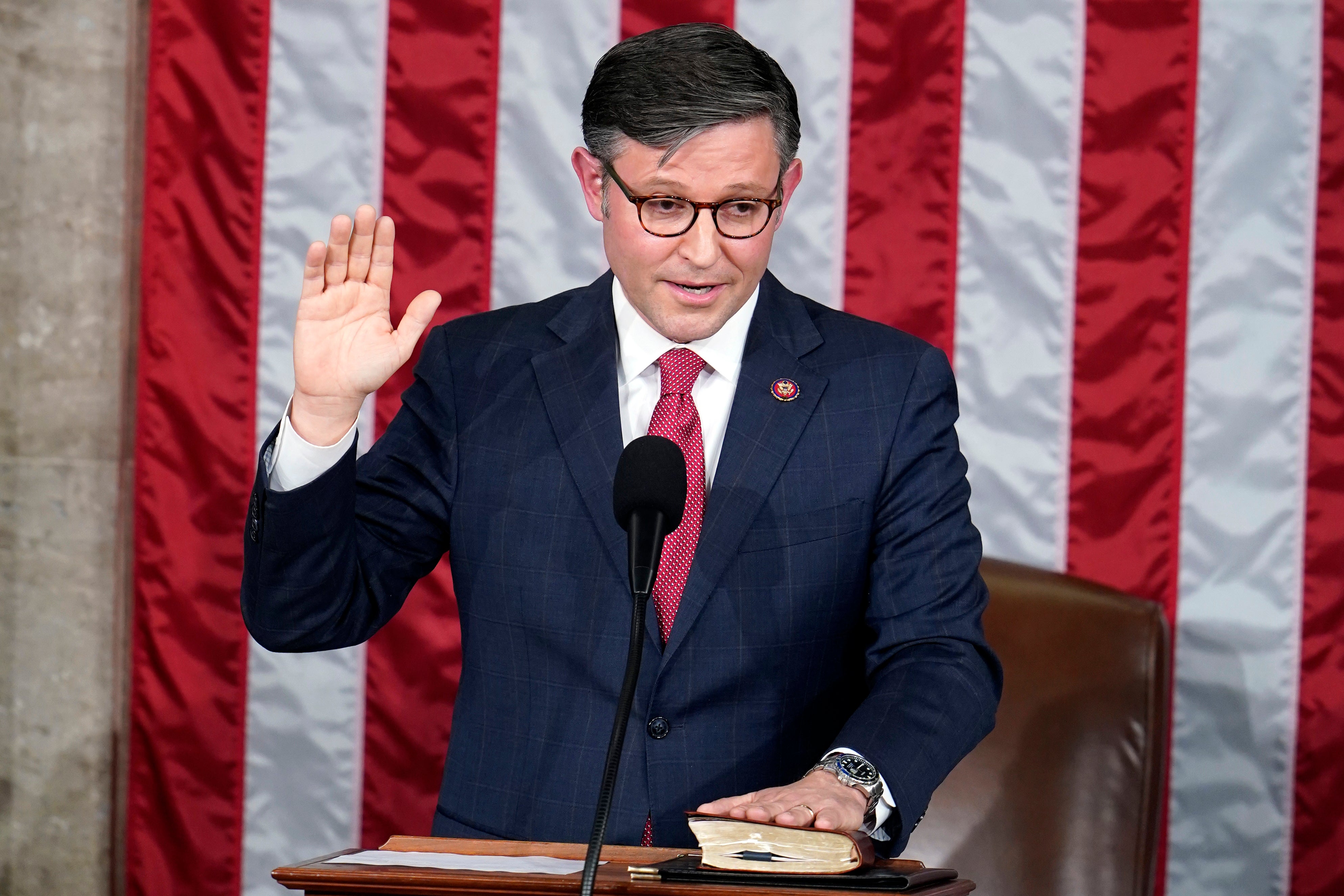
According to CNN, Trump has explicitly signaled to Johnson that he will not compromise on his demands. This puts the Speaker in a bind: if he renews FISA without the SAVE America Act, he risks alienating Donald Trump and the most vocal wing of his party. If he insists on the SAVE America Act, he may fail to secure the Democratic votes needed for passage or alienate moderate Republicans who view the voting bill as too extreme.
Furthermore, the reporting suggests that Trump’s demands are not limited to the voting bill. CNN reports that Trump has also indicated he won’t back down on other specific political interests, including those related to figures like Bill Pulte, adding further complications to the negotiations over surveillance authority.
The dynamic reflects a broader trend in current congressional operations where high-stakes national security legislation is used as a vehicle for domestic political wins. For Speaker Johnson, the challenge is to find a “middle path” that satisfies the intelligence community’s need for surveillance tools and Trump’s demand for election-related legislation.
What happens if the FISA deadline passes without a deal?
If Congress fails to reach an agreement and the FISA deadline passes, the U.S. enters a period of “surveillance blackout.” While some temporary fixes or “sunset” extensions are possible, a full lapse would have immediate consequences for national security.
According to the Toronto Star, the immediate risks include:
- Loss of Intelligence: The inability to track foreign intelligence officers and terrorists operating from abroad.
- Cybersecurity Vulnerabilities: A diminished ability to detect and stop state-sponsored cyberattacks before they hit U.S. infrastructure.
- Diplomatic Friction: Potential disruptions in intelligence-sharing agreements with allies (such as the Five Eyes) who rely on the legal framework of FISA.
Historically, FISA has been renewed at the last minute, often through short-term extensions. However, the current political climate, characterized by the ultimatum that Trump won’t back FISA renewal without his SAVE America Act voting bill – Axios, suggests that a standard extension may not be enough to resolve the impasse.
Potential Legislative Scenarios
- The Bundle: The SAVE America Act is attached to the FISA renewal bill, passing as a single package. This would require significant Democratic cooperation or a total GOP coalition.
- The Split: Congress passes a short-term FISA extension to buy time, while the SAVE America Act is debated as a separate piece of legislation.
- The Compromise: A watered-down version of the SAVE America Act is included, or FISA is renewed with new warrant requirements to satisfy the GOP’s civil liberties wing.
- The Lapse: FISA expires, leading to a national security crisis that forces a rushed, unplanned resolution.
Comparing the framing of the story across news outlets
The reporting on this development varies slightly across outlets, revealing different focuses on the political stakes. Axios and Reuters focus heavily on the transactional nature of the demand, framing it as a direct trade between surveillance powers and voting laws.
Bloomberg’s coverage emphasizes the controversial nature of the voter ID bill, highlighting the legal and social friction that the SAVE America Act would create. Their reporting leans into the “spy powers” aspect, framing the situation as a conflict between national security and partisan election goals.
CNN, meanwhile, provides more detail on the interpersonal dynamics between Trump and Speaker Mike Johnson. By reporting on Trump’s refusal to back down on specific figures and demands, CNN frames the story as a test of Johnson’s leadership and his ability to manage the former president’s influence over the House.
The Toronto Star provides the most contextual background on the technical risks of FISA expiring, shifting the focus from the political theater in Washington to the practical implications for global security.
Common misconceptions about the FISA-SAVE America link
There are several oversimplifications regarding this news story that require clarification based on the reported facts.
Misconception 1: FISA and the SAVE America Act are related policies.
They are not. FISA is a national security tool for foreign intelligence; the SAVE America Act is a domestic election law. The only connection is the political leverage Trump is applying by linking them in a legislative package.
Misconception 2: Non-citizens can already vote in federal elections.
Under current federal law, it is illegal for non-citizens to vote in federal elections. The SAVE America Act does not change the law regarding who can vote, but rather changes the process of registration by requiring documentary proof of citizenship.
Misconception 3: FISA only targets foreigners.
While the legal target must be a non-U.S. person abroad, the “incidental collection” of American communications is a well-documented reality. This is why civil liberties groups and some Republicans have pushed for warrant requirements, regardless of the SAVE America Act.
For more on how these laws affect privacy, see a related explainer on Section 702 surveillance.
Frequently Asked Questions
What is the SAVE America Act?
The SAVE America Act is a proposed bill that would require individuals to provide documentary proof of U.S. citizenship, such as a passport or birth certificate, when registering to vote in federal elections. Its goal is to prevent non-citizens from registering to vote.
Why is Donald Trump tying this to FISA renewal?
According to Axios and other sources, Trump is using the urgency of the FISA expiration as leverage. Because FISA is critical for national security, he believes it is the most effective way to force Speaker Mike Johnson and the GOP to pass the SAVE America Act.
What happens if FISA is not renewed?
If FISA Section 702 expires, U.S. intelligence agencies would lose the authority to conduct warrantless surveillance on foreign targets outside the U.S. This could hinder the government’s ability to stop terrorist attacks and cyber threats, according to the Toronto Star.
Is the SAVE America Act currently law?
No, it is a proposed bill. It must pass through both the House and the Senate and be signed into law before it takes effect.
Who is Speaker Mike Johnson in this scenario?
Speaker Mike Johnson is the leader of the House of Representatives. He is responsible for bringing bills to the floor for a vote and is currently the primary target of Trump’s pressure to bundle the two pieces of legislation.
The intersection of national security and election law has created a high-stakes legislative standoff. As the FISA deadline nears, the resolution will likely depend on whether Speaker Johnson can satisfy the demands of the Trump camp without alienating the broader coalition needed to pass the bill.
