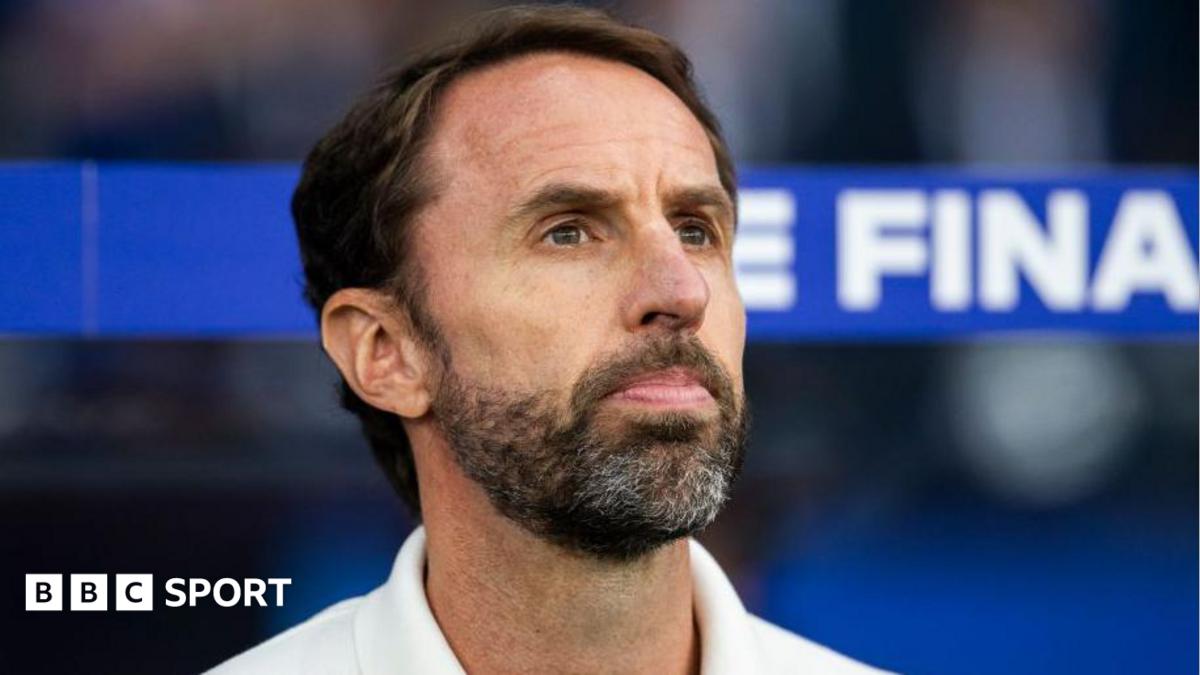
Gareth Southgate Opts Out of World Cup Punditry to Maintain Professional Distance
England manager Gareth Southgate has confirmed he will not participate in punditry or analytical roles during the World Cup, stating he intends to “stay out of the way.” According to reports from the BBC, Southgate’s decision aims to separate his managerial responsibilities from the public-facing critique typical of tournament broadcasting, ensuring his focus remains entirely on the national team’s performance.
Why Gareth Southgate is Avoiding World Cup Punditry
The decision to decline a role in the media circus surrounding the World Cup is a calculated move by Gareth Southgate. In a discussion regarding the nature of tournament coverage, Southgate explained that his priority is the stability of the England camp. By avoiding the role of a pundit, he removes himself from the cycle of immediate, public analysis that often follows every match. This prevents a conflict of interest where a manager might be asked to critique peers or players while simultaneously leading a high-pressure campaign.
Southgate’s approach reflects a broader strategy of emotional regulation and boundary setting. The England manager knows that the scrutiny facing the national team is immense. Engaging in punditry would require him to adopt a critical lens, a mindset that contradicts the supportive, protective environment he attempts to build within the squad. According to Southgate, the goal is to avoid adding unnecessary noise to an already loud environment.
Key reasons for this decision include:
- Eliminating Conflict of Interest: A manager cannot objectively analyze the tactical failures of opponents or teammates while actively competing.
- Mental Bandwidth: Managing a World Cup squad requires total cognitive focus; the preparation for broadcast analysis is a time-consuming distraction.
- Protecting Player Morale: Public critiques from a manager—even if directed at others—can create a culture of fear or over-analysis within the dressing room.
- Avoiding Media Entrapment: Pundits are often pushed toward “hot takes” and sensationalism, which contradicts the measured tone Southgate maintains.
The Tension Between Management and Media Analysis
The role of a football manager and a football pundit are fundamentally opposed. A pundit is paid to find flaws, highlight mistakes, and offer definitive judgments on outcomes. A manager, conversely, must manage egos, maintain confidence, and keep the group cohesive. When these two roles overlap, the result is often a clash of perspectives that can destabilize a team.
Historically, the English media landscape has been aggressive toward national team managers. By explicitly stating “I’ll be staying out of the way,” Southgate is signaling a refusal to engage in the “blame game” that often characterizes post-match panels. This distance allows him to control the narrative around the team without being forced into the reactive posture of a commentator.
| Feature | Managerial Perspective | Punditry Perspective |
|---|---|---|
| Primary Goal | Winning matches and team cohesion | Entertainment and critical analysis |
| Tone | Protective and measured | Critical and provocative |
| Focus | Internal processes and growth | External results and mistakes |
| Time Horizon | Long-term tournament progression | Immediate post-game reaction |
How This Decision Impacts the England National Team
Southgate’s refusal to enter the punditry arena has direct implications for the psychological state of the England squad. Players are acutely aware of the media’s influence. If a manager is seen as part of the “analytical machine,” players may feel that their every mistake is being cataloged not just for coaching purposes, but for public consumption.
By removing himself from the broadcast booth, Southgate reinforces a “us against the world” mentality. This shielding effect is a hallmark of his tenure. He often acts as a lightning rod for criticism, taking the heat from the press to ensure his players can operate in a vacuum of relative peace. If he were to engage in punditry, he would essentially be joining the ranks of the critics, which would undermine his position as the team’s primary defender.
Furthermore, the timing of this decision is critical. The World Cup is a period of extreme volatility. A single loss can shift the national mood from euphoria to despair. By staying “out of the way,” Southgate ensures that his voice remains the authoritative, calming influence within the camp, rather than one of many voices contributing to the external chaos.
The Evolution of World Cup Media Coverage
The shift in how managers interact with the media is a notable trend in modern sports. In previous decades, the line between the coaching staff and the media was more porous. However, the rise of 24-hour news cycles and social media has amplified the impact of every word spoken. The phrase “‘I’ll be staying out of the way’ – Southgate on World Cup punditry – BBC” captures a moment where a high-profile figure recognizes the danger of over-exposure.
Modern punditry has moved toward a “performance” model. Analysis is no longer just about tactics; it is about personality and conflict. This environment is toxic for a manager who needs to maintain a professional, diplomatic relationship with various footballing bodies and opposing coaches. Southgate’s decision is a rejection of this performance-based analysis in favor of professional discretion.
This trend is not limited to England. Many top-tier managers across Europe have adopted similar “media diets,” limiting their interactions to mandatory press conferences and avoiding any voluntary engagement with analytical platforms. The goal is to minimize the “surface area” available for critics to attack.
Comparing Southgate’s Approach to Previous England Managers
To understand the significance of Southgate’s stance, it is helpful to look at the history of England’s leadership. Previous managers have had varying degrees of success in managing the media’s appetite for analysis.
Some managers leaned into the media, attempting to use the press to build a narrative of dominance. Others, like Fabio Capello, attempted to impose a strict, almost authoritarian control over information, which often led to friction with the players and the press. Southgate’s approach is different; it is not about control through restriction, but about control through absence.
By choosing not to be a pundit, Southgate avoids the trap of “over-explaining.” Many managers fail when they try to justify their tactical decisions in a public forum, providing ammunition for pundits to dismantle their logic. Southgate’s silence in the analytical sphere is a strategic advantage. It leaves the pundits with nothing but the results on the pitch to discuss, rather than his own self-critique.
For more on how tactical shifts impact team psychology, see our related explainer on sports psychology in tournament football.
Common Misconceptions About Managerial Media Roles
There is a common belief that managers who engage with the media gain a better understanding of the public’s perspective, which can then be used to manage expectations. However, this is often a fallacy. The “public perspective” presented by pundits is frequently a distilled, sensationalized version of reality designed for ratings, not for tactical insight.

Another misconception is that avoiding punditry is a sign of fear or a lack of confidence in one’s tactical abilities. In reality, the opposite is true. It takes a high level of confidence to step away from the spotlight and allow the work to speak for itself. Southgate’s decision is not an act of avoidance, but an act of prioritization.
Finally, some argue that the BBC and other broadcasters lose value when high-profile figures like Southgate decline to participate. While the broadcaster may lose a “star” name, the integrity of the analysis is often preserved. A manager acting as a pundit is rarely an objective observer; they are biased by their own experiences and current stakes in the game.
The Broader Implications for Football Governance
Southgate’s stance also touches upon the professionalization of the managerial role. The modern manager is no longer just a coach; they are the CEO of a multi-million-pound brand. Every public appearance is a branding exercise. By opting out of punditry, Southgate is protecting the “England” brand from the volatility of the punditry circuit.
This decision may set a precedent for future managers. As the pressure of the World Cup continues to grow, the expectation that managers should be “available” for analysis may fade. We may see a future where the divide between the “doers” (managers) and the “talkers” (pundits) becomes an absolute wall, ensuring that those in charge of the players are not influenced by the noise of the commentary box.
The impact on the FA (Football Association) is also noteworthy. The governing body generally prefers a stable, low-drama environment. Southgate’s desire to stay “out of the way” aligns with the FA’s goals of minimizing distractions and maximizing the team’s chances of success. It reduces the likelihood of a “media storm” sparked by an offhand comment during a broadcast.
Analyzing the Risks of the “Silent” Approach
While the benefits of staying out of the way are numerous, there are inherent risks. When a manager is absent from the analytical conversation, they lose the ability to shape the narrative in real-time. They leave the field open for pundits to speculate without the benefit of a counter-argument from the person actually in charge.
This can lead to a “vacuum of information” where rumors and incorrect tactical assumptions proliferate. If the team performs poorly, the lack of a managerial voice in the analysis can be interpreted as a lack of accountability. Southgate accepts this risk, betting that the internal stability of his team is more valuable than the ability to correct a pundit’s mistake on live television.
Moreover, the pressure on the post-match press conference increases. Because Southgate does not provide analysis elsewhere, the brief windows after a game become the only source of insight. This puts an immense burden on his ability to communicate effectively under pressure, as every word is scrutinized for clues about his mindset and strategy.
FAQ: Southgate and World Cup Punditry
Why did Gareth Southgate say he would stay out of the way of World Cup punditry?
According to Southgate, the decision is based on the need to focus entirely on managing the England team and avoiding the distractions and potential conflicts of interest that come with providing public media analysis during a major tournament.
Does this mean Southgate won’t do any interviews?
No. Southgate will still fulfill his official media obligations, such as pre- and post-match press conferences. He is specifically avoiding “punditry”—the role of an expert commentator who analyzes games and provides opinions on players and tactics for a broadcast audience.
How does this affect the England players?
It is intended to protect the players from additional scrutiny. By not participating in the analytical cycle, Southgate avoids creating an environment where the manager is seen as a critic, thereby maintaining a more supportive and cohesive team atmosphere.
Is it common for managers to avoid punditry during tournaments?
Yes, it is increasingly common. Many elite managers prioritize mental focus and the avoidance of “media noise” to maintain a stable environment for their athletes during high-stakes competitions.

What is the difference between a press conference and punditry?
A press conference is an official communication channel where a manager answers questions about their team’s performance and plans. Punditry is a voluntary role where an individual provides critical analysis, opinions, and predictions for an audience, often focusing on the failures or successes of others.
The Long-Term Legacy of Media Management in Football
The dialogue surrounding “‘I’ll be staying out of the way’ – Southgate on World Cup punditry – BBC” is a microcosm of the evolving relationship between sport and media. For years, the trend was toward more access, more “behind the scenes” content, and more transparency. However, the pendulum is swinging back toward privacy and professional boundaries.
Southgate’s approach suggests that the ultimate luxury for a modern manager is not fame, but silence. The ability to operate away from the gaze of the analytical camera is a strategic tool. By choosing to be a ghost in the punditry machine, Southgate is attempting to reclaim the mental space necessary to lead a nation’s hopes on the world stage.
As the tournament progresses, the success of this strategy will be measured not by what Southgate says, but by how the team handles the pressure. If England remains composed despite external criticism, it will validate the decision to keep the manager and the pundits in two entirely different worlds. The focus remains on the pitch, where the only analysis that truly matters is the one that results in a victory.
For further insights into the intersection of media and sport, check out our analysis of modern sports broadcasting trends.
