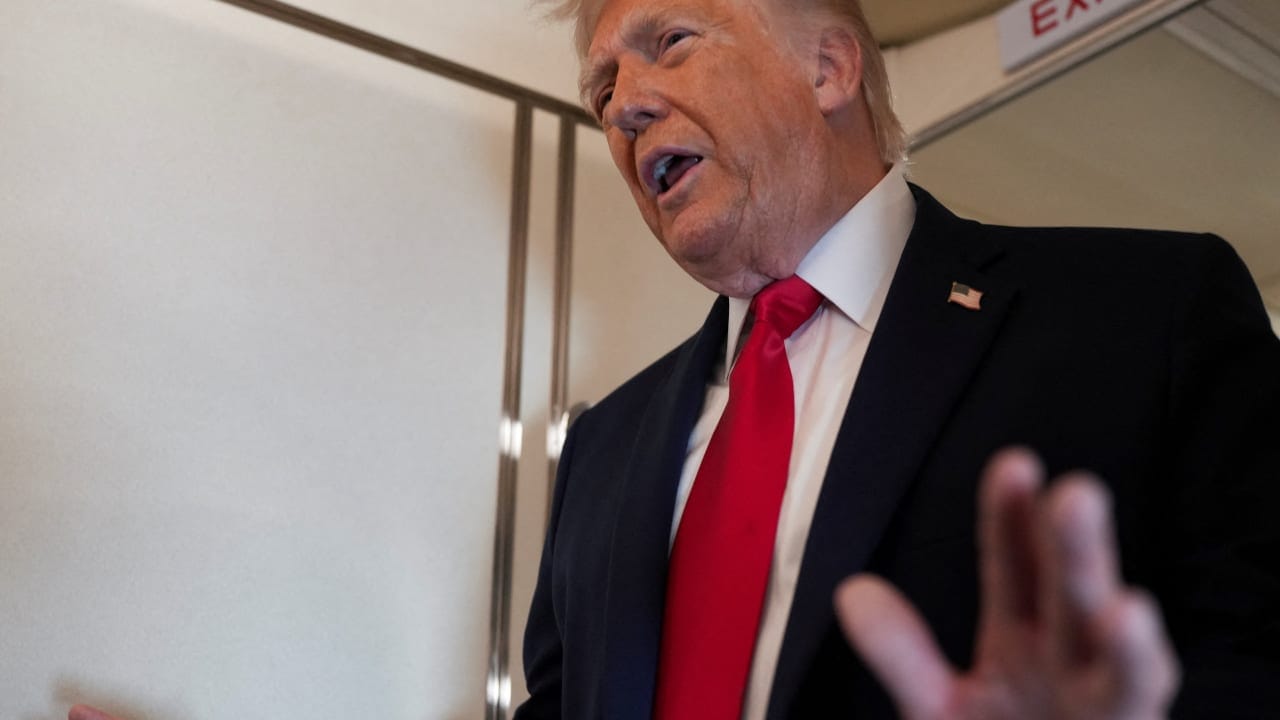
Donald Trump separates Lebanon issue from Iran ceasefire deal – The Jerusalem Post
President Donald Trump is decoupling the conflict in Lebanon from ongoing negotiations for a ceasefire with Iran. While the administration remains open to easing sanctions and unfreezing Iranian funds “if they behave,” no assets will be released until a formal ceasefire agreement is reached, according to reports from Al Jazeera and The Washington Post.
Why is Donald Trump separating the Lebanon issue from the Iran ceasefire deal?
The decision to treat the Lebanon crisis as a distinct entity from the broader Iran ceasefire negotiations marks a strategic shift in U.S. diplomatic maneuvering. According to The Jerusalem Post, Donald Trump separates Lebanon issue from Iran ceasefire deal to prevent the complexities of the Lebanese conflict from stalling a potential diplomatic breakthrough with Tehran.
By separating these two theaters, the U.S. administration aims to avoid a “package deal” scenario where progress in one region is held hostage by deadlock in another. This decoupling allows the U.S. to apply specific pressures on the Lebanese front while maintaining a separate, focused track for a ceasefire with the Iranian government.
- Strategic Flexibility: The U.S. can negotiate terms for a ceasefire without being forced to concede on Lebanese security arrangements immediately.
- Pressure Points: Separating the issues allows the administration to isolate Iran’s direct actions from those of its regional proxies.
- Diplomatic Speed: A ceasefire deal with Iran may be reachable faster if it is not tethered to the multifaceted political instability within Lebanon.
The conditions for unfreezing Iranian funds and easing sanctions
A central point of contention in the current negotiations is the status of Iranian financial assets currently frozen by the United States. The administration has signaled a willingness to use these funds as leverage, though the conditions for their release remain strict.
According to The Washington Post, President Trump has indicated that the U.S. is open to unfreezing Iranian funds and easing sanctions, provided that the Iranian government “behaves.” This phrasing suggests a behavioral-based approach to sanctions relief, where concessions are tied to verifiable changes in Iran’s regional and domestic conduct.
However, the sequence of these events is non-negotiable. Al Jazeera reports that Trump explicitly stated he will not unfreeze Iranian assets before a ceasefire deal is actually reached. This establishes a clear “deal first, payment later” framework, ensuring that the U.S. maintains its primary leverage—the frozen assets—until the cessation of hostilities is formally codified.
| Condition | U.S. Position (per reported sources) | Timing/Requirement |
|---|---|---|
| Sanctions Relief | Open to easing “if they behave” | Contingent on behavior |
| Asset Unfreezing | Will not occur before ceasefire | Post-ceasefire agreement |
| Lebanon Issue | Separated from Iran deal | Treated as a distinct track |
Why Iran has not yet agreed to a peace deal
Despite the potential for financial relief, a final agreement remains elusive. The administration has pointed to the internal psychology and political posture of the Iranian leadership as a primary hurdle.
According to reports from NBC News and The Hill, Trump stated that Iran has not agreed to a deal to end the war because “they’re strong, they’re proud.” This assessment suggests that the Iranian government views the current conflict through a lens of national prestige and perceived strength, making them hesitant to accept terms that could be framed as a surrender or a sign of weakness.
“Iran has not agreed on peace deal because they’re ‘strong,’ ‘proud’” — attribution via NBC News and The Hill.
This “strength and pride” dynamic complicates traditional diplomatic bargaining. When a state views its refusal to compromise as a demonstration of power, financial incentives—such as the unfreezing of assets—may not be sufficient to trigger a deal unless the terms allow the opposing party to maintain a facade of victory or strength.
The geopolitical implications of decoupling Lebanon and Iran
The decision that Donald Trump separates Lebanon issue from Iran ceasefire deal carries significant implications for the stability of the Middle East. Historically, the U.S. and other global powers have viewed Iran’s influence in Lebanon—primarily through its support of regional proxies—as an extension of Tehran’s foreign policy. By treating them separately, the U.S. is effectively attempting to isolate the “proxy” problem from the “state” problem.
Impact on Regional Proxies
If the U.S. reaches a ceasefire with Iran without first resolving the Lebanon issue, it creates a complex security vacuum. There is a risk that a ceasefire with the central government in Tehran does not automatically translate to a cessation of hostilities by affiliated groups in Lebanon. Conversely, it allows the U.S. to negotiate a direct end to state-level aggression without being bogged down by the internal sectarian politics of the Lebanese state.
Economic Leverage vs. Political Pride
The tension between the “behavioral” requirements mentioned by The Washington Post and the “pride” mentioned by NBC News highlights the core conflict of the negotiations. The U.S. is attempting to use economic tools (sanctions and frozen assets) to solve a problem that the Iranian leadership perceives as a matter of national identity and strength.
For further context on how this fits into broader U.S. foreign policy, see a related explainer on U.S. sanctions mechanisms.
Common misconceptions about the current negotiations
As these reports emerge, several oversimplifications have entered the public discourse. It is important to clarify the specific boundaries of the current U.S. position based on the available reports.
Misconception: The U.S. is offering a blanket amnesty for Iranian assets.
In reality, the administration has set a strict sequence. According to Al Jazeera, the unfreezing of assets is not a starting offer but a result of a completed ceasefire. There is no “up-front” payment to induce a deal.
Misconception: A deal with Iran will automatically solve the Lebanon crisis.
The reports from The Jerusalem Post explicitly contradict this. Because the administration is separating the two issues, a ceasefire with Iran does not inherently include a resolution to the Lebanon conflict. The two are being handled on different diplomatic tracks.
Misconception: The U.S. is unwilling to negotiate sanctions.
On the contrary, The Washington Post indicates that the U.S. is “open” to easing sanctions. The hurdle is not a lack of willingness from the U.S., but rather the “behavioral” requirements and the “pride” of the Iranian leadership.
Frequently Asked Questions
Will the U.S. unfreeze Iranian assets to get a ceasefire?
According to Al Jazeera, President Trump has stated that he will not unfreeze Iranian assets before a ceasefire deal is reached. The funds are intended as a reward or a result of the agreement, not a precondition for entering one.

How is the Lebanon issue being handled differently?
As reported by The Jerusalem Post, the administration is separating the Lebanon issue from the Iran ceasefire deal. This means the U.S. is treating the conflict in Lebanon as a distinct matter, rather than linking its resolution to the broader agreement with Iran.
What does “if they behave” mean in the context of sanctions?
Based on reporting from The Washington Post, this phrase indicates that sanctions relief is contingent upon the Iranian government’s conduct. While specific “behaviors” were not listed, it implies a requirement for verifiable compliance with U.S. demands or a change in regional aggression.
Why hasn’t Iran agreed to the ceasefire yet?
According to NBC News and The Hill, the administration believes Iran has not agreed to a deal because they view themselves as “strong” and “proud,” suggesting that national prestige is currently outweighing the desire for immediate economic relief.
Is there a timeline for when these deals might be reached?
The provided reports do not specify a definitive date, but they establish the sequence of events: first, a ceasefire must be reached; second, the Iranian government must “behave”; and only then will assets be unfrozen and sanctions eased.
