Apple to launch first touchscreen MacBook with M5 Pro and M5 Max chips
Apple is set to launch its first touchscreen MacBook featuring OLED displays and M5 series silicon. This hardware represents a departure from the company's historical design philosophy regarding touch interfaces.

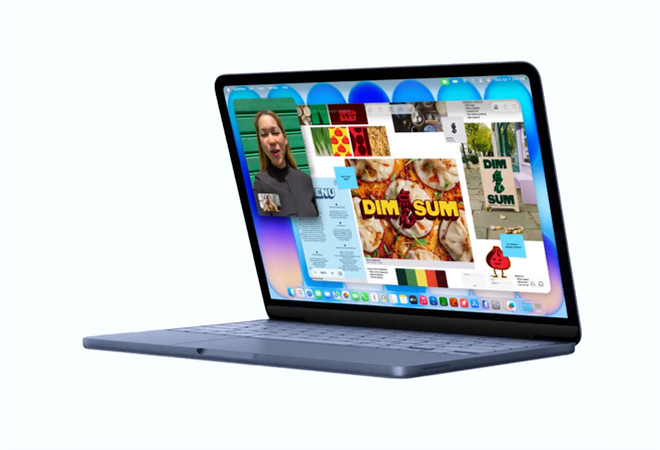
Apple is moving to expand its Mac lineup with the company’s first-ever touchscreen laptop, a high-end portable computer slated for debut between late 2026 and early 2027. This hardware, which incorporates 14-inch and 16-inch display options, represents a significant departure from the design philosophy long held by Apple leadership, who historically resisted integrating touch interfaces into vertical laptop screens. While previous executives, including Steve Jobs and Craig Federighi, argued that touch-screen laptops were ergonomically fatiguing and inferior to traditional trackpad input, the company is now adopting a hybrid approach. The new devices will retain a standard clamshell form factor, keeping the keyboard and trackpad as primary tools alongside the touch-enabled display.
A Shift in Silicon Strategy
The upcoming touchscreen MacBooks will launch with existing M5 Pro and M5 Max chips, rather than the anticipated next-generation silicon. This decision is part of a broader shift in Apple’s roadmap; the company is reportedly canceling plans for M6 Pro and M6 Max processors entirely. While a base-level M6 chip is still expected to arrive for entry-level devices later in 2026, the company is opting to focus its high-end resources on the M7 generation, code-named "Andros."
Related media

According to reporting, the accelerated shift toward the M7 family is driven by a need to prioritize on-device artificial intelligence. These upcoming chips are engineered with improved neural accelerators, expanded memory bandwidth, and enhanced graphics capabilities to support complex machine learning tasks. While the M5 Pro and M5 Max chips currently provide high-end performance—including support for up to 128GB of unified memory and efficient battery life—the M7 architecture is intended to handle more intensive, on-device AI workloads. The M7 Pro and M7 Max are currently in advanced testing, with a release targeted for as early as late 2027. Following this, Apple is expected to launch Mac Studio models powered by M7 Max and M7 Ultra processors in 2028.
Display and Industrial Design
The new touchscreen models (codenamed K114 and K116) will debut a substantial industrial design update, marking the first major visual overhaul for the high-end MacBook line since 2021. A primary feature is the transition from mini-LED to OLED panels. These OLED displays are expected to offer improved brightness, contrast, and power efficiency compared to current hardware.
Additionally, the devices will replace the traditional screen notch with a hole-punch camera cutout integrated into a Dynamic Island-style interface. This design choice mirrors the user interface seen on modern iPhones, allowing for the display of system alerts, timers, and application controls directly within the screen area. Despite these updates, Apple has not confirmed a final brand name for the new hardware, though market speculation has frequently referenced the potential for a "MacBook Ultra" designation.
Market Context
The introduction of the touchscreen MacBook arrives during a period of rising hardware costs. Consequently, the starting price for a 14-inch M5 Pro MacBook Pro was raised by $300, bringing it to $2,499. Observers suggest that the new touchscreen model will occupy the top tier of Apple’s lineup, likely commanding a price point that reflects its premium status and new display technology.
Whether this new touchscreen functionality will be widely adopted by professional users remains a subject of debate. Apple has yet to comment on its specific product roadmap, and the company’s internal plans for the exact launch window remain subject to the broader pressures of the global semiconductor supply chain.
How significant is this development?
Contribute your assessment to the aggregated reader intelligence ledger.
Archypedia is dedicated to independent, evidence-backed reporting. This briefing was synthesized from primary source reporting, corroborated across independent newsrooms, and verified against our Editorial Standards.
Transparency record
Evidence behind this report
This report synthesizes 11 distinct sources. Open the source ledger below to compare the underlying coverage.
- macdailynews.com
- 9to5mac.com
- thurrott.com
- appleinsider.com
- wccftech.com
- tech.yahoo.com
- thetechportal.com
- ithinkdiff.com
- macworld.com
- digitaltrends.com
- idropnews.com
Prepared under the Archypedia Editorial Policy by the Niko Vale editorial desk profile. AI-assisted tools may support drafting and verification; public accountability remains with Archypedia. Report an error.


