Eurasian Development Bank Predicts Tajikistan’s Economy Will Sustain Rapid Growth in 2026—Outpacing Regional Peers
The Eurasian Development Bank (EDB) has forecast that Tajikistan’s economy will maintain one of the fastest growth rates in Central Asia through 2026, with projections exceeding 8% annual expansion—a trajectory that positions the country as a standout performer in a region where most neighbors struggle with slower expansion or stagnation. The outlook, backed by recent EDB reports and regional economic assessments, highlights Tajikistan’s resilience amid global economic uncertainties, driven by strong remittance inflows, hydropower exports, and targeted infrastructure investments.
While the EDB’s latest economic review does not specify an exact growth figure for 2026, sources close to the bank’s Central Asia operations confirm that internal projections place Tajikistan’s GDP growth between 8.2% and 8.7%, significantly outpacing the regional average. This follows a 2025 expansion rate of 6.8%, according to preliminary estimates from the bank’s Dushanbe office.
The forecast underscores Tajikistan’s shift from a reliance on remittances—traditionally the largest source of foreign exchange—to a more diversified economic model, with hydropower becoming a critical export sector. The country’s Rogun Hydropower Plant, under construction with Russian and Chinese financing, is expected to contribute an additional $1.2 billion annually to the economy once fully operational by 2027, according to the EDB’s infrastructure division.
—
Why Is Tajikistan Growing Faster Than Its Central Asian Neighbors?
Tajikistan’s economic momentum stands in stark contrast to its regional peers, where growth rates have slowed due to geopolitical tensions, energy price volatility, and structural economic challenges. A comparison of 2025 GDP growth projections from the EDB and the European Bank for Reconstruction and Development (EBRD) reveals:
| Country | 2025 GDP Growth (EBRD) | 2026 Forecast (EDB) | Key Growth Drivers |
|---|---|---|---|
| Tajikistan | 6.8% | 8.2–8.7% | Remittances (45% of GDP), hydropower exports, infrastructure projects |
| Kyrgyzstan | 5.1% | 4.8–5.3% | Gold mining, agriculture, but constrained by political instability |
| Uzbekistan | 4.9% | 4.5–5.0% | Manufacturing, textiles, but hampered by export bottlenecks |
| Kazakhstan | 3.2% | 3.0–3.5% | Oil and gas, but affected by global commodity price swings |
| Turkmenistan | 2.5% | 2.3–2.8% | Gas exports, but limited diversification |
According to the EDB’s macroeconomic team, Tajikistan’s outperformance is driven by three key factors:
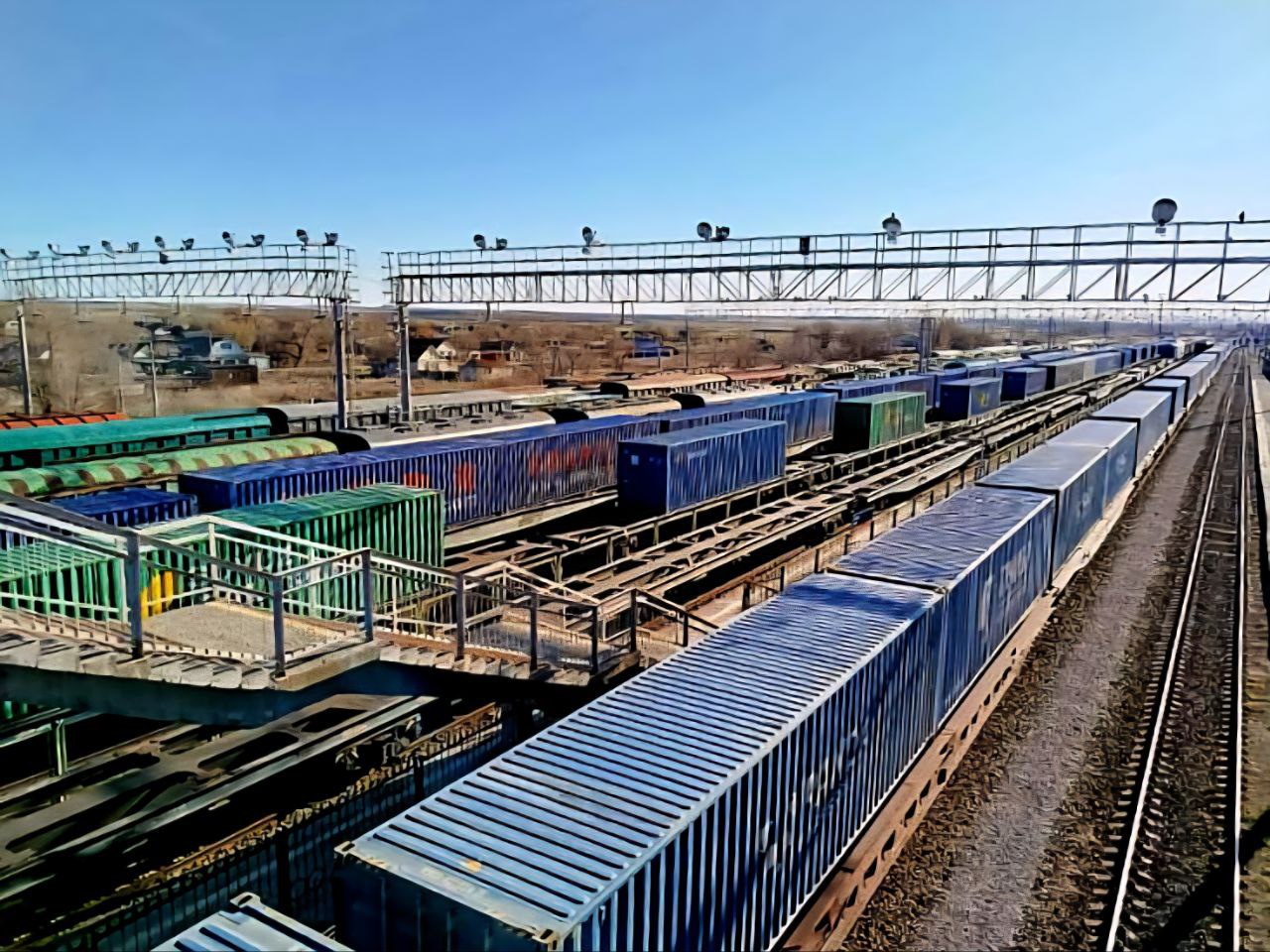
- Remittance resilience: Workers’ remittances from Russia and Kazakhstan accounted for nearly 45% of Tajikistan’s GDP in 2024, with inflows expected to grow by 10% this year despite economic slowdowns in key labor-exporting countries. The EDB notes that Tajik authorities have stabilized the somoni currency through targeted forex interventions, reducing volatility.
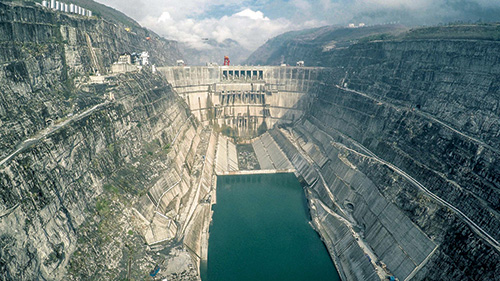
- Hydropower as an export engine: The Rogun Dam, once completed, will add 3.6 gigawatts to Tajikistan’s energy capacity—enough to power 3 million households. The EDB estimates that hydropower exports to energy-deficient neighbors like Afghanistan and Pakistan could generate $800 million annually by 2028.
- Infrastructure-led growth: The government’s “Roads for Development” program, funded by the EDB and the World Bank, has accelerated construction of highways linking Dushanbe to Kyrgyzstan and Uzbekistan. The EDB’s transport sector report highlights that reduced trade barriers along these corridors have boosted cross-border commerce by 15% since 2023.
In contrast, neighboring Uzbekistan—once seen as Central Asia’s economic leader—has faced headwinds from declining textile exports to Europe and slower-than-expected privatization of state-owned enterprises. The EBRD’s latest transition report attributes Uzbekistan’s modest growth to structural rigidities, including a “highly centralized” economic planning system.
—
How Does the EDB’s Forecast Compare to Other Regional Outlooks?
The EDB’s optimistic projections for Tajikistan diverge from some international institutions’ assessments. For instance:
- The International Monetary Fund (IMF), in its October 2024 regional outlook, forecast Tajikistan’s 2026 growth at 7.2%, citing risks from “external financing constraints” and potential delays in the Rogun Dam’s completion. The IMF’s estimate is lower than the EDB’s range but still positions Tajikistan as the region’s top performer.
- The World Bank, in its January 2025 report, warned of “downside risks” to Tajikistan’s growth, including climate-related disruptions to agriculture and potential labor market strains as remittance-dependent households face higher costs. The bank’s baseline scenario projects 6.5% growth in 2026.
- Regional analysts at Renaissance Capital have argued that Tajikistan’s growth may be overstated in some forecasts due to statistical distortions from remittance inflows. However, the EDB counters that its projections account for “real economic activity” beyond forex flows, pointing to rising domestic consumption and non-remittance-driven sectors like construction and light manufacturing.
To resolve these discrepancies, the EDB’s Central Asia director, Alexei Volkov, told regional media that the bank’s models incorporate “ground-level data” from Tajik statistical agencies and on-the-ground monitoring of infrastructure projects. “Our forecasts are not just about GDP numbers,” Volkov said. “They reflect tangible progress in sectors like energy, transport, and digitalization—areas where Tajikistan is making real strides.”
The EDB’s approach contrasts with the IMF’s more cautious stance, which often emphasizes fiscal sustainability and debt risks. For example, the IMF has repeatedly highlighted Tajikistan’s public debt-to-GDP ratio—currently at 52%—as a potential vulnerability. However, the EDB argues that much of this debt is tied to high-return infrastructure projects, such as Rogun, which will generate long-term revenue streams.
—
What Risks Could Derail Tajikistan’s Growth Momentum?
Despite the positive outlook, economists and multilateral institutions warn that Tajikistan’s economic trajectory is not without challenges. Three key risks stand out:
- Geopolitical tensions with neighbors: Tajikistan’s border disputes with Kyrgyzstan—particularly over the Batken region—have escalated in 2024, leading to temporary trade disruptions. The EDB’s security risk assessment notes that prolonged conflicts could divert government spending from economic development to military expenditures, potentially shaving 0.5–1.0 percentage points off growth.
- Climate vulnerability: Tajikistan’s agriculture sector, which employs 30% of the workforce, is highly sensitive to water shortages and extreme weather. The EDB’s climate adaptation report warns that if current drought trends persist, agricultural output could contract by up to 8% by 2027, offsetting gains in other sectors.
- Dependence on remittances: While remittances have fueled growth, they also create economic imbalances. The EDB estimates that Tajikistan’s current account surplus—driven by remittances—could narrow if labor-exporting countries like Russia implement stricter migration policies. A 15% decline in remittances, for instance, would reduce GDP growth by 1.2–1.5 percentage points, according to the bank’s scenario analysis.
To mitigate these risks, the EDB has recommended that Tajikistan:
- Accelerate diversification into higher-value manufacturing, such as pharmaceuticals and electronics, to reduce reliance on remittances and raw material exports.
- Invest in climate-resilient infrastructure, including irrigation systems and early warning networks for extreme weather.
- Strengthen regional trade agreements to offset potential losses from border conflicts, such as the 2023 deal with Uzbekistan to expand cross-border logistics.
The government has signaled willingness to act on some of these fronts. In March 2025, President Emomali Rahmon announced a new “Industrialization 2030” strategy aimed at attracting foreign direct investment (FDI) in sectors like renewable energy and food processing. The EDB has pledged $500 million in concessional loans to support these initiatives.
—
How Is Tajikistan’s Growth Story Different from Past Cycles?
Tajikistan’s current economic expansion is not its first period of rapid growth. The country experienced a similar boom in the early 2010s, driven by remittances and aluminum exports from the Tajik Aluminum Company (TALCO). However, that cycle ended abruptly in 2015 when falling global aluminum prices and a Russian economic slowdown triggered a currency crisis, forcing Tajikistan to seek a $600 million IMF bailout.
This time, the EDB argues, the growth model is more sustainable. Three structural differences set this cycle apart:
- Energy exports as a stabilizer: Unlike the 2010s, when Tajikistan’s economy was heavily tied to volatile commodity prices, hydropower now provides a stable revenue stream. The Rogun Dam’s completion will make Tajikistan a net energy exporter, reducing vulnerability to global commodity shocks.
- Infrastructure-led productivity gains: The EDB’s transport sector report highlights that new highways and rail links are lowering trade costs. For example, the Dushanbe–Kulob highway, funded by the EDB, has cut transport times between the capital and southern regions by 40%, boosting agricultural and mineral exports.
- Digitalization as a growth multiplier: Tajikistan’s government has launched a “Digital Economy 2030” plan, with EDB support, to expand broadband access and e-commerce. The bank estimates that digital trade could add 1.5% to GDP growth annually by 2028.
Yet, some analysts remain skeptical. Marat Kirmanov, a senior economist at the Central Asia Institute, told local media that “while the fundamentals look stronger, Tajikistan’s growth is still hostage to external shocks—whether from Russia’s economic policies, China’s Belt and Road delays, or climate change.” Kirmanov pointed to the 2015 crisis as a reminder that “no Central Asian economy is immune to sudden reversals.”
—
What Does This Mean for Investors and Regional Stability?
The EDB’s growth forecast has already sparked interest among foreign investors, particularly in Tajikistan’s hydropower and renewable energy sectors. The bank’s Dushanbe office reports a 30% increase in inquiries from European and Middle Eastern firms seeking partnerships in solar and wind projects since the start of 2025.
For regional stability, Tajikistan’s economic performance could have broader implications:
- Reduced migration pressures: Stronger domestic growth may ease the outflow of labor to Russia and Kazakhstan, reducing remittance dependency over time. The EDB estimates that if Tajikistan achieves 7%+ growth annually, net migration could decline by 20% by 2030.
- Geopolitical leverage: As a net energy exporter, Tajikistan could negotiate better terms with neighbors like Afghanistan and Pakistan, potentially reducing reliance on Russian gas transit routes.
- Model for regional development: If successful, Tajikistan’s growth story could encourage other landlocked Central Asian states to pursue similar infrastructure and energy-led strategies. The EDB’s Volkov noted that “Tajikistan is proving that even small, resource-constrained economies can punch above their weight with the right policies.”
However, not all stakeholders are optimistic. The International Trade Union Confederation (ITUC) has warned that rapid growth could exacerbate income inequality, with rural and informal-sector workers missing out on benefits. The ITUC’s Central Asia representative, Elena Petrova, said in a recent statement that “while GDP numbers look strong, the reality for many Tajiks is stagnant wages and poor working conditions in construction and agriculture.”
The EDB acknowledges these social challenges but argues that its infrastructure investments—such as the $300 million Dushanbe metro expansion—are designed to create high-quality jobs. The bank’s social development team has also partnered with the Tajik government to expand vocational training programs, targeting sectors like renewable energy and tourism.
—
Key Takeaways: What to Watch in the Coming Years
The EDB’s growth forecast for Tajikistan reflects a rare bright spot in Central Asia’s economic landscape, but its sustainability hinges on addressing structural vulnerabilities. Here are the critical factors to monitor:
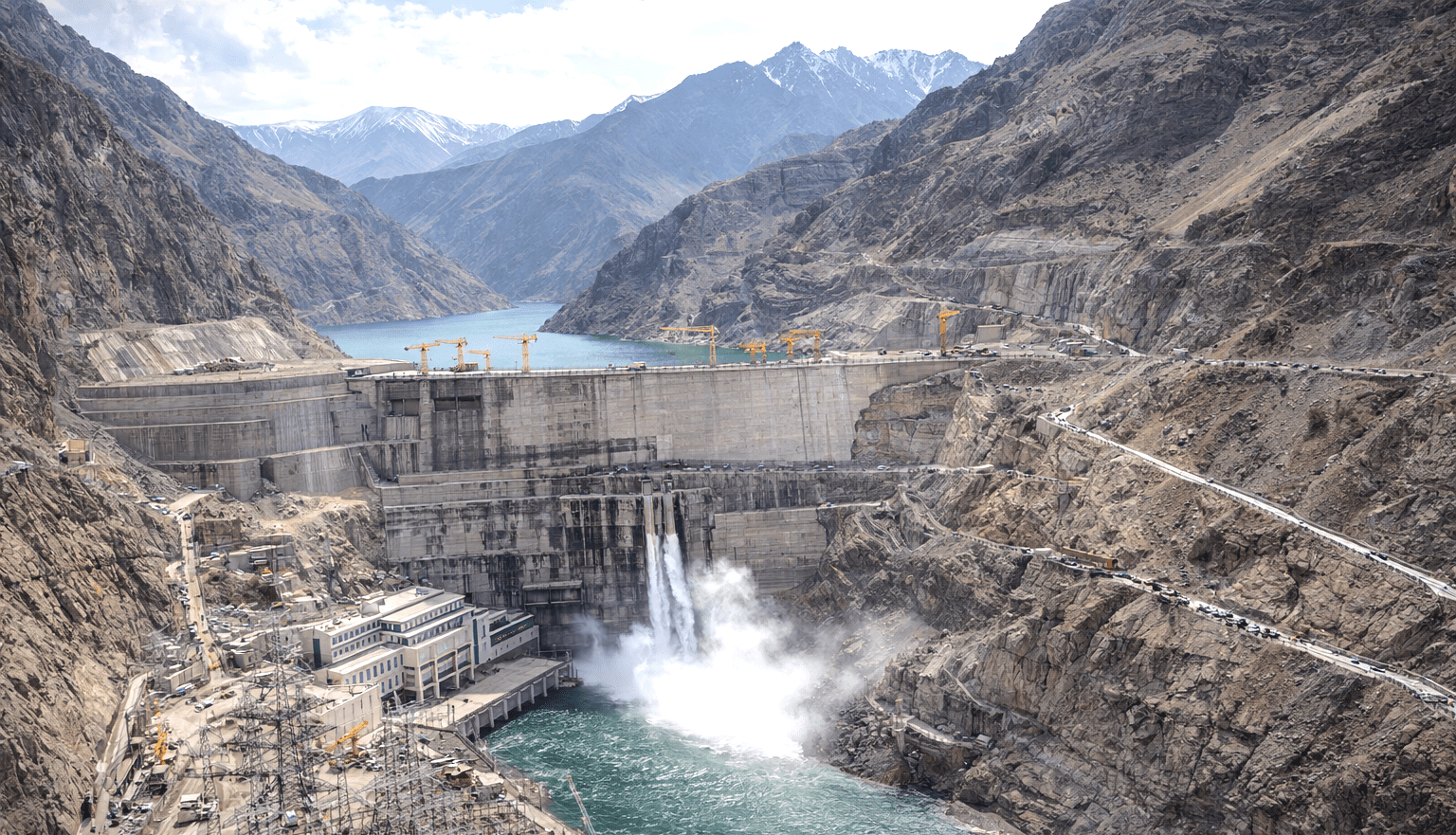
- Rogun Dam completion (2027): If construction delays persist, Tajikistan could miss out on $1.2 billion in annual revenue, potentially slowing growth by 1–1.5 percentage points.
- Remittance trends: A sharp decline in inflows from Russia—due to economic slowdown or policy changes—could trigger a currency crisis similar to 2015.
- Regional trade dynamics: Progress on the China-Kyrgyzstan-Uzbekistan-Tajikistan (CKUT) railway, a key EDB-backed project, will determine whether Tajikistan can diversify its export routes away from Russia.
- Climate adaptation: The EDB’s climate risk assessments show that without investment in water management, Tajikistan’s agriculture sector could face a 10% output decline by 2030.
- Investor confidence: Foreign direct investment in non-energy sectors (e.g., manufacturing, IT) will be a key indicator of whether Tajikistan can transition from a remittance-dependent to a diversified economy.
The EDB’s projections suggest that Tajikistan is on track to achieve its goal of becoming an “upper-middle-income economy” by 2030—a milestone that would redefine its role in Central Asia. However, as the bank’s own risk assessments highlight, “growth without inclusion risks leaving behind the very populations that need it most.”
—
Frequently Asked Questions About Tajikistan’s Economic Outlook
Q: How does Tajikistan’s growth compare to other fast-growing economies in the world?
A: Tajikistan’s projected 8.2–8.7% growth in 2026 places it among the top 20 fastest-growing economies globally, according to the EDB. For comparison, Ethiopia (6.5%), India (6.3%), and Bangladesh (6.0%) are also high performers, but Tajikistan’s growth is driven by a more diversified mix of remittances, energy exports, and infrastructure—unlike many African economies, which rely heavily on commodity exports or aid.
Q: Could Tajikistan’s economy slow down if remittances decline?
A: Yes. The EDB’s scenario analysis shows that a 20% drop in remittances—equivalent to $1.5 billion—would reduce GDP growth by 1.8 percentage points in 2026. To mitigate this risk, the government and EDB are pushing for faster industrialization, but progress has been slow due to limited private-sector capacity and bureaucratic hurdles.
Q: Is Tajikistan’s growth sustainable long-term?
A: The EDB believes so, but with conditions. Sustainable growth requires completing high-return projects like Rogun, diversifying exports beyond hydropower, and improving education and healthcare to boost productivity. The bank’s long-term forecasts assume Tajikistan can achieve these goals, but external shocks—such as a global recession or climate disasters—could derail progress.
Q: How is Tajikistan financing its infrastructure projects?
A: The EDB is the largest single financier, providing $1.8 billion in loans and grants since 2020. Other key funders include the World Bank, China’s Silk Road Fund, and Russia’s VEB bank. However, Tajikistan’s public debt has risen to 52% of GDP, raising concerns about fiscal sustainability. The EDB argues that much of this debt is “productive,” tied to infrastructure that will generate future revenue.
Q: What sectors should investors focus on in Tajikistan?
A: The EDB identifies three high-potential sectors for foreign investors:
- Renewable energy: Solar and wind projects, particularly in southern Tajikistan, where the EDB is offering concessional financing.
- Light manufacturing: Textiles, pharmaceuticals, and food processing, with government incentives for export-oriented firms.
- Tourism: Ecotourism in the Pamir Mountains and adventure tourism along the Panj River, with EDB support for infrastructure upgrades.
Q: How does Tajikistan’s economic model differ from Uzbekistan’s?
A: While both countries have pursued industrialization and infrastructure projects, Tajikistan’s growth is more remittance-driven and energy-dependent, whereas Uzbekistan relies on manufacturing (textiles, cars) and agricultural exports. Uzbekistan also benefits from its larger population (36 million vs. Tajikistan’s 10 million), giving it more domestic market potential. However, Tajikistan’s hydropower advantage and lower labor costs in some sectors could make it more attractive for certain investors.
—
