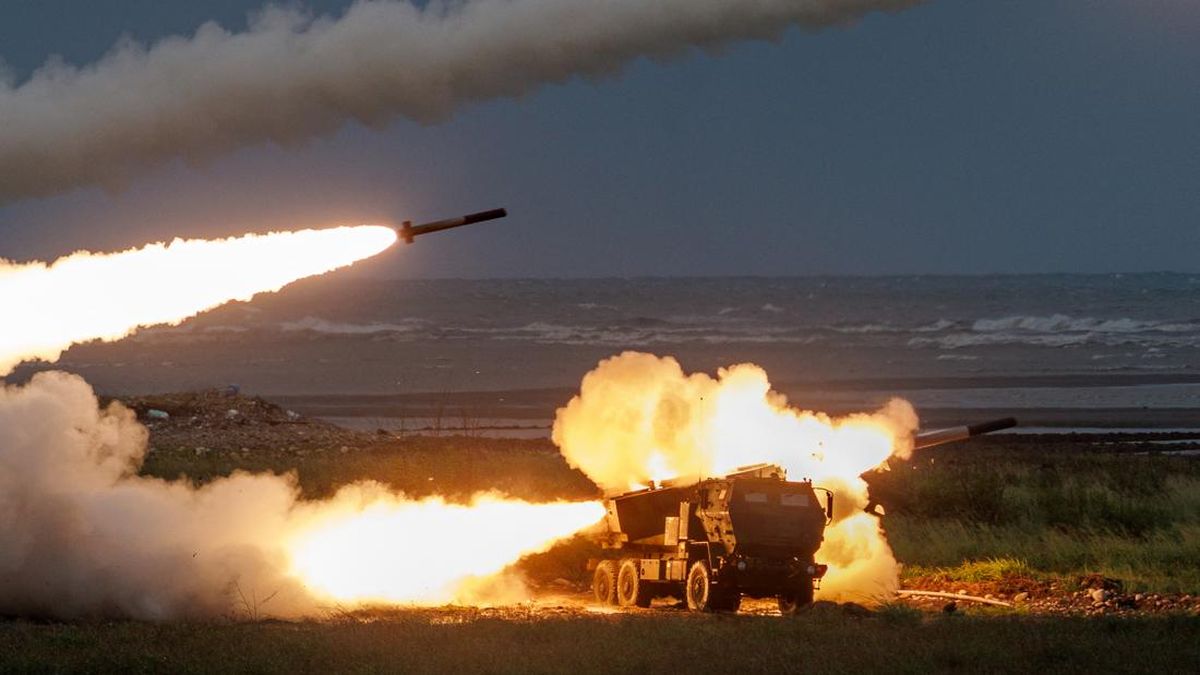
Taiwan military forces conducted combat simulations in Taichung, firing dozens of U.S.-made HIMARS and domestic Thunderbolt-2000 rockets toward China to practice defending against a potential amphibious invasion, according to reports from local and international media outlets including Focus Taiwan and SINDOnews.
- Location: Taichung, Taiwan.
- Weaponry Used: U.S.-made HIMARS and domestic Thunderbolt-2000 rocket systems.
- Primary Objective: Simulating defense against an amphibious landing.
- Target Direction: Toward mainland China.
Which weapon systems did Taiwan deploy?
The exercises featured a combination of imported and indigenous artillery. According to SINDOnews, Taiwan fired dozens of HIMARS (High Mobility Artillery Rocket System) missiles provided by the United States. This marks the first time the island has deployed these specific rockets in such quantities toward China.
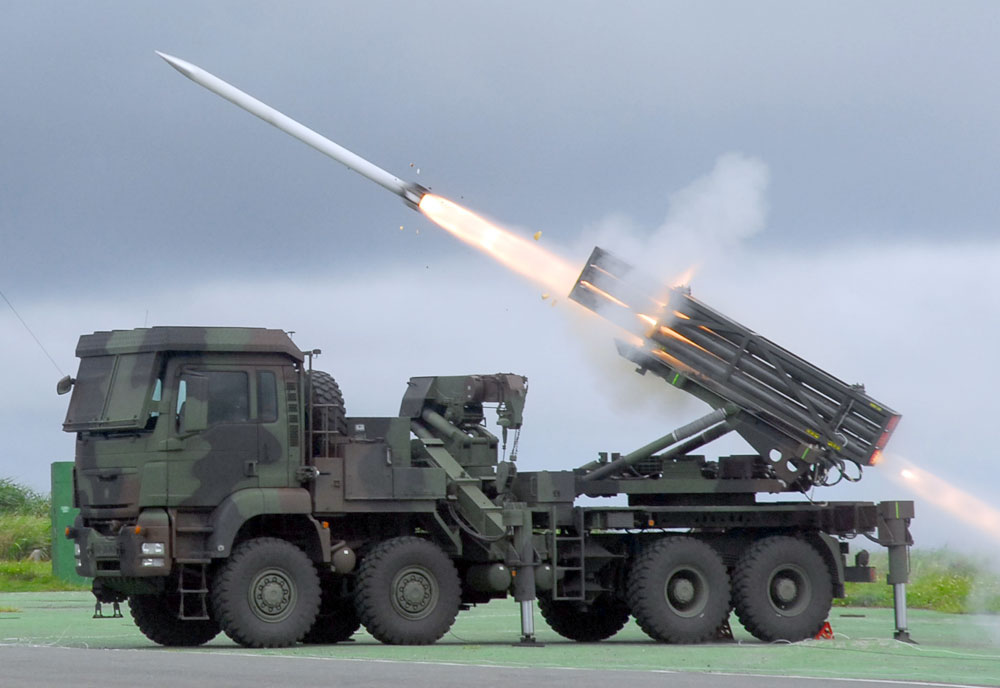
Alongside the American systems, Taiwan tested its own hardware. Reports from SinPo.id state that the military utilized the Thunderbolt-2000 rocket system, a domestically produced weapon designed for long-range strikes.
What was the goal of the Taichung simulations?
The military maneuvers focused on coastal defense. According to Focus Taiwan, the soldiers simulated a defense strategy specifically designed to repel an amphibious invasion in the Taichung region. The exercise aimed to test the readiness and response time of forces tasked with stopping enemy ships from establishing a beachhead.
The direction of the rocket fire served as a signal of deterrent capability. Reports from CNN Indonesia and CNBC Indonesia confirm that the rockets were directed toward China as part of these combat training exercises.
How do these rocket systems differ in strategy?
The use of both the HIMARS and the Thunderbolt-2000 demonstrates a dual-track procurement strategy. While the HIMARS provides Taiwan with highly mobile, precision-strike capabilities backed by U.S. technology, the Thunderbolt-2000 represents the island’s effort to maintain an indigenous defense industry to reduce total reliance on foreign suppliers.
By integrating both systems in a single exercise, Taiwan’s military tested its ability to coordinate international hardware with local assets during a simulated invasion scenario.
