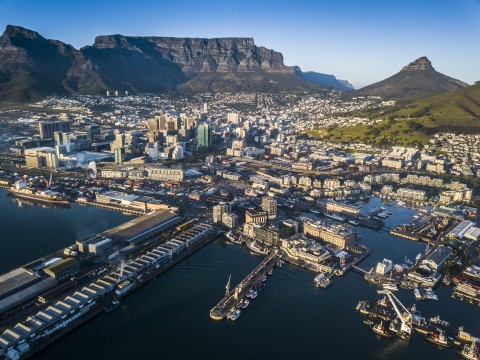
Cape Town Container Port Ranked World’s Worst: World Bank Data Sparks Demands for Transnet Reform
The World Bank has ranked the Cape Town container port as the worst in the world among 400 global ports, according to reports from Business Insider Africa and eNCA. The ranking highlights severe operational inefficiencies and infrastructure failures, leading to urgent calls from local government and industry stakeholders for Transnet to implement immediate management and investment reforms.
Why was the Cape Town container port ranked world’s worst?
The ranking, based on World Bank data, places Cape Town at the bottom of a list comprising 400 ports globally. According to Business Insider Africa, the low ranking is a result of systemic inefficiencies that hinder the movement of goods and increase costs for shippers. The data emerges at a time when global shipping patterns are shifting, with more vessels rerouting around the African continent, placing additional pressure on existing infrastructure.
Reports from EWN and Moneyweb indicate that the primary drivers of this ranking are poor management and a lack of critical investment. The port’s inability to handle container volumes efficiently has led to congestion and delays, which directly impact the supply chain for businesses relying on the Western Cape’s maritime gateway.
Industry observers point to several recurring issues that contribute to this standing:
- Infrastructure Decay: Aging equipment and inadequate berth depth.
- Operational Bottlenecks: Slow turnaround times for vessels and inefficient cargo handling.
- Management Failures: A perceived lack of strategic oversight within Transnet, the state-owned enterprise managing the port.
“The ranking serves as a stark indicator of the operational crisis facing the port, necessitating a complete overhaul of how the facility is managed and funded,” according to industry analysis reported by Moneyweb.
Who is responsible for the port’s decline and who is calling for action?
Transnet, the state-owned company responsible for South Africa’s ports and rail networks, is the central entity under scrutiny. Because Transnet holds a monopoly over port operations, the responsibility for the Cape Town port’s performance rests with its executive leadership and the Department of Transport. According to eNCA, the city of Cape Town has been vocal in its demand for Transnet to take decisive action to reverse the port’s decline.

The stakeholders affected by the port’s poor performance include:
- Local Government: The City of Cape Town, which views the port as a critical economic engine for the region.
- Importers and Exporters: Businesses facing increased costs due to delays and inefficient logistics.
- Shipping Lines: Global carriers that must factor in the inefficiency of Cape Town when planning routes.
- Consumers: Who ultimately pay higher prices for goods due to increased shipping and handling costs.
According to EWN, there are growing calls for a shift in management style, with some suggesting that private sector participation or a more transparent partnership model could alleviate the current bottlenecks. The consensus among critics is that the current state-led management model has failed to keep pace with global maritime standards.
How does Cape Town compare to other South African ports?
While Cape Town struggles, other South African maritime hubs show a different trajectory. Freight News reports that the Port of Durban has been identified as one of the world’s most improved ports. This contrast creates a complex picture of South Africa’s maritime capabilities: one major hub is ascending in efficiency while another hits a global low.
The divergence suggests that the issues in Cape Town are not merely national trends but are specific to the local management and infrastructure of the Western Cape facility. While Durban has seen improvements in throughput and turnaround times, Cape Town has moved in the opposite direction.
| Port | World Bank / Industry Status | Primary Trend |
|---|---|---|
| Cape Town | Ranked last among 400 ports | Operational decline and inefficiency |
| Durban | Among world’s most improved | Increasing efficiency and throughput |
This disparity raises questions about the allocation of resources within Transnet. According to reports from Moneyweb, the uneven performance suggests that investment has not been distributed equitably or based on the most urgent needs of the various port locations.
What are the economic implications of the World Bank ranking?
The economic fallout of being ranked the world’s worst container port extends beyond prestige. According to Business Insider Africa, the ranking occurs as shipping reroutes around Africa become more common. When a port is inefficient, shipping lines may bypass it entirely or reduce the frequency of their calls, which diminishes the city’s status as a trade hub.

The financial consequences include:
- Increased Demurrage Costs: Ships waiting outside the port incur heavy daily fees, which are often passed down to the end consumer.
- Supply Chain Instability: Just-in-time manufacturing and retail sectors suffer when container arrivals are unpredictable.
- Loss of Foreign Direct Investment: Companies are less likely to establish warehouses or factories near a port that cannot guarantee reliable logistics.
Moreover, the port’s inefficiency creates a “bottleneck effect” for the entire Western Cape economy. As reported by eNCA, the inability to move goods quickly out of the port clogs road networks and puts undue pressure on rail systems that are already struggling with theft and vandalism.
For a detailed look at how these logistics failures impact the broader economy, see our related explainer on South African supply chain volatility.
The role of global shipping reroutes in the crisis
A critical context provided by Business Insider Africa is the trend of shipping rerouting. Due to geopolitical tensions and conflicts in other global regions, more vessels are opting for routes that skirt the African coast. In theory, this should provide an opportunity for African ports to capture more traffic and grow their economies.
However, the World Bank ranking suggests that Cape Town is fundamentally unprepared for this increase in potential volume. Instead of capitalizing on the rerouting, the port’s inefficiency acts as a deterrent. If the infrastructure cannot handle current levels of traffic, an increase in vessels would likely lead to total gridlock rather than economic growth.
This creates a paradoxical situation: the global environment is providing a window of opportunity, but the internal operational state of the port is closing that window. According to industry experts cited in EWN, the failure to modernize the port is not just a local management issue but a missed strategic opportunity for the South African state.
Common misconceptions regarding the port’s failure
There is a common misconception that the port’s problems are solely due to a lack of funding. While investment is a major factor, reports from Moneyweb and EWN suggest that management is an equally significant culprit. Simply injecting capital into a system with poor operational oversight may not resolve the underlying issues.
Another misconception is that the “worst in the world” ranking is an exaggeration or based on a small sample. The World Bank’s analysis covers 400 ports, meaning Cape Town was compared against a vast array of facilities, including those in developing nations with far fewer resources. This makes the last-place ranking particularly damaging to the port’s reputation.
Finally, some argue that the Port of Durban’s improvement proves that Transnet is working effectively. However, the stark contrast between Durban’s rise and Cape Town’s fall suggests that Transnet’s successes are inconsistent and not the result of a unified, effective national strategy.
Key points for stakeholders and policymakers
To address the crisis, the reports from eNCA and Moneyweb highlight several areas where urgent intervention is required:
- Accountability: Clear benchmarks for performance must be set for Transnet executives managing the Cape Town facility.
- Private Sector Integration: Exploring models that allow private operators to manage specific terminals to introduce efficiency and capital.
- Infrastructure Modernization: Prioritizing the dredging of berths and the acquisition of modern ship-to-shore cranes.
- Intermodal Coordination: Improving the link between the port and the rail network to ensure containers leave the port area faster.
The current situation is seen by many as a symptom of a broader crisis within South Africa’s state-owned enterprises. The port’s ranking is not just a maritime failure but a reflection of the challenges facing state-led infrastructure management in the country.
Frequently Asked Questions
What does it mean for the Cape Town container port to be ranked world’s worst?
It means that according to World Bank data, out of 400 ports analyzed globally, the Cape Town container port performed the worst in terms of operational efficiency, turnaround times, and overall effectiveness. This ranking indicates that the port is a significant bottleneck in global trade.
Who is Transnet and why are they being criticized?
Transnet is the South African state-owned company that manages the country’s ports, rail, and pipelines. They are being criticized because they have sole operational control over the Cape Town port, and the World Bank ranking suggests a failure in their management and investment strategies.
Is the Port of Durban also performing poorly?
No. According to reports from Freight News, the Port of Durban has actually been ranked as one of the most improved ports in the world. This creates a sharp contrast with the decline seen in Cape Town.
How does this ranking affect the price of goods in South Africa?
Inefficiencies at the port lead to delays for ships and containers. These delays result in higher costs for shipping companies (such as demurrage fees), which are eventually passed on to importers and then to consumers in the form of higher retail prices.
What is being done to fix the situation?
The City of Cape Town and various industry bodies are calling for Transnet to implement urgent reforms, increase investment in infrastructure, and improve management practices. There are also ongoing discussions about increasing private sector involvement in port operations.
The trajectory of the Cape Town port remains a critical point of concern for South Africa’s economic outlook. As global shipping patterns evolve, the ability of the Western Cape to maintain its role as a trade gateway depends entirely on whether the World Bank’s ranking serves as a catalyst for genuine reform or remains a permanent marker of decline.
