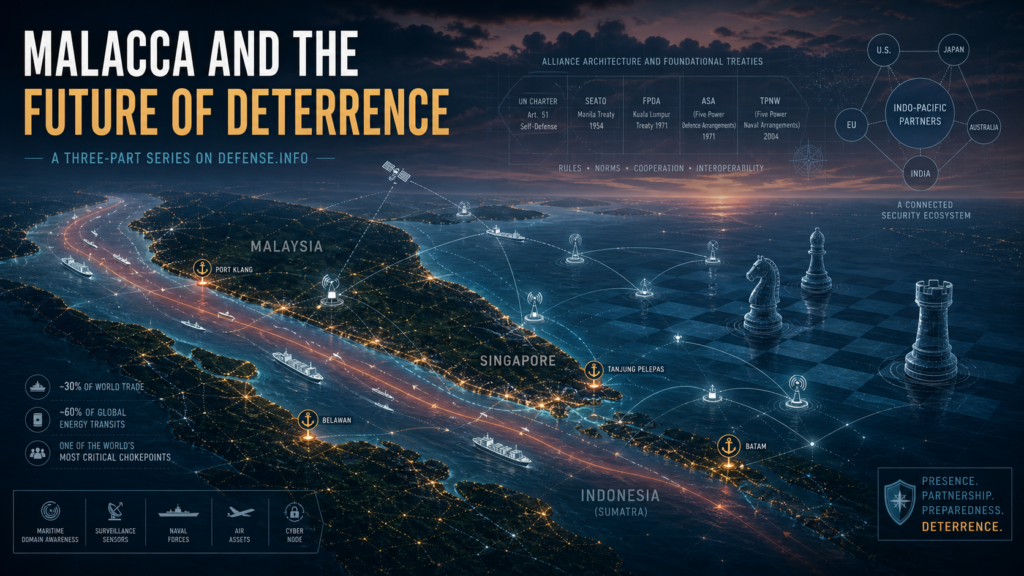
Malacca as a Case Study: Alliance Documents, Strategic Games, and the Architecture of Deterrence – Defense.info
The Strait of Malacca is far more than a geographic shortcut between the Indian and Pacific Oceans; It’s one of the most critical maritime chokepoints on the planet. In the realm of global geopolitics, this narrow corridor serves as a primary artery for international trade and energy supplies, making its stability a matter of global security. However, the intersection of national sovereignty, regional cooperation, and international strategic interests has turned the strait into a complex laboratory for what experts describe as the Malacca as a Case Study: Alliance Documents, Strategic Games, and the Architecture of Deterrence – Defense.info framework.
As regional powers navigate the tension between maintaining open sea lanes and asserting territorial control, the architecture of deterrence in the region is shifting. From the development of integrated security frameworks between littoral states to the theoretical possibility of economic leverage through maritime tolls, the Strait of Malacca represents a high-stakes balancing act. The current landscape is defined by a transition from fragmented patrolling to a more cohesive model of regional stewardship, aimed at ensuring that this “tiny gap in the ocean” remains a conduit for commerce rather than a flashpoint for conflict.
The Integrated Security Framework: Indonesia and Malaysia’s Collaborative Pivot
For decades, the security of the Strait of Malacca was characterized by a patchwork of national efforts. However, recent strategic shifts have seen Indonesia and Malaysia move toward a more integrated security framework. This evolution is not merely about increasing the number of patrol boats in the water; it is about the synchronization of intelligence, communication, and operational command.
The push for an integrated framework stems from the recognition that maritime threats—ranging from piracy and smuggling to illegal fishing—do not respect national borders. By building a shared security architecture, these littoral states are attempting to create a seamless shield across the strait. This collaborative approach is designed to reduce redundancies and eliminate the “security gaps” that opportunistic actors have historically exploited.
Key pillars of this integrated security approach include:
- Joint Intelligence Sharing: Establishing real-time data exchanges to track suspicious vessel movements.
- Coordinated Patrols: Aligning the timing and location of naval and coast guard deployments to ensure maximum coverage.
- Unified Response Protocols: Developing standardized operating procedures for intercepting threats in contested or bordering waters.
Regional stewardship is now viewed as the primary key to the safety and stability of the Strait of Malacca, moving the responsibility of security away from external superpowers and toward the nations that actually border the waterway.
The Economic Dimension: The “Tollbooth” Theory and Maritime Leverage
While security is the immediate priority, there is a simmering debate regarding the economic valuation of the strait. Some analysts have posited a provocative scenario: the transformation of this vital waterway into what could be described as the world’s most expensive tollbooth. The concept suggests that the littoral states, bearing the immense financial and military burden of securing the strait, could potentially justify charging fees for the use of the passage.

This “tollbooth” concept is less about immediate revenue and more about strategic leverage. If the nations managing the strait can monetize the security they provide, it shifts the power dynamic between the providers of security (the littoral states) and the primary beneficiaries of that security (global shipping conglomerates and energy-dependent nations).
However, implementing such a system would face significant hurdles, including international maritime laws regarding “innocent passage” and the risk of pushing shipping traffic toward alternative, albeit longer, routes. The tension here lies between the right of sovereign nations to manage their waters and the global community’s requirement for unobstructed trade.
| Perspective | Primary Goal | Potential Risk |
|---|---|---|
| Littoral States | Sovereignty and cost-recovery for security. | International diplomatic backlash. |
| Global Shipping | Low-cost, fast, and safe transit. | Increased operational costs via tolls. |
| External Powers | Unimpeded access for naval and trade assets. | Strategic vulnerability to “chokepoint diplomacy.” |
Analyzing the Architecture of Deterrence: Alliance Documents and Strategic Games
When examining the Malacca as a Case Study: Alliance Documents, Strategic Games, and the Architecture of Deterrence – Defense.info perspective, the focus shifts to the invisible structures that prevent open conflict. Deterrence in the Strait of Malacca is not just about the presence of warships; it is built upon “alliance documents” and the outcomes of “strategic games.”
The Role of Alliance Documents
Alliance documents—treaties, Memorandums of Understanding (MoUs), and formal security agreements—serve as the blueprints for deterrence. These documents define the “red lines” of engagement and the obligations of partner nations. In the context of the Malacca Strait, these agreements help clarify who is responsible for what, thereby preventing accidental escalations caused by miscommunication or overlapping jurisdictions.
The Utility of Strategic Games
Strategic games, refer to the theoretical modeling and war-gaming used by defense planners to predict how different actors will respond to specific crises. By simulating scenarios—such as a blockade, a major maritime accident, or a sudden surge in piracy—defense analysts can identify weaknesses in the current architecture of deterrence. These games allow policymakers to test the resilience of their alliance documents without risking real-world conflict.
The goal of this architecture is to create a state of “stable deterrence,” where the cost of disrupting the strait is perceived as prohibitively high for any single actor, while the benefits of cooperation remain high for all involved.
A Model for Cooperative Maritime Governance
The transition toward a model of cooperative maritime governance in the Strait of Malacca offers a potential blueprint for other global chokepoints. Unlike regions where security is dictated by a single hegemonic power, the Malacca model emphasizes “regional stewardship.”
This model of governance is based on the premise that those closest to the resource have the greatest stake in its long-term viability. By prioritizing local cooperation over external intervention, Indonesia and Malaysia are asserting that regional stability is best maintained through mutual agreement rather than imposed security umbrellas.
This shift toward cooperative governance involves several critical transitions:
- From Competition to Coordination: Moving away from competing for territorial claims and toward coordinating for common security.
- From Reactive to Proactive: Shifting from responding to piracy incidents to creating an environment where piracy is structurally impossible.
- From External Dependence to Internal Capability: Increasing the naval and technological capacity of littoral states to manage their own waters.
For those interested in how these dynamics play out in other regions, a related explainer on maritime chokepoints may provide further context on the global nature of these strategic vulnerabilities.
Strategic Implications for Global Trade and Security
The implications of the current developments in the Strait of Malacca extend far beyond Southeast Asia. Because a significant portion of the world’s oil and liquefied natural gas (LNG) passes through this gap, any shift in the “architecture of deterrence” has immediate effects on global energy prices and supply chain resilience.
If the integrated security framework succeeds, it reduces the “risk premium” associated with shipping through the strait, potentially lowering insurance costs for global trade. Conversely, if the “tollbooth” concept were ever realized, it could trigger a global search for alternative routes, potentially accelerating the development of land-based pipelines or alternative shipping lanes through the Indonesian archipelago.
the success of regional stewardship in Malacca signals a broader trend in international relations: the rise of “middle powers” taking charge of their own strategic environments. This reduces the reliance on distant superpowers to maintain order, though it introduces new complexities in how those superpowers interact with regional frameworks.
Common Misconceptions About Malacca’s Security
There are several oversimplifications often found in discussions about the Strait of Malacca. Correcting these is essential for a nuanced understanding of the region:
- Misconception: Piracy is the only major threat to the strait.
Correction: While piracy is a visible issue, the more significant strategic threats involve state-level tensions, accidental collisions in narrow channels, and the potential for strategic blockades. - Misconception: The strait is controlled by a single nation.
Correction: The strait is a shared space. Its management requires a delicate balance between Malaysia, Indonesia, and Singapore, each with differing priorities and capacities. - Misconception: External naval presence is the only way to ensure stability.
Correction: While external powers provide a layer of deterrence, the littoral states argue that sustainable stability can only be achieved through regional stewardship and internal cooperation.
Key Takeaways for Strategic Observers
The evolution of the Strait of Malacca from a contested waterway to a model of cooperative governance highlights several critical trends in modern defense and diplomacy:
- The Power of Integrated Frameworks: The move by Indonesia and Malaysia toward a shared security architecture demonstrates that coordinated local action is often more effective than fragmented national efforts.
- Economic Leverage as Strategy: The conceptualization of the strait as a “tollbooth” underscores the growing intersection between maritime security and economic sovereignty.
- The Necessity of Theoretical Planning: The use of alliance documents and strategic games proves that deterrence is as much about psychological and legal frameworks as it is about physical hardware.
- The Shift Toward Stewardship: The emphasis on regional stewardship suggests a global move toward localized management of critical infrastructure.
As the world continues to rely on this narrow passage, the focus will remain on whether the architecture of deterrence can evolve fast enough to keep pace with shifting geopolitical alliances and emerging maritime threats. The “Malacca Case Study” continues to provide essential lessons in how to manage a global asset through regional cooperation.
Frequently Asked Questions
What is the “Architecture of Deterrence” in the context of the Strait of Malacca?
The architecture of deterrence refers to the combined system of military presence, formal alliance documents, and strategic planning (including “strategic games”) designed to discourage any actor from disrupting the flow of trade or violating the sovereignty of the littoral states.
Why are Indonesia and Malaysia building an integrated security framework?
They are collaborating to eliminate security gaps, share intelligence in real-time, and coordinate patrols. This prevents threats like piracy and smuggling from exploiting the borders between the two nations, ensuring a more seamless and effective security shield.

Could the Strait of Malacca actually become a “tollbooth”?
While theoretically possible as a means of recovering security costs and exerting strategic leverage, implementing a toll would be legally and diplomatically complex due to international laws regarding the freedom of navigation and “innocent passage.”
What is “regional stewardship” in maritime governance?
Regional stewardship is the principle that the nations bordering a waterway (the littoral states) should take the primary responsibility for its management, security, and stability, rather than relying on external superpowers to maintain order.
How do “strategic games” help in securing the strait?
Strategic games are simulations used by defense experts to model potential crises. By testing how different nations might react to a specific event, planners can identify flaws in their agreements and improve their response strategies before a real crisis occurs.
