World Cup final air quality to improve as storms clear wildfire smoke
Meteorologists expect incoming storms to clear thick smoke from the region, leading to improved air quality for the World Cup final at MetLife Stadium. FIFA officials have confirmed the match remains on schedule as they continue to monitor local atmospheric conditions.

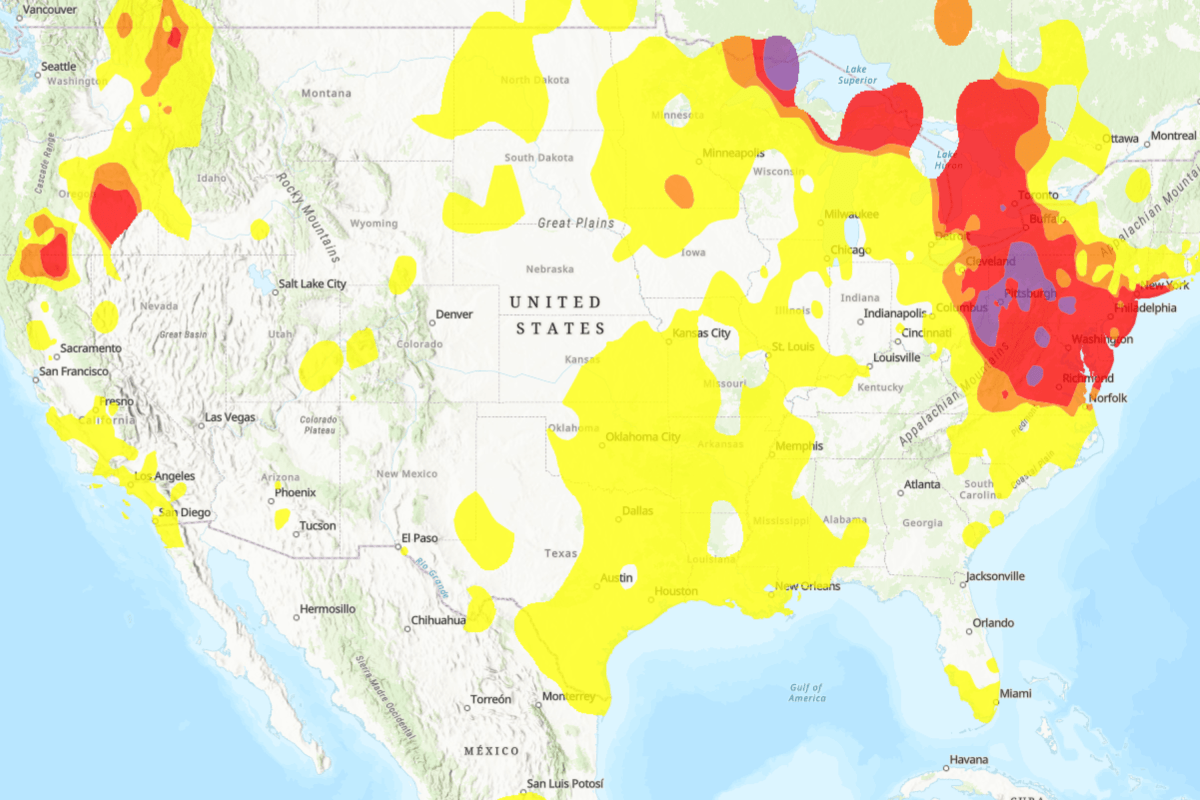
Heavy, acrid smoke from Canadian wildfires has blanketed the eastern United States, creating hazardous conditions that cast a shadow over preparations for the World Cup final. As of Sunday, 19 July 2026, the championship match between Argentina and Spain at MetLife Stadium—referred to as the New York/New Jersey Stadium—remains scheduled to proceed, despite severe air quality fluctuations throughout the week. While organizers are maintaining a presence, the event has not been postponed or relocated, a move that would be unprecedented in tournament history.
Meteorologists expect a significant change in the atmosphere just in time for the 3 p.m. ET kickoff. According to Tyler Roys, a senior meteorologist at AccuWeather, a storm front passing through the Northeast on Saturday is anticipated to sweep the thickest smoke out of the region. While spectators might experience faint haziness, officials suggest the air quality will reach moderate
levels, posing little to no health risk to the general public. Jeff Berardelli, a climate specialist, stated the storm would leave the atmosphere dramatically better
than the unhealthy conditions recorded earlier in the weekend.
Related media


Ongoing Monitoring and Safety Concerns
Despite the improved forecast, the path to the final has been fraught with uncertainty. FIFA officials have maintained close coordination with local authorities and the National Weather Service to monitor conditions. Andrew Giuliani, executive director of the White House World Cup Task Force, confirmed that organizers are watching the data closely, noting that a National Weather Service representative is stationed at FIFA headquarters to provide real-time updates. David Lu, CEO and co-founder of Clarity Movement, noted that air quality at the stadium is measured every 10 minutes.
The urgency of the situation was highlighted by hazardous air readings earlier in the week. New York City briefly ranked among the world's most polluted cities, prompting officials to urge residents to limit outdoor exposure. The impact was felt across the sporting community, leading to the postponement of a match for the Chicago Fire and forcing a recent NWSL game at Yankee Stadium to implement frequent hydration breaks to assist players. U.S. Women’s national team midfielder Trinity Rodman noted the difficulty of playing in such conditions, stating, If we have to have a hydration break every 15 minutes, then we shouldn’t be playing the game, and that’s my opinion.
The Health Debate
The risks posed by fine particulate matter have sparked a broader conversation regarding athlete safety in an era of intensifying climate change. Emergency physician Dr. Courtney Howard explained that wildfire smoke represents a major public health issue, noting that elite athletes are particularly vulnerable due to increased respiration during high-intensity exertion. Medical experts emphasize that short-term exposure to particulate matter can trigger respiratory and cardiovascular complications.
Political Friction Over Forest Management
The environmental crisis has also triggered diplomatic tension. President Donald Trump, who intends to attend the final, has publicly criticized Canada for its forest management policies, labeling the situation as willful negligence
and threatening to impose new tariffs. These claims have been met with sharp rebukes from Canadian officials. Ontario Premier Doug Ford described the criticism as absolutely unacceptable,
noting that Canadian firefighting crews have historically provided assistance to U.S. States during domestic emergencies. Prime Minister Mark Carney has stated that climate change remains a shared responsibility for both nations.
What to Watch Next
- Match Status: As of this morning, FIFA has indicated no intention to reschedule the match.
- Atmospheric Conditions: While the heaviest smoke is clearing in the Northeast, meteorologists warn that hazardous smoke levels are projected to persist across parts of the Midwest and the Great Lakes region as weather patterns shift.
- Ongoing Risk: With more than 950 wildfires active in Canada, officials advise sensitive groups to continue monitoring the Air Quality Index (AQI) as weather patterns remain fluid.
Archypedia is dedicated to independent, evidence-backed reporting. This briefing was synthesized from primary source reporting, corroborated across independent newsrooms, and verified against our Editorial Standards.
Transparency record
Evidence behind this report
This report synthesizes 12 distinct sources. Open the source ledger below to compare the underlying coverage.
- forbes.com
- aol.com
- usatoday.com
- dw.com
- si.com
- newsweek.com
- clickorlando.com
- straitstimes.com
- sports.yahoo.com
- yahoo.com
- npr.org
- en.hespress.com
Prepared under the Archypedia Editorial Policy by the Rafael Ortega editorial desk profile. AI-assisted tools may support drafting and verification; public accountability remains with Archypedia. Report an error.


