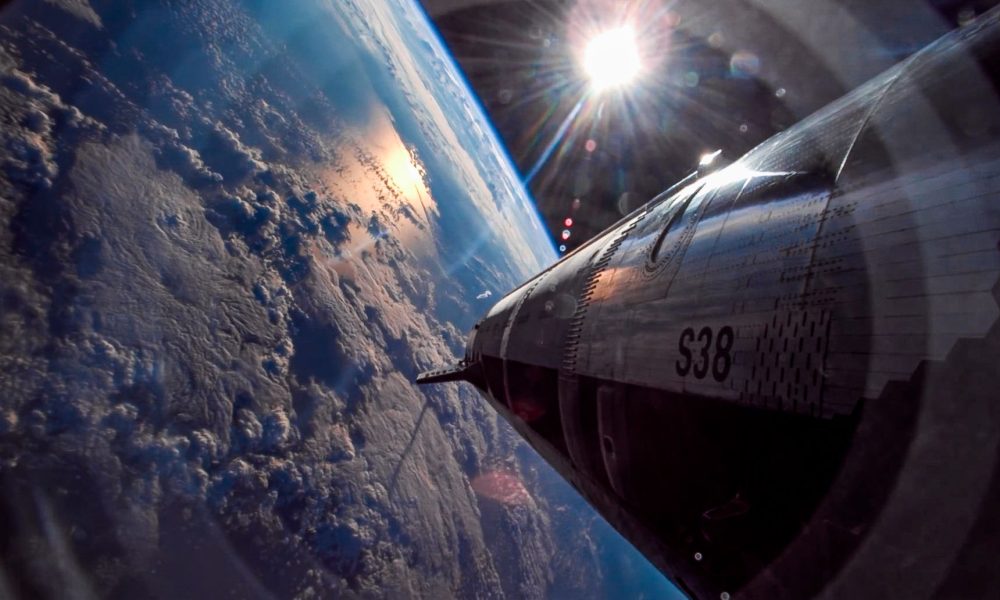
SpaceX’s ‘Starfall’ Mission: How a Secret Spacecraft Could Revolutionize Off-World Manufacturing
Elon Musk’s aerospace company is preparing to test a classified spacecraft designed to drastically cut costs for returning cargo from orbit—potentially unlocking a new era for in-space production, from pharmaceuticals to advanced materials. The mission, codenamed Starfall, aims to address a critical bottleneck in space economics: the prohibitive expense of bringing experiments, prototypes, and manufactured goods back to Earth for study or commercial use. According to industry sources familiar with the project, the spacecraft could enable rapid iteration of space-made products, from high-purity crystals to lab-grown tissues, by slashing re-entry costs by up to 90%.
Scheduled for an undisclosed launch window later this year, Starfall represents SpaceX’s most ambitious foray into what the company calls the “last mile” of space logistics—the final, most expensive leg of transporting goods between Earth and orbit. If successful, it could redefine industries from aerospace to biotech, where the ability to test and refine materials in microgravity has long been limited by the cost of recovery.
Here’s what we know about the mission, its potential impact, and why it matters for the future of space manufacturing.
—
### What Is SpaceX’s ‘Starfall’ Mission, and Why Is It Classified?
SpaceX’s Starfall mission is a demonstration flight for a reusable, high-speed return capsule designed to ferry payloads from low Earth orbit back to Earth at a fraction of current costs. Unlike traditional deorbit systems—such as those used by SpaceX’s Dragon capsules, which rely on parachutes and ocean splashdowns—Starfall is expected to employ a combination of aerodynamic braking, precision guidance, and potentially even partial reusability to land payloads on solid ground or near-prepared sites.
Key details:
- Primary goal: Test a faster, cheaper alternative to existing re-entry methods, with a focus on cargo recovery rather than crewed missions.
- Target payloads: Small to medium-sized experiments, manufactured goods, and research samples—items currently costing tens of thousands per kilogram to return.
- Classification: The mission’s secrecy stems from its dual-use potential: while primarily aimed at commercial space manufacturing, the technology could also have defense applications, according to sources briefed on the project.
- Launch vehicle: Likely to use a modified Starship or Falcon 9, though exact details remain undisclosed.
According to NextBigFuture, which first reported on the mission’s objectives, SpaceX has been developing the capsule in tandem with its broader Starship program. The company has not publicly confirmed the mission’s existence, but internal documents and regulatory filings hint at preparations for a high-altitude test flight in the coming months.
Why the secrecy? Industry analysts suggest two main reasons: first, to avoid tipping off competitors about the technology’s capabilities, and second, to allow SpaceX to refine the system without immediate public scrutiny. “This isn’t just about bringing things back—it’s about changing the economics of space manufacturing entirely,” said a source with knowledge of the project. “If you can recover a payload for $500 per kilogram instead of $50,000, the math changes overnight.”
—
### How Does ‘Starfall’ Compare to Existing Space Cargo Recovery Methods?
Currently, returning cargo from orbit is a costly and logistically complex process. Here’s how Starfall could disrupt the status quo:
| Method | Cost per Kilogram (Est.) | Speed to Recovery | Reusability | Primary Use Case |
|---|---|---|---|---|
| Dragon Capsule (Splashdown) | $10,000–$50,000 | 24–48 hours | Partial (capsule reused) | Crew and critical cargo |
| Cygnus (Burn-up Re-entry) | $1,000–$5,000 | Not applicable (destructive) | Not reusable | Disposable cargo |
| Experimental Systems (e.g., Starfall) | $500–$2,000 (target) | Under 12 hours | High (capsule reused) | High-value manufacturing samples |
Source: Cost estimates compiled from NextBigFuture and industry reports, with projections for Starfall based on SpaceX’s stated goals for Starship reusability.
The most significant advantage of Starfall would be its potential to enable rapid iteration cycles for in-space manufacturing. For example:
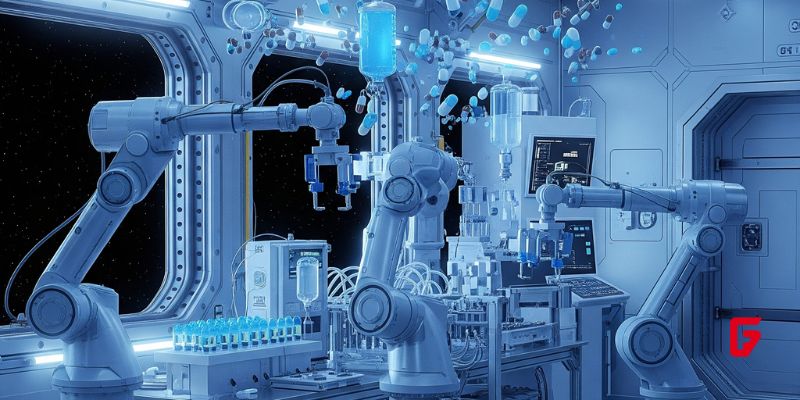
- Pharmaceuticals: Protein crystals grown in microgravity often require immediate analysis. Currently, samples take weeks to return; Starfall could cut that to hours.
- Advanced materials: Companies like Made In Space and Redwire have already demonstrated 3D printing in orbit, but scaling requires cost-effective recovery of prototypes.
- Biotech: Lab-grown tissues or organs cultured in microgravity could be tested and refined faster, reducing the need for animal testing or ground-based simulations.
“The bottleneck isn’t just getting things to space—it’s getting them back,” said a researcher at the International Space Manufacturing Association. “If SpaceX can make this work, we could see a surge in commercial activity in low Earth orbit.”
—
### Who Stands to Gain—and Who Could Be Left Behind?
The implications of Starfall extend far beyond SpaceX’s immediate goals. Here’s how different stakeholders might be affected:
#### 1. Space Manufacturing Companies
Firms investing in off-world production—such as Redwire Space, Varda Space Industries, and Made In Space—could see their business models validated. Varda, for instance, already uses microgravity to produce high-purity pharmaceuticals and is planning to return samples via commercial cargo missions. If Starfall succeeds, such companies could accelerate timelines for bringing products to market.
#### 2. Research Institutions
Universities and government labs, including NASA’s Materials International Space Station Experiment (MISSE) program, rely on slow, expensive recovery methods. A faster turnaround could lead to breakthroughs in areas like fiber optics, alloys, and even quantum materials.
#### 3. Defense and National Security
While SpaceX has framed Starfall as a commercial venture, its technology could have military applications. The ability to rapidly recover sensitive payloads—such as surveillance equipment or experimental sensors—could give the U.S. an edge in space-based intelligence. Some reports suggest the Pentagon has shown interest in similar capabilities, though no official ties to Starfall have been confirmed.
#### 4. Traditional Aerospace Players
Companies like Northrop Grumman and Lockheed Martin, which currently dominate cargo recovery contracts, may face disruption. Their systems are optimized for crew safety and reliability, not cost efficiency. If SpaceX proves its approach is both safe and cheaper, it could force a shift in the market.
Potential roadblocks:
- Regulatory hurdles: The FAA and other agencies would need to certify Starfall’s landing systems, which could delay commercialization.
- Competition: Blue Origin and other players are also exploring reusable return systems, though none have matched SpaceX’s scale.
- Public perception: If the mission is seen as overly secretive, it could draw scrutiny from lawmakers or advocacy groups concerned about transparency in space operations.
—
### Why Now? The Growing Demand for Space Manufacturing
The timing of Starfall aligns with a broader shift in how industries view space as a production environment. Three key trends are driving demand:
1. Microgravity Advantages
Certain materials and biological processes behave differently in microgravity, leading to higher-quality outcomes. For example:
- Protein crystals grown in space are often 10–100 times larger than those grown on Earth, making them easier to study.
- Fiber optics produced in microgravity have fewer imperfections, potentially enabling faster internet cables.
- Tissue engineering could benefit from reduced gravity, leading to better-organized cell structures.
2. Commercial Space Stations on the Horizon
NASA’s Commercial Low Earth Orbit Development program and private ventures like Axiom Space and Orbital Reef are planning dedicated manufacturing facilities in orbit. These stations will need cost-effective ways to return samples and products.
3. The ‘Space Economy’ Boom
Analysts at Morgan Stanley and McKinsey project the space economy could reach $1 trillion by 2040, with manufacturing as a major growth driver. If Starfall lowers recovery costs, it could accelerate this timeline.
“We’re at an inflection point where space isn’t just about satellites and science—it’s about production,” said a senior executive at a major aerospace firm. “If SpaceX can crack the code on affordable returns, we’ll see a flood of new industries moving off-world.”
—
### What Happens If ‘Starfall’ Fails—or Succeeds?
The outcome of this mission could have lasting repercussions for SpaceX and the broader space industry.
#### If the Mission Succeeds:
- Lower costs for space manufacturing: Companies could begin treating orbit as a viable production environment, leading to new industries like in-space pharmaceuticals, advanced alloys, and even space-based solar power components.
- Accelerated R&D cycles: Researchers could iterate on experiments in weeks rather than months, potentially speeding up discoveries in materials science and biotech.
- SpaceX’s dominance in logistics: The company could extend its lead in orbital transportation, further cementing its role as the primary provider for both crew and cargo services.
- New regulatory challenges: Governments may need to update laws around space commerce, particularly regarding liability for recovered payloads.
#### If the Mission Fails:
- Delayed commercialization: Space manufacturing could remain constrained by high recovery costs, limiting investment in off-world production.
- Competitor opportunities: Blue Origin or other players might step in with their own return systems, fragmenting the market.
- Public skepticism: If the capsule’s secrecy is seen as excessive, it could damage SpaceX’s reputation, particularly among academic and research communities.
One thing is clear: regardless of the outcome, Starfall will reshape the conversation around space economics. “This isn’t just about bringing things back—it’s about proving that space can be a place where we don’t just visit, but where we build,” said a former NASA engineer now advising commercial space firms.
—
### What to Watch For in the Coming Months
While SpaceX has not announced a specific launch date for Starfall, industry observers expect the following developments:
- Regulatory filings: Look for updated FAA or commercial space launch licenses that hint at the mission’s timeline.
- Starship testing: If Starfall relies on Starship, its progress—particularly in orbital re-entry and landing—will be a key indicator.
- Partnership announcements: SpaceX may reveal commercial or research partners for the mission, signaling which industries are prioritizing space manufacturing.
- Alternative recovery methods: Competitors like Blue Origin or startups may accelerate their own return systems in response.
For now, the focus remains on proving the concept. If successful, Starfall could be the first step toward a future where the most valuable manufacturing isn’t done on Earth—but in orbit.
—
### Frequently Asked Questions About SpaceX’s ‘Starfall’ Mission
1. What is the ‘Starfall’ mission, and why is it secret?
The Starfall mission is SpaceX’s test of a reusable spacecraft designed to return cargo from low Earth orbit at a fraction of current costs. The secrecy stems from its potential dual-use applications—both commercial manufacturing and defense—allowing SpaceX to refine the technology without immediate public scrutiny.
2. How does ‘Starfall’ differ from SpaceX’s Dragon capsule?
Dragon capsules use parachutes and ocean splashdowns, costing tens of thousands per kilogram to recover. Starfall is expected to use aerodynamic braking and precision landing, potentially reducing costs to under $2,000 per kilogram while enabling faster turnaround times.
3. What industries could benefit most from this technology?
Pharmaceuticals, advanced materials (e.g., fiber optics, alloys), and biotech—particularly lab-grown tissues—could see the biggest impact. Faster recovery of microgravity-grown samples could accelerate R&D in these fields.
4. Is there a risk to crewed missions if ‘Starfall’ is used for cargo?
No—Starfall is designed solely for cargo recovery and would not carry humans. SpaceX’s crewed missions (e.g., Dragon) remain separate systems with redundant safety features.
5. Could other companies replicate this technology?
Yes, but SpaceX’s scale and existing infrastructure give it a head start. Competitors like Blue Origin or startups may develop similar systems, but certification and cost-efficiency will be major hurdles.
6. When might we see ‘Starfall’ used for commercial purposes?
If the demonstration mission succeeds, commercial applications could begin as early as 2025–2026, depending on regulatory approval and further testing. Full-scale deployment may take longer.
—
