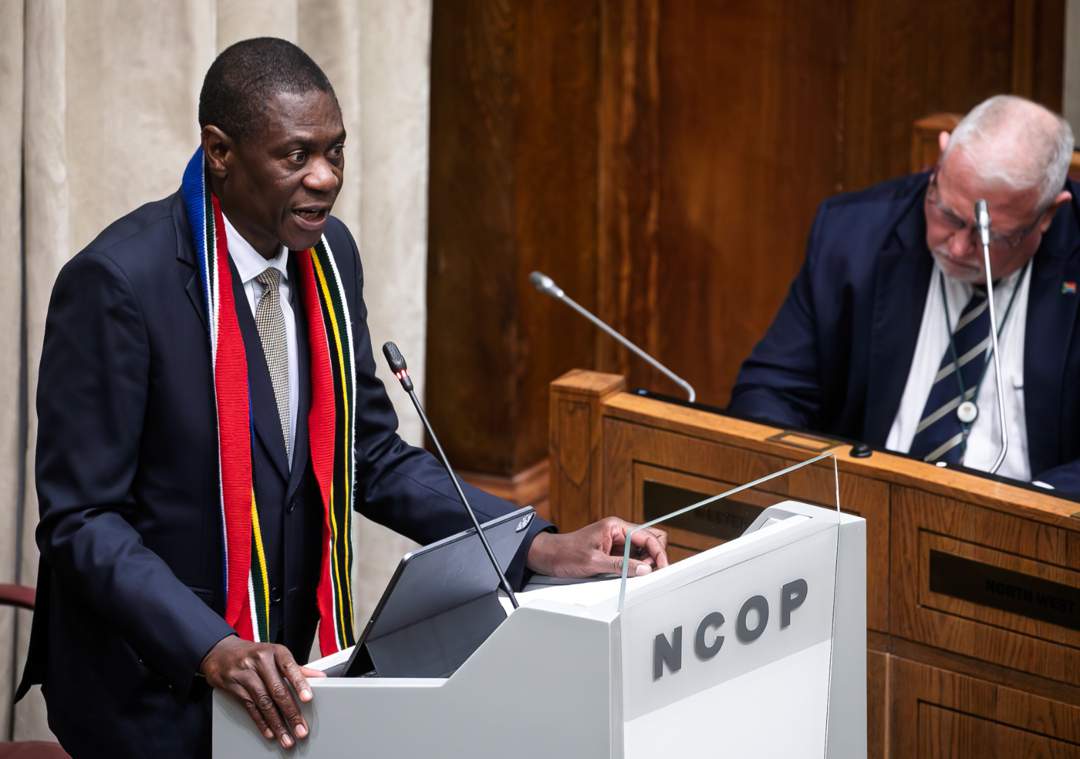
Mashatile Concedes Government Has ‘Taken a Bit of Time’ to Deal With Immigration Issues
Deputy President Paul Mashatile admitted the South African government was slow to address immigration challenges, according to News24. This admission comes as President Cyril Ramaphosa dismissed a rumored June 30 deadline for undocumented migrants as unnecessary, while transport bodies and analysts warn that misinformation and Afrophobia are fueling social instability.
Why the Government Admits a Delay in Immigration Management
Deputy President Paul Mashatile stated that the state has “taken a bit of time” to effectively manage immigration issues, according to reporting by News24. This acknowledgment suggests a gap between the emergence of migration pressures and the implementation of a cohesive state response. The admission arrives during a period of heightened public scrutiny over the presence of undocumented foreign nationals and the efficiency of border controls.
The delay in government action has created a policy vacuum. According to News24, this lack of timely intervention has left the administration struggling to balance legal enforcement with the social realities of migration. The government’s slow pace in refining immigration laws and enforcement mechanisms has coincided with rising public frustration over service delivery and unemployment, which often manifests as hostility toward migrants.
- Policy Lag: The time taken to update immigration frameworks has hindered rapid response to illegal entries.
- Administrative Bottlenecks: Slow processing of permits and visas has contributed to the number of undocumented persons.
- Political Pressure: The government faces increasing demands from the public to prioritize “nationals first” in economic opportunities.
The June 30 Deadline: Fact vs. Misinformation
A significant point of contention has been a rumored June 30 deadline for undocumented migrants to leave the country or regularize their status. President Cyril Ramaphosa clarified that such a deadline is not necessary, according to eNCA. The President’s statement aimed to quell panic and correct the narrative that a mass expulsion event was scheduled for the end of June.
However, Daily Maverick reports that this specific date became a “weapon” in the hands of those spreading misinformation. The outlet notes that social media platforms have been used to amplify fears and incite Afrophobia, transforming a non-existent administrative deadline into a catalyst for potential violence. This disconnect between official government communication and the narratives circulating online highlights a failure in the state’s strategic communication.
“When misinformation becomes a weapon, it fuels Afrophobia and social instability,” Daily Maverick reports, highlighting how the June 30 date was leveraged to target foreign nationals.
The tension between Ramaphosa’s denial and the public’s belief in the deadline suggests that official government channels are not reaching the most volatile segments of the population. This gap allows unofficial sources to dictate the mood on the street, often leading to targeted harassment of migrants.
Enforcement vs. Development: The Border Management Debate
While the government focuses on border security, analysts argue that enforcement is not a substitute for a comprehensive development strategy. The Mail & Guardian reports that border management is not a development policy, asserting that policing the perimeter cannot solve the underlying pressures that drive migration.

The argument presented by the Mail & Guardian is that migration is driven by economic instability, conflict, and environmental crises in neighboring countries. Therefore, focusing solely on “stopping” people at the border treats the symptom rather than the cause. A development-led approach would involve regional cooperation to stabilize economies, reducing the necessity for illegal migration in the first place.
| Approach | Primary Focus | Expected Outcome | Limitation |
|---|---|---|---|
| Enforcement-Led | Border patrols, raids, deportations | Immediate reduction in illegal entries | Does not address root causes; high cost |
| Development-Led | Regional economic stability, diplomacy | Long-term reduction in migration pressure | Slow results; requires international cooperation |
This ideological split creates a challenge for the Mashatile-led administration. On one hand, there is political pressure to show “strong” enforcement to satisfy domestic critics. On the other hand, as the Mail & Guardian suggests, such measures are often performative and fail to provide a sustainable solution to the migration crisis.
Transport Disruptions and the Threat of Protests
The social friction surrounding illegal immigration has moved beyond political debate and into the streets. The South African National Taxi Council (SANTACO) has issued warnings that protests against illegal immigration must not disrupt the transport sector, according to EWN.
SANTACO’s concern stems from the history of xenophobic violence in South Africa, where transport hubs and taxi ranks often become flashpoints for unrest. By warning against the disruption of transport, the council is attempting to protect the economic viability of the taxi industry and ensure the safety of commuters, regardless of their nationality.
The involvement of SANTACO indicates that the “immigration issue” is no longer just a matter for the Department of Home Affairs; it is now a security and economic concern. When protests target undocumented migrants, they often spill over into general lawlessness, affecting the movement of goods and people. This adds another layer of urgency to Deputy President Mashatile’s admission that the government has been too slow to act.
Key Risks Identified by Stakeholders
- Economic Instability: Transport disruptions can paralyze local economies, as warned by SANTACO via EWN.
- Social Cohesion: The rise of Afrophobia, as detailed by Daily Maverick, threatens the “Rainbow Nation” ideal.
- Legal Chaos: The confusion over deadlines (June 30) leads to arbitrary actions by vigilante groups.
The Cycle of Misinformation and Afrophobia
The role of digital platforms in shaping the immigration narrative cannot be overlooked. Daily Maverick emphasizes that misinformation is not merely a byproduct of the immigration crisis but is often intentionally deployed to trigger Afrophobic sentiment. By linking undocumented migrants to crime or the theft of resources without evidence, these narratives create a climate of fear.

This climate of fear makes the government’s delay—as admitted by Mashatile—even more damaging. When the state is silent or slow to implement clear, fair, and transparent policies, the public fills that silence with speculation. The “June 30 deadline” myth is a primary example of how a lack of clear, proactive government communication allows falsehoods to gain traction.
To counter this, experts suggest that the government must move beyond simple denials (like those issued by Ramaphosa) and instead provide real-time, accessible data on immigration and the steps being taken to manage it. Without this, the “weaponization” of information described by Daily Maverick will continue to outpace official government narratives.
Comparing the Government’s Stance Across Different Outlets
The reporting across various outlets reveals a fragmented government response. While News24 focuses on the admission of failure (Mashatile), eNCA focuses on the denial of urgency regarding the June 30 deadline (Ramaphosa). This creates a contradictory image: a government that knows it is late but insists there is no immediate crisis requiring a deadline.
Furthermore, the contrast between the state’s focus on border control and the Mail & Guardian’s focus on development policy highlights a strategic divide. The government appears to be leaning toward a security-centric model, while intellectual and policy critics argue for a socio-economic model. This tension suggests that the “time taken” mentioned by Mashatile may be due to internal disagreements over which path to take.
Related explainer on South African Home Affairs policy may provide more context on the specific legislative hurdles the government faces.
Potential Long-Term Implications of Delayed Action
The admission by Deputy President Mashatile that the state has been slow to act carries several long-term risks. First, it may embolden political opposition parties who campaign on platforms of stricter immigration control, potentially pushing the government toward more radical and less humane policies to prove its “toughness.”
Second, the continued reliance on enforcement over development—as critiqued by the Mail & Guardian—may lead to a permanent state of crisis at the borders. If the drivers of migration are not addressed, no amount of fencing or patrolling will stop the flow of people seeking survival.
Third, the social cost of Afrophobia may become irreversible. As Daily Maverick notes, once misinformation is weaponized, it changes how citizens view their neighbors. The trauma of xenophobic attacks, fueled by myths like the June 30 deadline, creates deep scars in the social fabric of urban centers.
Expected Government Pivot Points
- Communication Strategy: A shift from reactive denials to proactive, data-driven transparency.
- Inter-Departmental Coordination: Better alignment between Home Affairs, the Police, and the Department of International Relations and Cooperation (DIRCO).
- Regional Diplomacy: Increased investment in SADC (Southern African Development Community) partners to address the “development gap” mentioned by the Mail & Guardian.
Frequently Asked Questions
What did Paul Mashatile admit regarding immigration?
According to News24, Deputy President Paul Mashatile conceded that the South African government has “taken a bit of time” to deal with immigration issues, acknowledging a delay in the state’s response to migration pressures.
Is there a June 30 deadline for undocumented migrants to leave South Africa?
No. According to eNCA, President Cyril Ramaphosa stated that such a deadline is not necessary. Daily Maverick further reports that this date was largely a product of misinformation used to fuel Afrophobic sentiment.

Why is the Mail & Guardian critical of border management?
The Mail & Guardian argues that border management is an enforcement tool, not a development policy. They contend that policing borders does not solve the root causes of migration, such as economic instability in neighboring countries.
What was SANTACO’s warning regarding immigration protests?
As reported by EWN, SANTACO warned that protests against illegal immigration should not be allowed to disrupt the transport sector, as this would threaten the economy and the safety of the public.
How is misinformation affecting the immigration debate?
Daily Maverick reports that misinformation is being “weaponized” on social media to incite Afrophobia, creating panic and instability, as seen with the false rumors regarding the June 30 deadline.
The intersection of government delay, social anxiety, and regional instability has placed South Africa at a critical juncture. While the admission of slow progress by Mashatile is a start, the gap between enforcement and development remains a primary point of contention. As the state navigates these pressures, the ability to combat misinformation and protect the transport and social infrastructure will be as vital as the policies implemented at the border.
