Environmental Damages of Top 10% Consumers Outpace Global Climate and Biodiversity Funding Gaps, Nature Study Finds
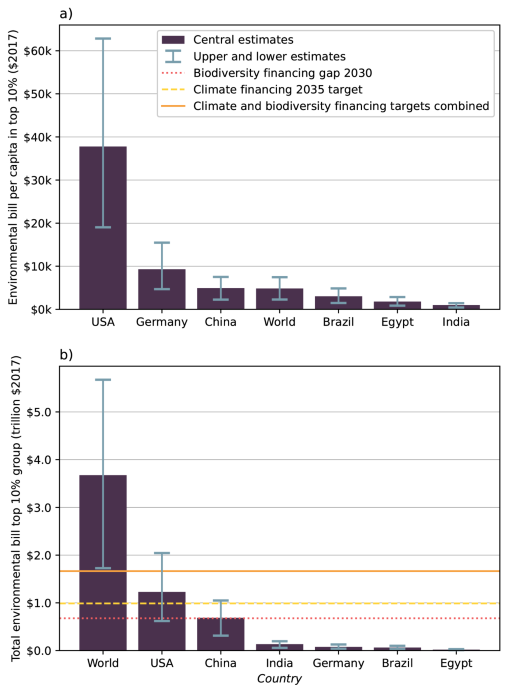
A study published in Nature finds that the environmental damages caused by the top 10% of global consumers exceed the current funding gaps for climate and biodiversity protection. This indicates that the financial resources required to meet global environmental targets are smaller than the economic costs generated by the consumption patterns of the world’s wealthiest decile.
What are the core findings of the Nature study on consumption damages?
Research published in Nature establishes a direct financial link between high-income consumption and the global funding deficit for environmental preservation. According to the study, the monetary value of the ecological damage attributed to the top 10% of global consumers is greater than the total amount of money currently missing from climate and biodiversity funding budgets.
The study focuses on consumption-based accounting rather than production-based accounting. While traditional metrics track emissions and habitat loss where they physically occur, this research tracks the “environmental footprint” back to the end consumer. This shift reveals that a small fraction of the global population is responsible for a disproportionate share of the planetary cost.
Key findings from the research include:
- Consumption Imbalance: The top 10% of earners drive the majority of resource extraction and carbon emissions through luxury spending, high-meat diets, and frequent air travel.
- Financial Offset: The “damage cost” generated by this group exceeds the “funding gap”—the difference between current spending and the investment needed to stop catastrophic biodiversity loss and warming.
- Geographic Displacement: Much of the environmental damage occurs in the Global South, while the consumption benefits accrue to individuals in the Global North.
How is the “environmental funding gap” calculated?
The funding gap refers to the shortfall between the current financial investments in nature and climate and the amount required to achieve international goals, such as those outlined in the Paris Agreement and the Kunming-Montreal Global Biodiversity Framework. According to the Nature analysis, this gap persists because governments and private sectors have failed to allocate sufficient capital toward reforestation, renewable energy transitions, and species protection.
The study contrasts this gap with the “social cost” of consumption. The social cost is an estimate of the economic damages—such as crop failure, flood damage, and health costs—resulting from a single unit of pollution or habitat destruction. By multiplying the consumption footprint of the top 10% by these social costs, researchers found that the resulting figure dwarfs the funding needed to fix the system.
| Metric | Focus Area | Economic Implication |
|---|---|---|
| Funding Gap | Climate & Biodiversity Targets | The missing capital needed to meet global goals. |
| Consumption Damage | Top 10% Global Consumers | The estimated cost of ecological harm caused by high-end consumption. |
| Comparison | Financial Scale | Damages > Funding Gap. |
Why does consumption-based accounting change the narrative?
Most national climate reports use production-based accounting. This means if a factory in Vietnam produces a smartphone for a consumer in the United States, the carbon emissions and water pollution are recorded in Vietnam. The Nature study argues this method masks the true drivers of environmental decay.
By utilizing consumption-based metrics, the researchers shifted the responsibility to the buyer. This approach reveals that the top 10% of the global population—primarily located in high-income nations—effectively “export” their environmental damage to poorer nations. This creates a cycle where the countries least responsible for the damage suffer the most severe consequences, while the consumers driving the destruction remain financially insulated.
This distinction is critical for policymakers. It suggests that taxing production in developing nations is less effective than regulating consumption and implementing “wealth-based” environmental levies in developed economies.
“The disparity between those who benefit from high-consumption lifestyles and those who bear the environmental costs is not just an ecological issue, but a financial one.”
What are the primary drivers of damage among the top 10%?
The researchers identify several key sectors where the top 10% of consumers create the most significant environmental damage. These drivers are not merely about the quantity of goods purchased, but the intensity of the resources required to produce them.
High-Emission Transport and Travel
Private aviation and frequent long-haul flights are primary contributors. The carbon intensity of a single luxury flight can equal the annual emissions of multiple low-income households. According to the study, the top decile’s travel habits contribute a disproportionate amount to global warming, which in turn drives the costs associated with climate-induced disasters.
Resource-Intensive Diets
The consumption of beef and other livestock products is heavily concentrated among the wealthy. Industrial livestock farming is a leading cause of deforestation, particularly in the Amazon. The Nature report links this consumption directly to biodiversity loss, as forests are cleared to make room for soy feed and grazing land.
Fast Fashion and Disposable Luxury
The demand for rapidly changing fashion trends leads to massive water pollution and textile waste. The study notes that the top 10% drive the demand for “ultra-fast fashion,” which relies on chemical-heavy dyeing processes and non-biodegradable materials that damage aquatic ecosystems.
For a more detailed look at how these industries impact the planet, see a related explainer on consumption-based emissions.
What are the implications for global climate policy?
The finding that consumption damages exceed funding gaps suggests a potential solution to the global financial crisis regarding climate change: a redistribution of costs. If the “polluter pays” principle were applied to the top 10% of consumers, the resulting revenue could theoretically close the biodiversity and climate funding gaps entirely.
This has several immediate policy implications:
- Consumption Taxes: Governments could implement taxes on high-carbon luxury goods, such as private jets or oversized mansions, to fund nature restoration.
- Wealth-Based Carbon Credits: Instead of allowing corporations to buy offsets, policies could target the individuals whose lifestyles drive the demand for those offsets.
- Trade Agreements: International trade laws could be updated to include “environmental footprints,” requiring importing nations to pay a fee that goes directly toward the biodiversity gaps in the exporting nation.
However, the study notes that implementing these changes faces significant political hurdles. The top 10% of consumers often hold a disproportionate amount of political power, making it difficult to pass legislation that targets their specific spending habits.
How does this compare to previous environmental funding reports?
Previous reports, such as those from the UN Environment Programme (UNEP), have focused on the lack of money—highlighting the trillions of dollars needed to transition to a green economy. The Nature study differs by identifying where that money is already “hidden” in the form of unpaid environmental damages.
While previous narratives framed the climate crisis as a global shortage of funds, this research frames it as a failure of allocation. The money exists within the global economy; it is simply being spent on consumption that destroys the environment rather than on the systems that protect it.
This shifts the conversation from “How do we find more money?” to “How do we reclaim the costs of damage from those who cause it?”
Common misconceptions about the “Top 10%” and environmental impact
A common misconception is that the “top 10%” refers only to billionaires or the ultra-wealthy. In reality, the top 10% of global consumers includes a significant portion of the middle and upper-middle class in developed countries like the US, Canada, and members of the EU. While their impact is lower than that of a billionaire, their collective consumption patterns—such as owning a car and eating meat daily—create the bulk of the damage.
Another misconception is that technological innovation (like electric cars) will solve the problem. The Nature study suggests that “green growth” is insufficient if the overall volume of consumption by the wealthy continues to rise. An electric SUV still requires massive amounts of lithium and cobalt mining, which damages biodiversity in regions like the Democratic Republic of Congo.
The study argues that the solution is not just better consumption, but less consumption among the global elite.
Frequently Asked Questions
What is the “biodiversity funding gap”?
The biodiversity funding gap is the difference between the amount of money currently spent on protecting nature and the amount estimated to be necessary to halt species extinction and restore degraded ecosystems. According to international frameworks, this gap runs into hundreds of billions of dollars annually.
Who exactly makes up the top 10% of consumers?
This group consists of the wealthiest 10% of the global population by income and spending power. This includes most residents of high-income nations and the wealthy elite in emerging economies. They are characterized by high levels of energy use, meat consumption, and global travel.

Can taxing the top 10% actually fix the climate?
The Nature study suggests that the financial value of the damages they cause is larger than the funding gap. Therefore, if those damages were taxed or internalized, the revenue could theoretically fund the necessary global climate and biodiversity projects. However, this would require unprecedented international cooperation.
What is the difference between production and consumption emissions?
Production emissions are measured where the goods are made (e.g., a factory in China). Consumption emissions are measured by who uses the goods (e.g., a consumer in the UK). Consumption-based accounting provides a more accurate picture of who is driving environmental degradation.
Does this study mean that individual actions don’t matter for the bottom 90%?
No, but it highlights that the scale of impact is vastly different. While collective action by the bottom 90% is important, the study emphasizes that the most significant “leverage point” for reducing global damage is the reduction of high-end consumption by the top 10%.
For more information on how global wealth affects the planet, you may find a related analysis on wealth inequality and ecology useful.
