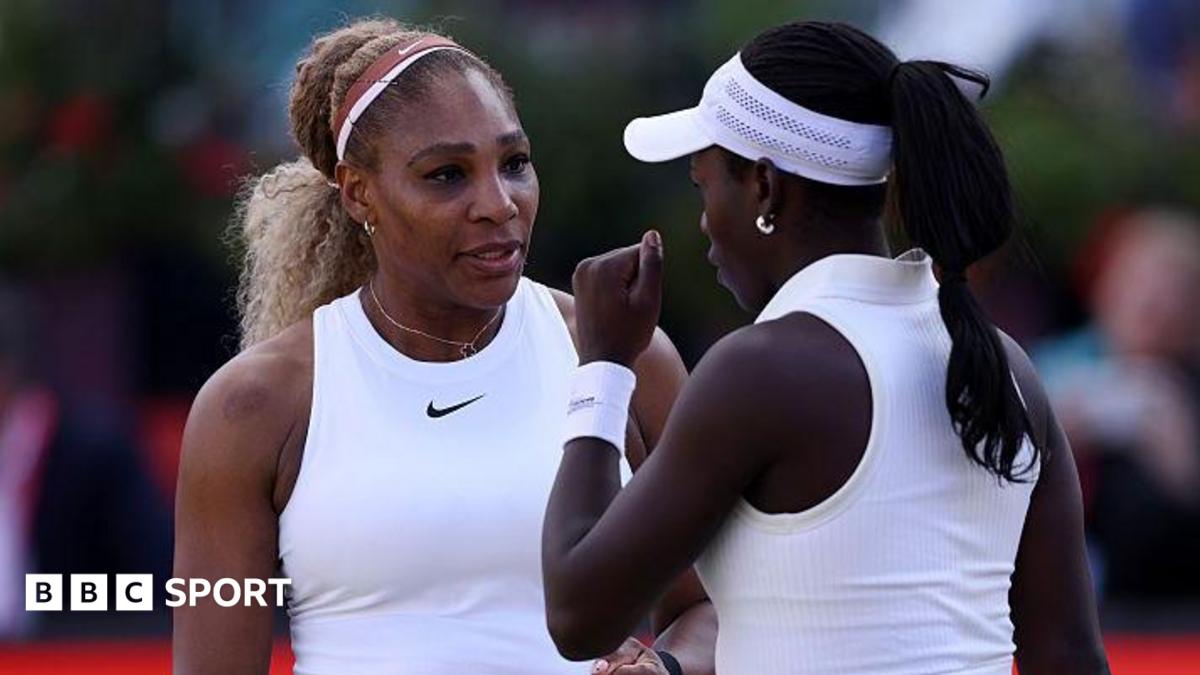
Serena Williams’ Return at Queen’s Club Ends With Withdrawal – ESPN
Serena Williams has withdrawn from the Queen’s Club tennis event following an injury to her doubles partner, Mboko, according to reports from ESPN and the BBC. The former world number one made a surprise last-minute entry into the tournament, but the forced exit ended her brief comeback attempt at the venue.
Why did Serena Williams withdraw from the Queen’s Club event?
Serena Williams withdrew from the competition because her doubles partner, Mboko, suffered an injury that made continued play impossible, according to the BBC and NBC News. While Williams herself remained available, the nature of doubles competition requires both partners to be fit for play. The BBC specifically noted that the run ended as the injured Mboko was forced to withdraw from the bracket.
This withdrawal marks a sudden stop to what was a highly anticipated appearance. NBC News characterized the event as a “comeback” that was cut short, emphasizing that the external factor—the partner’s health—was the deciding variable in Williams’ departure from the tournament.
Key details regarding the withdrawal:
- Primary Cause: Injury to doubles partner Mboko.
- Event Location: Queen’s Club.
- Outcome: Immediate withdrawal from the tournament.
- Reporting Sources: Confirmed by ESPN, BBC, and NBC News.
How did the tennis community react to Williams’ last-minute entry?
The arrival of Serena Williams transformed the atmosphere of the tournament, which The Washington Post described as a “quiet tennis event” that suddenly received a “loud last-minute guest.” Her presence shifted the event’s profile from a standard grass-court tune-up to a major media spectacle.
According to The Washington Post, the late addition of Williams brought an immediate surge of attention to the venue. This pattern of high-impact, last-minute appearances is consistent with Williams’ career history, where her presence alone often alters the commercial and spectator dynamics of a tournament. The contrast between the initial low-key nature of the event and the intensity following her entry highlights her enduring draw in the sport.
“A quiet tennis event gets a loud last-minute guest: Serena Williams.” — The Washington Post
What is the connection between Serena Williams and the GLP-1 performance debate?
While the Queen’s Club withdrawal focused on a physical injury to a partner, The New York Times has linked Williams’ return to a broader, more complex discussion regarding GLP-1 medications and performance enhancement in professional athletics. The publication suggests that Williams’ presence in the sport coincides with a “coming reckoning” over how these drugs—originally designed for diabetes and weight loss—might be used to gain a competitive edge.
According to The New York Times, the debate centers on whether GLP-1 agonists provide an unfair advantage by optimizing body composition or metabolic efficiency. This discussion is not limited to Williams but uses her profile to examine the intersection of medical advancement and sports integrity. The reporting indicates a growing concern among sports regulators about the line between therapeutic use and performance enhancement.
This angle adds a layer of scrutiny to any return to the court for veteran athletes, as the medical landscape of professional sports has shifted significantly since the peak of Williams’ dominance. The “reckoning” mentioned by The New York Times implies that governing bodies may soon face pressure to formalize rules regarding these specific classes of medication.
How did different news outlets frame the Queen’s Club exit?
The reporting on Williams’ withdrawal varied significantly across major outlets, reflecting different editorial priorities. While ESPN and the BBC focused on the factual mechanics of the exit, other outlets analyzed the spectacle or the systemic implications of her return.
| Outlet | Primary Focus of Coverage | Framing of the Event |
|---|---|---|
| ESPN | The fact of the withdrawal | Breaking news update |
| BBC | Mboko’s injury | Cause-and-effect reporting |
| NBC News | The end of the “comeback” | Narrative of a failed return |
| Washington Post | The atmosphere and celebrity draw | The spectacle of her arrival |
| New York Times | GLP-1s and performance enhancement | Analytical/Systemic critique |
ESPN provided the most direct reporting on the withdrawal itself, serving as the primary source for the news hook. In contrast, the BBC provided the specific detail regarding Mboko’s injury, which served as the catalyst for the exit. NBC News framed the story through the lens of a “comeback,” suggesting a broader narrative arc for Williams’ career, while The Washington Post focused on the immediate cultural impact of her presence at the club.
What are the implications for Serena Williams’ future appearances?
The abrupt end to the Queen’s Club run raises questions about the sustainability of Williams’ return to competitive play. Because the withdrawal was caused by a partner’s injury rather than her own physical failure, the technical result is neutral regarding her individual fitness. However, the volatility of last-minute entries and partner dependencies introduces a level of unpredictability to her schedule.
Industry observers often look at grass-court performance as a barometer for success at Wimbledon. By missing the opportunity to gain match rhythm at Queen’s Club, Williams loses a critical window for adaptation to the surface. This follows a historical precedent where preparation on grass is essential for mitigating the risks of injury and improving timing.
Furthermore, the discussion raised by The New York Times regarding performance enhancement suggests that any future return will be viewed through a more critical medical lens. The sports world is currently navigating a transition where “bio-hacking” and pharmaceutical assistance are becoming more prevalent, and high-profile athletes like Williams naturally become the focal point of these conversations.
The role of doubles in a comeback strategy
Choosing a doubles entry for a return is a common strategic move for veteran players. It allows them to:
- Build match toughness with less physical strain than singles.
- Acclimate to the speed of the game in a shared-responsibility environment.
- Maintain visibility and engagement with fans without the grueling demand of a full singles draw.
In this instance, the strategy backfired not due to Williams’ performance, but due to the instability of the partnership. This highlights the inherent risk of doubles-based comebacks: the athlete’s fate is tied to another person’s health.
Common misconceptions about the Queen’s Club withdrawal
There is a tendency in social media discourse to assume that a “withdrawal” implies a personal injury to the star athlete. In this case, that is incorrect. According to the BBC and NBC News, Serena Williams was not the injured party; her partner, Mboko, was. This is a critical distinction for those tracking Williams’ physical health and her ability to compete in future events.

Another misconception is that the Queen’s Club appearance was a formal, long-planned part of a tour. The Washington Post clarifies that this was a “last-minute” addition. This suggests that Williams is currently operating on a flexible, opportunistic schedule rather than a rigid professional tour calendar.
Finally, some readers may conflate the GLP-1 discussion in The New York Times as an accusation of use. The reporting, however, frames the issue as a “coming reckoning” for the sport in general, using Williams’ return as a timely backdrop for a larger analysis of performance enhancement in the modern era.
For those interested in how professional tennis manages player health, a related explainer on WTA injury protocols may provide further context on how withdrawals are handled during grass-court seasons.
Frequently Asked Questions
Did Serena Williams get injured at Queen’s Club?
No. According to reports from the BBC and NBC News, the withdrawal was caused by an injury to her doubles partner, Mboko, not by an injury to Williams herself.
Why is the ESPN report on Serena Williams’ withdrawal significant?
The ESPN report confirmed the end of Williams’ brief return to the court at Queen’s Club, signaling that her attempt to gain competitive momentum at this specific event has concluded.
Who is Mboko?
Mboko was Serena Williams’ doubles partner for the Queen’s Club event. The BBC reported that Mboko’s injury was the direct cause of the pair’s withdrawal from the tournament.
Is Serena Williams being accused of using GLP-1 drugs?
The New York Times report discusses the broader “reckoning” regarding GLP-1s and performance enhancement in sports. It uses the context of Williams’ return to explore these systemic issues rather than making a specific accusation of misconduct.
Was Serena Williams’ entry into Queen’s Club planned?
The Washington Post described her appearance as a “last-minute guest,” indicating that her entry was not a long-term scheduled part of the event’s original draw.
As the tennis world looks toward the remainder of the grass-court season, the focus remains on whether Williams will seek another entry or if the complications at Queen’s Club will lead to a prolonged hiatus. The intersection of partner availability and the evolving standards of sports medicine continues to define the parameters of her potential return.
