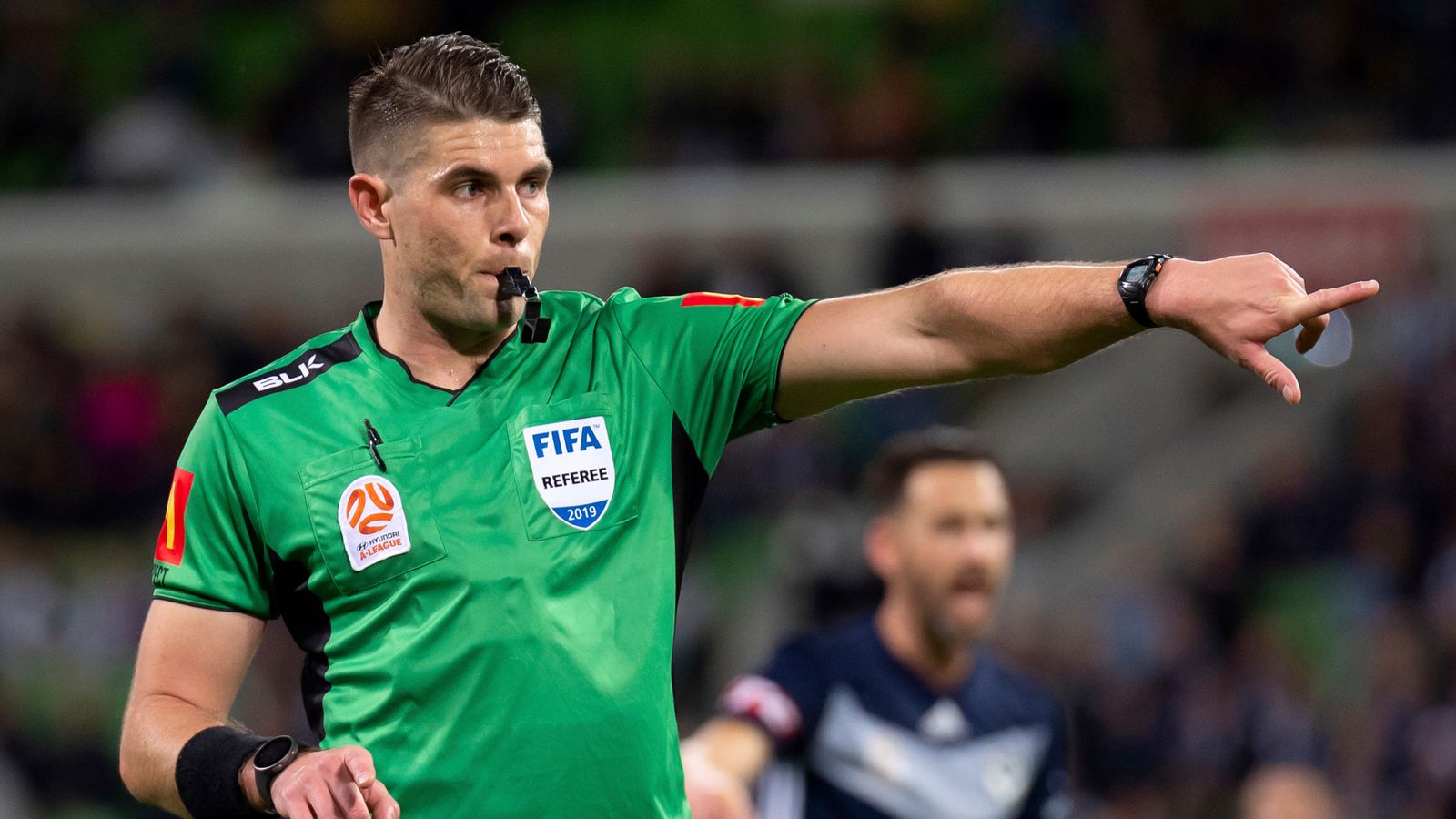
World Cup 2026 VAR Official Shaun Evans Faces Removal Demands After Controversial Hand Gesture During Broadcast
A senior Video Assistant Referee (VAR) for the upcoming 2026 World Cup is under intense scrutiny after making a hand gesture widely recognized as a symbol of white supremacy during a live broadcast. Shaun Evans, a key figure in FIFA’s VAR operations, now faces calls for immediate removal from his role amid growing outrage over the incident, which has reignited debates about racism in football’s governing bodies and the tournament’s preparations.
According to multiple reports, Evans—who has been integral to VAR decisions in recent major tournaments—made the gesture during a match broadcast, prompting an immediate backlash from players, anti-racism organizations, and FIFA’s own monitoring units. The incident has placed FIFA in a precarious position as it seeks to address long-standing concerns about discrimination in the sport ahead of the expanded 2026 World Cup, which will feature 48 teams across three North American hosts.
The hand gesture, often associated with far-right extremist movements, was captured on camera and widely circulated on social media, accelerating demands for Evans’ dismissal. FIFA’s racism monitor has formally urged the organization to take swift action, while former players and advocacy groups have condemned the incident as a stark reminder of the work still needed to eradicate racism in football.
—
What Happened: The Incident and Its Immediate Fallout
The controversy erupted after Evans, a former professional referee, made a gesture during a VAR review broadcast that was immediately recognized by viewers as the “white power” salute. The gesture—an upward palm with fingers spread—has been linked to white supremacist and neo-Nazi symbolism for decades, though Evans has not yet publicly addressed the incident.
Footage of the moment, which occurred during a high-stakes match, quickly spread across social media platforms, sparking outrage. Within hours, anti-racism campaigns, including Kick It Out and Show Racism the Red Card, issued statements condemning the gesture and calling for FIFA to act. The incident occurred just as FIFA has been under pressure to demonstrate stronger commitments to combating racism ahead of the 2026 tournament, which will be the first to include teams from North and Central America and the Caribbean.
Key details of the incident:
- Timing: The gesture was made during a VAR review broadcast, likely during a recent international match or qualifying fixture.
- Platform: The footage was shared on social media, with clips circulating on Twitter, Instagram, and TikTok, amplifying the backlash.
- Recognition: Multiple sources, including anti-racism organizations and former players, confirmed the gesture’s association with white supremacist symbolism.
- Response: FIFA’s racism monitor, FIFPRO, and other advocacy groups have demanded Evans’ immediate removal from VAR duties.
FIFA has not yet issued a public statement on the matter, though internal discussions are reportedly underway. The organization’s silence has fueled speculation about whether Evans will retain his role in the 2026 World Cup, where VAR will play a critical role in officiating matches across three countries.
—
Who Is Shaun Evans and What Role Does He Play in FIFA’s VAR System?
Shaun Evans is an Australian referee who has risen through the ranks to become one of FIFA’s most experienced Video Assistant Referees. Appointed to the VAR team for the 2022 World Cup in Qatar, Evans has since been involved in major tournaments, including the UEFA European Championship and FIFA Club World Cup.
His responsibilities include:
- Reviewing on-field decisions for potential errors, such as offside calls, penalties, and red cards.
- Consulting with on-field referees via communication devices to provide clarity on contentious moments.
- Overseeing the VAR team’s operations during matches, ensuring consistency in decision-making.
Evans’ experience and technical expertise have made him a valued member of FIFA’s officiating team. However, the recent incident has cast a shadow over his career, with calls for his removal gaining traction among players, fans, and advocacy groups.
According to FIFA’s official VAR guidelines, officials are expected to uphold the organization’s zero-tolerance policy on racism and discrimination. The incident has raised questions about whether Evans’ actions violate these standards and whether FIFA will enforce its own rules.
—
Why This Matters: The Broader Context of Racism in Football
The controversy surrounding Evans is not an isolated incident but part of a larger pattern of racism in football that has persisted despite high-profile campaigns and penalties. FIFA has faced repeated criticism for its handling of racist incidents, from player abuse to discriminatory behavior by officials and fans.
Key factors that make this incident significant:
- Symbolism: The hand gesture is widely recognized and has been used in far-right movements for decades, making the incident particularly egregious.
- Timing: The 2026 World Cup is just months away, and FIFA’s preparations are under intense scrutiny. The incident risks undermining efforts to present the tournament as inclusive and progressive.
- Precedent: FIFA has faced backlash in the past for failing to address racism among officials. In 2021, a referee was suspended for racist comments during a match in Germany, but such cases remain rare.
- Player and Fan Reactions: High-profile athletes, including former England captain John Terry and current stars like Marcus Rashford, have spoken out against racism in football, adding pressure on FIFA to act.
FIFA’s racism monitor, FIFPRO, has previously highlighted that only 12% of referees worldwide are from African or Asian backgrounds, despite these regions producing a majority of the world’s football talent. The Evans incident has reignited debates about diversity in officiating and whether FIFA’s policies are effectively enforced.
In a statement, FIFPRO’s racism monitor said: “This is not just a gesture—it is a clear violation of FIFA’s values. If the organization cannot address this within its own ranks, how can it expect players and fans to trust its anti-racism initiatives?“
—
What Are the Potential Consequences for Shaun Evans and FIFA?
The fallout from the incident could have several repercussions, both for Evans and for FIFA’s broader reputation.
For Shaun Evans:
- Immediate Removal: Advocacy groups and former players have called for Evans to be stripped of his VAR role immediately. If FIFA acts swiftly, Evans could be replaced in the 2026 World Cup VAR team.
- Career Impact: As one of FIFA’s most experienced VAR officials, Evans’ removal would send a strong message about the organization’s commitment to combating racism. However, it could also set a precedent for future disciplinary actions against officials.
- Public Apology: Evans has not yet issued a statement. If he does, the tone and content of his apology could influence whether the backlash subsides or escalates.
For FIFA:
- Reputation Damage: FIFA has faced criticism in the past for slow responses to racist incidents. A delayed or inadequate reaction to the Evans case could further erode trust in the organization.
- 2026 World Cup Preparations: The tournament’s success depends on maintaining a positive image. Racism scandals could deter sponsors, broadcasters, and fans from engaging fully with the event.
- Policy Review: The incident may prompt FIFA to review its anti-racism training for officials and VAR teams, potentially leading to stricter enforcement of existing rules.
- Legal and Financial Risks: While no legal action has been threatened, advocacy groups could escalate the matter, potentially leading to lawsuits or boycotts.
FIFA’s handling of this case will be closely watched, particularly as it prepares to host the largest World Cup in history. The organization’s ability to address racism internally will be a key factor in determining whether the 2026 tournament can live up to its promise of inclusivity.
—
How Have Players, Fans, and Organizations Reacted?
The response to the Evans incident has been swift and widespread, with reactions coming from players, fans, and anti-racism organizations.
Player Reactions:
- Marcus Rashford (England): The Manchester United forward, who has been a vocal advocate against racism, stated: “This is unacceptable. Football must be a place where everyone feels safe, and that includes our officials. FIFA must act now.“
- John Terry (Former England Captain): Terry, who has spoken out against racism in the past, called for Evans’ immediate removal: “There is no place for this in football. The message must be clear: zero tolerance.“
- African Players’ Association: The group, which represents African footballers, issued a statement demanding FIFA take action, stating: “This is a betrayal of the values we hold dear. We will not stand idle while racism festers in our sport.“
Fan and Advocacy Group Reactions:
- Kick It Out: The UK-based anti-racism organization urged FIFA to suspend Evans and review its VAR training programs.
- Show Racism the Red Card: The group launched a campaign using the hashtag #VARWithoutRacism, calling for fans to pressure FIFA to act.
- Social Media: The incident has trended globally, with fans sharing videos of the gesture and demanding accountability from FIFA.
While some supporters have defended Evans, arguing that the gesture may have been unintentional, the overwhelming consensus is that FIFA must address the issue seriously. The lack of a public response from FIFA has only intensified the calls for action.
—
What Happens Next: The Road Ahead for FIFA and the 2026 World Cup
With the 2026 World Cup just months away, FIFA faces a critical juncture in its handling of this controversy. Several key developments are likely:
- Official Response: FIFA is expected to issue a statement within the next 48 hours, outlining its position on the incident and any disciplinary measures against Evans.
- Internal Investigation: FIFA’s disciplinary committee will likely launch an inquiry to determine whether Evans violated its anti-racism policies.
- VAR Team Review: The organization may reassess its VAR team composition, potentially replacing Evans with another official to maintain credibility.
- Anti-Racism Training: There may be calls for mandatory anti-racism training for all VAR officials, including refresher courses on acceptable behavior.
- Public Pressure: Advocacy groups and players will continue to monitor FIFA’s actions, with potential protests or boycotts if the organization fails to address the issue decisively.
The Evans case comes at a time when FIFA is already under scrutiny for other controversies, including concerns about human rights in Qatar and financial mismanagement. The organization’s ability to handle this incident will be a litmus test for its commitment to reform and inclusivity.
For the 2026 World Cup, the stakes are higher than ever. With the tournament set to be the most diverse in history—featuring teams from across the Americas—FIFA’s response to this incident will shape perceptions of whether the sport is truly moving toward a more equitable future.
—
Key Questions and Answers About the Incident
What is the hand gesture Shaun Evans made, and why is it controversial?
The gesture—an upward palm with fingers spread—is widely recognized as a symbol of white supremacy, often associated with far-right extremist movements. It has been used in protests and online spaces to promote racist ideologies, making its appearance in a football broadcast particularly alarming.
Has Shaun Evans been formally accused of racism?
As of now, Evans has not been formally accused or charged with racism. However, FIFA’s racism monitor and advocacy groups have called for an investigation, and the organization is expected to review the incident under its anti-racism policies.
Could Shaun Evans still officiate at the 2026 World Cup?
It is unlikely. Given the severity of the incident and the public outcry, FIFA is under significant pressure to remove Evans from the VAR team for the 2026 tournament. Any decision would depend on the outcome of FIFA’s internal investigation.
What has FIFA done in the past to address racism among officials?
FIFA has implemented a zero-tolerance policy on racism, suspending officials in the past for discriminatory behavior. However, cases involving VAR officials are rare, and the organization has faced criticism for inconsistent enforcement of its rules.
How can fans and players pressure FIFA to act?
Fans and players can amplify their voices through social media campaigns, petitions, and public statements. Organizations like Kick It Out and FIFPRO have already begun mobilizing support, and broader movements can apply additional pressure on FIFA to take decisive action.
What are the long-term implications for football’s officiating?
The Evans incident could lead to stricter anti-racism training for officials, greater diversity in officiating roles, and more transparent disciplinary processes. If FIFA fails to address the issue effectively, it risks further eroding trust in the sport’s governing bodies.
—
The controversy surrounding Shaun Evans serves as a stark reminder that racism in football is not confined to players and fans—it extends to the officials who shape the game. As the 2026 World Cup approaches, FIFA’s response to this incident will be a defining moment in its journey toward true inclusivity. The question now is whether the organization will act with the urgency and decisiveness that the moment demands.
