
Astronomers have identified the first robust evidence of magnetic fields on planets outside our solar system, a discovery that provides a critical new metric for determining whether distant worlds could potentially support life.
- Researchers measured wind speeds on seven hot, Jupiter-like exoplanets to infer the presence of magnetic activity.
- The study utilized the Gemini North telescope and the European Southern Observatory’s Very Large Telescope (VLT).
- The findings, published in
Nature Astronomy, suggest that magnetic fields govern the wind patterns on these distant gas giants.
Using Wind Speeds to Detect Magnetism
While scientists have spent 15 years attempting to directly measure the strength of exoplanetary magnetic fields, success remained elusive until a research team shifted their focus toward atmospheric movement. By observing seven gas giants that are tidally locked and orbit very close to their host stars, the team found that wind speeds were likely governed by magnetic fields.
This indirect method of measurement allowed the team to identify magnetic activity where previous direct attempts had failed. The research was conducted using high-precision instrumentation from the Gemini North telescope and the VLT.
The Link Between Magnetic Fields and Habitability
The ability of a planet to maintain a magnetic field is a fundamental factor in its long-term habitability. On Earth, the magnetic field protects the atmosphere and prevents the loss of water, creating an environment where life can persist. Similar magnetic environments exist within our own solar system on planets such as Saturn and Jupiter.
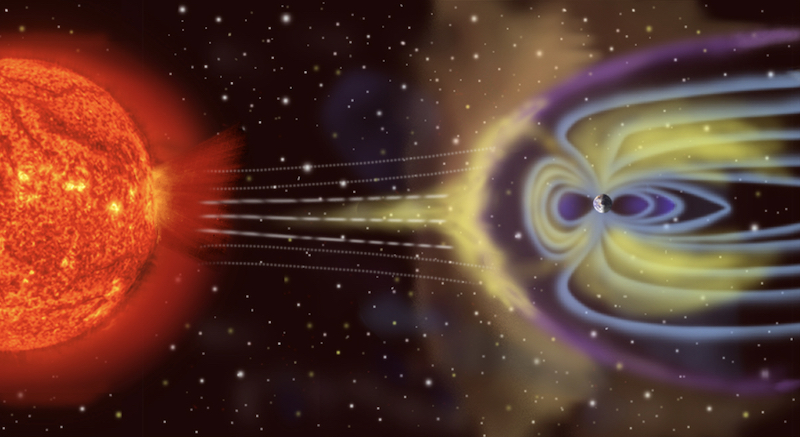
By establishing a way to measure these fields on exoplanets, scientists can now begin comparing the magnetic environments of different worlds to understand which ones are capable of retaining their atmospheres and water.
This breakthrough opens a completely new window on exoplanet research. It’s the first time we can compare the magnetic environments of other worlds — a key step toward ultimately understanding which planets can stay alive, keep their water, and perhaps even, one day, host life as we know it. Julia Seidel, astronomer at the Laboratoire Lagrange, Observatoire de la Côte d’Azur, France and lead author of the study
Scope and Limitations of the Study
The current findings are based on a specific class of exoplanets: hot Jupiters. These are gas giants that orbit their stars at extremely close distances, which contributes to the intense wind speeds measured by the team. While these results provide the first robust measurement of magnetism outside the solar system, the study focused on these extreme environments rather than smaller, rocky planets similar to Earth.
