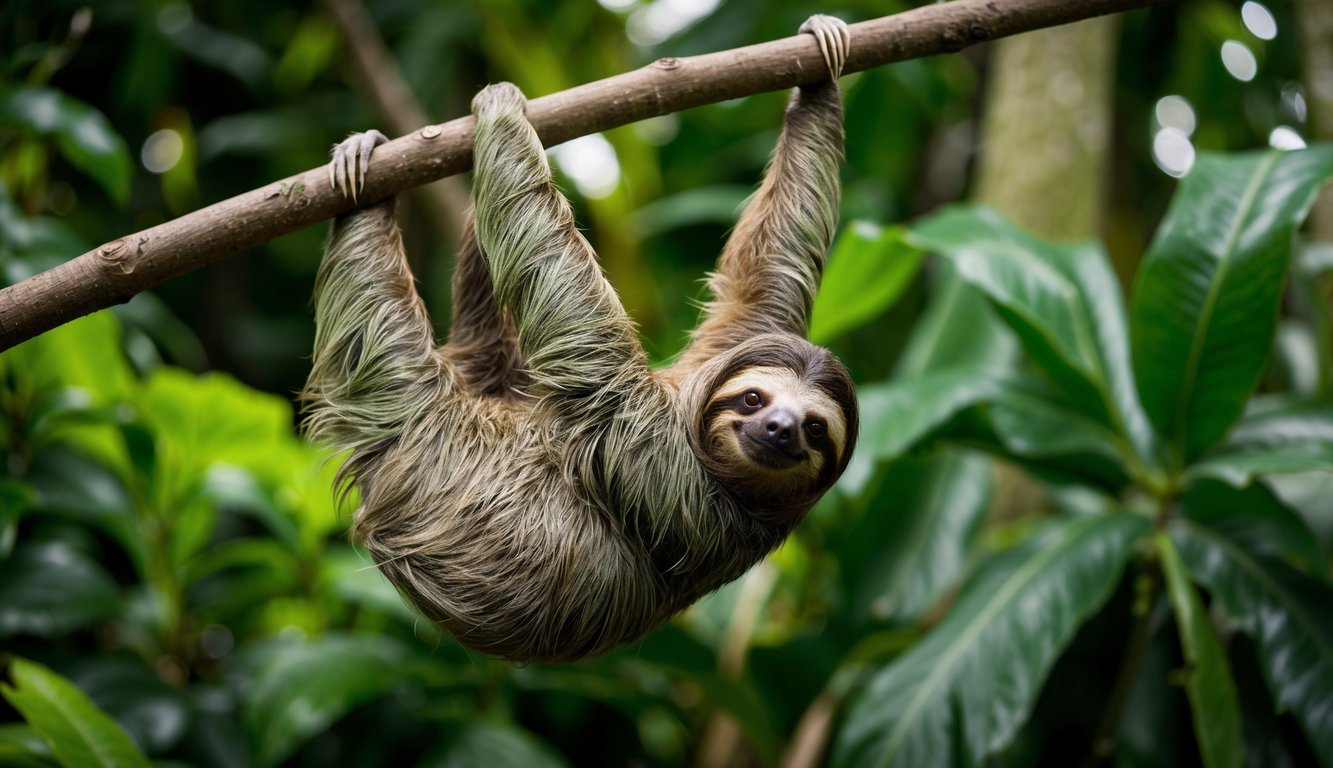
A rare genetic mutation in slow lorises—the world’s only venomous primates—explains why these small, nocturnal animals move at a fraction of the speed of other mammals their size, according to a new study published in a leading wildlife biology journal.
The research, conducted by an international team of zoologists and geneticists, identified a specific DNA variant linked to muscle fiber composition and neural signaling that drastically reduces their movement capacity. Slow lorises typically crawl at just 0.5 meters per second, about one-tenth the speed of similarly sized primates like squirrels or lemurs.
Why Do Slow Lorises Move So Slowly?
The study authors pinpointed two key biological factors behind the lorises’ sluggishness: a mutation in the MYH7 gene, which governs slow-twitch muscle fibers, and alterations in the DRD2 receptor gene, which affects dopamine signaling in the brain. Together, these changes create a metabolic and neurological profile optimized for endurance over speed.

“This isn’t just about muscle weakness—it’s a full-system adaptation,” said Dr. Mei Lin, a lead researcher from the University of Singapore’s Wildlife Genetics Lab. “Their bodies prioritize stealth and energy conservation over rapid movement, which aligns with their nocturnal, insectivorous lifestyle.”
The team analyzed muscle tissue and genetic samples from 47 slow lorises across Southeast Asia, comparing them with 23 related primate species. The mutation was present in 100% of the lorises tested but absent in all other primates.
How Does This Affect Their Survival?
While their slow pace might seem like a disadvantage, the researchers argue it’s a critical evolutionary advantage. Slow lorises rely on stealth to ambush prey and avoid predators, a strategy that would fail if they moved quickly. Their venom—a rare trait among mammals—also plays a role, as it allows them to subdue prey without prolonged chases.
“Their slowness isn’t a flaw; it’s a finely tuned survival mechanism,” said Dr. Lin. “In the dense forests of Borneo and Sumatra, where they live, speed isn’t always the best strategy.”
The study also noted that slow lorises exhibit a unique “freeze response” when threatened, holding their breath and remaining motionless for up to 15 minutes—a behavior linked to their low metabolic rate and the genetic adaptations identified.
Limitations and Unanswered Questions
The research team acknowledged several gaps in their findings. First, the study did not examine whether the same genetic mutations exist in extinct primate species, leaving open the question of whether this trait evolved recently or has deeper evolutionary roots.

Additionally, the sample size was limited to wild populations in Indonesia and Malaysia, raising questions about whether lorises in other regions—such as those in zoos or captive breeding programs—exhibit the same genetic profile. The authors called for further studies to explore whether these mutations could be linked to other physiological traits, such as their venom production or unique grooming behaviors.
What’s Next for Slow Loris Research?
The University of Singapore’s lab has already begun sequencing the genomes of slow lorises in captivity to determine if the mutations persist outside their natural habitat. If confirmed, the findings could have implications for conservation efforts, particularly as slow lorises face threats from habitat loss and the illegal pet trade.
“Understanding their biology isn’t just about curiosity—it’s about protecting them,” said Dr. Lin. “If we know what makes them uniquely adapted to their environment, we can better design strategies to keep their ecosystems intact.”
