VERBATIM
VERBATIM
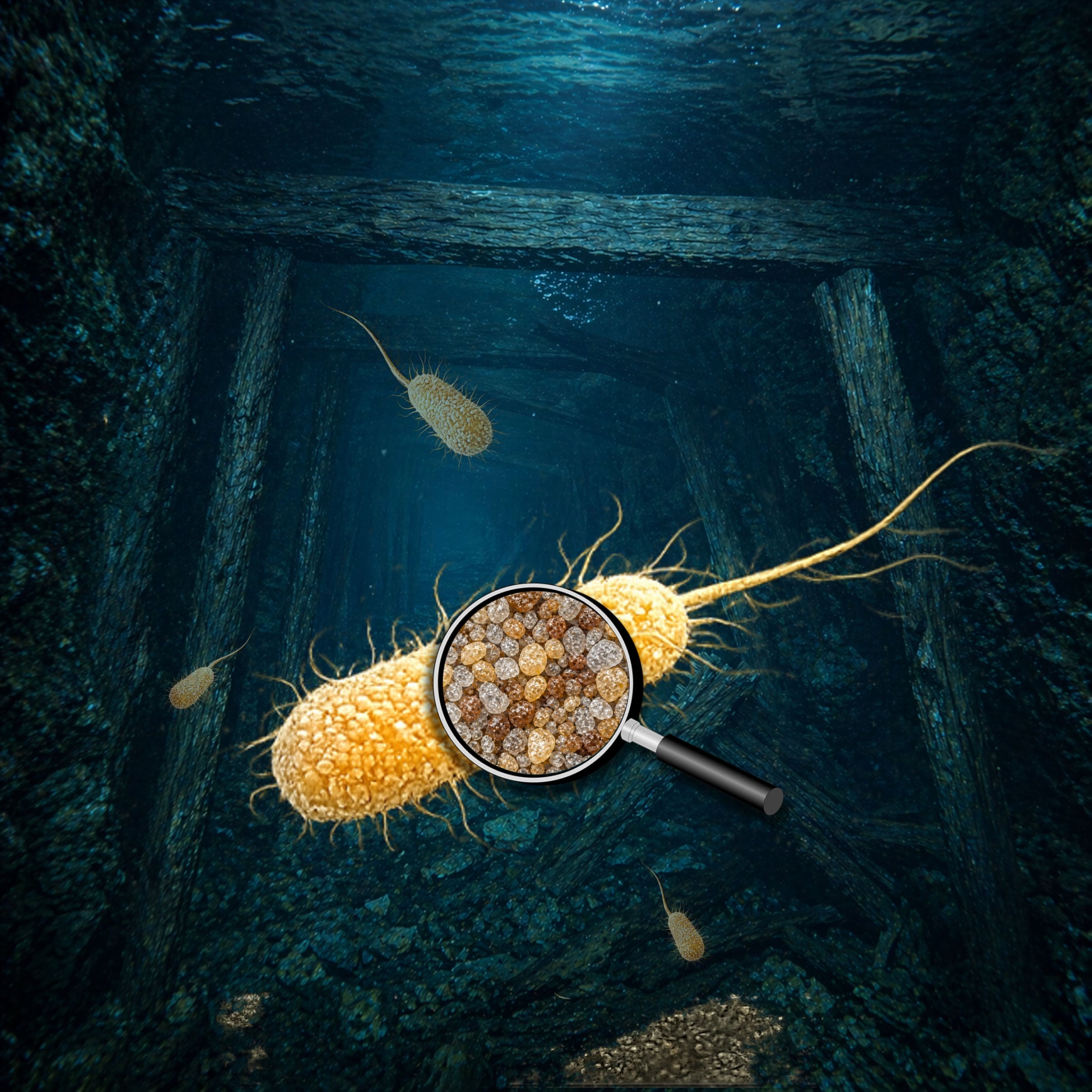
A recent breakthrough in the field of environmental remediation has been achieved by researchers at the Helmholtz-Zentrum Dresden-Rossendorf (HZDR), in collaboration with Wismut GmbH and the University of Granada. The team has discovered that bacteria can convert toxic uranium dissolved in water into a stable chemical compound when supplied with glycerol as a food source. This finding, published in Nature Communications, has significant implications for the remediation of uranium-contaminated environments.
Uranium contamination is a major environmental concern, as the metal can change chemical form and become mobile, posing risks to human health and the environment. The researchers used water from a flooded uranium mine in the Ore Mountains, operated by Wismut GmbH, to conduct their experiments. They added a specific amount of glycerol to the water samples and created an oxygen-free environment, simulating the conditions found at a depth of approximately 2,000 meters.
Related media


After 130 days, the team found that only around 5 percent of the dissolved uranium remained in the water. The bacteria had incorporated the uranium into their cell walls, and further analysis revealed that the uranium had formed a stable compound, FeU(V)O4, with iron and oxygen. This compound was first discovered in a study in 2020, which analyzed soil samples from parts of Croatia contaminated by uranium ammunition.
According to the study, the team wanted to create natural conditions for the bacterial community already existing in the mine water. The researchers used advanced microscopic and spectroscopic methods to analyze the bacterial membrane and determine the chemical states of the uranium. Dr. Evelyn Krawczyk-Bärsch, a scientist in HZDR's Terrestrial Microbiology research group and co-author of the study, explains that "there are bacteria that can metabolically utilize the heavy metal, uranium, which is toxic for humans." She adds that "our group's investigations had already revealed that bacteria can use uranium dissolved in water for their metabolism when they have access to glycerol as a food source."
Dr. Antonio M. Newman-Portela, former doctoral candidate at both HZDR and the Microbiology Department at the University of Granada (Spain), and the lead author of the study, explains that "we wanted to create natural conditions for the bacterial community already existing in the mine water because at a depth of approximately 2,000 meters there is usually little or no oxygen in the mine."
The study's findings could help scientists better understand how uranium behaves in contaminated groundwater, mine water, and waste sites. They may also support research into bioremediation, which uses living organisms to reduce the movement, toxicity, or availability of pollutants. As Dr. Krawczyk-Bärsch notes, "our study has revealed for the first time that bacteria supplied with glycerol as a carbon source can convert toxic uranium dissolved in water into a stable chemical compound." However, she adds that "we still have to investigate to what extent bacteria might help to render uranium harmless for remediation purposes."
In future work, the HZDR team aims to gain further insights into uranium-binding bacteria as well as to better understand the underlying biochemical and geochemical processes. The researchers will focus on uranium-binding bacteria and the biochemical and geochemical reactions that allow the microbes to immobilize the metal.
Archypedia is dedicated to independent, evidence-backed reporting. This briefing was synthesized from primary source reporting, corroborated across independent newsrooms, and verified against our Editorial Standards.
Transparency record
Evidence behind this report
This report synthesizes 6 distinct sources. Open the source ledger below to compare the underlying coverage.
Prepared under the Archypedia Editorial Policy by the Niko Vale editorial desk profile. AI-assisted tools may support drafting and verification; public accountability remains with Archypedia. Report an error.