Dinosaurs likely spread seeds for fruit-bearing plants in Cretaceous era
Fossilized evidence from New Mexico suggests that flowering plants produced large fruits while dinosaurs still roamed, challenging the belief that this developed post-extinction.
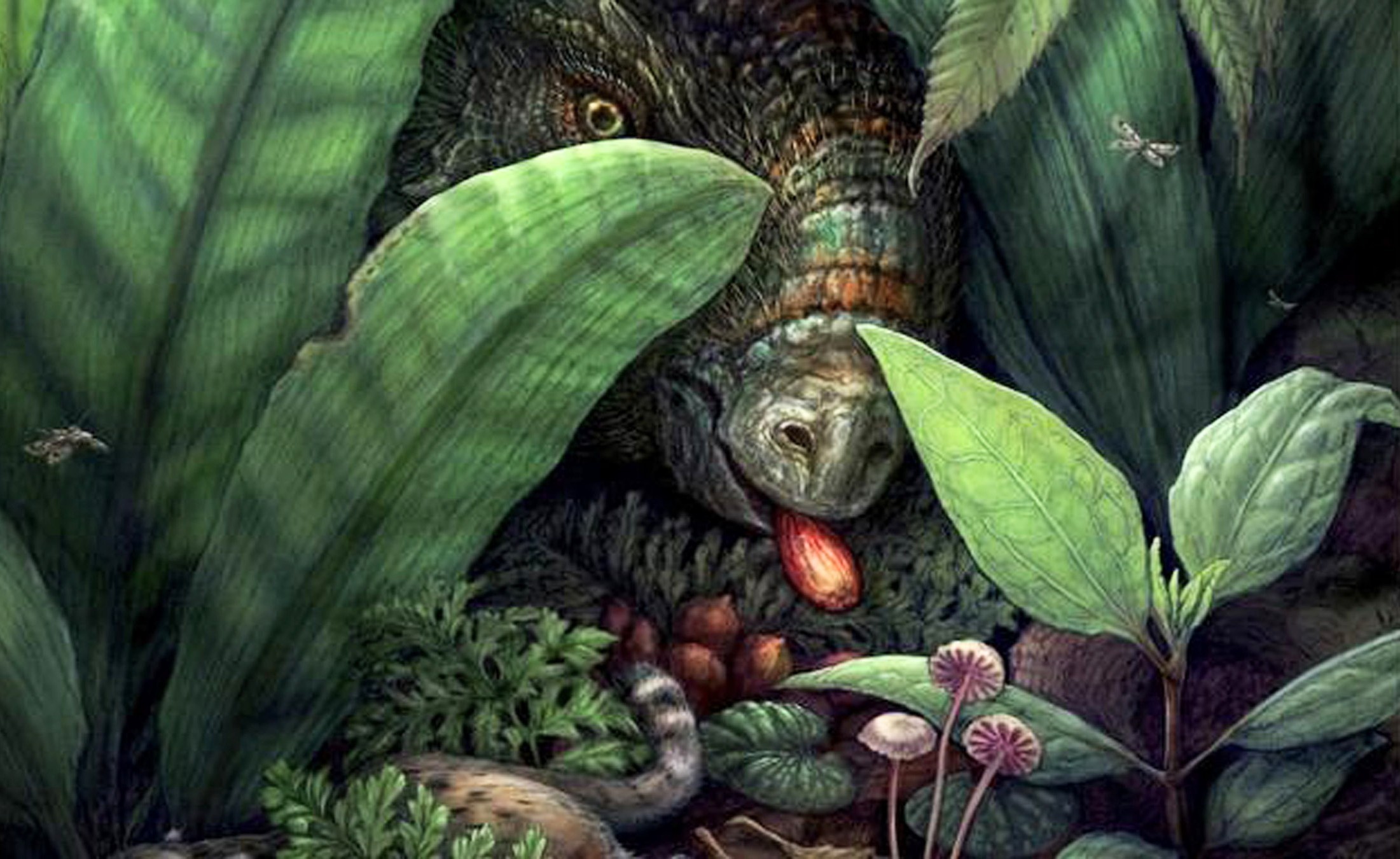
A fossilized forest preserved in volcanic ash in New Mexico has provided what scientists describe as a botanical Pompeii
, revealing that flowering plants produced large, fleshy fruits tens of millions of years earlier than previously assumed. The findings, published in the journal Science, challenge the long-standing scientific narrative that angiosperms — the group that includes most modern trees and flowers — only developed complex reproductive strategies and large fruits after the mass extinction that ended the Cretaceous period 66 million years ago.
According to researchers from the University of Kansas and the University of California, Berkeley, the fossils date back 74.6 million years. The site, known as Dori’s tuff within the Jose Creek Formation, captured a tropical ecosystem where diverse, large-seeded plants thrived while non-avian dinosaurs still roamed the Earth. This discovery suggests that the evolution of fleshy fruits was not a delayed response to the post-extinction rise of mammals, but rather an earlier development that likely involved dinosaurs as primary seed dispersers.
Related media
Challenging the Post-Extinction Narrative
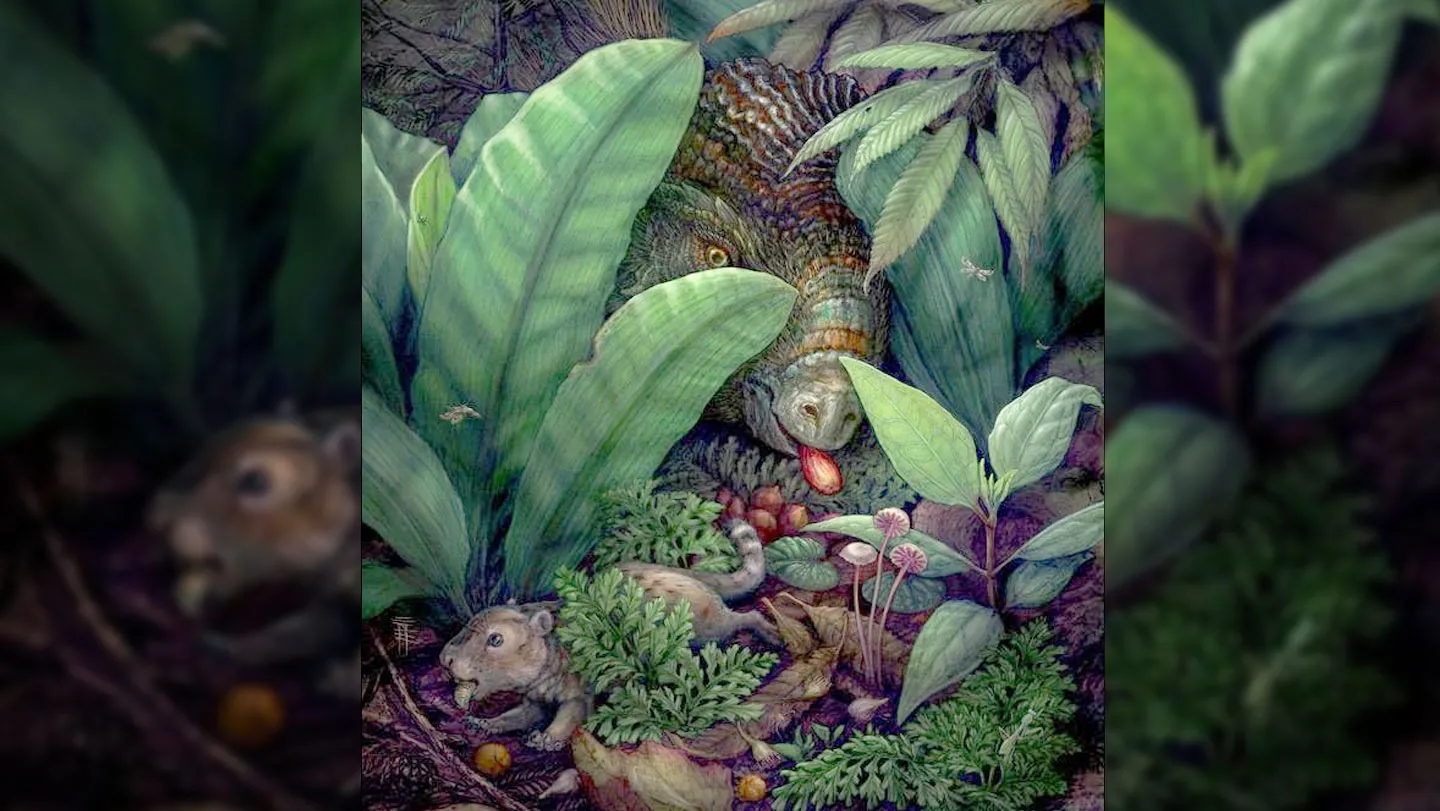
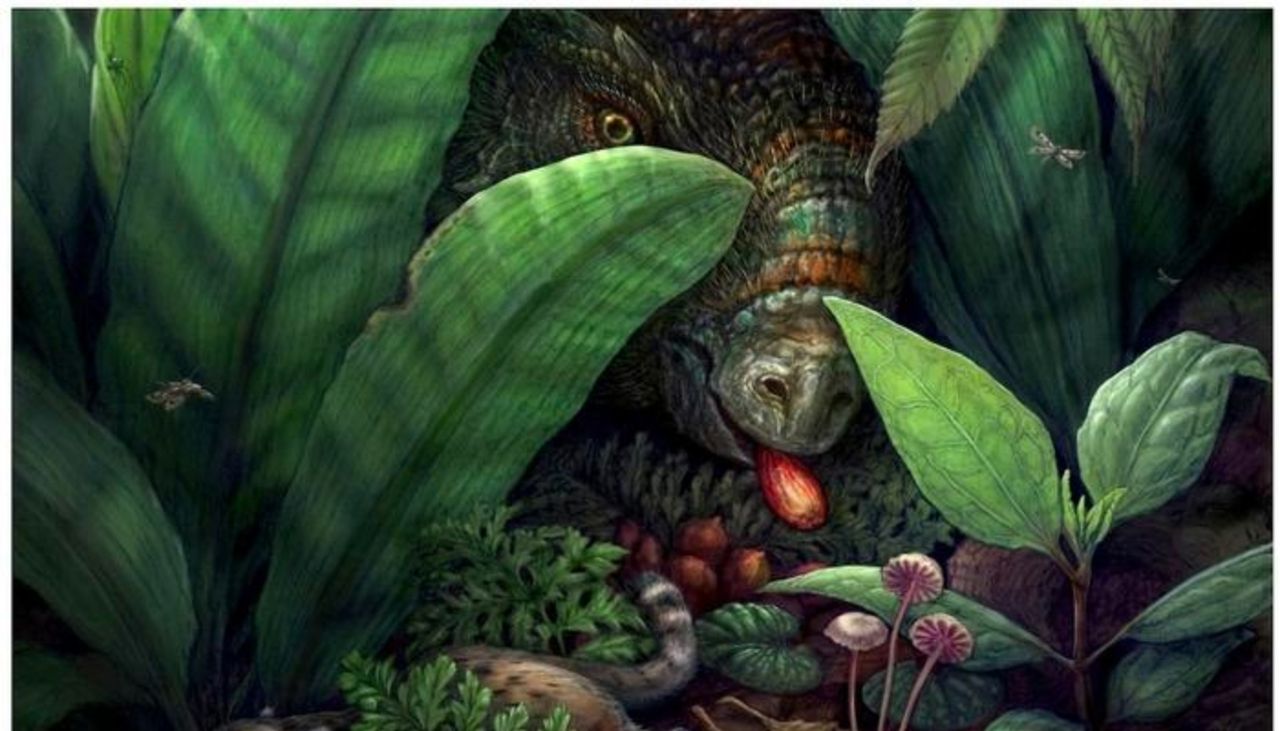
For decades, paleontologists held that early flowering plants were small, weedy organisms producing only tiny, wind-dispersed seeds. The prevailing view maintained that these plants remained secondary members of the forest until the Chicxulub impact wiped out the dinosaurs, creating ecological space for fruit-eating mammals to drive the diversification of modern fruit-bearing trees. However, the New Mexico site shows that 74 million years ago, forests were already dominated by flowering trees that produced fruits the size of grapes or blueberries.
Lead author Jaemin Lee of UC Berkeley noted that these findings suggest angiosperms were already investing significant resources into their reproductive units long before the mass extinction. By sampling a deposit of solidified ash, the researchers were able to reconstruct a landscape in high detail, confirming that these plants were not minor players but structural pillars of their ancient forest.
The Role of Dinosaurs as Engineers
The discovery aligns with new research regarding how megafauna shaped ancient environments. A separate study published in Palaeontology by researchers at Northern Arizona University explores the ecosystem engineer
role of large dinosaurs. According to Christopher E. Doughty, the massive physical impact of these dinosaurs, knocking down trees and thinning forests, kept the forest floor relatively bright. This environment suppressed the evolutionary pressure for seeds to grow larger, as smaller seeds were sufficient for plants in more open, high-light conditions.
When dinosaurs went extinct, the forests became significantly denser and darker, creating a competitive environment where larger, nutrient-rich seeds provided a survival advantage for seedlings struggling for sunlight. The study suggests this cycle of seed-size evolution is sensitive to the presence of large animals; when giant mammals appeared later, seeds shrank again, only to increase once more after the extinction of megafauna like mammoths.
What to Watch Next
- Global Expansion: Researchers, including Brian Atkinson of the University of Kansas, emphasize the need to sample other Late Cretaceous fossil sites worldwide to determine if these large-fruited forests were a global phenomenon or specific to North American mid-latitudes.
- Human Impact: As modern humans engage in activities like logging and agriculture, scientists are observing if current forest management practices mirror the environmental thinning once caused by dinosaurs, potentially influencing the future evolution of fruit and seed sizes.
The findings collectively shift the perspective on the late Cretaceous, moving away from a world of small, wind-dispersed plants toward a complex, animal-integrated ecosystem that laid the foundation for the forests of today. As Jaemin Lee noted, these Cretaceous plants were already investing more resources into individual diaspores
while dinosaurs still roamed the Earth, turning our modern understanding of plant evolution on its head.
Archypedia is dedicated to independent, evidence-backed reporting. This briefing was synthesized from primary source reporting, corroborated across independent newsrooms, and verified against our Editorial Standards.
Transparency record
Evidence behind this report
This report synthesizes 12 distinct sources. Open the source ledger below to compare the underlying coverage.
- earth.com
- smithsonianmag.com
- sciencenews.org
- yourweather.co.uk
- scientificamerican.com
- timesofindia.indiatimes.com
- economictimes.indiatimes.com
- news.ku.edu
- knowridge.com
- news.berkeley.edu
- news.nau.edu
- fieldmuseum.org
Prepared under the Archypedia Editorial Policy by the Niko Vale editorial desk profile. AI-assisted tools may support drafting and verification; public accountability remains with Archypedia. Report an error.