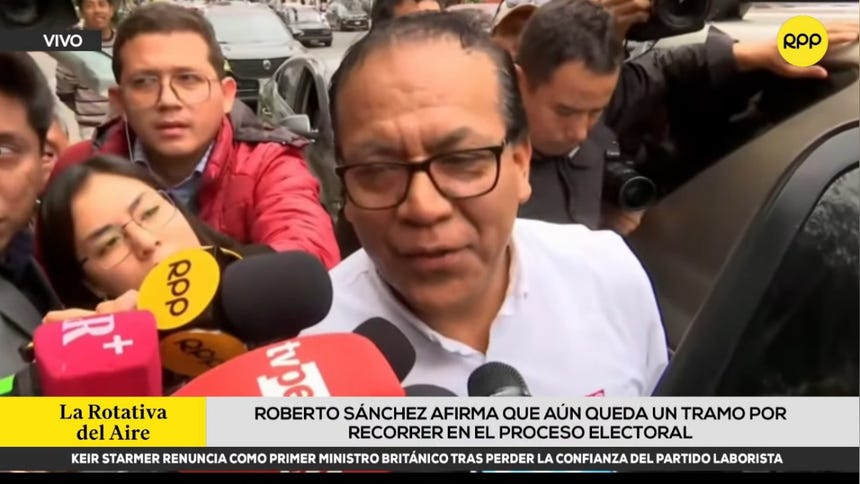
Peruvian opposition leader Roberto Sánchez has escalated his legal challenge against the country’s 2026 election results, accusing consular offices of violating electoral norms in a move that could further destabilize the political process. With protests already underway in Lima and a new round of legal filings confirmed, Sánchez’s campaign frames the dispute as a direct threat to democratic integrity.
What’s at stake in Sánchez’s legal push?
Sánchez’s team announced plans to formalize a new recurso impugnatorio—a formal appeal challenging the validity of votes cast by Peruvians abroad. According to local media reports, the opposition argues that consular offices failed to comply with electoral regulations, a claim Sánchez’s spokesperson described as a “grave affectation” to the process.
Key Details
- Legal action: New impugnatory resource filed to challenge overseas votes.
- Protests: Pacifist demonstrations in Lima’s central districts, per El Peruano.
- Timeline: Challenges follow the June 2026 election, with no official resolution yet.
Why this matters beyond Peru’s borders
Sánchez’s campaign isn’t just targeting domestic procedures—it’s framing the issue as a precedent for future elections in Latin America, where diaspora voting has become a contentious flashpoint. The Agencia Peruana de Noticias noted that similar disputes have arisen in Venezuela and Colombia, where expatriate ballots have sparked legal battles over transparency.
“This isn’t just about numbers—it’s about whether the vote counts when Peruvians are scattered across the world,” Sánchez told reporters during a Lima press conference. DW.com captured footage of the rally, where protesters carried signs reading “Defend the popular vote”.
How the government is responding—and what’s next
The Peruvian government has yet to publicly address the new legal filing, but sources close to the electoral council say internal reviews are underway. Meanwhile, Sánchez’s team has vowed to escalate pressure, with plans to mobilize supporters ahead of a July 15 deadline for preliminary rulings.
For now, the focus remains on Lima’s streets, where organizers say turnout for the protests exceeded 10,000, per Infobae. Whether the legal challenge succeeds—or even reaches a courtroom—will hinge on whether Sánchez can prove systematic irregularities, a standard critics say has been difficult to meet in past disputes.
One thing is certain: the case will test Peru’s electoral system at a moment when trust in institutions is already fragile. With no clear path to resolution, the coming weeks could determine whether the 2026 vote stands—or if the country faces a prolonged political standoff.
