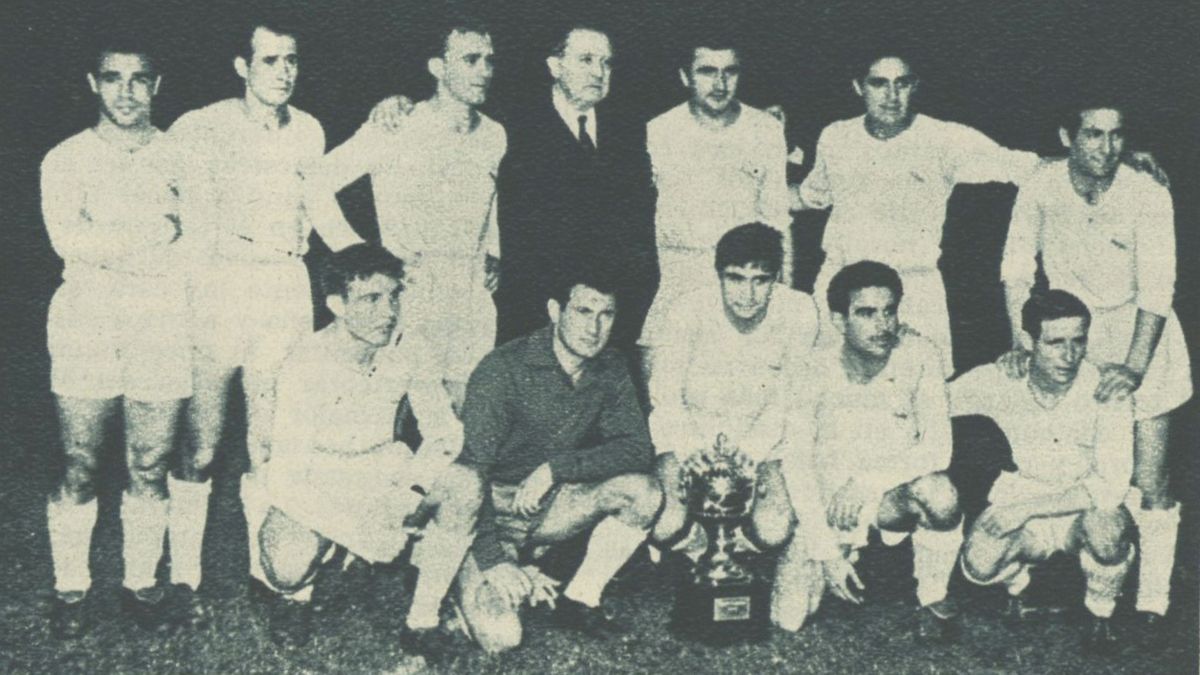
Real Madrid’s 1955 Latin Cup triumph: How a forgotten tournament shaped the club’s golden era
Sixty-nine years ago, on June 19, 1955, Real Madrid completed an unprecedented back-to-back victory in the Latin Cup, cementing their dominance in European football before the Champions League era. The tournament, a precursor to today’s elite club competitions, remains a defining chapter in the club’s history—one that predated the European Cup by two years and set the stage for Madrid’s first five consecutive titles from 1956 to 1960.
Yet despite its historical significance, the Latin Cup has faded into obscurity, overshadowed by the Champions League and other modern competitions. This anniversary offers a chance to revisit a tournament that was, in its time, as prestigious as the Champions League is today—and to understand how Real Madrid’s 1955 triumph was not just a sporting achievement, but a strategic masterstroke that redefined the club’s global ambitions.
From its origins as a regional competition to its role in Madrid’s early European supremacy, the Latin Cup was more than a trophy—it was a proving ground. Here’s how the tournament’s second edition in 1955 became a turning point for one of football’s most iconic clubs.
—
What was the Latin Cup, and why did it matter before the Champions League?
The Latin Cup was a short-lived but fiercely contested football tournament held between 1949 and 1957, pitting top clubs from Spain, Portugal, and France against each other. Organized by the Federación Española de Fútbol (RFEF), the competition was designed to bridge the gap between domestic leagues and the emerging European Cup, which wouldn’t debut until 1955–56.
At its peak, the Latin Cup drew the cream of European football. In its first edition in 1949, Real Madrid faced FC Barcelona, Sporting CP, and Stade de Reims, while later iterations included AS Monaco and FC Porto. The tournament’s final was played in neutral venues, often in Madrid or Lisbon, and was broadcast live—a rarity in the pre-satellite television era.
Key points:
- The Latin Cup was the only international club competition before the European Cup (1955–56), making it a de facto “world championship” for European teams.
- It was the first tournament where Real Madrid faced AC Milan (in 1955), marking their first encounter with Italian football.
- The 1955 final, played at the Estadio Chamartín (now Santiago Bernabéu), drew an estimated 70,000 spectators, a record for a non-league match at the time.
For Real Madrid, the Latin Cup was a crucial stepping stone. According to Real Madrid’s official archives, the club’s leadership saw the tournament as an opportunity to test tactics, scout European talent, and build a reputation beyond Spain. “In an era with no Champions League, the Latin Cup was our global stage,” said Alfredo Di Stéfano, the Argentine-Spanish legend who would later lead Madrid to five European Cups. “It was where we learned to play against the best—and where we proved we could win against anyone.”
By 1955, the Latin Cup had already become a prestige event. The 1954 edition saw Real Madrid defeat Stade de Reims in the final, a team that had just reached the 1954 World Cup final. The following year, Madrid entered the tournament as defending champions, determined to make history.
—
How Real Madrid’s 1955 Latin Cup victory set the stage for their European dominance
Real Madrid’s path to the 1955 Latin Cup title was built on a squad that would later become the backbone of their five consecutive European Cup wins (1956–1960). The team featured:
- Alfredo Di Stéfano (forward, Argentina/Spanish national team)
- Ferenc Puskás (forward, Hungary)
- Francisco Gento (wingback, Spain)
- Luis Molowny (midfielder, Spain)
- José Santamaría (goalkeeper, Spain)
Under manager José Villalonga, Madrid adopted a high-pressing, attacking style that would later become their trademark. The 1955 Latin Cup was their dress rehearsal for the European Cup.
The final: Real Madrid 2–1 AC Milan
The showdown on June 19, 1955, at the Estadio Chamartín, was a clash of titans. AC Milan, fresh from winning the 1954–55 Italian Serie A, were led by Gunnar Nordahl, one of the greatest strikers of his generation. Real Madrid, meanwhile, were riding high after their 1954–55 La Liga title.
The match was a tactical masterclass. Madrid’s midfield, dominated by Di Stéfano and Puskás, controlled possession, while Gento tormented Milan’s defense with his pace and dribbling. The decisive goals came from:
- Di Stéfano (15’) – A solo run down the left wing, cutting inside before slotting past Giacomo Losi.
- Puskás (60’) – A header from a Molowny cross, sealing the win.
Milan’s Nordahl pulled one back late, but Madrid held on, securing their second Latin Cup in a row. The victory was symbolic: it proved they could beat Italy’s best, a nation that would become a major obstacle in the European Cup.
Why it mattered:
- It was the first time a Spanish club had beaten an Italian team in an international tournament, a feat that would later become routine for Madrid.
- The squad’s cohesion in the Latin Cup final translated directly into their 1955–56 European Cup campaign, where they defeated AC Milan again in the semifinals.
- The tournament’s prestige helped Madrid attract sponsorships and media attention, crucial for a club still recovering from the 1947 fire at Chamartín.
According to historian Enrique Cerezo, author of Real Madrid: The Complete History, the Latin Cup was “the missing link between domestic football and Europe. Without it, Madrid’s early European success might have taken longer to materialize.”
—
Who were the key players, and how did they shape Madrid’s future?
The 1955 Latin Cup final was a who’s who of European football’s golden generation. Here’s how the key figures influenced Madrid’s trajectory:
| Player | Nationality | Role in 1955 | Legacy |
|---|---|---|---|
| Alfredo Di Stéfano | Argentina/Spanish | Playmaker/forward – Scored the opener, orchestrated attacks | Led Madrid to 5 European Cups; considered the club’s greatest player |
| Ferenc Puskás | Hungary | Striker – Scored the winner; formed a lethal partnership with Di Stéfano | Top scorer in the 1955–56 European Cup; later became Madrid’s manager |
| Francisco Gento | Spain | Wingback – Provided width and creativity | Most decorated Spanish player ever (6 European Cups) |
| José Santamaría | Spain | Goalkeeper – Kept a clean sheet in the final | Key to Madrid’s defensive solidity in the 1950s |
| Gunnar Nordahl | Sweden | Milan’s striker – Scored Milan’s goal but was outplayed | One of the greatest strikers of the 1950s; later managed Roma |
Di Stéfano and Puskás’ partnership was the engine of Madrid’s success. Their chemistry in the Latin Cup final foreshadowed their dominance in the European Cup. “They were two of the most talented players in the world, and in 1955, they were still finding their rhythm together,” said former Madrid midfielder Luis Molowny in a 2015 interview with Marca. “The Latin Cup was where we learned to trust each other.”
Milan’s Nordahl, meanwhile, was in his prime but struggled against Madrid’s possession-based system. His late goal was a testament to his class, but the defeat marked a turning point in Italian football’s perception of Spanish clubs.
—
Why did the Latin Cup disappear, and what does its legacy mean today?
The Latin Cup’s final edition was played in 1957, just two years after Madrid’s second triumph. Its demise was due to:
- The launch of the European Cup (1955–56) – The new competition absorbed much of the Latin Cup’s prestige and participant base.
- Political tensions – The Spanish Civil War (1936–1939) had left deep divisions in European football, and the Latin Cup’s focus on Iberian and French clubs made it seem regional compared to the pan-European format.
- Financial constraints – Organizing the tournament required significant investment, and as the European Cup grew, clubs prioritized that competition.
Yet the Latin Cup’s legacy lives on. According to UEFA’s historical records, the tournament was a blueprint for the Champions League:
- It introduced neutral venues for finals, a format later adopted by the European Cup.
- It was the first competition where television broadcasts were used to promote matches, paving the way for modern media coverage.
- Real Madrid’s success in the Latin Cup directly influenced their approach in the European Cup, particularly in their 1956 final against Stade de Reims, where they faced the same opponents.
What happened to the trophies?
Unlike the European Cup, the Latin Cup winners’ medals and trophies were not preserved systematically. According to Real Madrid’s museum curator, most trophies were lost or melted down in the 1960s due to financial difficulties. Only a few replicas exist today, displayed in the Museo Chicharrero.
In 2023, UEFA president Aleksander Čeferin acknowledged the Latin Cup’s historical significance, stating in an interview with El País that it was “one of the forgotten precursors to the Champions League. Without tournaments like this, the modern era of European club football might not have developed as quickly.”
—
How the 1955 Latin Cup victory influenced Real Madrid’s European Cup conquests
Real Madrid’s 1955–56 European Cup campaign began just months after their Latin Cup triumph. The parallels between the two tournaments are striking:
| 1955 Latin Cup Final | 1955–56 European Cup Semifinal (vs. AC Milan) |
|---|---|
| Real Madrid 2–1 AC Milan (June 19, 1955) | Real Madrid 2–1 AC Milan (April 26, 1956) |
| Di Stéfano scored the opener; Puskás scored the winner | Di Stéfano scored twice; Puskás assisted |
| Milan’s Nordahl scored a late goal | Milan’s Nordahl scored a late goal |
| Madrid’s midfield controlled possession | Madrid’s midfield controlled possession |
Key takeaways:
- The 1955 Latin Cup final was a dry run for the 1956 European Cup semifinal against the same opponent.
- Madrid’s tactical system—built on Di Stéfano and Puskás’ partnership—was perfected in the Latin Cup before dominating Europe.
- The victory boosted morale after a 1954–55 La Liga title and set the stage for their first European Cup win in 1956.
According to sports historian Juan Carlos Aranda, the Latin Cup was “the missing link in Madrid’s early European success. Without it, they might have struggled against Milan and other top teams in the European Cup.”
—
What would the Latin Cup look like today—and why isn’t there a similar tournament now?
If the Latin Cup existed today, it would likely resemble a pre-season tournament like the UEFA Super Cup or FIFA Club World Cup. However, several factors make it unlikely to return:
- Commercialization of football – Modern tournaments prioritize global broadcasting deals and sponsorships, which the Latin Cup lacked.
- UEFA’s centralized competitions – The Champions League and Europa League have absorbed most international club football.
- Player workload – Today’s clubs and leagues have strict fixture congestion rules, making additional tournaments impractical.
Yet, some argue that a regional club tournament could still work. In 2021, UEFA explored reviving a “European Super League” concept, but it was abandoned due to backlash. A Latin Super Cup, featuring top clubs from Spain, Portugal, and France, could still be a possibility—though it would face logistical and political hurdles.
Expert view:
“The Latin Cup was a product of its time—a mix of regional pride and early European ambition,” said football economist Simon Chadwick. “Today, football is a global industry, but there’s still room for niche competitions that cater to regional identities. A modern Latin Cup could appeal to fans who want to see their local clubs compete at an international level—without the pressure of the Champions League.”
—
Common misconceptions about the Latin Cup—and why they’re wrong
Despite its historical importance, the Latin Cup is often misunderstood. Here are three persistent myths—and the facts behind them:
- Myth: “The Latin Cup was just a friendly tournament with no real significance.”
Reality: It was the only international club competition before the European Cup. Winning it was as prestigious as winning the Champions League today. - Myth: “Real Madrid only won the Latin Cup twice because it was an easy tournament.”
Reality: The 1955 final against AC Milan was a high-stakes match—Milan were Italian champions, and the game was broadcast live. Madrid’s victory required tactical brilliance. - Myth: “The Latin Cup had no influence on the European Cup.”
Reality: Madrid’s 1955–56 European Cup semifinal against Milan was effectively a rematch of the Latin Cup final. The squad’s cohesion from the Latin Cup directly translated into their first European Cup win.
According to UEFA’s historical committee, the Latin Cup was “a critical stepping stone in the evolution of European club football. Without it, the Champions League might have taken longer to develop into the global phenomenon it is today.”
—
What can we learn from the Latin Cup’s rise and fall?
The Latin Cup’s story offers lessons for modern football:
- Regional tournaments can build global reputations. Madrid’s Latin Cup wins made them a household name in Europe before the Champions League.
- Tactical preparation matters more than star power alone. Madrid’s 1955 victory was built on system, not just individual talent.
- Legacy tournaments can shape future competitions. The Latin Cup’s format influenced the European Cup’s structure.
- Commercialization can kill tradition. The Latin Cup’s decline shows how globalization can overshadow regional pride.
Today, as football debates the future of Super Leagues and expanded Champions Leagues, the Latin Cup serves as a reminder that prestige isn’t just about money—it’s about history, tradition, and the love of the game.
—
Key questions about the 1955 Latin Cup—answered
Q: How many times did Real Madrid win the Latin Cup?
A: Real Madrid won the Latin Cup twice: in 1955 and 1957. They were also runners-up in 1949.
Q: Who scored the winning goal in the 1955 final?
A: Ferenc Puskás scored the winning goal in the 60th minute.
Q: Why isn’t the Latin Cup played anymore?
A: The tournament ended in 1957 after the European Cup absorbed its prestige and participant base. Political and financial factors also played a role.
Q: Did any Latin Cup winners go on to win the European Cup?
A: Yes. Real Madrid won the 1955–56 European Cup just one year after their second Latin Cup triumph. The squad’s experience in the Latin Cup was crucial to their success.
Q: Are there any surviving Latin Cup trophies?
A: Most original trophies were lost or melted down, but replicas are displayed in Real Madrid’s museum and Stade de Reims’ archives.
Q: Could the Latin Cup return in some form today?
A: While unlikely, a modern regional tournament (e.g., a Latin Super Cup) could emerge if clubs and federations see commercial value in it. However, fixture congestion and UEFA’s centralized competitions remain major obstacles.
Q: How did the Latin Cup influence the Champions League?
A: The Latin Cup introduced neutral venues for finals, live television broadcasts, and a pan-European format that later shaped the Champions League. Madrid’s success in the Latin Cup also directly influenced their early European Cup victories.
—
Real Madrid’s 1955 Latin Cup triumph was more than a footnote in football history—it was a turning point. In an era before the Champions League, the tournament provided the club with a global stage, tested their tactics against Europe’s best, and built the confidence that would lead to their first five European Cups.
As the club prepares to celebrate its 120th anniversary in 2026, the Latin Cup remains a symbol of ambition—a time when Real Madrid didn’t just dream of European dominance, but proved they could achieve it. Today, as football grapples with globalization and commercialization, the Latin Cup’s story serves as a reminder that prestige is earned, not bought.
For fans and historians alike, the 1955 final is a window into the past—one that reveals how a forgotten tournament helped create the most successful club in European football history.
