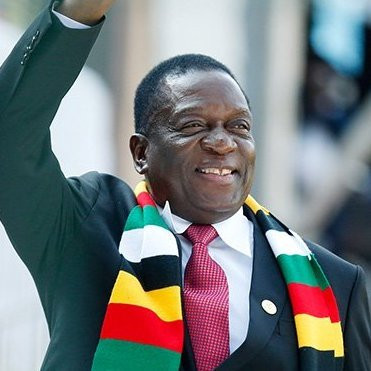
Power Struggle in Harare: Inside the Widening Rift Between Mnangagwa and Chiwenga Allies Over Cabinet Dynamics
The political landscape in Zimbabwe is currently witnessing a deepening fracture within the upper echelons of the ruling ZANU-PF party. While the public face of the administration remains one of unity, reports of an intensifying friction between the camps of President Emmerson Mnangagwa and Vice President Constantino Chiwenga have surged. At the heart of this latest escalation is a dispute surrounding “CAB 3″—a reference to the strategic distribution of cabinet portfolios and the influence wielded by key allies within the executive branch. This internal friction is not merely a clash of personalities but a high-stakes battle for patronage, policy direction, and the ultimate control of the state apparatus.
For observers of Zimbabwean politics, the Mnangagwa, Chiwenga allies rift widens over CAB 3 narrative is a signal that the “marriage of convenience” established during the 2017 transition of power is under severe strain. The tension reflects a broader systemic struggle between the civilian-political wing of the party and the security-heavy establishment, creating a volatile atmosphere that could have far-reaching implications for the country’s governance and economic stability.
The Core of the Conflict: Understanding the CAB 3 Dispute
To understand why the rift has widened, one must look at the mechanics of power in Zimbabwe. In a system where political loyalty is rewarded with ministerial appointments and control over state resources, the Cabinet is the primary engine of patronage. The “CAB 3” dispute centers on the perceived marginalization of allies loyal to Vice President Chiwenga within the cabinet structure and the strategic placement of Mnangagwa’s confidants in “gold-mine” ministries.
In Zimbabwean political parlance, “gold-mine” ministries are those that control significant budgets, foreign currency streams, or strategic sectors such as Mines, Finance, and Home Affairs. When one faction feels that the other is monopolizing these positions, it is viewed not just as a loss of prestige, but as a direct threat to the faction’s ability to sustain its own network of loyalists.
The struggle over cabinet appointments is rarely about the administrative efficiency of the ministries; it is about the architecture of survival. In ZANU-PF, if you do not control a ministry, you cannot feed your political machine.
Key Drivers of the Current Tension
- Resource Allocation: Disputes over who manages the country’s mineral wealth and the resulting revenue streams.
- Policy Divergence: Differing views on how to handle the economic crisis, with one camp favoring more aggressive market reforms and the other wary of losing state control.
- Succession Anxiety: As the administration progresses, the question of who follows whom becomes a dominant psychological driver, leading to preemptive strikes to weaken rivals.
- Security Sector Influence: The ongoing struggle to define the boundary between military influence in governance and civilian administrative authority.
The Architecture of the Rift: Factional Power Bases
The rift is not a simple binary between two men, but a conflict between two distinct power blocs. Each leader draws strength from different sectors of the Zimbabwean state and society.
President Mnangagwa’s power base is rooted in his long history as a political strategist and his ability to navigate the complex bureaucracy of the party. His allies typically include seasoned politicians, strategic businessmen, and a growing circle of loyalists within the civil service who view him as the primary architect of the “Second Republic.”
In contrast, Vice President Chiwenga’s strength is derived from his deep ties to the military and the security apparatus. Having served as the Commander of the Zimbabwe Defence Forces (ZDF), his allies are predominantly drawn from the “securocrat” class—generals, intelligence officers, and those who believe that the military should remain the ultimate guarantor of ZANU-PF’s power.
| Feature | Mnangagwa Faction | Chiwenga Faction |
|---|---|---|
| Primary Power Base | Political Bureaucracy & Business Elites | Military & Security Services |
| Strategic Goal | Consolidation of civilian executive power | Maintenance of security sector oversight |
| Approach to Economy | Engagement with international capital/investment | Sovereignty-focused, state-centric control |
| Key Leverage | Constitutional authority & party machinery | Command and control of the armed forces |
Historical Context: From the 2017 Coup to the Current Crisis
To fully grasp why the Mnangagwa, Chiwenga allies rift widens over CAB 3, one must revisit the events of November 2017. The removal of Robert Mugabe was not a spontaneous democratic uprising, but a carefully choreographed military intervention known as “Operation Restore Legacy.” At that time, Mnangagwa and Chiwenga were indispensable partners; the military provided the muscle, and Mnangagwa provided the political legitimacy and the party framework.
However, the alliance was born of necessity, not ideological alignment. Once the common enemy (Mugabe) was removed, the inherent contradictions between the two camps began to surface. The transition from a military-led intervention to a civilian-led government created a natural friction point. The security sector, led by Chiwenga, expected a permanent seat at the table of governance, while Mnangagwa sought to normalize the administration and centralize power in the presidency.
The Cycle of Purges and Reconciliations
Zimbabwean politics has a long history of “purges.” From the liberation struggle to the fallout between Mugabe and Joice Mujuru, the pattern is consistent: an alliance forms to seize power, followed by a period of internal competition, and eventually, the purging of the losing faction. The current tension over cabinet appointments is a modern iteration of this cycle. The “CAB 3” disputes are essentially the opening salvos of a struggle to determine who will be the dominant force in the post-Mugabe era.
The Economic Implications of Political Instability
While these disputes may seem like “palace intrigue” to the casual observer, the real-world consequences for the Zimbabwean citizen are severe. Political instability at the top translates directly into administrative paralysis at the bottom.
When the two most powerful offices in the land are at odds, the bureaucracy freezes. Permanent secretaries and directors find themselves caught in the crossfire, hesitant to implement policies for fear of offending the “wrong” faction. This leads to a breakdown in service delivery and an inability to tackle the country’s hyperinflation and currency volatility.
Impact on Foreign Investment
International investors crave predictability. The perception that the Zimbabwean government is divided—and that a sudden shift in power could occur—makes the country a high-risk environment. The rift over cabinet influence signals to the world that the “Open for Business” mantra is undermined by internal instability. If the leadership cannot agree on who manages the mines or the treasury, foreign capital is likely to remain on the sidelines.
For those interested in how this affects the broader region, a related explainer on SADC political stability may provide further context on how Zimbabwe’s internal strife impacts Southern African diplomacy.
Common Misconceptions About the Rift
There are several oversimplifications that often appear in the media regarding the Mnangagwa-Chiwenga dynamic. Addressing these is crucial for a nuanced understanding of the situation.
Misconception 1: The rift is purely about a personal grudge.
While personal animosity may exist, the conflict is systemic. It is about the control of the state. In a rent-seeking economy, the person who controls the cabinet controls the wealth. The rift is an economic struggle disguised as a personal one.
Misconception 2: The military is a monolithic bloc supporting Chiwenga.
The security sector is not a single unit. There are generals and intelligence officers who are loyal to the office of the President regardless of the individual, and others who have their own ambitions. The “Chiwenga camp” is powerful, but it is not the entirety of the ZDF.
Misconception 3: A cabinet reshuffle will solve the problem.
A reshuffle might provide a temporary truce, but it does not address the underlying issue of succession and the role of the military in politics. As long as there is no clear, agreed-upon path for the future of the party, these disputes will recur every time a portfolio is assigned.
Potential Trajectories: What Could Happen Next?
The widening rift over cabinet influence leaves the administration at a crossroads. There are three primary scenarios that could unfold:
- The Managed Compromise: The two leaders reach a “grand bargain” where cabinet portfolios are split more equitably, and a formal agreement on succession is reached. This would stabilize the government in the short term but would likely leave the underlying tensions simmering.
- The Systematic Purge: One faction successfully outmaneuvers the other, leading to the removal of key allies from the cabinet and the party. Given the military’s role, this would be a high-risk strategy that could trigger a renewed constitutional crisis.
- The Stagnant Deadlock: The rift continues to widen without reaching a breaking point, leading to a “frozen” government where neither side can implement significant changes, and the economy continues to suffer from a lack of decisive leadership.
The Role of External Actors
No internal Zimbabwean struggle happens in a vacuum. Regional powers and global players watch these developments closely. South Africa, as the regional hegemon, has a vested interest in Zimbabwe’s stability to prevent further migration crises and economic contagion. Meanwhile, the relationship with China—Zimbabwe’s primary infrastructure and mining partner—remains a critical variable. Beijing typically prefers stability and the continuity of contracts over the specifics of who holds which cabinet seat, but a total collapse of the ruling alliance would force a recalculation of their strategy in Harare.
The internal struggle is also influenced by the desire for re-engagement with the West. Some within the Mnangagwa camp argue that a more civilian-led, less “securitized” government is the only way to lift sanctions and return to the Commonwealth. This creates an ideological divide with the Chiwenga camp, which views such moves as a surrender to foreign interests.
Frequently Asked Questions
What is “CAB 3” in the context of Zimbabwean politics?
“CAB 3” refers to the strategic disputes over cabinet appointments and the influence of specific tiers of allies within the executive branch. It represents the struggle to control key ministries that provide political patronage and economic resources.
Why is the relationship between Mnangagwa and Chiwenga so volatile?
Their relationship is based on a strategic alliance formed to remove Robert Mugabe in 2017. Because they represent different power bases—civilian/political versus military/security—their interests often clash regarding how the country should be governed and who should hold power.
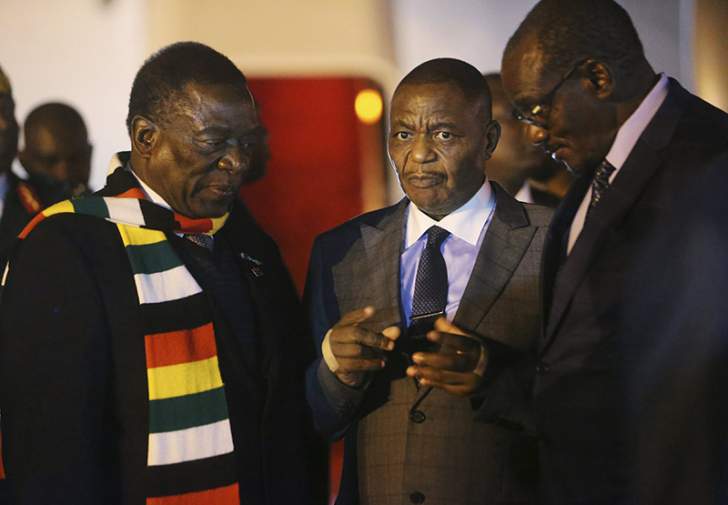
How does this internal rift affect the average Zimbabwean citizen?
Political instability at the top leads to administrative inefficiency, a lack of consistent policy implementation, and economic volatility. When the leadership is divided, the government’s ability to address inflation and unemployment is severely hampered.
Does this rift signal another coup in Zimbabwe?
While the tension is high, a coup is not the only possible outcome. The struggle is currently playing out through political maneuvering, cabinet reshuffles, and factional positioning. However, the involvement of the security sector always makes the situation more precarious than a standard political disagreement.
What is the difference between the “civilian wing” and the “security wing” of ZANU-PF?
The civilian wing consists of party bureaucrats and politicians who operate through the party’s structures and the law. The security wing consists of members of the military and intelligence services who believe their role in the 2017 transition gives them a permanent right to oversee and influence government policy.
The current trajectory of the Zimbabwean government suggests that the era of absolute unity following the 2017 transition has ended. The deepening divide between the allies of the President and the Vice President indicates a return to the factionalism that has historically defined ZANU-PF. As the dispute over cabinet influence and the “CAB 3” dynamics continues to evolve, the stability of the state will depend on whether these two power centers can find a sustainable equilibrium or if the rift will widen to a point of no return. For now, the focus remains on the strategic placement of personnel, where every ministerial appointment is a move in a larger, more dangerous game of political chess.
