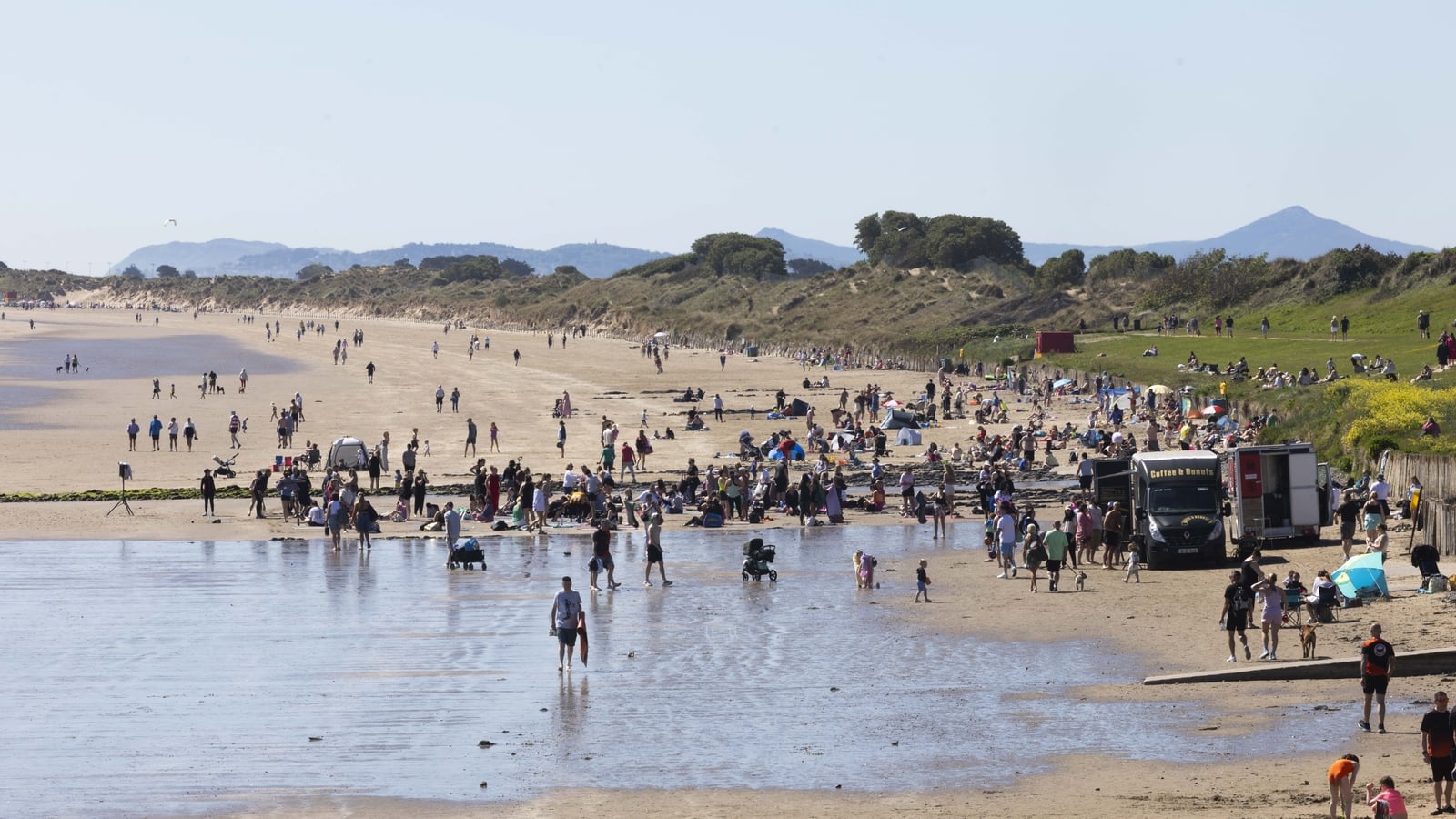
Climate scientists warn Europe’s record-breaking heat may now be the new baseline – and the implications are alarming
Europe is experiencing a dramatic shift in its climate, where once-unthinkable heatwaves are now becoming the norm rather than the exception. Scientists are increasingly concerned that the extreme temperatures that shattered records across the continent this year—including in Portugal, where a new national high was set—may no longer be outliers but instead the new baseline for summer conditions. The implications stretch far beyond uncomfortable weather, threatening public health, agriculture, energy systems, and even political stability.
This year’s heat has been relentless. In June alone, temperatures in parts of southern Europe soared past 45°C (113°F), while northern regions also faced prolonged periods of abnormal warmth. Meteorologists and climatologists warn that these extremes are no longer isolated events but part of a broader, accelerating trend. The question now is whether societies can adapt—or if the worst is yet to come.
What follows is an examination of how Europe’s climate is changing, why this year’s heat is particularly significant, and what it means for the future.
—
Europe’s heatwave season: a year of shattered records
This summer, Europe has been locked in a pattern of persistent, record-breaking heat that has defied historical norms. Unlike past heatwaves—often confined to specific regions or lasting just days—this year’s extreme temperatures have blanketed vast areas for weeks, with little relief in sight.
Key examples include:
- Portugal’s all-time high: In June, the southern city of Amareleja recorded 47.4°C (117.3°F), surpassing the previous national record of 47.3°C set in 2003. This wasn’t just a marginal increase—it was a near-perfect tie, underscoring how close the continent now sits to its limits.
- Southern Europe’s furnace: Spain, Italy, and Greece have seen repeated days where temperatures exceeded 40°C (104°F) in multiple regions simultaneously. In Sicily, the town of Floridia hit 48.8°C (119.8°F), a European record for June.
- Northern Europe’s unusual warmth: Even countries like the UK, Germany, and the Netherlands—accustomed to milder summers—have experienced prolonged heatwaves, with London surpassing 30°C (86°F) on multiple occasions.
These records aren’t just statistical curiosities. They reflect a fundamental shift in Europe’s climate, where the old rules no longer apply. Climatologists emphasize that while heatwaves have always occurred, their frequency, intensity, and duration are now increasing at an unprecedented rate.
Key point: The 2020s have seen Europe’s hottest years on record, with 2022 and 2023 both breaking previous temperature highs. This year’s heatwave is part of a clear, long-term trend—not a one-off anomaly.
—
Why is Europe heating up so fast?
The drivers behind Europe’s rapid warming are complex, but three primary factors stand out:
1. Human-induced climate change
Global temperatures have risen by approximately 1.2°C (2.2°F) since pre-industrial times, with Europe warming at nearly twice the global average. Here’s due to the continent’s landmass being more susceptible to temperature changes than oceans. The Intergovernmental Panel on Climate Change (IPCC) has repeatedly warned that such warming increases the likelihood of extreme heat events.
Recent studies suggest that the probability of Europe experiencing heatwaves like those seen this year has increased by at least 100 times due to human activity. In other words, what was once a rare event is now statistically inevitable.
2. Shifts in atmospheric patterns
Europe’s heatwaves are often linked to persistent high-pressure systems, such as the blocking anticyclones that trap hot air over regions for weeks. These patterns are becoming more frequent and intense, partly due to changes in the jet stream—a fast-moving air current that typically steers weather systems.
Research published in Nature earlier this year found that the jet stream is weakening and becoming more erratic, leading to prolonged periods of stagnant weather. When a high-pressure system settles over Europe, it can bake the continent for weeks, as seen this summer.
3. Localized feedback loops
Urbanization, deforestation, and land-use changes are amplifying heat in certain regions. Cities, in particular, suffer from the urban heat island effect, where concrete and asphalt absorb and re-radiate heat, making temperatures in urban areas up to 10°C (18°F) higher than in surrounding rural areas.
For example, Madrid’s urban sprawl has turned it into one of Europe’s hottest capitals, while southern Spain’s loss of Mediterranean forests has reduced natural cooling through evaporation.
—
Who is most at risk—and why should we care?
The impacts of Europe’s new heat norm extend far beyond discomfort. Vulnerable populations, critical infrastructure, and economic sectors face growing threats.
Public health emergencies
Heatwaves are already Europe’s deadliest natural hazard, responsible for more fatalities than floods or storms. This year, early data suggests hundreds of excess deaths in countries like Spain and Italy, where elderly populations and those with pre-existing conditions are particularly vulnerable.
Hospitals are bracing for an influx of patients suffering from heatstroke, dehydration, and heat-exacerbated illnesses like cardiovascular disease. In some regions, nighttime temperatures—once a respite—are now only slightly cooler than daytime highs, offering little relief.
Agriculture under pressure
Europe’s farming sector is facing unprecedented stress. Heatwaves disrupt pollination, increase water demand, and reduce crop yields. This year, olive and wheat harvests in Spain and Italy have been hit hard, raising concerns about food security and prices.
Drought conditions across the continent have also led to water restrictions in cities like Rome and Athens, with reservoirs at critically low levels. The Mediterranean region, already a climate hotspot, is seeing traditional farming practices become unsustainable.
Energy systems on the brink
Extreme heat strains power grids as demand for air conditioning surges. In France, nuclear reactors—critical to the country’s energy mix—have had to reduce output due to low river water levels needed for cooling. Similar challenges are emerging in Germany and Spain.
Blackouts remain a risk, particularly in southern Europe, where aging infrastructure was not designed for prolonged high temperatures. The European Union’s energy crisis, still fresh in memory from last winter, could resurface if heatwaves persist.
Economic and political fallout
Tourism—Europe’s economic lifeline—is also under threat. Beach resorts in Greece and Portugal are seeing cancellations as visitors flee unrelenting heat, while ski destinations in the Alps face long-term viability questions due to shrinking snowpack.
Politically, heatwaves are exacerbating migration pressures. Droughts in North Africa and the Middle East are pushing more people toward Europe, while within the EU, rural depopulation accelerates as young people leave unsustainable farming communities.
—
What do scientists say about the future?
Climatologists are united in their assessment: Europe’s heatwaves are not just getting worse—they’re becoming the new normal. Projections suggest that by 2050, what we now consider extreme heat could be the average summer in many regions.
Dr. Friederike Otto, a leading climate scientist at Imperial College London, warns that “the climate we’re moving into is one where heatwaves are the default, not the exception.” She notes that even if global warming is limited to 1.5°C—the target set in the Paris Agreement—Europe will still see far more frequent and intense heatwaves.
Other experts highlight the need for urgent adaptation:
- Urban planning: Cities must incorporate more green spaces, reflective surfaces, and efficient cooling systems.
- Water management: Drought-resistant crops and improved reservoir systems are essential.
- Energy resilience: Grids need to be upgraded to handle peak demand without blackouts.
- Public health preparedness: Heat action plans must be expanded and better enforced.
Yet, despite the warnings, many European countries remain underprepared. A 2023 report by the European Environment Agency found that only about half of EU member states have fully implemented heatwave early warning systems.
—
Misconceptions and what they get wrong
As Europe’s climate shifts, several myths have emerged about heatwaves and their causes. Here’s what’s often misunderstood—and why it matters:
“This is just natural variability—climate change isn’t the main driver.”
While weather patterns have always varied, the speed and scale of recent changes cannot be explained by natural cycles alone. Attribution studies consistently show that human-caused global warming has made today’s heatwaves at least five times more likely than they would have been 50 years ago.
“We’ll just adapt—humans have survived hotter climates before.”
While adaptation is necessary, the rate of change is unprecedented. Past societies had centuries to adjust; today, temperatures are rising in decades. Infrastructure, agriculture, and ecosystems are struggling to keep up.
“Only southern Europe is affected—northern countries are safe.”
Heatwaves are now spreading northward. Countries like Germany and Poland, once considered temperate, are experiencing heatwaves with increasing frequency. The UK’s record-breaking temperatures in 2022 (40.3°C) proved that no part of Europe is immune.
“Heatwaves are just a summer problem—they don’t affect winter.”
Extreme heat in summer can lead to long-term ecological damage, such as forest die-offs and soil degradation, which worsen winter flooding and landslides. Heatwaves can delay the onset of winter, disrupting seasonal cycles.
—
Looking ahead: what’s next for Europe’s climate?
The next few decades will determine whether Europe can mitigate the worst impacts of its new heat norm or if it will face escalating crises. Key developments to watch include:
- Policy shifts: The EU’s upcoming climate laws, including the Green Deal, will shape adaptation efforts. Will member states commit to stronger emissions cuts—or will progress stall?
- Infrastructure investments: Billions in funding are needed for heat-resistant buildings, water systems, and energy grids. Will projects move fast enough?
- Public awareness: Heatwave preparedness campaigns must reach beyond cities to rural and vulnerable communities.
- Global cooperation: Europe’s heatwaves are linked to global emissions. Will international climate agreements hold—or will nations prioritize short-term economic gains?
One thing is clear: the era of “abnormal” heat has arrived. The question is no longer whether Europe will face more record-breaking summers—but how societies will respond.
—
Key questions answered
Why are Europe’s heatwaves getting worse so quickly?
Europe is warming faster than the global average due to its landmass, urbanization, and shifting atmospheric patterns. Human-induced climate change is accelerating the process, making extreme heat events more frequent and intense.
Is this year’s heatwave a sign of permanent change?
Yes. Scientists warn that what was once a rare event is now becoming the new baseline. Projections suggest that by mid-century, today’s record-breaking temperatures could be the norm in many regions.
How can individuals prepare for more heatwaves?
Stay informed about local heat alerts, keep homes cool with blackout curtains and fans, stay hydrated, and check on vulnerable neighbors. Long-term, advocating for climate-resilient infrastructure is key.
Will Europe’s heatwaves affect other parts of the world?
Yes. Europe’s climate is interconnected with global systems. For example, heatwaves in southern Europe can disrupt weather patterns that influence North Africa and the Middle East, while melting Arctic ice weakens the jet stream, affecting weather worldwide.
Are there any silver linings to Europe’s warming climate?
Some regions may see longer growing seasons and new agricultural opportunities, but these benefits are outweighed by risks like water scarcity and ecosystem collapse. The focus must remain on adaptation and mitigation.
What can governments do to reduce heatwave risks?
Governments should invest in heat-resilient infrastructure, expand early warning systems, protect green spaces in cities, and enforce strict emissions reductions to limit further warming.
