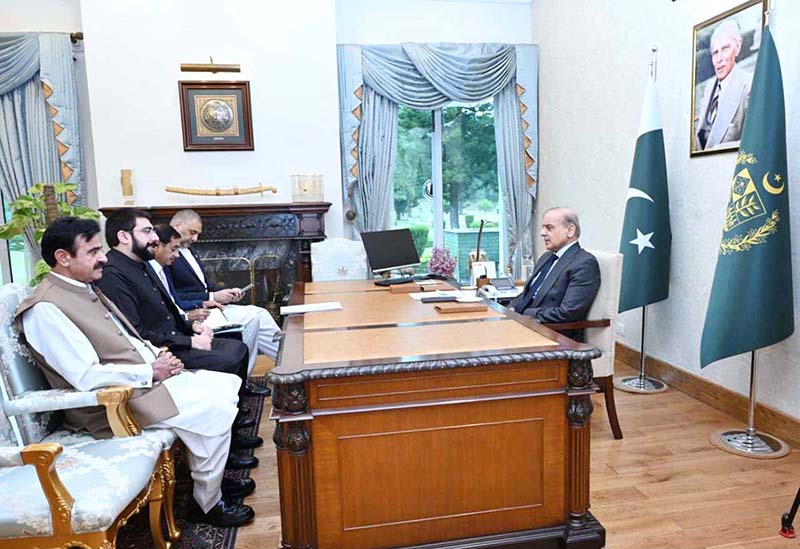
Member of the National Assembly Raja Osama Sarwar calls on Prime Minister Muhammad Shehbaz Sharif: Analyzing the Dialogue on Political Stability and Local Governance
In a move reflecting the ongoing efforts to strengthen the ties between the executive branch and the legislative body, the Member of the National Assembly Raja Osama Sarwar calls on Prime Minister Muhammad Shehbaz Sharif. This high-level meeting, occurring amidst a complex political landscape in Pakistan, underscores the administration’s commitment to addressing grassroots grievances and maintaining a cohesive political front within the National Assembly. While such meetings are often viewed as routine diplomatic formalities, they serve as critical conduits for conveying the immediate needs of the electorate directly to the highest office in the land.
The dialogue between Prime Minister Shehbaz Sharif and Raja Osama Sarwar was not an isolated event but part of a broader series of engagements. The Prime Minister has recently hosted several other legislators, including MNA Hafiz Mian Nauman and MNA Malik Ibrar Ahmed. These consultations suggest a strategic approach by the Prime Minister to ensure that the concerns of various constituencies are not lost in the broader noise of national policy-making. By engaging directly with Members of the National Assembly (MNAs), the Prime Minister is effectively utilizing these representatives as sensors for the public mood and local administrative failures.
The Core Agenda: Political Dynamics and Local Grievances
The discussions during the meeting between Raja Osama Sarwar and Prime Minister Shehbaz Sharif primarily revolved around two pivotal axes: the current political situation of the country and the specific developmental and administrative issues facing the MNA’s constituency. In the Pakistani parliamentary system, the MNA acts as the primary bridge between the rural or urban voter and the federal government. When an MNA “calls on” the Prime Minister, it is often to advocate for resources, resolve bureaucratic bottlenecks, or provide a boots-on-the-ground perspective on how federal policies are being received by the public.
The “political situation” mentioned in these briefings typically encompasses several layers of complexity:
- Coalition Management: The necessity of maintaining harmony among various political factions to ensure legislative stability.
- Public Sentiment: Assessing the impact of economic measures, such as inflation and taxation, on the general population.
- Legislative Alignment: Ensuring that the government’s agenda is supported by a unified block of MNAs during critical votes in the National Assembly.
Beyond the macro-political level, the focus on “constituency issues” is where the most immediate impact is felt. For a representative like Raja Osama Sarwar, the priority is often the delivery of basic services—roads, electricity, water, and healthcare—to their specific region. In many parts of Pakistan, the federal government’s support is essential for securing funding for large-scale infrastructure projects that the provincial governments may be unable to fund independently.
“The effectiveness of a parliamentary democracy is measured by how efficiently the concerns of the furthest village are communicated to the center of power. Direct access between MNAs and the Prime Minister is the primary mechanism for this feedback loop.”
A Pattern of Engagement: The Broader Context of PM Shehbaz’s Meetings
To understand the significance of the visit by Raja Osama Sarwar, one must look at the pattern of recent meetings. The Prime Minister’s reception of Hafiz Mian Nauman and Malik Ibrar Ahmed indicates a systematic effort to conduct a “listening tour” within his own legislative ranks. This approach serves multiple purposes:
1. Strengthening Internal Party and Coalition Loyalty
By granting individual audiences to MNAs, the Prime Minister reinforces the value of each representative. In a political environment where loyalties can be fluid, these personal interactions build a rapport that transcends formal bureaucratic channels. It signals to the MNAs that their voices are heard and that their specific regional challenges are recognized at the top level.
2. Real-Time Intelligence Gathering
Official reports from ministries often sanitize the reality of the ground situation. When an MNA like Malik Ibrar Ahmed or Hafiz Mian Nauman describes the specific failures of a local district administration, the Prime Minister receives unfiltered intelligence. This allows the executive to hold provincial authorities accountable or pivot policy directions based on real-world failures.
3. Expediting Development Projects
Constituency issues often get stuck in the “red tape” of the federal bureaucracy. A direct request from an MNA to the Prime Minister can bypass layers of administrative inertia, accelerating the approval of development schemes that are vital for maintaining the MNA’s popularity and the government’s legitimacy in that region.
| Key Participant | Primary Focus Area | Expected Outcome |
|---|---|---|
| PM Shehbaz Sharif | National Stability & Governance | Legislative Cohesion |
| Raja Osama Sarwar | Constituency Development | Local Resource Allocation |
| Hafiz Mian Nauman | Political Strategy/Local Issues | Policy Feedback |
| Malik Ibrar Ahmed | Regional Infrastructure | Project Approvals |
Understanding the Role of the MNA in Pakistan’s Governance
To the casual observer, a meeting between an MNA and a Prime Minister might seem like a routine social call. However, the role of a Member of the National Assembly in Pakistan is deeply intertwined with the concept of “patronage politics.” An MNA is not just a legislator who votes on bills; they are viewed by their constituents as a “problem solver” who can navigate the complex state machinery.
When Raja Osama Sarwar discusses constituency issues, he is likely addressing several common challenges:
- Infrastructure Gaps: Requests for the construction of farm-to-market roads, bridges, or the expansion of the electrical grid in underserved areas.
- Administrative Red Tape: Intervening in cases where local bureaucracy is hindering business growth or delaying the issuance of essential documents.
- Public Service Delivery: Addressing shortages in government hospitals or the lack of teaching staff in public schools.
- Security Concerns: Bringing local law and order issues to the attention of the federal government, especially in regions facing volatility.
This dynamic creates a high-pressure environment for the MNA. If they cannot secure tangible benefits for their constituency, their political viability is threatened. The meeting where the Member of the National Assembly Raja Osama Sarwar calls on Prime Minister Muhammad Shehbaz Sharif is essentially a negotiation for the resources necessary to maintain political stability at the local level.
The Interplay Between National Politics and Local Needs
The tension between national economic goals and local demands is one of the greatest challenges facing the current administration. Prime Minister Shehbaz Sharif is tasked with managing a precarious economy, often under the guidance of international financial institutions. This frequently requires austerity measures, cutting subsidies, and increasing taxes—all of which are unpopular at the constituency level.

This is where the meetings with MNAs become strategically vital. The Prime Minister must explain the necessity of these harsh national measures to the MNAs, who in turn must “sell” these policies to their voters. If the MNAs are not convinced, or if they feel their own constituents are being unfairly burdened without any compensatory development, the government risks losing its legislative majority.
The “Pressure Valve” Mechanism
These meetings act as a pressure valve. By allowing Raja Osama Sarwar and his colleagues to voice the frustrations of their people, the Prime Minister can identify which regions are reaching a breaking point. This allows the government to strategically allocate “special packages” or targeted development funds to volatile areas to prevent wider political unrest.
For more information on how the legislative process works in Pakistan, you may find a related explainer on the National Assembly’s legislative powers useful.
Potential Implications and Long-Term Impact
The frequency of these meetings suggests that the administration is prioritizing a “bottom-up” communication style. If this approach is successful, it could lead to several positive outcomes:
- Increased Government Legitimacy: When people see their local representative successfully lobbying the Prime Minister for a new road or clinic, the legitimacy of the federal government increases.
- More Accurate Policy Design: Policies informed by the direct feedback of MNAs are more likely to be practical and implementable than those designed solely by technocrats in Islamabad.
- Political Consolidation: A satisfied MNA is a loyal MNA. By addressing constituency issues, the Prime Minister secures the legislative support needed to pass difficult but necessary reforms.
However, there are risks. Over-reliance on individual MNA requests can lead to “pork-barrel politics,” where funds are allocated based on political loyalty rather than objective need. This can exacerbate regional inequalities, where constituencies represented by MNAs with better access to the Prime Minister receive more funding than those without such access.
Common Misconceptions Regarding MNA-PM Meetings
There are several common misunderstandings about the nature of these interactions that are worth clarifying:
Misconception 1: These meetings are purely ceremonial.
While the press releases are brief, the actual discussions are often highly transactional. They involve specific lists of projects, budget requests, and political commitments. They are working meetings, not social visits.
Misconception 2: The Prime Minister can solve all constituency issues instantly.
While the PM has significant power, many issues are the jurisdiction of provincial governments. The PM’s role is often to exert pressure on provincial chiefs or provide federal grants to bypass provincial budget constraints.
Misconception 3: Only “important” MNAs get these meetings.
The fact that the Prime Minister is meeting a variety of MNAs, including Raja Osama Sarwar, Hafiz Mian Nauman, and Malik Ibrar Ahmed, shows an effort to be inclusive. This is a deliberate strategy to prevent any single faction from feeling marginalized.
Navigating the Future of Legislative-Executive Relations
As Pakistan continues to navigate its current economic and political hurdles, the relationship between the Prime Minister and the National Assembly will remain a cornerstone of stability. The act of a Member of the National Assembly Raja Osama Sarwar calling on Prime Minister Muhammad Shehbaz Sharif is a micro-event that represents a macro-strategy of governance.
The success of the current administration will depend on its ability to balance the overarching needs of the state—such as IMF compliance and macroeconomic stability—with the visceral, immediate needs of the people living in the constituencies represented by these MNAs. If the government can bridge this gap, it will not only survive its term but may actually improve the standard of governance in the country.
Observers should watch for whether these meetings translate into visible development projects in the coming months. The true measure of these consultations is not the meeting itself, but the asphalt on the roads and the medicines in the clinics of the constituencies discussed.
Frequently Asked Questions
Why is it significant when an MNA “calls on” the Prime Minister?
In the Pakistani political context, a formal visit (calling on) is the primary way for a legislator to advocate for their region. It allows for direct communication, bypassing bureaucracy to ensure that constituency-specific needs are prioritized by the federal government.
What are “constituency issues” in the context of the National Assembly?
Constituency issues refer to local problems such as lack of infrastructure (roads, bridges), inadequate public services (health, education), water shortages, or administrative failures within a specific electoral district that the MNA represents.
How do these meetings affect the political stability of the government?
By addressing the needs of MNAs and their constituents, the Prime Minister ensures the loyalty and support of the legislators. This reduces the risk of defections and ensures a smoother passage of government legislation through the National Assembly.
Who are the other MNAs mentioned in these recent meetings?
Besides Raja Osama Sarwar, the Prime Minister has recently met with MNA Hafiz Mian Nauman and MNA Malik Ibrar Ahmed, indicating a broad effort to engage with various representatives of the people.
Do these meetings lead to actual changes in policy?
Yes, they often result in the allocation of special development funds, the removal of bureaucratic hurdles for local projects, or adjustments in how federal policies are implemented at the local level to avoid public backlash.
For further insights into the current political climate, you may explore our related analysis on Pakistan’s economic recovery plan.
