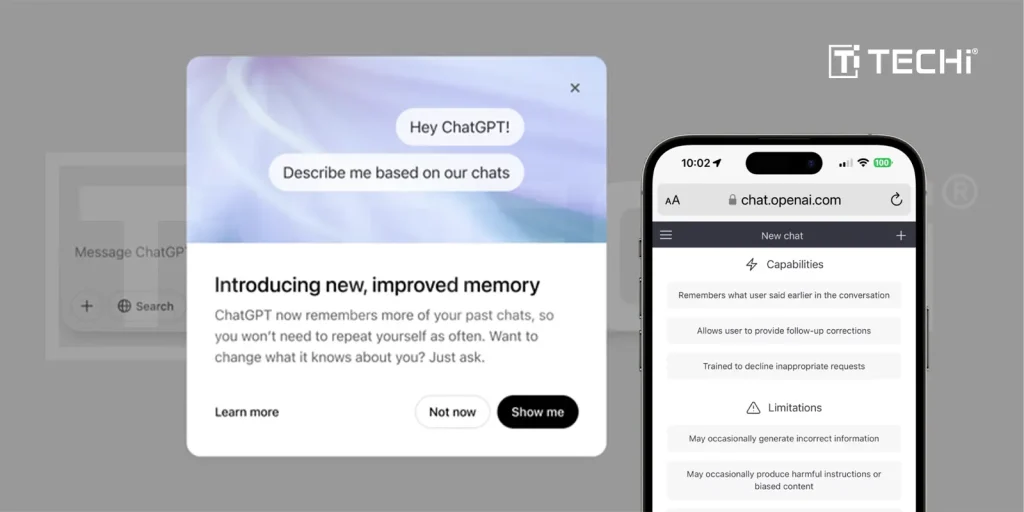
Dreaming: Better Memory for a More Helpful ChatGPT — How OpenAI is Evolving AI Recall
The evolution of Large Language Models (LLMs) has long been hindered by a fundamental limitation: the “goldfish effect.” For years, users have experienced the frustration of a sophisticated AI that can compose a symphony or debug complex code in one breath, yet forgets a crucial preference or a piece of context mentioned only a few thousand words prior. OpenAI is now addressing this gap with a strategic pivot toward enhanced memory synthesis, a process colloquially referred to as “dreaming.”
By focusing on Dreaming: Better memory for a more helpful ChatGPT – OpenAI, the company is moving beyond simple context windows—the amount of text an AI can “see” at one time—toward a more biological approach to information retention. This shift involves not just storing data, but synthesizing it, allowing the AI to distill vast amounts of conversational history into a coherent, persistent understanding of the user.
The Mechanics of Memory Synthesis: What is “Dreaming”?
In human biology, dreaming and sleep are critical for memory consolidation. The brain does not simply record events like a video camera; it reviews, prunes, and integrates new information into existing knowledge frameworks. OpenAI is implementing a digital analog to this process through improved memory synthesis.
Traditional AI memory usually falls into two categories: short-term context (the current chat session) and long-term storage (static data or basic user profiles). Memory synthesis, or “dreaming,” represents a middle layer. Instead of the AI attempting to re-read every single past interaction—which would be computationally expensive and prone to “noise”—the system periodically synthesizes these interactions.
Memory synthesis allows the AI to identify patterns, remember recurring preferences, and discard irrelevant filler, creating a condensed “knowledge graph” of the user’s needs.
From Raw Data to Refined Insight
When ChatGPT “synthesizes” memory, it performs several critical operations:
- Pattern Recognition: Identifying that a user consistently prefers Python over Java for data analysis across ten different conversations.
- Contradiction Resolution: Updating a preference when a user changes their mind (e.g., “I used to prefer concise summaries, but now I want detailed reports”).
- Salience Filtering: Distinguishing between a passing comment (“I’m eating a sandwich”) and a permanent fact (“I am allergic to peanuts”).
This process ensures that the AI remains “helpful” without becoming bogged down by the sheer volume of raw text, effectively turning a chaotic archive of chats into a streamlined personal operating manual.
Addressing the Long Conversation Bottleneck
One of the most persistent pain points for power users is the degradation of performance in long conversation threads. As a chat grows, the AI often suffers from “context drift,” where it forgets the original goal of the session or begins to hallucinate details to fill the gaps in its dwindling memory window.
To combat this, OpenAI is testing specific fixes for long conversation threads. These updates are designed to maintain coherence even when the dialogue spans dozens of pages of text. Rather than simply increasing the token limit—which can lead to slower response times and increased latency—the focus is on smarter retrieval.
| Memory Approach | Mechanism | Primary Benefit | Primary Drawback |
|---|---|---|---|
| Expanded Context Window | Increases the total tokens the AI can “read” at once. | High immediate recall of recent text. | High computational cost; “lost in the middle” effect. |
| Basic User Profiles | Static “Custom Instructions” provided by the user. | Consistent personality and basic rules. | Manual updates required; not dynamic. |
| Memory Synthesis (Dreaming) | Dynamic distillation of past interactions. | Adaptive, evolving understanding of the user. | Complexity in ensuring privacy and accuracy. |
The “Lost in the Middle” Phenomenon
Research has shown that LLMs are often best at remembering the very beginning and the very end of a prompt, while the middle section becomes a “blind spot.” The new fixes for long threads likely involve a more sophisticated way of indexing the middle of the conversation, allowing the AI to “jump” back to relevant points without needing to process the entire thread linearly.

Expanding the Ecosystem: Android Integration and Mobile Utility
Memory is only useful if This proves accessible. OpenAI is currently working on a slew of new features for Android users, aiming to integrate ChatGPT more deeply into the mobile experience. The goal is to transition the AI from a destination (an app you open) to a layer (a tool that exists across your device).
For Android users, this could mean several things:
- System-Level Context: The ability for the AI to understand what is happening on the screen, combined with its synthesized memory of the user’s preferences.
- Improved Voice Modalities: Leveraging memory to make voice conversations feel more natural, remembering the context of a conversation started on a desktop and continuing it via voice while driving.
- Proactive Assistance: Using synthesized memory to anticipate needs based on the time of day or the app currently in use.
By optimizing for Android, OpenAI is ensuring that the “dreaming” process feeds into a real-time, mobile-first utility. If the AI remembers that you are currently working on a specific project, it can offer relevant suggestions the moment you open a related app on your phone.
The Social Frontier: Conversational Social Tools
In a surprising convergence of AI strategies, there is a growing focus on conversational social tools, with both OpenAI and Meta exploring how AI can facilitate human-to-human and human-to-AI social interaction. This marks a shift from the AI as a solitary tutor or coder to the AI as a social lubricant or coordinator.
The integration of memory synthesis into social tools opens up several possibilities:
- Shared Context: AI that can help bridge the gap between two users by remembering the common interests or shared history of a group.
- Social Intelligence: An AI that remembers the social nuances of a conversation—who prefers what tone, who is the lead on a project, and what the group’s collective goals are.
- Collaborative Memory: Tools that allow multiple users to contribute to a shared “AI memory bank” for a specific project or social circle.
While Meta has traditionally focused on the social graph (who you know), OpenAI’s approach focuses on the cognitive graph (what the AI knows about how you interact). When these two forces meet, the result is a conversational tool that doesn’t just respond to prompts but understands the social dynamics of the environment it inhabits.
Why Memory Synthesis Changes the AI Value Proposition
The transition toward “dreaming” and memory synthesis fundamentally changes the relationship between the user and the machine. Until now, most AI interactions have been transactional. You provide an input; the AI provides an output. Once the session ends, the relationship effectively resets.
With advanced memory synthesis, the interaction becomes relational. The AI begins to develop a “theory of mind” regarding the user. It doesn’t just know the facts you’ve told it; it understands your style, your goals, and your cognitive blind spots.
The Shift in User Experience
Consider the difference in a typical workflow:
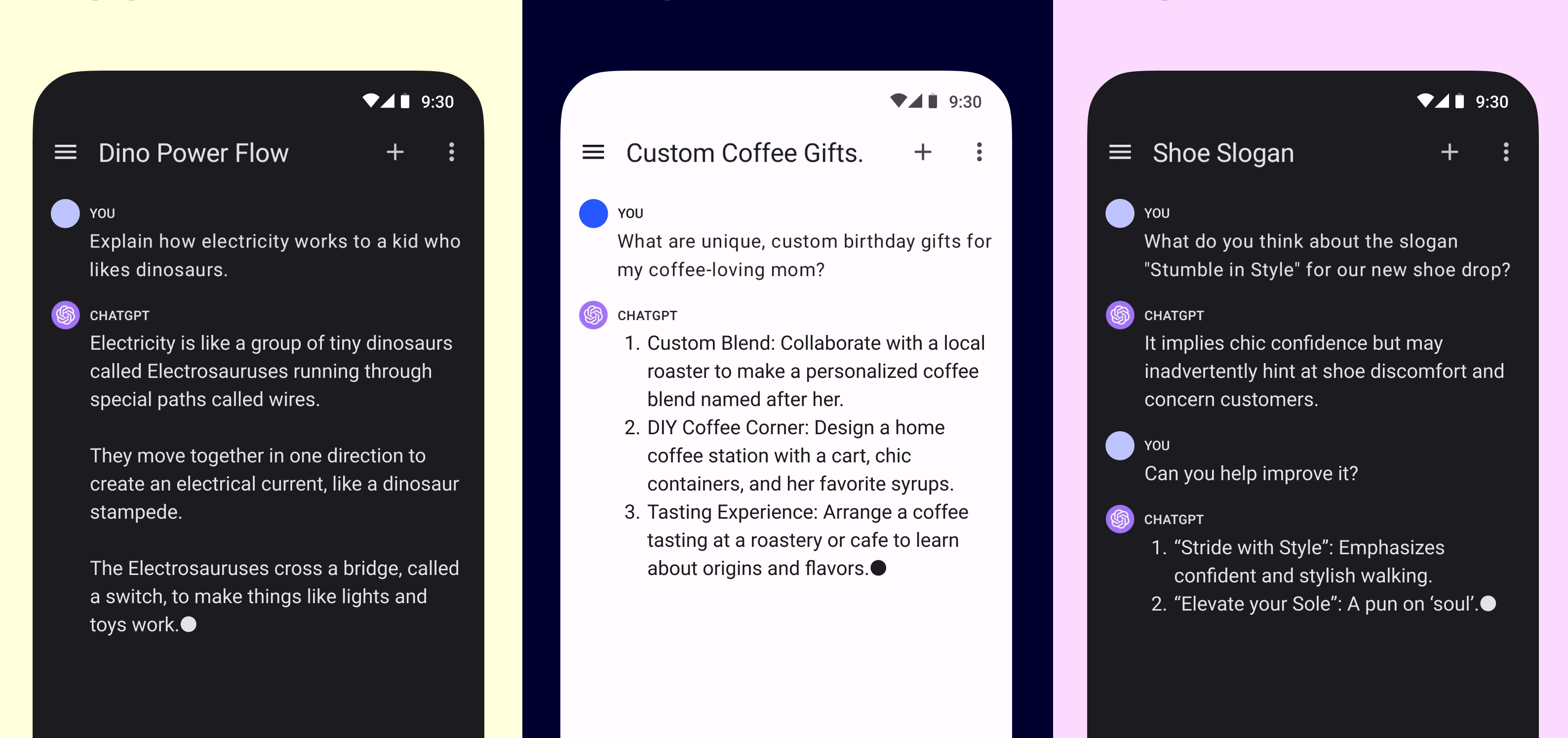
Transactional AI: “Write an email to my boss in a professional tone, mentioning the Q3 report and that I’ll be late tomorrow.” (The user must specify the tone and context every time).
Relational AI: “Write that email to my boss about the Q3 report and my late arrival.” (The AI already knows who the boss is, what “professional tone” means for this specific relationship, and the context of the Q3 report from a conversation three weeks ago).
This reduction in “prompt overhead” is where the true productivity gain lies. The more the AI “dreams” and synthesizes, the less the user has to explain, and the more the AI can act as a true extension of the user’s own mind.
Potential Challenges and Misconceptions
Despite the benefits, the move toward persistent memory synthesis introduces significant hurdles. It is important to distinguish between “remembering” and “recording.”
Privacy and the “Right to be Forgotten”
If an AI is synthesizing a permanent profile of a user, the question of data sovereignty becomes paramount. Users must have the ability to not only delete specific chats but to “wipe” specific synthesized memories. For example, if a user no longer wants the AI to remember a previous career path or a past health concern, the system must be able to prune that specific node from its synthesized memory without collapsing the entire profile.
The Risk of “Memory Hallucinations”
A critical risk in memory synthesis is the creation of “false memories.” If the AI incorrectly synthesizes two unrelated facts into a single pattern, it may begin to insist on a “truth” that never existed. This is the digital equivalent of a false memory in humans. Ensuring that synthesized memories remain tethered to verifiable chat logs is a primary technical challenge for OpenAI.
The Efficiency Paradox
There is a common misconception that more memory always equals a better AI. In reality, too much memory can lead to “overfitting,” where the AI becomes so attuned to a user’s past habits that it struggles to be creative or suggest new ways of doing things. The “dreaming” process must balance retention with flexibility.
Comparing the Evolutionary Paths of AI Memory
To understand where OpenAI is heading, it is helpful to compare their current trajectory with other industry approaches to AI memory.
- The RAG Approach (Retrieval-Augmented Generation): Many companies use RAG to let AI search a database of documents. This is like giving the AI a library card. It can find the info, but it doesn’t “know” the user.
- The Fine-Tuning Approach: Some models are fine-tuned on specific datasets. This is like giving the AI a degree in a specific subject. It’s permanent, but it can’t learn new things in real-time.
- The Synthesis Approach (OpenAI): This is like giving the AI a lifelong companion. It learns, forgets, and evolves alongside the user through a continuous loop of interaction and “dreaming.”
By combining these methods—using RAG for factual accuracy and synthesis for personal relevance—OpenAI is attempting to create a hybrid intelligence that is both globally knowledgeable and personally intuitive.
Frequently Asked Questions
How does “dreaming” in ChatGPT differ from regular chat history?
Regular chat history is a raw log of everything said. “Dreaming,” or memory synthesis, is the process of analyzing those logs to extract key facts and preferences, storing them as a condensed profile so the AI doesn’t have to re-read every old message to understand you.

Will these memory improvements affect my privacy?
Persistent memory requires storing more information about user preferences. OpenAI typically provides controls to manage what the AI remembers, including the ability to ask the AI to “forget” specific information or turn off memory features entirely.
What are the “long conversation fixes” actually doing?
These fixes aim to solve the “lost in the middle” problem, where AI forgets the center of a long prompt. By improving how the AI indexes and retrieves information within a single thread, it can maintain coherence over much longer interactions.
How do the new Android features tie into AI memory?
By integrating more deeply with Android, ChatGPT can combine its synthesized memory of your preferences with real-time context from your device, allowing for more proactive and personalized assistance on the go.
Are “conversational social tools” meant to replace human interaction?
No; these tools are designed to enhance interaction. By remembering shared context and social nuances, the AI can act as a coordinator or assistant that helps humans collaborate more effectively.
As OpenAI continues to refine the process of memory synthesis, the boundary between a tool and an assistant continues to blur. The goal is a system that doesn’t just process commands, but understands the trajectory of a user’s life and work. By implementing a digital version of the human “dream” cycle, ChatGPT is moving toward a future where the AI doesn’t just know the answer—it knows why the answer matters to you.
For those interested in how these developments fit into the broader AI landscape, a related explainer on LLM architecture may provide further technical context on how context windows and weights function.
