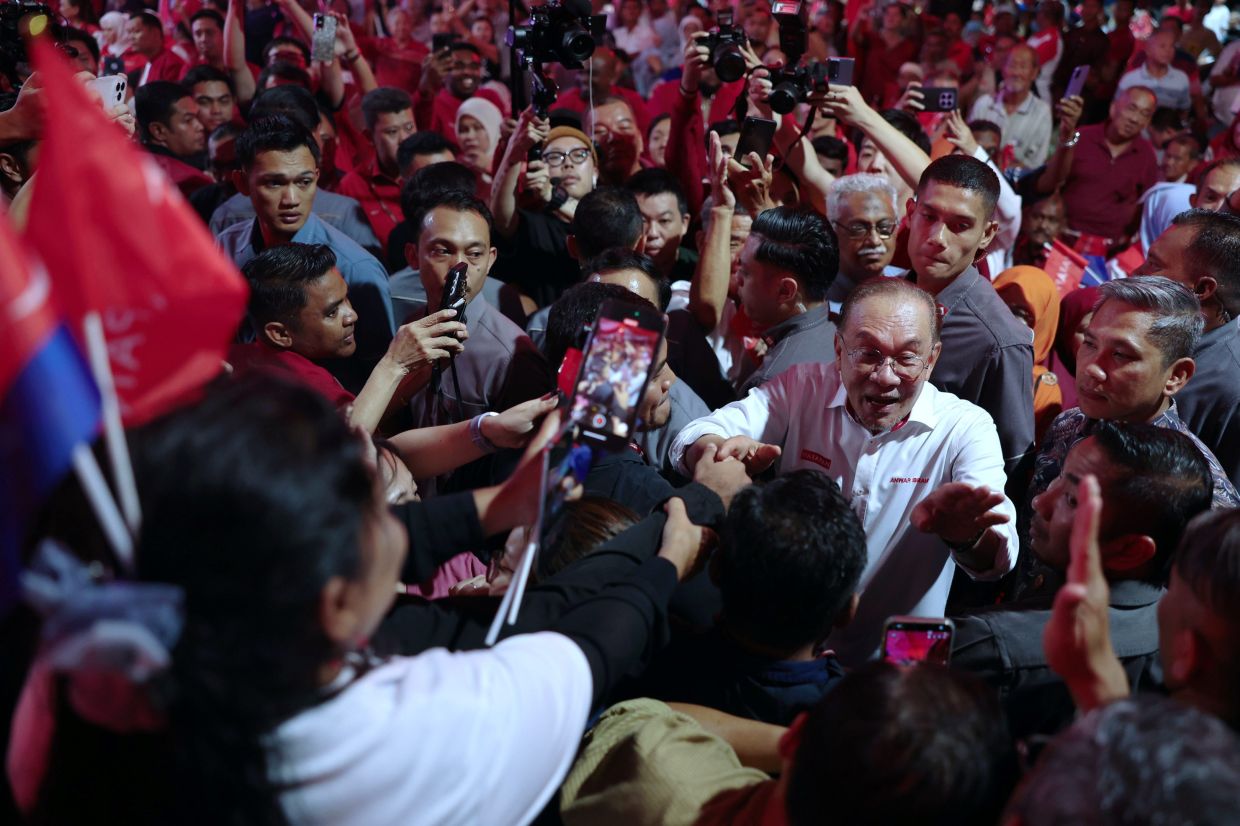
State polls: Johor receives more from Federal govt than it contributes, says Anwar – The Star
Prime Minister Anwar Ibrahim has stated that Johor receives more in financial allocations from the Federal government than the state contributes to the national treasury. This assertion comes as Minister Saifuddin Nasution Ismail confirmed that Johor received RM14.6 billion in allocations under the current administration, emphasizing a shift in focus toward national technological advancement over political friction.
How much has the Federal government allocated to Johor?
Johor has received RM14.6 billion in allocations under the administration of Prime Minister Anwar Ibrahim, according to statements from Minister Saifuddin Nasution Ismail. This figure represents the total financial support channeled from the center to the state to fund various development projects, infrastructure, and administrative needs.
The disclosure of the RM14.6 billion figure serves as a factual anchor for the Prime Minister’s broader claim that the state’s financial intake from the Federal government outweighs its own fiscal contributions to the center. This dynamic is common in many Malaysian states, where the Federal government redistributes national wealth to ensure balanced regional development, though the scale of these allocations often becomes a point of contention during election cycles.
Key details regarding the financial relationship between the center and the state include:
- Total Allocation: RM14.6 billion under the current administration.
- Core Claim: Federal expenditure in Johor exceeds the state’s revenue contribution to the Federal government.
- Source of Data: Minister Saifuddin Nasution Ismail.
Why does the Prime Minister want to pivot from political disputes to AI and quantum computing?
Prime Minister Anwar Ibrahim has urged a move away from political bickering, arguing that the nation’s energy is better spent on driving growth through artificial intelligence (AI) and quantum computing. According to the Prime Minister, the focus of the administration is to position Malaysia as a leader in high-tech industries rather than remaining bogged down in partisan disputes.
This strategic pivot suggests that the administration views technological sovereignty as the primary engine for economic stability. By prioritizing AI and quantum computing, the government aims to attract high-value foreign investment and upgrade the domestic workforce. This approach contrasts with traditional political campaigning, which often focuses on regional grievances or the distribution of state funds.
The Prime Minister’s insistence on this shift highlights a desire to redefine the national discourse. Instead of debating the “contribution versus receipt” balance of individual states, the administration is pushing for a narrative centered on future-proofing the economy. This is particularly relevant for states like Johor, which are positioned as hubs for digital economy initiatives and special economic zones.
What criteria should Johor voters use to judge candidates in state polls?
Azalina Othman Said has stated that voters in Johor should evaluate candidates based on their record of service and their commitment to the people, rather than relying solely on party affiliations. This call for a performance-based assessment suggests a move toward “service-centric” politics where the tangible impact of a representative’s work outweighs ideological rhetoric.

The emphasis on service and commitment reflects a broader trend in Malaysian politics where voters are increasingly skeptical of party loyalty alone. By urging voters to look at the track record of candidates, Azalina is highlighting the importance of local governance and the ability of a representative to secure resources and solve community issues.
Voters are encouraged to consider the following when assessing candidates:
- Service Record: The tangible projects and improvements brought to the constituency.
- Commitment: The consistency and availability of the candidate to their constituents.
- Accountability: How the candidate has handled previous responsibilities or promises.
What is the Prime Minister’s philosophy regarding elections and political struggle?
Prime Minister Anwar Ibrahim has remarked that the administration’s struggle has never been exclusively about winning elections. This statement frames the current government’s mission as a broader effort toward systemic reform and national improvement rather than a mere quest for electoral dominance.
This philosophy suggests that the administration views elections as a means to an end—specifically, the implementation of governance reforms—rather than the end goal itself. By distancing the “struggle” from the act of winning polls, Anwar is positioning his leadership as one driven by a long-term vision for the country’s structural health, including the fight against corruption and the pursuit of economic equity.
“Our struggle has never been just about winning elections,” says Prime Minister Anwar Ibrahim.
This perspective is critical when viewed alongside the discussions on federal allocations. It suggests that the government’s decision to allocate RM14.6 billion to Johor is part of a broader developmental strategy rather than a tactical move to secure votes for upcoming state polls.
Comparing Federal Allocations and Political Narratives
The discourse surrounding Johor’s relationship with the Federal government reveals a tension between fiscal reality and political perception. While some political narratives may suggest that wealthy states are “underfunded” by the center, the data provided by the administration tells a different story.
| Perspective | Core Argument | Key Evidence/Source |
|---|---|---|
| Federal Government | Johor is a net receiver of federal funds. | RM14.6 billion in allocations (Saifuddin). |
| Strategic Vision | Growth should come from tech, not politics. | Focus on AI and Quantum Computing (Anwar). |
| Voter Guidance | Judge by service, not party. | Focus on commitment and delivery (Azalina). |
The contrast here is clear: while the opposition or regional critics may focus on the “contribution” Johor makes to the national GDP, the government is highlighting the “investment” the center makes back into the state. This shift in framing is designed to counter claims of federal neglect.
The broader implications for Malaysian state-federal relations
The tension described in the “State polls: Johor receives more from Federal govt than it contributes, says Anwar – The Star” narrative is a microcosm of the ongoing struggle for power and resources between state and federal governments in Malaysia. When a Prime Minister publicly discusses the balance of contributions and receipts, it serves as a reminder of the Federal government’s role as the primary distributor of wealth.
This dynamic can have several long-term effects:
- Fiscal Dependency: Large allocations can lead to state dependency on federal grants, making state governments more susceptible to the political whims of the center.
- Developmental Disparity: The focus on high-tech sectors like AI and quantum computing may benefit urban centers in Johor, but the administration must ensure that the RM14.6 billion also reaches rural areas to avoid widening the wealth gap.
- Political Realignment: If voters follow Azalina’s advice to prioritize service over party, it could lead to a more fragmented political landscape where local “strongmen” or highly effective administrators win regardless of their party banner.
Furthermore, the push for AI and quantum computing is not just a political distraction but a necessary economic evolution. As traditional manufacturing faces headwinds, the transition to a digital economy is essential for maintaining Malaysia’s competitiveness in Southeast Asia. The government’s attempt to link this technological leap to the political climate in Johor suggests that they want the state to be a primary laboratory for these advancements.
For more context on how these funds are managed, readers may find a related explainer on Malaysian federal budget distribution useful.
Frequently Asked Questions
How much money did Johor receive from the Federal government?
According to Minister Saifuddin Nasution Ismail, Johor received RM14.6 billion in allocations under the administration of Prime Minister Anwar Ibrahim.

What does Anwar Ibrahim mean by saying Johor receives more than it contributes?
The Prime Minister is stating that the total amount of federal funding spent on development and administration within Johor exceeds the amount of tax revenue and other contributions that the state of Johor provides to the Federal government.
Why is the government focusing on AI and quantum computing during state polls?
Prime Minister Anwar Ibrahim believes that national progress depends on technological advancement rather than political disputes. He aims to steer the national conversation toward economic modernization and high-tech industries to ensure long-term growth.
How should voters in Johor choose their candidates according to Azalina Othman Said?
Azalina Othman Said suggests that voters should look past party lines and judge candidates based on their actual service to the community and their commitment to the people.
Is the RM14.6 billion allocation a political move for the state polls?
While critics may argue this, Prime Minister Anwar Ibrahim has stated that the government’s struggle is not merely about winning elections, suggesting that these allocations are part of a broader national development and reform agenda.
