
Philippine Town Seeks Immediate Airlift of Food to Ease Hunger in Quake-Hit Villages
A 7.8 magnitude earthquake in the Philippines has left at least 35 people dead and caused widespread destruction, prompting local officials to request immediate food airlifts for isolated villages. According to reports from AP News, the disaster has triggered acute hunger in remote areas, while the Civil Aviation Authority of the Philippines (CAAP) has closed the General Santos airport to commercial operations.
Why Local Officials are Requesting Emergency Food Airlifts
Local government units in the affected regions are calling for urgent aerial intervention to deliver basic necessities. According to AP News, a Philippine town seeks immediate airlift of food to ease hunger in quake-hit villages after land-based supply chains failed. The request stems from the isolation of several communities where roads have been rendered impassable by landslides or structural collapses caused by the seismic activity.
The urgency of these airlifts is driven by the depletion of local food stocks. In many of these remote villages, residents are unable to access markets or government distribution centers. The reliance on airlifts indicates that traditional ground logistics—trucks and utility vehicles—cannot reach the most vulnerable populations. This gap in delivery creates a critical window where malnutrition and hunger could spike if emergency drops of rice, canned goods, and clean water are not implemented immediately.
Key drivers for the airlift request include:
- Road Blockages: Debris and landslides preventing truck access to mountain villages.
- Supply Exhaustion: Local community pantries and household stores emptied during the initial days of the crisis.
- Geographic Isolation: The rugged terrain of the affected Mindanao regions complicating search and rescue and relief efforts.
The Scale of the 7.8 Magnitude Earthquake
The disaster was triggered by a massive 7.8 magnitude earthquake that struck the region with devastating force. According to AP News, the quake killed at least 35 people and caused the collapse of numerous buildings. The intensity of the tremor was sufficient to spark tsunami warnings, adding a layer of panic and evacuation necessity to the existing structural chaos.
The collapse of buildings has not only contributed to the death toll but has also displaced thousands of families. When residential and commercial structures fail, the immediate result is a loss of shelter, which exposes survivors to the elements and increases the risk of disease. The tsunami threat, while a secondary effect of the quake, forced coastal residents to move inland, often into areas that were already struggling with earthquake damage.
The seismic event’s magnitude placed it among the more severe earthquakes to hit the archipelago in recent years. A 7.8 magnitude quake releases an immense amount of energy, capable of altering the landscape and destroying infrastructure that was not built to withstand such high-intensity shaking.
General Santos Airport Closure and Logistical Delays
Efforts to bring in aid and evacuate the injured have been hampered by the closure of key transportation hubs. The Civil Aviation Authority of the Philippines (CAAP) announced that the General Santos (GenSan) airport is closed for commercial operations until June 14, according to the Philippine News Agency.
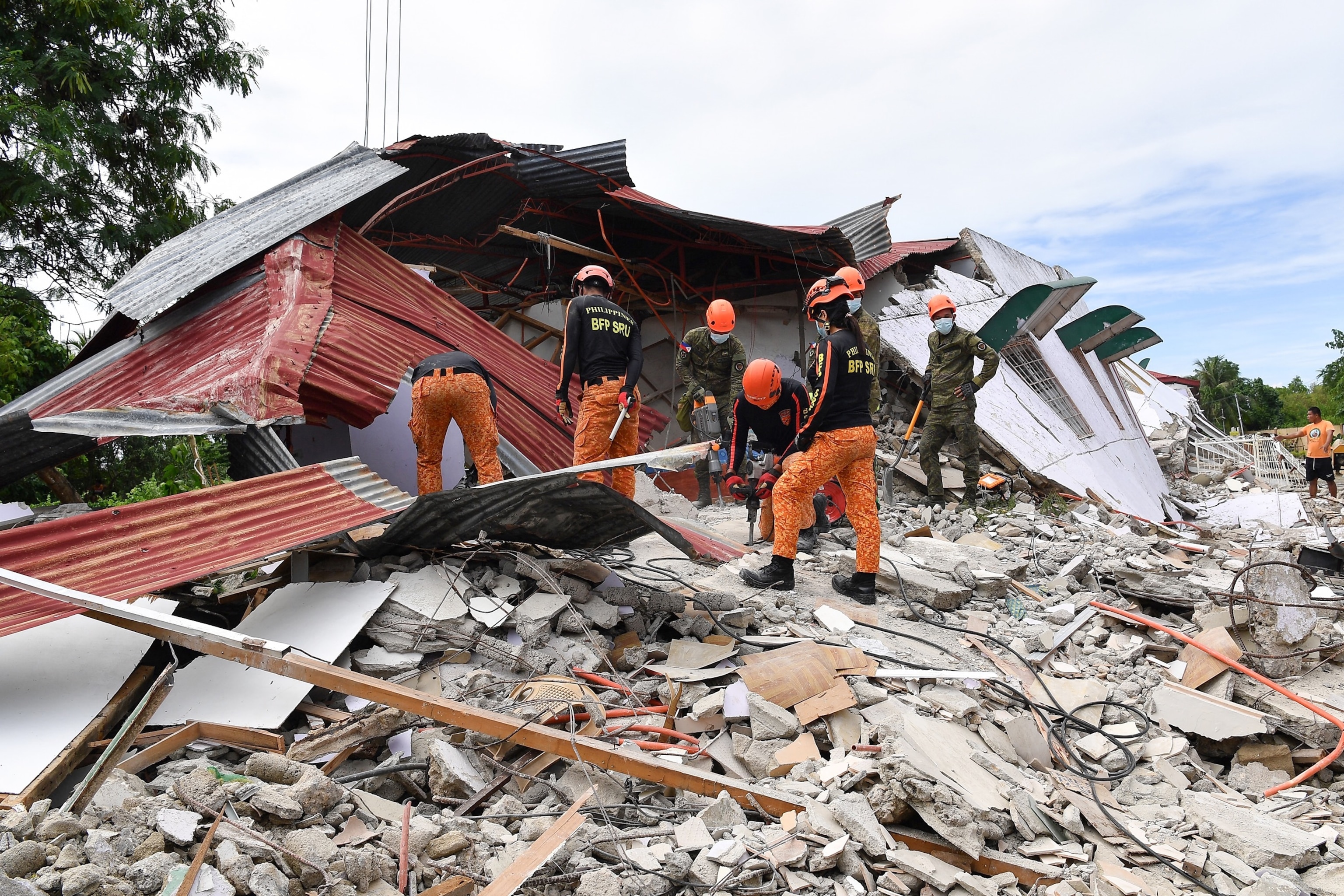
The closure of a primary commercial airport creates a significant bottleneck in the disaster response. Commercial flights often carry not only passengers but also critical cargo and personnel. By restricting operations, the movement of bulk supplies into the region is slowed, forcing the government and NGOs to rely on military aircraft or smaller, private charters for emergency deliveries.
This closure directly correlates with the need for the food airlifts mentioned by AP News. Because commercial logistics are paralyzed at the GenSan hub, the “last mile” delivery of food to remote villages becomes nearly impossible without specialized military or government aviation assets.
| Impact Category | Details/Status | Source |
|---|---|---|
| Human Toll | At least 35 confirmed dead | AP News |
| Seismic Strength | 7.8 Magnitude | AP News |
| Air Transport | GenSan Airport closed until June 14 | PNA / CAAP |
| Education | ~4,000 schools damaged in Mindanao | ABS-CBN / DepEd |
| Financial Aid | 4,000 victims received cash aid | Inquirer / DSWD |
Government Relief Efforts: DSWD Cash Aid and DepEd Safety
While food insecurity remains a primary concern in isolated areas, the national government has initiated financial assistance programs. According to Inquirer.net, 4,000 quake victims in General Santos have already received cash aid from the Department of Social Welfare and Development (DSWD).
Cash transfers are a standard part of the DSWD’s disaster response strategy, intended to allow survivors to purchase specific needs and stimulate local markets. However, there is a stark contrast between the victims in the urban centers of General Santos who can use this cash, and the residents of the “quake-hit villages” mentioned by AP News. For those in isolated areas where no food is available for purchase, cash aid is less effective than the direct airlift of physical supplies.
Simultaneously, the Department of Education (DepEd) is managing the crisis within the school system. According to ABS-CBN, DepEd has assured the safety of learners after a quake damaged around 4,000 schools in Mindanao. This represents a massive blow to the region’s educational infrastructure. While the department emphasizes student safety, the sheer volume of damaged buildings suggests that thousands of children may face significant disruptions to their learning for months or years.
The response can be broken down into three primary government tracks:
- Financial: DSWD providing immediate liquidity to urban survivors.
- Educational: DepEd assessing structural integrity and ensuring learner safety.
- Logistical: CAAP managing airport safety and reopening timelines.
Infrastructure Damage and Long-Term Implications in Mindanao
The damage to 4,000 schools, as reported by ABS-CBN, highlights a systemic vulnerability in the region’s infrastructure. When thousands of public buildings are damaged simultaneously, it creates a secondary crisis: the loss of evacuation centers. In the Philippines, schools often serve as the primary shelters for displaced persons during disasters. If the schools themselves are unsafe, the government must find alternative locations to house thousands of homeless survivors.
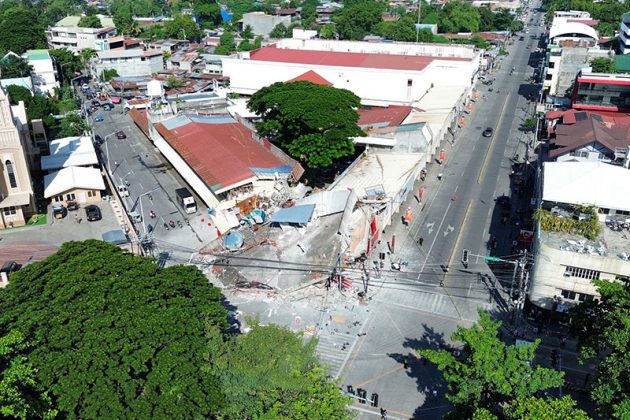
The collapse of buildings mentioned by AP News further indicates that many structures did not meet seismic building codes. The long-term recovery will require not just the rebuilding of homes and schools, but a comprehensive audit of construction standards across Mindanao to prevent similar casualty rates in future events.
The economic impact is also expected to be severe. With the General Santos airport closed for commercial operations, trade and tourism in the region are halted. For a region that relies heavily on agriculture and exports, the disruption of transport hubs can lead to significant financial losses for local farmers and business owners.
Related explainer on disaster risk reduction in the Philippines may provide further context on how the country manages frequent seismic events.
Addressing the Gap Between Cash Aid and Immediate Hunger
A critical analysis of the reports reveals a disparity in the relief experience. On one hand, the Inquirer reports that 4,000 people are receiving cash aid, which suggests a functioning administrative pipeline in the city. On the other hand, the AP News report regarding the request for food airlifts suggests a total breakdown of the supply chain in rural areas.
This disparity is common in large-scale disasters: urban centers receive aid faster due to better accessibility, while rural “pockets” of the disaster zone are forgotten or unreachable. The request for airlifts is a direct plea to bridge this gap. Without the physical delivery of food, the cash provided by the DSWD cannot be utilized by those in the most devastated villages, as there are no vendors left to sell the food.
Furthermore, the closure of the GenSan airport until June 14 creates a timeframe of vulnerability. Every day the airport remains closed to commercial cargo is another day that the airlift requests from remote towns become more desperate.
Frequently Asked Questions
What is the current status of the General Santos airport?
According to the Philippine News Agency and CAAP, the General Santos airport remains closed for commercial operations until June 14 following the earthquake.
How many people died in the Philippine earthquake?
AP News reports that at least 35 people have been killed as a result of the 7.8 magnitude quake.
What aid is being provided to quake victims?
According to Inquirer.net, the DSWD has provided cash aid to 4,000 victims in General Santos. Meanwhile, local towns are requesting food airlifts to reach isolated villages, as reported by AP News.
How many schools were affected by the earthquake in Mindanao?
ABS-CBN reports that approximately 4,000 schools in Mindanao were damaged, though DepEd has assured the safety of the learners.
Was there a tsunami after the earthquake?
According to AP News, the 7.8 magnitude earthquake sparked tsunami warnings, though the primary casualties reported were due to building collapses and the quake itself.
