
Budget 26-27 to play vital role in country’s economic growth: Aurangzeb – RADIO PAKISTAN
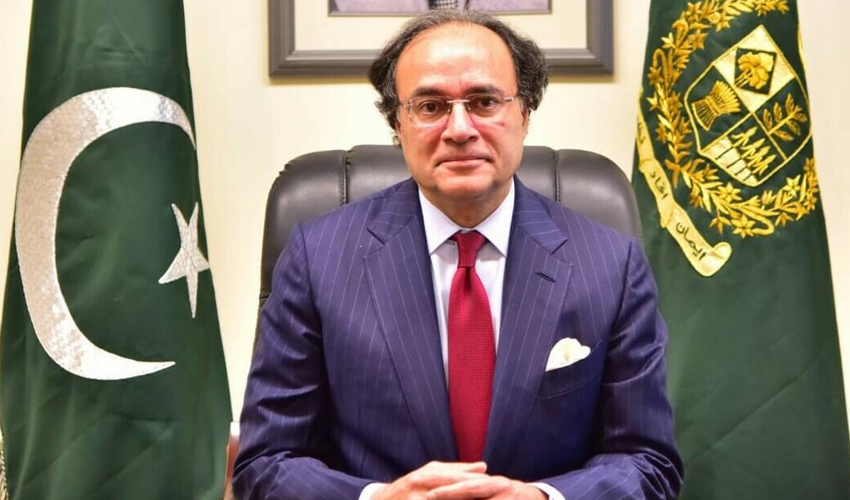
Finance Minister Aurangzeb stated that the Budget 26-27 will play a vital role in the country’s economic growth, according to Radio Pakistan. The proposed FY27 budget represents “significant progress” toward economic expansion, featuring Rs360 billion in tax relief and Rs306 billion in new taxes, alongside the abolition of the super tax on income up to Rs500 million.
How the FY27 Budget Aims to Drive Economic Growth
The proposed budget for the 2026-27 fiscal year is designed as a strategic tool to transition the national economy from a state of stabilization to one of sustainable growth. Finance Minister Aurangzeb characterized the framework as “significant progress,” signaling a shift in fiscal policy toward incentivizing production and consumption, according to reports from Dawn. The government’s objective is to create a fiscal environment where private sector investment can accelerate without being stifled by excessive taxation.
According to Radio Pakistan, the Finance Minister emphasized that the Budget 26-27 to play vital role in country’s economic growth: Aurangzeb – RADIO PAKISTAN is not merely a set of accounting figures but a roadmap for structural reform. This approach suggests a move away from short-term crisis management toward long-term economic planning. By aligning tax policies with growth targets, the administration intends to reduce the volatility that has historically hampered the country’s GDP growth.
Key growth drivers identified in the budget framework include:
- Investment Incentives: Reducing the tax burden on high-earning individuals and corporations to encourage capital reinvestment.
- Consumption Stimulus: Providing targeted relief to lower and middle-income brackets to boost domestic demand.
- Fiscal Discipline: Balancing new tax collections with relief packages to maintain a manageable deficit.
Analyzing the Rs360 Billion Relief and Rs306 Billion New Taxes
The Express Tribune reported that the government has proposed a complex balancing act in the FY27 budget, offering Rs360 billion in relief while simultaneously introducing Rs306 billion in new taxes. This net relief of Rs54 billion indicates a government attempt to ease the financial pressure on specific sectors of the economy while ensuring the national treasury remains funded.
The Rs360 billion relief package is intended to mitigate the impact of inflation and high costs of living. By reducing the tax burden in certain areas, the government hopes to increase the disposable income of citizens, which typically leads to higher spending in the retail and services sectors. This strategy is often used by governments to kickstart economic activity during a recovery phase.
Conversely, the Rs306 billion in new taxes suggests that the government is still seeking to broaden the tax base. According to the Express Tribune, these new levies are likely targeted at sectors or luxury items that have previously remained undertaxed. This dual approach—simultaneous relief and taxation—attempts to redistribute the tax burden more equitably without causing a sharp drop in total government revenue.
| Fiscal Component | Amount (PKR) | Primary Objective |
|---|---|---|
| Proposed Tax Relief | Rs 360 Billion | Stimulate consumption and ease inflation pressure |
| Proposed New Taxes | Rs 306 Billion | Broaden revenue base and ensure fiscal stability |
| Net Fiscal Impact | Rs 54 Billion (Relief) | Net stimulus to the economy |
The Abolition of the Super Tax on Income Up to Rs500 Million
In a move aimed at boosting investor confidence and reducing the tax burden on the business community, the government has abolished the super tax on income up to Rs500 million, according to the Business Recorder. The super tax had previously been a point of contention for high-net-worth individuals and corporate entities, who argued that it discouraged investment and promoted capital flight.
The Business Recorder indicates that removing this tax threshold is a calculated effort to encourage the formalization of the economy. When the tax burden on the top tier of earners is perceived as excessive, there is often an incentive to move assets into the informal sector or offshore accounts. By eliminating the super tax for those earning up to Rs500 million, the government is betting that more businesses will register their full earnings and reinvest their profits locally.
This policy shift reflects a change in the government’s philosophy regarding wealth taxation. Rather than focusing on high-rate taxes for a small number of people, the administration is moving toward a system that encourages the growth of mid-to-large scale enterprises, which are the primary employers in the industrial sector.
PM Shehbaz on Economy Stabilization and Growth
Prime Minister Shehbaz Sharif has asserted that the economy has reached a state of stabilization, providing a solid foundation for the new budget to boost growth, according to Pakistan Today. The Prime Minister’s statement suggests that the most volatile period of economic instability—characterized by high inflation and foreign exchange shortages—is beginning to subside.
According to Pakistan Today, the Prime Minister views the FY27 budget as the next logical step in a sequence of economic recoveries. Stabilization typically involves curbing inflation and securing external financing (such as through the IMF), while growth involves increasing the production of goods and services. The PM’s claim that the economy is “stabilized” serves as the political justification for shifting from austerity measures to growth-oriented incentives.
The Prime Minister’s vision involves a synergy between government policy and private sector execution. By declaring the economy stable, the administration is attempting to signal to both domestic and international investors that the risk profile of the country has decreased, making it a safer environment for long-term capital commitments.
Economic Implications and the Path Forward
The combination of the Finance Minister’s growth projections and the Prime Minister’s stabilization claims suggests a strategic pivot in national economic management. However, the success of the Budget 26-27 to play vital role in country’s economic growth: Aurangzeb – RADIO PAKISTAN depends on several critical factors.

The Challenge of Revenue Collection
While the government is offering Rs360 billion in relief, the actual collection of the Rs306 billion in new taxes remains a challenge. History shows that introducing new taxes often meets resistance from the business community and can lead to delays in implementation. If the new taxes are not collected efficiently, the net relief of Rs54 billion could widen the budget deficit, potentially leading to further borrowing.
Inflationary Pressures vs. Consumption Stimulus
The government’s plan to stimulate growth through tax relief is a delicate operation. If the Rs360 billion in relief leads to a surge in demand that exceeds the economy’s capacity to produce goods, it could inadvertently fuel inflation. The administration must ensure that the supply side of the economy—factories and farms—is growing at the same pace as the demand created by tax relief.
Investment Reaction to Super Tax Removal
The abolition of the super tax on income up to Rs500 million is a direct signal to the industrialist class. The real test will be whether this leads to new factories, updated technology, or expanded exports. If the abolished tax simply results in higher savings for the wealthy without new investments, the “growth” aspect of the budget will remain theoretical.
For those interested in how these policies compare to previous years, a related explainer on previous fiscal cycles may provide useful context on the evolution of Pakistan’s tax structure.
Comparing the Fiscal Strategy: Relief vs. Revenue
The FY27 budget differs from previous emergency budgets by focusing on “significant progress” rather than mere survival. In previous years, budgets were often characterized by aggressive tax hikes to meet IMF targets. The current proposal, as reported by the Express Tribune and Radio Pakistan, shows a more nuanced approach where relief is prioritized almost as much as new revenue.
This shift indicates a realization that continuous taxation without growth is unsustainable. By providing Rs360 billion in relief, the government is acknowledging that the private sector needs breathing room to recover from the shocks of the last few years. This represents a transition from a “revenue-first” mindset to a “growth-first” mindset, provided the stabilization mentioned by PM Shehbaz holds true.
Common Misconceptions Regarding the FY27 Budget
There are several common misunderstandings about the proposed budget that require clarification based on the available reports:
- Misconception: The budget is a pure tax cut.
Correction: It is not a simple tax cut. While there is Rs360 billion in relief, there is also Rs306 billion in new taxes. It is a reallocation of the tax burden rather than a total reduction. - Misconception: The super tax is gone for everyone.
Correction: According to the Business Recorder, the super tax is abolished specifically for income up to Rs500 million. Those earning above this threshold may still be subject to different tax tiers. - Misconception: Stabilization means inflation has ended.
Correction: When PM Shehbaz refers to the economy as “stabilized,” it refers to the macro-economic indicators and the ability to meet international obligations, not necessarily the complete disappearance of price increases for consumers.
Frequently Asked Questions
What is the main goal of the Budget 26-27 according to Finance Minister Aurangzeb?
According to Radio Pakistan, Finance Minister Aurangzeb believes the Budget 26-27 will play a vital role in the country’s economic growth. He describes the proposed framework as “significant progress” in the path toward expanding the national economy.
How much tax relief and how many new taxes are proposed in the FY27 budget?
As reported by the Express Tribune, the government has proposed Rs360 billion in tax relief and the introduction of Rs306 billion in new taxes.
Who benefits from the abolition of the super tax?
According to the Business Recorder, the super tax has been abolished for those with an income of up to Rs500 million, a move designed to encourage investment and business growth.
What did Prime Minister Shehbaz Sharif say about the current state of the economy?
According to Pakistan Today, PM Shehbaz stated that the economy has been stabilized and that the new budget is positioned to boost further growth.
Is the Budget 26-27 intended to reduce the overall tax burden?
The budget provides a net relief of Rs54 billion (Rs360b relief minus Rs306b new taxes), suggesting a slight reduction in the overall burden, but the primary focus is on restructuring who pays and where the relief is applied to stimulate growth.
The government’s strategy now hinges on the successful execution of these measures. If the relief triggers genuine industrial expansion and the new taxes are collected without disrupting business, the transition from stabilization to growth may be realized. Observers will be watching the quarterly GDP and inflation data to see if the “significant progress” mentioned by Aurangzeb translates into tangible economic improvement for the general population.
