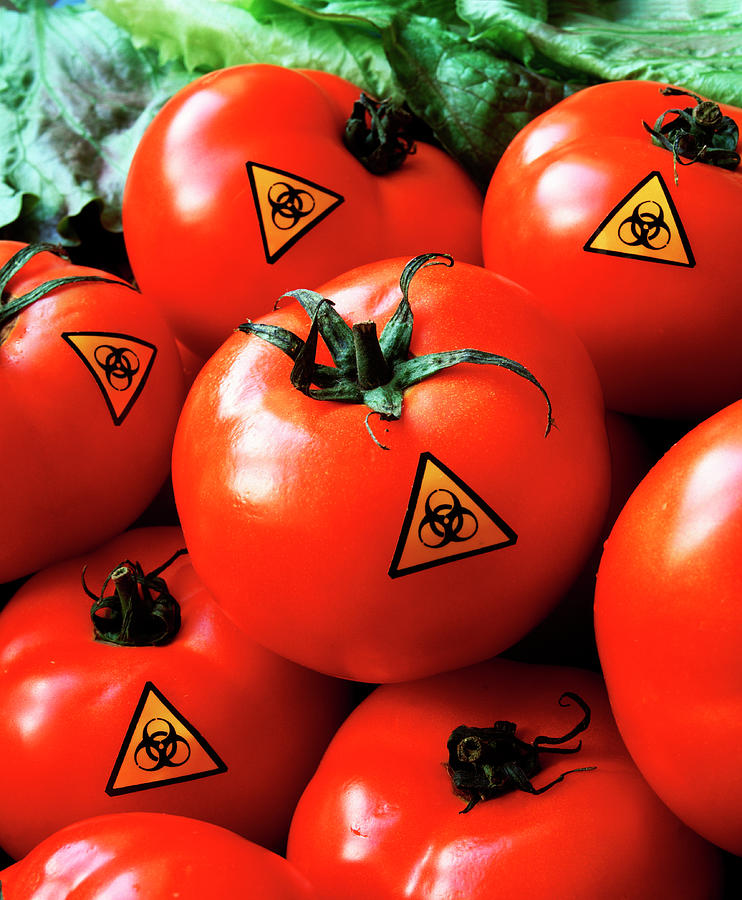
Unauthorised GMO tomatoes found in Latvia / Article – LSM: Regulatory Breach Triggers Market Alert
Latvian food safety authorities have identified genetically modified (GMO) tomatoes in the domestic market that lack the mandatory European Union authorization for sale or consumption. The discovery necessitates the immediate withdrawal of the affected products from retail shelves to comply with EU safety and labeling standards.
How the detection of unauthorised GMO tomatoes occurred in Latvia
The Food and Veterinary Service (PVD) of Latvia detected the presence of unauthorised genetically modified organisms through routine market surveillance and laboratory testing. According to PVD protocols, food samples are regularly screened to ensure compliance with European Union regulations regarding the import and sale of genetically modified crops. In this instance, testing confirmed that the tomatoes contained genetic modifications not approved by the European Food Safety Authority (EFSA).
Under EU law, any GMO product intended for the market must undergo a rigorous safety assessment and receive formal authorization. The tomatoes found in Latvia bypassed this process, meaning they were either imported illegally or mislabeled by suppliers. PVD officials have since initiated a process to trace the supply chain to determine the origin of the produce and identify all batches currently in circulation.
Key facts regarding the detection include:
- Detection Method: PCR (Polymerase Chain Reaction) testing used to identify specific DNA sequences associated with genetic modification.
- Regulatory Body: The Food and Veterinary Service (PVD) is the primary agency responsible for the enforcement.
- Immediate Action: Mandatory removal of the product from all retail points of sale.
- Legal Status: The specific genetic event found in these tomatoes is not listed in the EU Register of authorised GMOs.
Why the EU prohibits unauthorised GMO produce
The European Union maintains some of the strictest GMO regulations globally, guided by the “precautionary principle.” This principle dictates that if an action or policy has a suspected risk of causing harm to the public or the environment, in the absence of scientific consensus, the burden of proof that it is not harmful falls on those taking the action.
According to EU Regulation (EC) No 1829/2003, all genetically modified food and feed must be authorized before being placed on the market. This process involves a comprehensive risk assessment by the EFSA to ensure the product does not: calories
- Adversely affect human health.
- Hinder the nutritional value of the food.
- Pose a threat to the environment or biodiversity.
When unauthorised GMO tomatoes are found in Latvia, the primary concern for regulators is not necessarily an immediate toxicological threat, but the lack of a verified safety profile. Without EFSA approval, there is no official guarantee that the modification does not introduce new allergens or alter the crop’s nutritional composition in a way that could impact sensitive populations.
“The presence of unauthorised GMOs in the food chain represents a breach of consumer trust and a violation of the legal framework designed to ensure food safety and transparency across the single market.”
Comparing EU and International GMO Frameworks
The discovery of unauthorised GMO tomatoes in Latvia highlights the stark difference between the EU’s regulatory approach and that of other major exporters, such as the United States or Brazil. While the US generally views GMOs as “substantially equivalent” to traditional crops, the EU requires a distinct, case-by-case authorization process.
| Feature | European Union (EU) | United States (US) |
|---|---|---|
| Approval Process | Strict, centralized EFSA assessment | Coordinated between FDA, EPA, and USDA |
| Labeling | Mandatory for all GMO content >0.9% | National Bioengineered Food Disclosure Standard |
| Precautionary Principle | Central to all decision-making | Focus on demonstrated risk/harm |
| Market Access | Only specific authorised events allowed | Broad acceptance of approved traits |
This disparity often leads to “low-level presence” (LLP) issues, where authorised GMOs from one country accidentally contaminate shipments to the EU. However, in the case of the unauthorised GMO tomatoes found in Latvia, the presence of a completely unapproved genetic trait suggests a more direct failure in supply chain oversight or an intentional attempt to bypass EU import laws.
The role of the Rapid Alert System for Food and Feed (RASFF)
Once the PVD confirmed the presence of unauthorised GMOs, the incident was likely integrated into the Rapid Alert System for Food and Feed (RASFF). This EU-wide network allows member states to share information quickly when a food or feed product is found to be unsafe or non-compliant.
The RASFF system serves several critical functions in incidents like the one involving unauthorised GMO tomatoes in Latvia:
- Cross-Border Notification: If the tomatoes were imported from a third country and distributed to multiple EU states, RASFF alerts other countries to check their own markets.
- Traceability: It helps authorities track the movement of the contaminated goods back to the original manufacturer or importer.
- Prevention: By logging the breach, the EU can increase inspections on specific suppliers or origin countries known for non-compliance.
For consumers, the RASFF system ensures that a breach in one country does not remain a localized issue, effectively creating a safety net across the entire European Economic Area.
Potential health and environmental implications
Public reaction to the discovery of unauthorised GMO tomatoes often centers on health fears. However, food safety experts distinguish between “legal non-compliance” and “immediate toxicity.”
Human Health Considerations
Most GMO modifications are designed for agricultural efficiency—such as resistance to pests, herbicides, or extended shelf life. According to the World Health Organization (WHO), GMO foods currently on the international market have passed safety assessments. The risk with unauthorised GMOs is the unknown; because the specific modification in the Latvian tomatoes has not been vetted by the EFSA, the potential for unexpected allergic reactions cannot be mathematically ruled out.
Environmental Risks
The environmental concern regarding unauthorised GMOs focuses on “genetic drift.” If unauthorised GMO seeds were to enter the Latvian agricultural system, there is a risk of cross-pollination with wild relatives or organic crops. This could lead to the unintended spread of modified traits in the wild, potentially disrupting local ecosystems or compromising the “GMO-free” certification of nearby organic farms.
To prevent this, the PVD ensures that unauthorised produce is not only removed from shelves but destroyed in a manner that prevents seeds from entering the soil.
Supply chain vulnerabilities and the “Grey Market”
The appearance of unauthorised GMO tomatoes in Latvia suggests a vulnerability in the import-export pipeline. Produce often passes through multiple intermediaries—farmers, wholesalers, logistics firms, and finally retailers—before reaching the consumer. At any of these stages, documentation can be falsified or overlooked.
Industry analysts point to a few likely scenarios for how these tomatoes entered the market:
- Intentional Mislabeling: Suppliers may label GMO produce as “conventional” to avoid the rigorous documentation and labeling requirements of the EU.
- Contamination at Source: In regions where GMO and non-GMO crops are grown side-by-side, accidental mixing can occur during harvesting or packaging.
- Regulatory Arbitrage: Importers may gamble on the likelihood of detection, knowing that routine testing only covers a fraction of all imports.
For more information on how the EU manages these risks, readers may find a related explainer on EU food safety standards useful.
Legal consequences for importers and retailers
The discovery of unauthorised GMO tomatoes in Latvia carries significant legal and financial penalties for the parties involved. Under Latvian law and EU directives, the responsibility for the legality of a product rests with the “food business operator” (FBO) who places the product on the market.
Possible sanctions include:
- Administrative Fines: Heavy financial penalties imposed by the PVD for violating food safety and labeling laws.
- Product Recalls: The importer must bear the full cost of recalling and destroying the unauthorised produce.
- Loss of License: Repeat offenders may face the suspension or revocation of their import licenses.
- Reputational Damage: Public notification of the breach can lead to a loss of consumer trust and the termination of contracts with retail chains.
The PVD typically conducts an investigation to determine if the breach was a result of negligence or a deliberate attempt to defraud the consumer. Deliberate fraud can lead to criminal charges under Latvian consumer protection laws.
Common misconceptions about GMO detection
There are several frequent misunderstandings regarding the discovery of unauthorised GMOs in the food supply. Clarifying these helps provide a balanced view of the situation in Latvia.

Misconception 1: “GMOs are inherently poisonous.”
Regulatory action is taken based on authorization and labeling, not necessarily toxicity. The removal of the tomatoes is a legal and procedural requirement to ensure all food is vetted, not an indication that the tomatoes are acutely poisonous.
Misconception 2: “One GMO tomato can contaminate a whole warehouse.”
While cross-contamination is possible in grain silos (like soy or corn), it is less common with whole fruits like tomatoes unless the seeds are planted. The risk is primarily one of consumer right-to-know and regulatory consistency.
Misconception 3: “The EU bans all GMOs.”
The EU does not ban all GMOs; it bans unauthorised ones. Several GMO maize and soybean varieties are authorised for import and processing into animal feed or specific food ingredients, provided they are labeled correctly.
Frequently Asked Questions
What should I do if I bought these tomatoes?
If you have purchased tomatoes that have been flagged for removal by the PVD, you should stop consuming them and return them to the point of purchase for a refund. While the risk is primarily regulatory, returning the product helps authorities track the scale of the distribution.
Are unauthorised GMO tomatoes dangerous to eat?
According to the EFSA and WHO, most GMO traits are safe. However, because these specific tomatoes were not authorised, they have not undergone the EU’s mandatory safety assessment. The removal is a precautionary measure to ensure no unvetted allergens or nutritional changes are present.

How does the PVD know if a tomato is GMO?
The Food and Veterinary Service uses highly sensitive laboratory tests, such as Polymerase Chain Reaction (PCR). This process allows scientists to detect specific DNA sequences that are characteristic of genetic engineering, even in small quantities.
Why aren’t these tomatoes legal in Latvia but legal in other countries?
Different countries have different safety thresholds and approval processes. A variety of tomato may be approved in the US or South America based on their local laws, but if that same variety has not completed the EU’s specific EFSA approval process, it is considered unauthorised within the European Union.
Will this lead to higher food prices in Latvia?
Single incidents of unauthorised GMO detection typically do not impact overall food prices. However, increased scrutiny and more frequent testing of imports can lead to higher compliance costs for importers, which may be passed on to consumers over time.
Future outlook for GMO monitoring in the Baltics
The detection of unauthorised GMO tomatoes in Latvia is likely to prompt a tightening of import controls at Baltic ports of entry. As biotechnology advances—particularly with the rise of CRISPR and other gene-editing tools—the line between traditional breeding and genetic modification is blurring. This creates new challenges for regulators who must now develop new testing methods to identify “New Genomic Techniques” (NGTs) that may not leave the same genetic signatures as older GMO methods.
Latvian authorities are expected to increase collaboration with other EU member states to share data on emerging unauthorised traits. For the industry, this serves as a warning that the EU’s “zero tolerance” approach to unauthorised GMOs remains firmly in place, regardless of the product’s status in its country of origin.
Ongoing monitoring will focus on the transparency of the supply chain, with a push toward digital traceability systems that can verify the genetic status of produce from the seed to the supermarket shelf. This would reduce the reliance on random sampling and provide a more robust guarantee of compliance with EU law.
