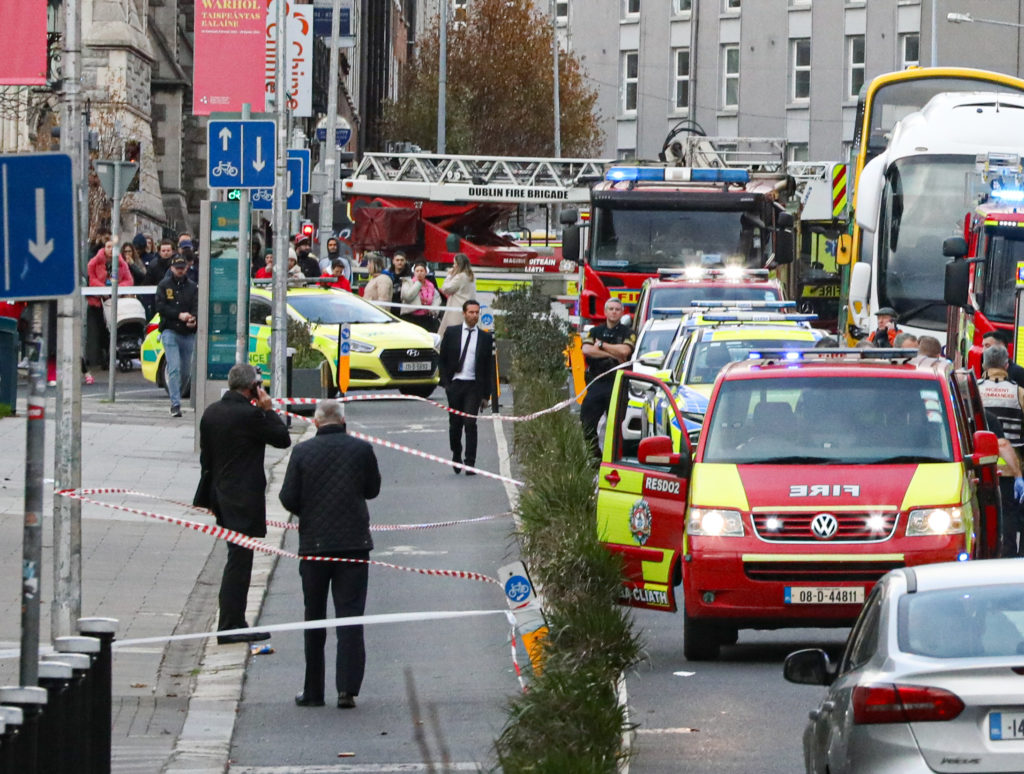
Woman’s bloodstained jacket shown to Bouchaker trial jury – RTE.ie
A jury in the trial of Caine Bouchaker has viewed a bloodstained jacket belonging to a woman attacked during the Parnell Square stabbings. According to reports from RTE.ie, the garment serves as physical evidence of the violence that occurred during the knife attacks in Dublin city center. This evidence accompanies CCTV footage and harrowing witness testimonies from parents and bystanders.
What physical evidence has been presented in the Bouchaker trial?
The prosecution has introduced several pieces of forensic and physical evidence to the court to establish the scale of the attack. As reported by RTE.ie, a woman’s bloodstained jacket was shown to the jury, providing a visual record of the injuries sustained during the incident. Forensic evidence of this nature is typically used in such trials to corroborate witness accounts of the struggle and the severity of the wounds inflicted.
The presentation of the jacket is part of a broader effort to reconstruct the events of the day. Legal proceedings of this magnitude rely on the intersection of physical evidence, such as clothing and weapons, and digital evidence to create a cohesive timeline for the jury. The bloodstained garment specifically links the victim’s physical trauma to the scene of the crime.
Key physical evidence categories introduced in the proceedings include:
- Forensic Clothing: Bloodstained garments, including the jacket reported by RTE.ie, used to demonstrate the impact of the weapon.
- Weaponry: Evidence relating to the knife used in the attacks.
- Medical Records: Documentation of the specific injuries sustained by the victims, including surgical reports and trauma assessments.
What does the CCTV footage reveal about the Parnell Square attack?
The jury has viewed CCTV footage that captures the moments of the knife attack on children and adults at Parnell Square. According to The Irish Times, the footage provides a chronological account of the assailant’s movements and the subsequent chaos that ensued as victims and bystanders reacted to the violence.
Digital evidence of this type is critical for the prosecution to establish the identity of the attacker and the sequence of events. The footage allows the jury to see the speed of the attack and the efforts made by members of the public to intervene or assist the wounded. In high-profile stabbing cases, CCTV often serves as the primary tool for debunking conflicting witness memories, which can be skewed by the trauma of the event.
The footage reportedly shows the specific locations where the attacks occurred, helping the court map out the “kill zone” or the area of maximum violence. This spatial reconstruction is essential for the jury to understand how the attacker moved through the crowd and targeted specific individuals, including children.
What testimony have witnesses provided regarding the attacker’s behavior?
Witnesses have described the atmosphere and the behavior of the man prior to the stabbing. A woman testifying in court stated that she heard a man who was “quite aggressive in his words” on the day of the Parnell Square attack, according to The Journal.

This testimony is significant because it suggests a state of agitation or intent before the physical violence began. Establishing the defendant’s mental state and behavior leading up to the crime is a standard part of the prosecution’s case to prove premeditation or a specific intent to cause harm. The description of “aggressive words” provides a behavioral bridge between the defendant’s arrival at the scene and the subsequent knife attacks.
“Woman heard man being ‘quite aggressive in his words’ on the day of Parnell Square stabbing.” — The Journal
Other witnesses have provided accounts of the immediate aftermath, describing the panic and the rapid mobilization of the public to help the victims. These testimonies, when paired with the CCTV footage reported by The Irish Times, create a multi-dimensional view of the event.
How have the victims’ families described the impact of the attack?
The trial has featured emotional testimony from the parents of the victims, detailing the immediate and long-term trauma caused by the stabbings. A distraught mother told the court about a “horror phonecall” she received from a crèche, during which she was told, “Oh my god, oh my god, a child has been stabbed,” according to the Irish Independent.
This testimony highlights the suddenness of the event and the psychological shock experienced by the families. The use of direct quotes from the phone call illustrates the desperation and confusion that characterized the first few minutes of the crisis.
Further medical evidence has been presented regarding the severity of the injuries. According to Gript, parents provided evidence stating that a fragment of a child’s skull was “gone” as a result of the attack. This detail underscores the extreme violence of the assault and the permanent physical damage inflicted on the youngest victims.
The impact on the victims can be summarized through these reported testimonies:
| Source of Testimony | Key Detail Reported | Impact Highlighted |
|---|---|---|
| Irish Independent | Crèche phone call: “a child has been stabbed” | Immediate psychological trauma and shock. |
| Gript | Fragment of skull “gone” | Severe, permanent physical trauma. |
| The Journal | “Quite aggressive” verbal behavior | Pre-attack behavioral red flags. |
Why is the Bouchaker trial significant for the Irish legal system?
The trial of Caine Bouchaker is not only a criminal proceeding to determine guilt but also a focal point for public discourse on safety and immigration in Ireland. The nature of the attack—targeting children and occurring in a busy city center—has placed it under intense scrutiny.

From a legal perspective, the case tests the ability of the State to manage highly emotional testimony and graphic evidence while ensuring a fair trial. The introduction of bloodstained clothing, as reported by RTE.ie, and the detailed medical descriptions of skull injuries reported by Gript, require the jury to balance visceral emotional reactions with a strict adherence to the facts of the law.
The case also highlights the role of the “citizen responder.” Much of the evidence, including the CCTV and witness statements, revolves around how ordinary people stepped in to stop the attacker or provide first aid. This aspect of the trial documents the intersection of public bravery and violent crime.
The role of forensic evidence in stabbing trials
In cases involving knife attacks, the prosecution must link the weapon, the defendant, and the victim. The “bloodstained jacket” mentioned by RTE.ie is a critical link. Blood spatter analysis and DNA testing on such garments can determine the position of the attacker relative to the victim and the force used during the assault.
When a jury sees a bloodstained garment, it transforms the abstract concept of “injury” into a concrete reality. This is a standard prosecutorial strategy to ensure the jury understands the gravity of the charges, such as attempted murder or causing serious harm.
The importance of chronological reconstruction
The combination of The Journal’s report on “aggressive words” and The Irish Times’ report on CCTV footage allows the court to build a timeline. A typical reconstruction in this trial likely follows this path:
- Pre-Attack Phase: Verbal aggression and movement through Parnell Square.
- Attack Phase: The actual stabbing events captured on CCTV.
- Immediate Aftermath: The phone calls to parents and the intervention of bystanders.
- Medical Phase: The treatment of catastrophic injuries, such as the skull trauma reported by Gript.
Common misconceptions about the Parnell Square evidence
There are often misconceptions regarding how CCTV and forensic evidence are used in Irish courts. Some may believe that CCTV provides a complete picture; however, as seen in this trial, CCTV is often fragmented. This is why the “aggressive words” reported by The Journal are so vital—they fill the gaps where cameras may not have captured audio or specific angles of interaction.
Another misconception is that physical evidence, like the bloodstained jacket reported by RTE.ie, is sufficient for a conviction on its own. In reality, the jacket proves that blood was present and that a struggle occurred, but it does not inherently prove *who* caused the blood to be there. This is why the prosecution pairs the jacket with the CCTV footage and witness testimony to place the defendant, Caine Bouchaker, in the exact position required to have caused those injuries.
Additionally, while the media reports on the “horror” of the phone calls, the legal court focuses on the *fact* of the call and the *timing* of the notification. The emotional weight is relevant for sentencing and victim impact statements, but the conviction relies on the forensic link between the defendant and the act.
Comparing the framing of the trial across sources
Different media outlets have focused on different dimensions of the trial. RTE.ie has highlighted the forensic aspect (the bloodstained jacket), while the Irish Independent has focused on the human tragedy and the emotional toll on parents. The Irish Times has emphasized the objective evidence of the CCTV, and Gript has foregrounded the specific, graphic nature of the physical injuries.
This divergence in reporting shows the complexity of the case. It is simultaneously a forensic puzzle, a human tragedy, and a security failure. By synthesizing these reports, a complete picture emerges: a man exhibiting aggressive behavior who committed a violent attack, captured on camera, resulting in catastrophic injuries that left families devastated.
For those following the legal progression of the case, it is helpful to monitor the related explainer on Irish criminal procedure to understand how these different types of evidence are weighed by a jury.
Frequently Asked Questions
What evidence was shown to the jury in the Bouchaker trial?
The jury has been presented with several types of evidence, including a woman’s bloodstained jacket (reported by RTE.ie), CCTV footage of the knife attacks (reported by The Irish Times), and testimony from witnesses who heard the defendant being aggressive (reported by The Journal).
Who is Caine Bouchaker?
Caine Bouchaker is the defendant in the trial concerning the stabbing attacks that took place at Parnell Square in Dublin. He is accused of carrying out the knife attacks that injured several people, including children.
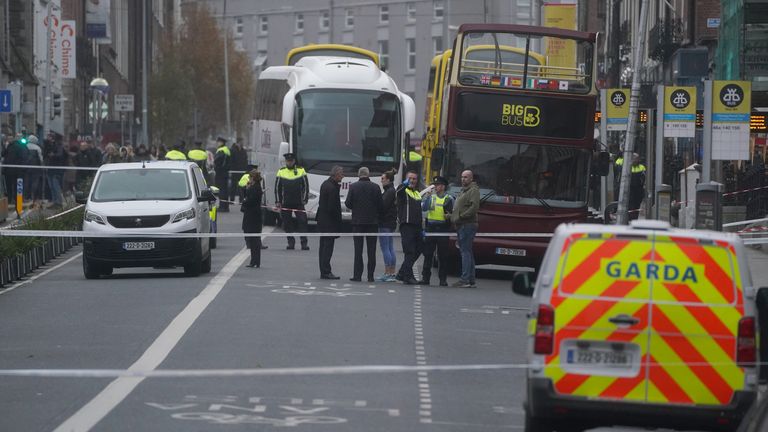
What were the injuries sustained in the Parnell Square attack?
The injuries were severe. According to reports from Gript, one victim suffered a catastrophic head injury where a fragment of their skull was missing. Other victims suffered various stab wounds, the severity of which was illustrated by the bloodstained clothing shown in court.
How did parents find out about the attack?
According to the Irish Independent, some parents were notified via phone calls from the crèche where the children were located. One mother described the call as a “horror,” during which she was told a child had been stabbed.
Is there CCTV of the event?
Yes. The Irish Times reports that the jury has viewed CCTV footage that captures the knife attack on children and adults at Parnell Square, providing a visual timeline of the incident.
The trial continues to unfold as the prosecution presents the full scope of the forensic and testimonial evidence. The combination of the bloodstained jacket, the graphic medical testimony, and the CCTV footage forms the core of the State’s case against Caine Bouchaker.
