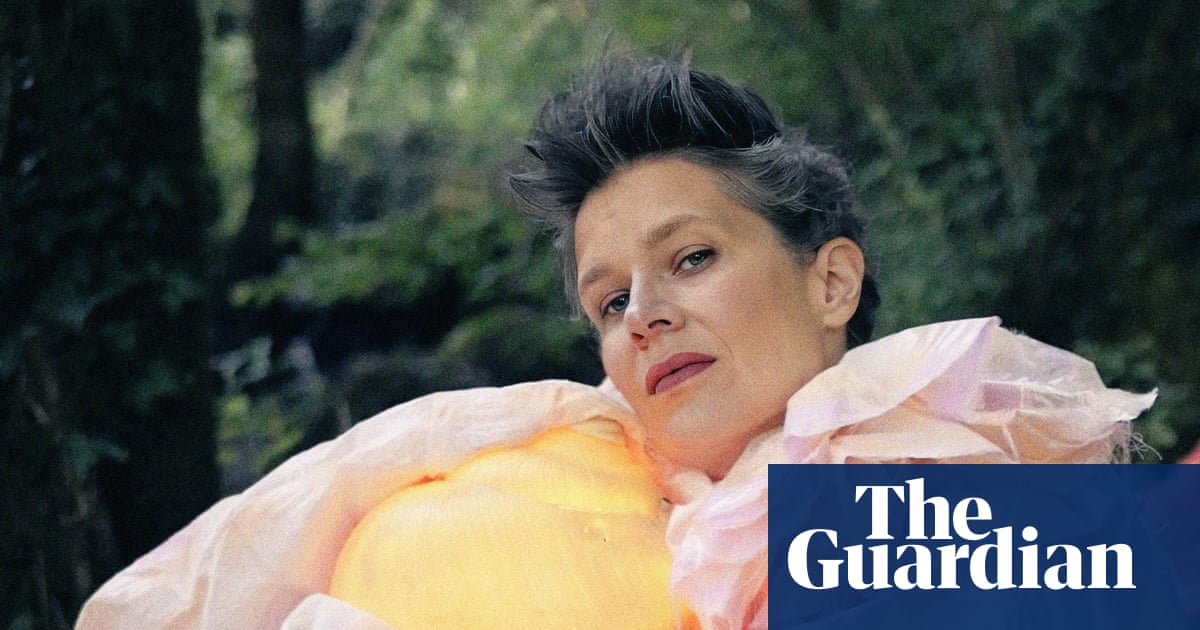
Camille Explores Maternal Agony in New Triple Album: ‘I carry the pain of the world’
Oscar-winning singer Camille has released a triple album documenting the emotional and psychological volatility of motherhood, a process she describes as carrying “the pain of the world.” The project examines the tension between artistic identity and maternal responsibility, utilizing a three-part structure to map the tumultuous transition into parenthood.
Why did Camille create a triple album about motherhood?
Camille developed the triple album format to capture the fragmented and overwhelming nature of the maternal experience. According to the artist, the decision to split the work into three distinct parts reflects the inability of a single narrative or musical style to encompass the “tumultuous” shift in identity that occurs after becoming a mother.
The project functions as an emotional archive. Camille states that the music serves as a vessel for the intense contradictions of motherhood: the profound love for a child juxtaposed with the grief of losing one’s former, independent self. By expanding the work into a triple album, she allows space for these conflicting emotions to exist without forcing a resolution.
Key thematic pillars of the project include:
- The Loss of Self: The erasure of the individual identity in favor of the maternal role.
- Global Empathy: The expansion of a mother’s pain to include the suffering of all children globally.
- Creative Friction: The struggle to maintain an avant-garde artistic practice while meeting the demands of childcare.
What does ‘I carry the pain of the world’ signify in the context of the album?
The phrase “I carry the pain of the world” refers to a psychological shift Camille experienced upon entering motherhood. She describes this not as a metaphorical sentiment, but as a visceral expansion of empathy. According to Camille, the act of caring for her own child opened a gateway to a broader, more agonizing awareness of the suffering of children everywhere.
This “world pain” manifests in the music through dissonant arrangements and raw vocal deliveries. The artist suggests that motherhood stripped away her emotional defenses, leaving her vulnerable to the collective trauma of the human condition. This state of heightened sensitivity became the primary catalyst for the album’s composition.
“I carry the pain of the world,” Camille stated, describing the crushing weight of maternal empathy and the realization that a mother’s concern extends beyond her own offspring to the global collective.
How does the album structure reflect the experience of parenthood?
The triple-album architecture is designed to mirror the disorientation of early parenthood. Rather than a linear progression, the three discs act as different emotional lenses through which Camille views her life. This structure prevents the listener from finding a “stable” center, mimicking the instability of the artist’s own psychological state during the writing process.
| Album Component | Primary Emotional Focus | Musical Characteristics |
|---|---|---|
| Part One | The Shock of Transition | Fragmented rhythms, high-tension vocals |
| Part Two | The Weight of Empathy | Atmospheric, expansive soundscapes |
| Part Three | Integration and Survival | More structured compositions, reflective tones |
By separating these phases, Camille avoids the cliché of a “healing journey.” Instead, she presents motherhood as a series of overlapping crises and revelations. The transition between the albums represents the shifting boundaries between the woman, the artist, and the mother.
The conflict between artistic ambition and maternal duty
A central tension in the work is the perceived incompatibility of the “avant-garde artist” and the “nurturing mother.” Camille discusses the guilt associated with the solitude required for high-level creativity. She notes that the intensity needed to produce art often clashes with the selfless, omnipresent nature of motherhood.
This conflict is a recurring theme in the history of female creators. Camille’s work echoes the struggles of previous generations of women who had to hide their domestic lives to be taken seriously in professional spheres, or conversely, sacrifice their art for the sake of the home. However, Camille chooses to foreground this friction rather than resolve it.
The album documents several specific points of tension:
- The Silence of the Studio vs. The Noise of the Home: The struggle to find a mental space for composition amidst the chaos of child-rearing.
- The Ego of the Performer vs. The Humility of the Parent: The clash between the desire for public recognition and the invisibility often associated with domestic labor.
- Emotional Exhaustion: The physical and mental depletion that makes the “tumultuous” nature of the album a necessity rather than a choice.
Comparing Camille’s approach to traditional ‘motherhood’ music
Most musical explorations of motherhood tend to focus on the lullaby—the soothing, protective, and idealized version of the bond. Camille explicitly rejects this framing. Her approach is an exercise in “anti-lullaby” composition, focusing instead on the anxiety, the rage, and the existential dread that can accompany parenthood.
While other artists have touched upon postpartum depression or the difficulties of working motherhood, Camille treats these not as medical conditions or social hurdles, but as metaphysical transformations. Where traditional songs about motherhood emphasize the *gift* of the child, Camille emphasizes the *cost* to the mother’s psyche.
This distinction positions the album closer to a psychological study than a standard studio record. By attributing her pain to a global scale—the “pain of the world”—she elevates the personal experience of motherhood to a universal human struggle, moving the conversation from the nursery to the global stage.
The role of the Oscar-winning pedigree in her creative risk
Having already achieved the highest level of critical recognition through an Academy Award, Camille possesses a degree of professional security that allows for such a risky, non-commercial project. A triple album focused on the “pain of the world” is a departure from the expectations of the music industry, which typically favors concise, marketable singles.
This status as an established artist enables her to prioritize raw honesty over accessibility. The complexity of the work suggests that Camille is less concerned with chart performance and more focused on the archival necessity of documenting her emotional state. The “tumultuous” nature of the record is a direct result of this creative freedom.
Common misconceptions about the album’s themes
One common oversimplification is that the album is a critique of motherhood. However, according to Camille’s descriptions, the work is not an indictment of the role itself, but an exploration of the intensity of the experience. The pain she describes is not a sign of failure, but a sign of a profound, almost overwhelming, connection to life.
Another misconception is that the album is purely a personal diary. While it is rooted in her life, the thematic reach—specifically the “pain of the world”—indicates an attempt to connect the individual maternal experience to broader geopolitical and social suffering. The album argues that motherhood is a lens that makes the suffering of others more visible and felt.
To clarify the album’s intent, consider these distinctions:
- Not a “Mommy Blog” in Song: It avoids the mundane details of parenting to focus on the metaphysical shift in consciousness.
- Not a Lament of Loss: While it speaks of losing the “old self,” it is an exploration of the “new self” that emerges from that loss.
- Not a Linear Narrative: It is a sonic collage of a psychological state.
The technical execution of ‘tumultuous’ sound
To translate emotional turmoil into audio, Camille employs several specific musical strategies. These include the use of sudden dynamic shifts—moving from near-silence to explosive vocal peaks—which mirror the unpredictable nature of a child’s needs and the corresponding stress of the parent.
The vocal arrangements often feature layers of overlapping voices, creating a sense of internal dialogue or mental crowding. This technical choice represents the “carrying” of multiple identities: the woman, the mother, and the global citizen. The music does not seek to soothe the listener; it seeks to immerse them in the same state of heightened sensitivity that Camille describes.
The production avoids traditional pop structures, opting instead for a more fluid, avant-garde approach. This ensures that the music feels as unstable as the emotions it describes, reinforcing the “tumultuous” label applied to the project.
FAQ: Understanding Camille’s Triple Album on Motherhood
What is the main theme of Camille’s triple album?
The main theme is the tumultuous emotional and psychological transformation experienced during motherhood, specifically focusing on the loss of individual identity and the expansion of empathy to include the “pain of the world.”
Why is the album described as ‘tumultuous’?
It is described as tumultuous because it documents the violent clash between the artist’s creative needs and the demands of parenthood, as well as the raw, often contradictory emotions—love, grief, and anxiety—that accompany the maternal experience.

How does Camille’s Oscar-winning background influence this project?
Her established critical success provides her with the artistic freedom to release a non-commercial, complex triple album that prioritizes emotional honesty and avant-garde exploration over mainstream appeal.
Does the album focus only on the positive aspects of motherhood?
No. While it acknowledges the bond between parent and child, it focuses heavily on the “shadow side” of motherhood, including the erasure of the self, the crushing weight of global empathy, and the struggle to maintain an artistic identity.
What does the phrase ‘I carry the pain of the world’ mean in this context?
It refers to the artist’s feeling that becoming a mother stripped away her emotional barriers, making her feel the suffering of all children and people globally as if it were her own personal pain.
As Camille continues to perform and discuss this work, the project stands as a significant contribution to the discourse on the intersection of art and domesticity. By refusing to sanitize the maternal experience, she provides a sonic map for others navigating the same complex transition, suggesting that the “pain of the world” is a burden shared by many who enter the role of the protector.
