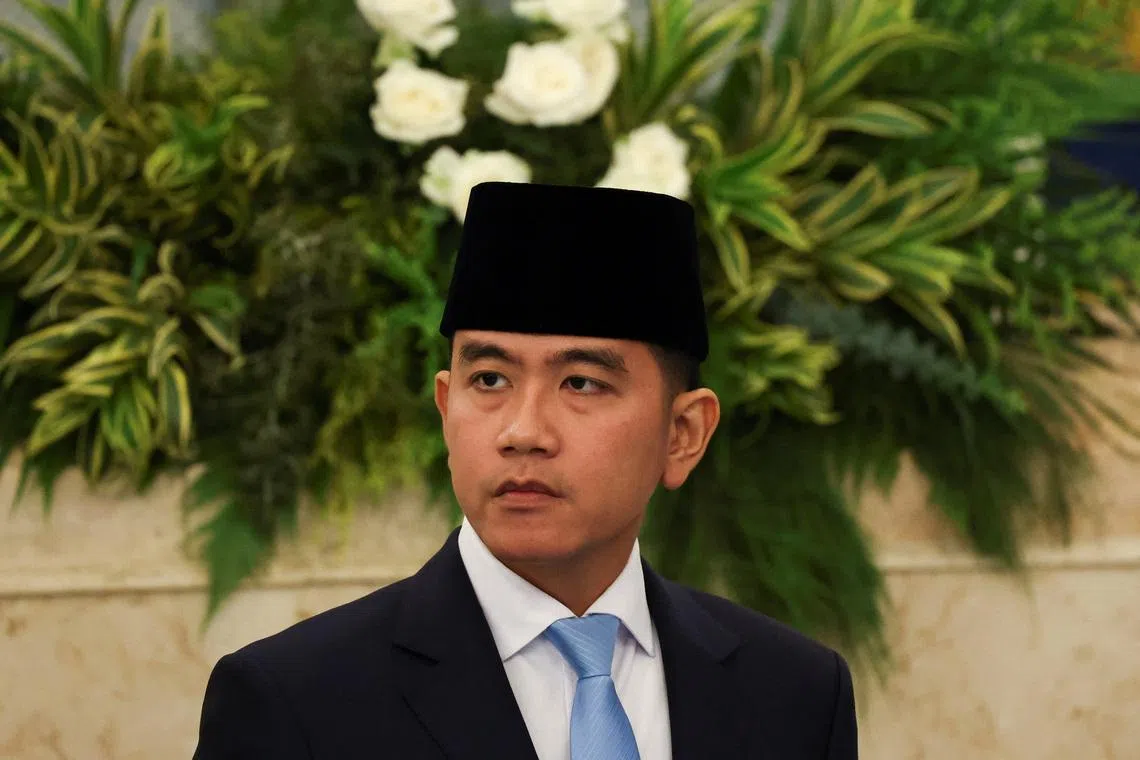
Jokowi’s Son Gibran’s Outreach to Student Protesters Puts Focus on His Role in Government
Vice President Gibran Rakabuming Raka met with student protesters at the Vice Presidential Palace, an encounter that yielded no formal agreement according to Tempo.co. The outreach has triggered scrutiny over Gibran’s political motives and his evolving role in the Indonesian government, as reported by The Straits Times and The Jakarta Post.
Why did Vice President Gibran meet with student protesters?
Vice President Gibran Rakabuming Raka hosted a meeting with student demonstrators at the Vice Presidential Palace to engage with critics and address the grievances of the youth demographic. According to ANTARA Foto, the meeting took place on the palace grounds, serving as a direct interface between the second-highest office in the land and organized student activists.
The move is viewed by analysts as an attempt to manage public perception and maintain stability. By opening the doors of the palace, the Vice President sought to project an image of accessibility. However, The Jakarta Post reports that this outreach has prompted significant scrutiny regarding the underlying political motives behind the gesture, questioning whether the meeting was a genuine attempt at dialogue or a strategic public relations effort.
Key objectives of the outreach included:
- Establishing a direct line of communication with student leaders.
- Addressing specific policy concerns raised during street protests.
- Mitigating the optics of a government detached from the youth population.
Was a deal reached during the Vice Presidential Palace meeting?
Despite the high-profile nature of the gathering, the meeting did not result in a concrete resolution. Tempo.co English reports that the Palace confirmed no deal was reached between Vice President Gibran and the student protesters. This indicates that while the dialogue occurred, the core demands of the students remained unmet or were not accepted by the administration.
The lack of a formal agreement suggests a gap between the students’ expectations and the government’s willingness to concede on key issues. This outcome shifts the focus from the act of meeting to the effectiveness of the Vice President’s influence within the executive branch.
| Reporting Outlet | Primary Focus of Coverage | Key Finding/Angle |
|---|---|---|
| Tempo.co English | Outcome of the meeting | No deal reached between VP and protesters. |
| The Jakarta Post | Political intent | Scrutiny over Gibran’s political motives. |
| The Straits Times | Institutional impact | Focus on Gibran’s role in government. |
| ANTARA Foto | Documentation | Visual record of the meeting at the Palace. |
How does this outreach put focus on Gibran’s role in government?
The Straits Times notes that Gibran’s decision to lead outreach to protesters puts a specific focus on his role in government. As the son of former President Joko Widodo (Jokowi), Gibran’s ascent to the Vice Presidency has been a point of intense national and international debate. His decision to take the lead in managing student unrest suggests an attempt to define his own political identity separate from his father, while simultaneously exercising the authority of his office.
This focus on his role is critical because the Vice Presidency in Indonesia has historically varied in actual power depending on the relationship between the President and Vice President. By positioning himself as the primary liaison for protesters, Gibran is signaling a specific type of executive presence. According to The Straits Times, this outreach forces a public conversation about what Gibran’s specific mandate is and how much influence he wields over policy decisions.
“Gibran’s outreach to student protesters puts focus on his role in government,” as highlighted by The Straits Times, suggesting that the act of meeting is as much about institutional positioning as it is about the protesters’ demands.
What are the political implications of Gibran’s motives?
The Jakarta Post reports that the outreach has prompted scrutiny over Gibran’s political motives. This scrutiny stems from the perception that the Vice President may be attempting to shield the administration from accusations of authoritarianism or dynastic consolidation. By engaging with students—a group that has historically been the vanguard of political change in Indonesia—Gibran may be attempting to neutralize opposition through visibility.
The implications of these motives are twofold:
- Legitimacy Building: By appearing as a listener, Gibran can attempt to build a personal brand of “youth-centric” leadership.
- Conflict De-escalation: Direct meetings can serve to lower the temperature of street protests, even if no policy changes are made, by making the protesters feel heard.
Critics argue that if no deal is reached, as Tempo.co reports, the outreach may be viewed as “performative politics.” This creates a risk where future attempts at dialogue are met with increased skepticism from the student community.
Comparing the media framing of the encounter
The reporting on this event varies significantly across different outlets, reflecting different analytical priorities. While all sources agree that the meeting occurred, the “meaning” assigned to the event differs.
The Outcome-Based Frame: Tempo.co focuses on the lack of a “deal.” This framing prioritizes the material result of the meeting, suggesting that the dialogue was unsuccessful in terms of policy concessions.
The Motivational Frame: The Jakarta Post focuses on “scrutiny” and “motives.” This approach analyzes the psychological and strategic reasons for the meeting, treating the event as a political maneuver rather than a policy discussion.
The Institutional Frame: The Straits Times focuses on the “role in government.” This perspective looks at the broader structural implications, viewing Gibran’s actions as a way of defining the Vice Presidential office’s function in the current administration.
This divergence in reporting shows that the event is being viewed not just as a news story, but as a data point in the larger narrative of Indonesia’s democratic trajectory and the influence of the Jokowi family.
Context: The history of student protests in Indonesia
To understand why Gibran’s outreach is significant, it is necessary to consider the role of students in Indonesian politics. Students were central to the 1998 Reformasi movement that ended the 32-year rule of President Suharto. Because of this legacy, student protests are viewed as a barometer for public discontent and a legitimate threat to government stability.
When a government official, particularly one as young as Gibran, meets with these groups, it is a recognition of their power. However, the fact that no deal was reached indicates a continuing tension between the state’s desire for order and the students’ demand for systemic change. This tension is further complicated by Gibran’s familial ties to the previous administration, which some protesters view as a challenge to democratic norms.
For more information on the political landscape, see a related explainer on Indonesian democratic transitions.
Frequently Asked Questions
Did Vice President Gibran reach an agreement with the students?
No. According to Tempo.co English, the Palace confirmed that no deal was reached between Vice President Gibran and the student protesters during their meeting.

Where did the meeting between Gibran and the protesters take place?
The meeting was held at the Vice Presidential Palace, as documented in photos provided by ANTARA Foto.
Why is Gibran’s outreach being scrutinized?
The Jakarta Post reports that the outreach has prompted scrutiny over Gibran’s political motives, with questions arising about whether the meeting was a strategic move to manage his public image or a genuine effort to address grievances.
What does this meeting signify for Gibran’s role in the government?
According to The Straits Times, the outreach puts focus on Gibran’s specific role and influence within the government, highlighting how he is choosing to exercise his authority as Vice President.
Who is Gibran Rakabuming Raka?
Gibran Rakabuming Raka is the Vice President of Indonesia and the son of the former president, Joko Widodo (Jokowi).
