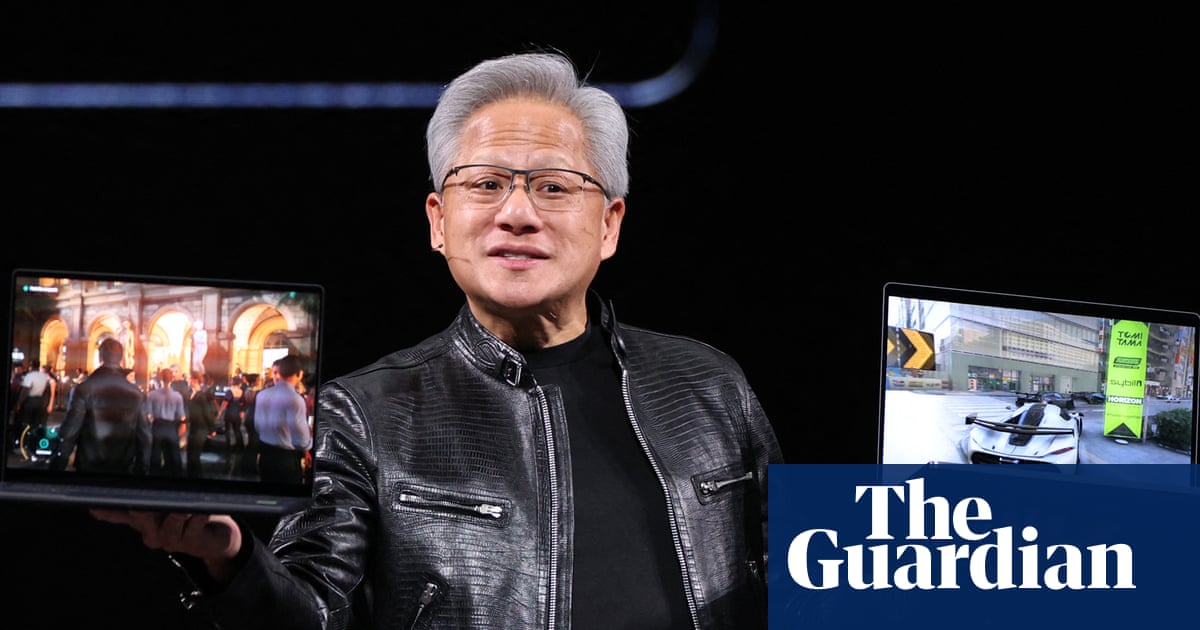
Nvidia’s New Arm-Based Superchip: Redefining the Architecture of the AI PC
The landscape of personal computing is undergoing its most significant architectural shift in decades. In a move that signals a departure from its traditional role as a provider of discrete graphics components, Nvidia has unveiled a sophisticated new “superchip” designed to serve as the central nervous system for the next generation of laptops and desktop computers. This transition isn’t merely about increasing clock speeds or adding more cores; This proves a fundamental reimagining of how a computer processes information, moving the heavy lifting of artificial intelligence from distant cloud servers directly onto the local silicon.
The industry has been buzzing since reports emerged that Nvidia launches ‘superchip’ putting AI power into laptops and PCs – The Guardian and other major outlets, highlighting a strategic pivot that places Nvidia in direct competition with established CPU giants. By leveraging Arm-based architecture, Nvidia is attempting to solve the “power-performance paradox”—the struggle to provide massive computational power for AI without draining a laptop battery in two hours. Through deep collaborations with Microsoft and hardware titans like Dell and HP, Nvidia is not just launching a product; it is attempting to establish a new standard for the “AI PC.”
The Architecture of the N1 and N1x: Beyond the Traditional CPU
At the heart of this announcement are the N1 and N1x chips. Unlike the traditional x86 architecture found in most Windows machines, these chips utilize the Arm instruction set. Arm is renowned for its efficiency, which is why it dominates the smartphone market and has allowed Apple to redefine the MacBook line. Nvidia’s entry into this space brings a different flavor of expertise: the ability to integrate high-performance AI acceleration directly into the system-on-a-chip (SoC).
The “superchip” designation refers to the tight integration of three critical components: a high-efficiency CPU, a powerful GPU and a dedicated Neural Processing Unit (NPU). While many modern laptops now claim to have “AI capabilities,” most rely on a modest NPU that handles basic tasks like background blur in video calls. Nvidia’s approach is far more aggressive, utilizing its leadership in data center AI to bring “tensor-core” level performance to the edge.
The Role of the NPU in the Local AI Ecosystem
The NPU is the unsung hero of this new architecture. While the GPU is excellent for parallel processing (like rendering graphics or training models), the NPU is designed specifically for the inference stage of AI—the part where the AI actually generates an answer or performs a task. By offloading AI workloads to the NPU, the system can maintain high performance while significantly reducing power consumption.
- Reduced Latency: Local processing eliminates the need to send data to a server and wait for a response.
- Enhanced Privacy: Sensitive data never leaves the device, making local AI a necessity for enterprise and government use.
- Offline Functionality: AI tools remain operational without an active internet connection.
“The shift toward local AI is not just a convenience; it is a structural necessity. As Large Language Models (LLMs) become integrated into every click and keystroke, the latency of the cloud becomes a bottleneck that only on-device silicon can solve.”
The Strategic Alliance: Microsoft, Dell, and HP
Hardware is only as good as the software that runs on it. Nvidia recognized early on that launching an Arm-based chip for Windows would be a failure without an optimized ecosystem. This is why the partnership with Microsoft is the cornerstone of the entire strategy. Windows is being “reinvented” to treat AI as a primary layer of the operating system rather than an application running on top of it.
For OEMs like Dell and HP, this provides a way to differentiate their hardware in a stagnant market. For years, laptop specs have looked remarkably similar year-over-year. The introduction of the N1 series allows these manufacturers to market devices that can run complex AI agents locally—tools that can organize files, draft emails, and analyze massive datasets without relying on a subscription-based cloud API.
| Feature | Traditional x86 Laptop | Nvidia Arm-Based AI PC |
|---|---|---|
| AI Processing | Cloud-dependent or basic NPU | Integrated High-Performance NPU/GPU |
| Power Efficiency | Moderate (Higher heat) | High (Optimized for battery life) |
| Latency | Network dependent | Near-instant local execution |
| Architecture | CISC (Complex Instruction Set) | RISC (Reduced Instruction Set/Arm) |
Why This Matters: The Transition from Cloud AI to Edge AI
To understand why the news that Nvidia launches ‘superchip’ putting AI power into laptops and PCs – The Guardian is so pivotal, one must understand the current state of AI. Currently, most users interact with AI via the cloud (e.g., ChatGPT, Claude, Gemini). This model is expensive for the providers, slow for the users, and a nightmare for privacy-conscious organizations.
The “Edge AI” movement seeks to move the intelligence to the “edge” of the network—the device in your hand. When AI is local, the computer becomes a proactive assistant rather than a reactive tool. Imagine a PC that doesn’t just search for a document but understands the context of your entire project and suggests edits in real-time, all while your Wi-Fi is turned off.
Economic and Industrial Implications
Nvidia is effectively diversifying its revenue streams. While its H100 and B200 data center GPUs are currently the most valuable pieces of silicon on earth, the data center market is subject to massive cycles of investment. By capturing the PC market, Nvidia ensures it is the dominant force in both the training of AI (in the cloud) and the consumption of AI (on the desktop).
This move also puts immense pressure on Intel and AMD. For decades, the x86 architecture was the undisputed king of the PC. However, the efficiency of Arm, coupled with Nvidia’s AI dominance, creates a formidable challenge. If Windows users begin to prefer the battery life and AI capabilities of Arm-based systems, the very foundation of the PC industry will shift.
Common Misconceptions About AI PCs
As with any major tech launch, there is a significant amount of misinformation regarding what an “AI PC” actually is. It is important to clarify a few key points to avoid oversimplification.
Myth 1: “It’s just a faster computer.”
A faster computer does things quicker; an AI PC does things differently. The integration of the NPU allows the computer to perform “predictive” tasks. It isn’t just about raw speed; it’s about the ability to handle neural network workloads without crashing the system or killing the battery.
Myth 2: “You won’t need the internet for AI anymore.”
While local AI reduces dependence on the cloud, it doesn’t eliminate it. Hybrid AI is the likely future. Simple, frequent tasks (like text correction or image enhancement) will happen locally, while massive, complex queries (like analyzing a billion-parameter database) will still be routed to the cloud.
Myth 3: “Arm chips can’t run traditional Windows apps.”
This was a major hurdle in the past. However, Microsoft’s emulation layers have improved drastically. While some legacy software may still struggle, the vast majority of modern applications run seamlessly on Arm, often with better energy efficiency than they did on x86.
The Competitive Landscape: Nvidia vs. Apple vs. Qualcomm
Nvidia is entering a battlefield that is already occupied. Apple’s M-series chips have already proven that Arm can dominate the laptop space, combining extreme efficiency with surprising power. Meanwhile, Qualcomm has recently launched the Snapdragon X Elite, which targets the exact same “AI PC” demographic with its own powerful NPU.
So, what is Nvidia’s “unfair advantage”? It is their software ecosystem. Nvidia isn’t just selling a chip; they are selling CUDA, the industry-standard platform for AI development. If developers continue to build AI tools using Nvidia’s libraries, those tools will naturally run best on Nvidia’s hardware. This creates a “moat” that is very difficult for Qualcomm or Intel to cross.
For those interested in how this fits into the broader hardware trend, a related explainer on the evolution of SoC architecture provides more context on why the industry is moving away from separate CPU/GPU components.
The Impact on the End User: What to Expect
For the average consumer, the launch of the N1 and N1x series will manifest in three primary ways: battery life, software capabilities, and price.
The Battery Life Breakthrough
The most immediate benefit will be the end of “battery anxiety.” By using Arm architecture and offloading AI tasks to the NPU, these laptops can potentially double the battery life of traditional high-performance machines. We are moving toward a world where a “pro” laptop can actually last a full workday without a charger, even while running AI-enhanced software.
New Forms of Software
We will likely see a new category of “Local-First” applications. These will be programs that don’t require a monthly subscription to a cloud service because the processing power is built into your hardware. This could lead to a resurgence of software ownership over the “everything-as-a-service” model.
The Cost Barrier
The primary downside will be the initial cost. Integrating this level of AI power into a laptop is expensive. Early adopters should expect a premium price tag for the first wave of N1-powered devices from Dell and HP. However, as the architecture scales, these features will eventually trickle down to mid-range laptops.
Technical Specifications and Performance Expectations
While full benchmarks are still emerging, the N1 and N1x series are designed to target specific performance metrics that prioritize “tokens per second” (the speed at which an AI generates text) and “watts per TOPS” (Tera Operations Per Second). The goal is to provide a seamless experience where the AI feels like a part of the OS, not a separate program that needs to “load.”
- Memory Integration: Expect unified memory architectures that allow the GPU and NPU to access the same data pool, eliminating the slow transfer of data between different chips.
- Thermal Management: Because Arm is more efficient, these laptops can be thinner and quieter, as they generate less heat during intensive AI workloads.
- Software Stack: Deep integration with Windows Copilot+ will be the primary driver of adoption.
If you are tracking the broader shift in computing, you might also find a detailed analysis of the RISC-V movement useful, as it represents another alternative to the x86 dominance.
Frequently Asked Questions
What exactly is an “AI PC”?
An AI PC is a computer specifically designed to run artificial intelligence tasks locally. This is achieved by integrating a dedicated Neural Processing Unit (NPU) alongside the CPU and GPU, allowing the device to handle AI workloads efficiently without relying entirely on the cloud.
Will I be able to run my old apps on an Nvidia Arm-based laptop?
Yes, in most cases. Microsoft uses an emulation layer that allows x86 applications to run on Arm architecture. While there may be a slight performance hit for some very old or specialized software, most modern apps will work normally.
How is this different from a laptop with a dedicated Nvidia GPU?
A dedicated GPU (like the RTX series) is a separate chip used primarily for graphics and heavy computation. The new “superchip” integrates the CPU, GPU, and NPU into a single piece of silicon (SoC). This results in much higher energy efficiency and faster communication between the different processing units.
Do I need a new laptop to use AI?
No, you can use cloud-based AI (like ChatGPT) on any computer. However, an AI PC allows you to run those models locally, which is faster, more private, and works without an internet connection.
Who are the main competitors to Nvidia’s new chip?
The primary competitors are Apple (with its M-series chips) and Qualcomm (with the Snapdragon X Elite), both of whom use Arm architecture to provide high-efficiency, AI-capable computing.
The arrival of Nvidia’s Arm-based silicon marks the end of the era where the PC was simply a portal to the internet. By embedding massive AI capabilities directly into the hardware, Nvidia is turning the laptop back into a powerful, independent workstation. As the first wave of devices from Microsoft, Dell, and HP hits the market, the industry will finally see if the promise of the “Personal AI” is a genuine evolution or simply a new marketing category. What remains clear is that the battle for the future of the PC is no longer about who has the fastest processor, but who has the most intelligent one.
