King Charles set to appoint fourth prime minister in four years
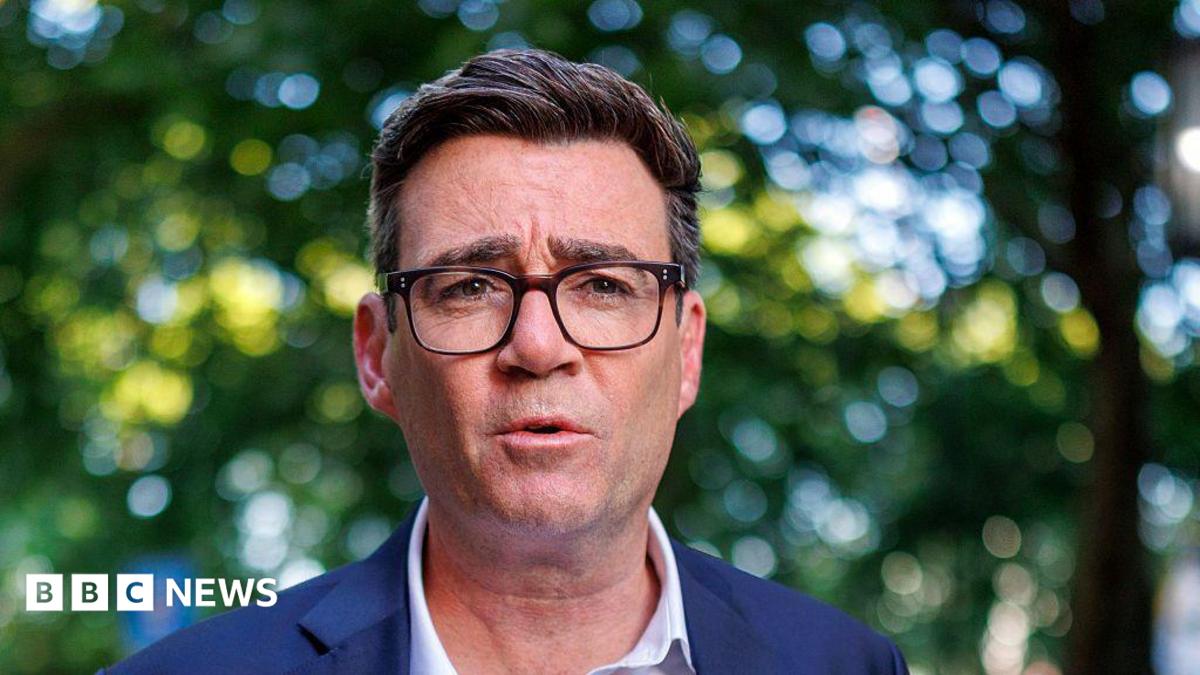
Andy Burnham will officially take office on Monday as the fourth prime minister to be installed by King Charles III following the resignation of Keir Starmer.
The United Kingdom prepares for a change in national leadership as Andy Burnham readies to assume the office of prime minister on Monday, 20 July 2026. This transition follows the resignation of Keir Starmer, who stepped down as leader of the Labour Party in June following a tenure of just over two years. The appointment marks the fourth time King Charles III will install a prime minister since his accession to the throne in September 2022.
The selection process concluded on Friday, 17 July 2026, when Burnham was confirmed as the new Labour leader. Having secured nominations from 379 of the 403 Labour Members of Parliament, he faced no viable opposition. British-Australian MP Catherine West was the only other individual put forward, but she did not nominate herself and ultimately cast her vote for Burnham. With the Labour Party holding a majority in the House of Commons, Burnham’s victory in the internal leadership contest guarantees his path to Downing Street without the requirement of a general election.
Related media

A Period of Volatility
The British political climate has experienced significant instability over the last decade. Burnham will become the seventh individual to hold the office of prime minister in 10 years. This frequent turnover has prompted ongoing debate regarding the sustainability of the current system, in which governing parties may replace their leader without returning to the electorate.
Starmer’s administration faced mounting pressure linked to low approval ratings and political controversies, most notably the resignation of his ambassador to the United States, Peter Mandelson, in February. By April 2026, satisfaction with Starmer’s leadership among the general population had reached 18%, while support within his own party had dipped to 41%. The pressure was exacerbated by heavy losses in local elections held in May and the rise of the Reform UK party in polling. Starmer’s departure was acknowledged by Donald Trump, who criticized the outgoing prime minister on Truth Social for his handling of immigration and energy policy hours before the resignation announcement.
Policy Priorities and Ideological Shifts
Burnham, who served as the mayor of Greater Manchester from 2017 until his return to Westminster in June 2026, has signaled an intent to pivot away from the economic policies established during the 1980s. In his first speech as Labour leader, he characterized the era of Margaret Thatcher as a series of wrong turns
that resulted in the privatization of key sectors and the concentration of wealth. He has pledged to address regional inequalities, reduce the cost of living, and potentially pursue public control for entities such as Thames Water.
Despite these promises, some commentators have questioned the specificity of his agenda. Critics have described his initial messaging as vague
or vacuous
, raising concerns about whether he possesses a concrete plan to govern effectively. Conversely, some reporting suggests there is public goodwill and a recognition that the current state of frequent leadership changes is unsustainable for the country.
The Transition Process
The transfer of power follows a traditional sequence:
- The Resignation: Keir Starmer will travel to Buckingham Palace on Monday to formally tender his resignation to King Charles III.
- The Invitation: Following the resignation, the King will invite Andy Burnham to form a government. Burnham officially becomes prime minister the moment he accepts this invitation, a process traditionally known as
kissing hands
. - The Address: Burnham will travel to 10 Downing Street, where he is expected to deliver his first public statement as prime minister.
- The Appointments: The new prime minister will begin naming his Cabinet, including senior ministers such as the chancellor, foreign secretary, and home secretary.
While Burnham has indicated he intends to work toward the existing 2024 Labour manifesto and has ruled out an immediate general election, he retains the authority to call for one at any point before the legal deadline in 2029. His administration will immediately face the challenges that plagued his predecessor: a sluggish economy, high costs for the public, and an aging population requiring attention to social care services.
Archypedia is dedicated to independent, evidence-backed reporting. This briefing was synthesized from primary source reporting, corroborated across independent newsrooms, and verified against our Editorial Standards.
Transparency record
Evidence behind this report
This report synthesizes 6 distinct sources. Open the source ledger below to compare the underlying coverage.
Prepared under the Archypedia Editorial Policy by the Mara Ionescu editorial desk profile. AI-assisted tools may support drafting and verification; public accountability remains with Archypedia. Report an error.

