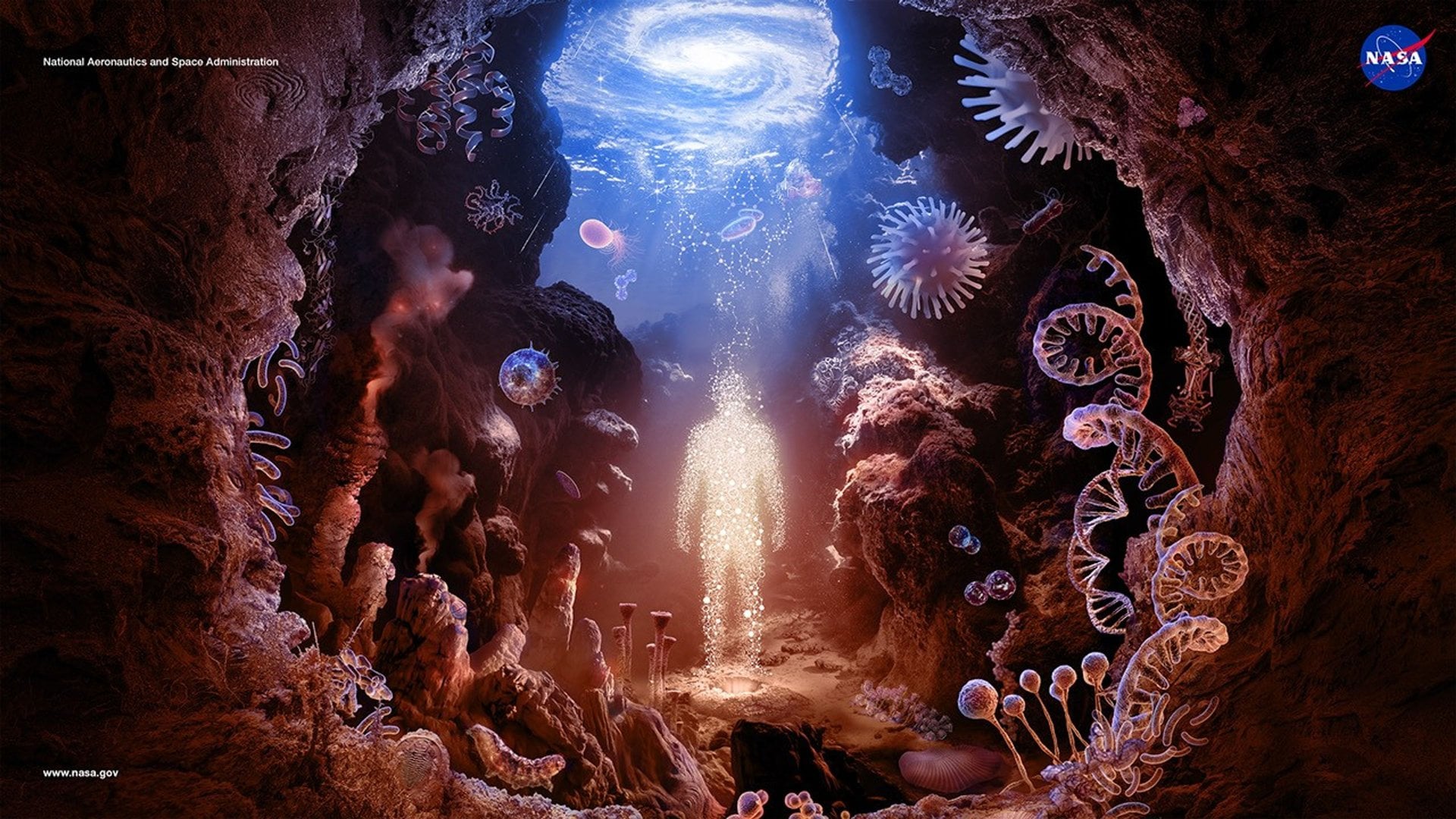
NASA Study Challenges Theories on Where the Ingredients for Life Came From – Universe Today
NASA researchers have identified a new mechanism for how Earth may have acquired the essential chemical building blocks for life, challenging long-held assumptions about the role of asteroids and comets. According to NASA Science, this discovery suggests that the elements necessary for biological development may have arrived via a different pathway than previously theorized, altering the current understanding of the early solar system’s chemistry.
How does this new NASA study change theories on the origin of life?
For decades, the prevailing scientific consensus suggested that Earth’s organic ingredients—such as carbon and nitrogen—were delivered primarily through the impact of carbonaceous chondrites (asteroids) and comets during the Late Heavy Bombardment. This “external delivery” model posits that the early Earth was too volatile or chemically unstable to synthesize these complex molecules on its own.
The recent findings highlighted by NASA Science challenge this singular narrative. The study indicates that the delivery system for life’s ingredients was more diverse and potentially more integrated into the formation of the solar nebula itself. Rather than relying solely on sporadic impacts from distant icy bodies, the research suggests that the precursors to life were more widely distributed and available in the protoplanetary disk.
This shift in perspective means that the “seeding” of Earth may not have been a series of lucky accidents involving a few large impacts. Instead, it may have been a continuous process of accretion. This suggests that the ingredients for life are common throughout the galaxy, increasing the statistical likelihood that other planets developed similar biological precursors.
What are the essential “ingredients for life” mentioned in the research?
When NASA refers to the “ingredients for life,” they are discussing the specific chemical elements and molecules that form the basis of all known biological structures. These are often grouped as CHNOPS—Carbon, Hydrogen, Nitrogen, Oxygen, Phosphorus, and Sulfur.
- Carbon: The structural backbone of all organic molecules due to its ability to form four stable bonds.
- Hydrogen and Oxygen: The primary components of water, the universal solvent required for biochemical reactions.
- Nitrogen: A critical component of amino acids, which build proteins, and nucleic acids, which form DNA and RNA.
- Phosphorus: Essential for the creation of ATP (energy transfer) and the phosphate backbone of genetic material.
- Sulfur: Necessary for the folding and stability of proteins through disulfide bridges.
The NASA study focuses on how these elements transitioned from simple atomic forms into complex organic molecules, such as amino acids and sugars, before they ever touched the Earth’s surface. The research indicates that these molecules could have formed in the interstellar medium or the solar nebula, rather than being synthesized exclusively within the interiors of asteroids.
Comparing Traditional Delivery Theories vs. New NASA Findings
To understand the impact of this research, it is necessary to contrast the old model of prebiotic delivery with the new evidence provided by NASA.

| Feature | Traditional “Impact” Theory | New NASA-Supported Model |
|---|---|---|
| Primary Source | Comets and specific asteroid classes. | Widespread distribution in the solar nebula/interstellar dust. |
| Delivery Method | Catastrophic impacts (Late Heavy Bombardment). | Continuous accretion and integrated nebula chemistry. |
| Timing | Occurred in distinct, violent episodes. | Ongoing process during planetary formation. |
| Probability | Viewed as a “lucky” or rare occurrence. | Viewed as a standard result of star system formation. |
“The discovery of these pathways suggests that the building blocks of life are not rare anomalies but are fundamental products of the chemistry of the universe,” according to data analyzed in the NASA Science reports.
Why does the source of these elements matter for astrobiology?
The distinction between a “lucky impact” and “universal availability” has massive implications for the search for extraterrestrial life. If the ingredients for life only arrive via specific, rare asteroid collisions, then the “habitable zone” of a star is not the only requirement for life; a planet would also need a specific history of bombardment.
However, if the NASA study is correct and these ingredients are a standard part of the solar nebula’s composition, then any planet forming in a similar environment would naturally receive the necessary chemistry. This expands the search parameters for astrobiologists. It suggests that we should look not just for “Earth-like” planets in terms of size and temperature, but for any planet that formed from a chemically enriched nebula.
This finding also influences how NASA missions, such as the James Webb Space Telescope (JWST), analyze the atmospheres of exoplanets. Scientists are now looking for “chemical fingerprints” of these organic precursors in the disks of young stars, knowing that these molecules are likely present long before a planet is fully formed.
How did NASA arrive at these conclusions?
The research involved a combination of laboratory simulations and spectroscopic analysis of interstellar clouds. By mimicking the conditions of the early solar system—extreme cold, vacuum, and exposure to ultraviolet radiation—scientists were able to observe how simple gases transform into complex organic solids.
According to the findings, these organic molecules can adhere to tiny grains of interstellar dust. As these dust grains clump together to form larger pebbles, then boulders, and eventually planets, the organic material is preserved. This process, known as accretion, allows the “ingredients for life” to be baked directly into the crust of a forming planet, rather than being delivered as an afterthought via a comet crash.
Key milestones in this research include:
- Spectroscopic Mapping: Identifying organic molecules in deep space clouds using infrared telescopes.
- Isotopic Analysis: Comparing the ratios of isotopes in Earth’s minerals to those found in primitive meteorites.
- Laboratory Synthesis: Creating amino acids in vacuum chambers that simulate the interstellar medium.
Common misconceptions about the origin of life ingredients
There are several frequent oversimplifications regarding this topic that the NASA study helps correct.

Misconception 1: “Life arrived on Earth from space”
The NASA study is not claiming that life itself (bacteria or microbes) arrived from space—a theory known as panspermia. Instead, it is discussing the ingredients for life. There is a critical difference between a living organism and the organic molecules (like amino acids) that a living organism is made of. The research focuses on the chemistry, not the biology.
Misconception 2: “The Earth was a sterile rock until comets hit it”
The new evidence suggests the Earth was never “sterile” in a chemical sense. If the ingredients were part of the solar nebula, the Earth was infused with organic chemistry from the moment it began to coalesce from dust and gas. The comets may have added to the stockpile, but they were not the sole providers.
Misconception 3: “Organic means biological”
In a scientific context, “organic” simply refers to molecules containing carbon. A molecule can be organic without being biological. The NASA study tracks the transition from inorganic atoms to organic molecules, which is a chemical process, not a biological one.
Potential long-term impacts on space exploration
This shift in theory changes the priority of future sample-return missions. If the ingredients for life are universal to the solar nebula, then samples from a wider variety of celestial bodies—not just carbonaceous asteroids—could yield clues about the origin of biology.
For example, the exploration of Mars and the moons of Jupiter (Europa) and Saturn (Enceladus) takes on new meaning. If these bodies formed from the same enriched nebula as Earth, their internal oceans may have started with the same chemical advantages, regardless of whether they were hit by the same asteroids Earth was.
Furthermore, this research encourages a more interdisciplinary approach to space science, blending astrophysics (the study of stars and nebulae) with geochemistry (the study of planetary rocks) and prebiotic chemistry. By linking the scale of a galaxy to the scale of a molecule, NASA is creating a more cohesive timeline of how a cloud of gas becomes a conscious observer.
For more on how these findings influence current missions, see a related explainer on the James Webb Space Telescope’s organic search.
Frequently Asked Questions
Does this mean life is common in the universe?
While the study does not prove that life exists elsewhere, it proves that the materials needed for life are common. According to NASA’s findings, the chemical precursors are a standard byproduct of star and planet formation, which increases the probability that life could emerge wherever conditions are right.
What is the difference between a comet and an asteroid in this context?
Comets are primarily composed of ice and dust and originate from the outer solar system, while asteroids are mostly rock and metal. Traditional theories relied on these bodies to “transport” organics from the cold outer reaches to the warmer inner solar system. The new study suggests these materials were already present throughout the system.
Could life have started without these “ingredients”?
Based on all current biological knowledge, the CHNOPS elements are non-negotiable for life as we know it. The debate is not about if these ingredients were needed, but how they arrived on Earth. The NASA study focuses on the delivery mechanism, not the necessity of the elements.
How does this affect the “Late Heavy Bombardment” theory?
The Late Heavy Bombardment—a period of intense asteroid impacts—is still a recognized event. However, this research suggests it was not the only or necessarily the primary way Earth got its organic chemistry. It adds a layer of “continuous delivery” to the “catastrophic delivery” model.
What is the next step for NASA in this research?
NASA continues to use spectroscopic data from deep space to see if these same organic-rich dust grains are present in other star systems. By confirming that other nebulae have the same “ingredients,” they can better target the search for habitable exoplanets.
